Upstream: Selected Essays
43 pages • 1-hour read
Mary OliverUpstream: Selected Essays
A modern alternative to SparkNotes and CliffsNotes, SuperSummary offers high-quality Study Guides with detailed chapter summaries and analysis of major themes, characters, and more.
Symbols & Motifs
Fox
In Upstream, Mary Oliver uses the fox as a symbol of the deep wildness that she believes exists in all living things, including people. The fox appears only briefly, but the moment stays with Oliver because it captures something essential about how she understands the natural world. For her, wildness is not just about danger, instinct, or survival. It is a way of being fully alive, fully present, and connected to the larger rhythms of nature.
The fox shows up in the essay set at the ponds near Oliver’s home. It steps out of the woods in summer and notices a group of geese nearby. Readers might expect the fox to chase them or act like a typical predator. Instead, it simply lies down in the leaves and goes to sleep. This small scene is important because the fox refuses to act according to the script humans usually write for wild animals. It does not perform “foxness” for anyone; it follows its own internal pace. Oliver pays attention to this because the fox reminds her that every creature carries its own inner life, one that does not need human approval or interpretation.
Oliver also sees a connection between the fox’s wildness and the human spirit. She often writes about her own childhood wandering alone outside, driven by curiosity and a desire for freedom. The fox reflects the same impulse: A pull toward the world that is not controlled by rules or expectations. When foxes appear in her work—pouncing in a field or running across a frozen pond—they represent the otherness that is inherent to being wild. Oliver suggests that people, too, have this inner wildness—a part of themselves that seeks mystery, creativity, and a deeper sense of belonging.
This wildness, Oliver argues, is not something to suppress. It helps people pay attention, stay open, and live more honestly. When she watches the fox resting in the leaves, she recognizes a model for how humans might move through the world: Awake, aware, and unafraid to be fully themselves. The fox, then, becomes more than just an animal passing through the scene. It is a reminder that all life, human and nonhuman, shares a common source of energy and instinct. By noticing the fox, Oliver deepens her belief that wildness is not outside us—it is within us, shaping how we see, feel, and connect to the world.
Turtle
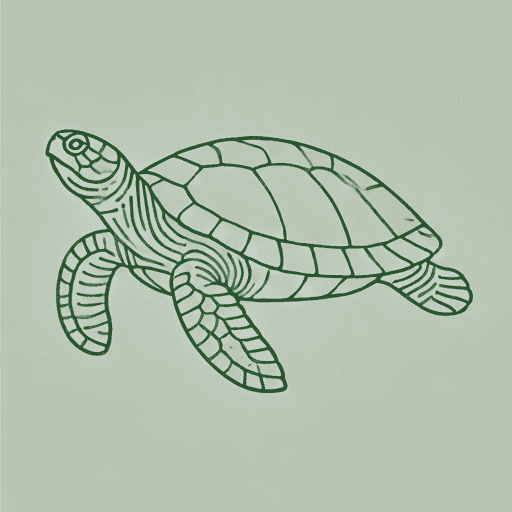
Oliver uses the snapping turtle as an important symbol of the tension between appetite and empathy—a tension she believes is an unavoidable part of being alive. In the essay “Sister Turtle,” Oliver watches the female turtles leave the pond in summer to search for a place to lay their eggs. Their slow, determined movements highlight how purposeful and vulnerable they are. Oliver loves seeing the turtles, but her presence also worries her, since she knows she might distract them from completing their work. This mix of admiration and concern sets the stage for the deeper struggle she explores: The fact that humans, like all animals, are shaped by both desire and responsibility.
This tension becomes especially vivid when Oliver returns to the nesting site after a turtle has deposited her eggs. She unearths half of them, carries them home, and eats them. For many readers, this act might feel surprising, even unsettling, but Oliver uses the moment to reveal something honest about the natural world. She acknowledges that appetite is not shameful—it is a fact of life shared by every creatures. What matters, she suggests, is the spirit in which one acts. When she eats the eggs, she does so with full awareness of the turtle and her labor, writing, “I ate them all, with attention, whimsy, devotion, and respect” (59). The quote captures Oliver’s belief that taking from the world is not wrong if it is done with humility, gratitude, and care.
The turtle therefore becomes a mirror through which Oliver examines her own instincts. Just as the turtle follows an ancient internal calendar, Oliver recognizes that she too has natural impulses, including hunger. However, she also feels the pull of empathy—an understanding that her actions affect other beings. She does not deny her appetite, but she refuses to be careless with it. This balance is at the heart of her creative and ethical practice.
Great Horned Owl
Oliver’s depiction of the Great Horned Owl transforms the bird into a symbol of the terror that saturates the natural world—a terror she suggests we must not resist, but accept as part of being alive. The embodies a profound and unsettling force, one that exposes the inherent terror of existence: “I know this bird. If it could, it would eat the whole world” (136).
Oliver never finds the creature’s nest, and this absence becomes symbolic in itself, emphasizing the interconnection of terror and beautiful mystery. The owl’s presence is revealed instead through the remnants of its violence—decapitated jays, torn rabbits—signs that coexist alongside sunsets, pond reflections, and all the gentler beauties Oliver so often celebrates.
Rather than seeking safety in certainty, Oliver chooses to approach the owl’s presence with awe. The terror it symbolizes is not a defect in the world but a vital element of it—a reminder that life’s beauty derives in part from its ugliness. To embrace the owl is to embrace the fullness of existence, including the parts that unsettle or overwhelm. In this way, the owl stands as a threshold figure, guiding Oliver—and, by extension, the reader—toward a deeper, more honest relationship with the natural world, one rooted not in mastery but in reverent acceptance.

Unlock the meaning behind every key symbol & motif
See how recurring imagery, objects, and ideas shape the narrative.
- Explore how the author builds meaning through symbolism
- Understand what symbols & motifs represent in the text
- Connect recurring ideas to themes, characters, and events