Voyager
69 pages • 2-hour read
Diana GabaldonVoyager
A modern alternative to SparkNotes and CliffsNotes, SuperSummary offers high-quality Study Guides with detailed chapter summaries and analysis of major themes, characters, and more.
Symbols & Motifs
Names
Names are important symbols in Voyager and often highlight the ways characters like Claire and Jamie have to disguise their true selves. In the first novel in the Outlander series, Jamie didn’t tell Claire his full name (James Alexander Malcolm MacKenzie Fraser) until they were married. Jamie was a known fugitive under his Fraser name and had been hiding within his mother’s MacKenzie clan, so telling Claire his full name was a sign of trust. Similarly, Claire uses her family name (Beauchamp) rather than her married name of Randall when she first meets Jamie and the MacKenzies to align her more with their French allies rather than their English adversaries. Throughout the novel, Jamie in particular is known by many names—Red Jamie, Mac Dubh, Alexander Morgan, Jamie Roy, Dunbonnet, and more. Each name signifies different roles he plays and different aspects of his personality. The use of multiple names becomes a survival tactic in a fractured political landscape, symbolizing Jamie’s fractured identity and the compromises required to stay alive.
Yet names are also a sign of affection, with many characters having nicknames for those they love. Jamie calls Claire “Sassenach” (which translates, literally, to “Outlander”) at first to tease her affectionately about her status as a foreigner in Scotland. Claire has various names for Brianna or Bree, whom she most often calls her “baby” regardless of Bree’s age. When she writes her final letter to Brianna, Claire tells her, “All the names I’ve called you through the years—my chick, my pumpkin, precious dove, darling, sweetheart, dinky, smudge…I know why the Jews and Muslims have nine hundred names for God; one small word is not enough for love” (696). Here, names serve as attempts to articulate intimacy—tiny linguistic containers for overwhelming love. Yet being nameless is also a sign of affection in the novel, as Jamie tells Claire: “I was Uncle to Jenny’s children, and Brother to her and Ian. ‘Milord’ to Fergus, and ‘Sir’ to my tenants. ‘Mac Dubh’ to the men of Ardsmuir and ‘MacKenzie’ to the other servants at Helwater. ‘Malcolm the printer,’ then, and ‘Jamie Roy’ at the docks […] But here […] with you…I have no name” (588).
The Standing Stones
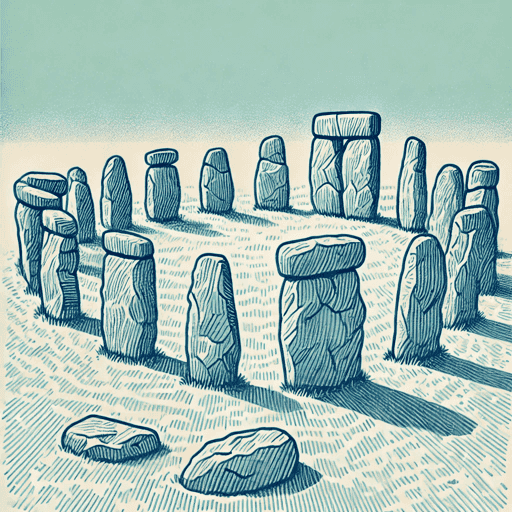
The ancient standing stones at Craigh Na Dun serve as the portal between past and present, acting as a literal and symbolic threshold between worlds. Though their physical appearance is static and unmoving, the stones represent possibility, transformation, and the unknown. For Claire, touching the stones is a surrender to love, fate, and uncertainty.
The stones function as a gauntlet, demanding sacrifice in exchange for passage. Those who pass through them are forever altered. Claire experiences the process as violent and overwhelming, describing it as “the roar of death and dissolution” (1005), while Geillis likens it to chaos and terror. These descriptions emphasize how the act of time-travel is not whimsical but deeply corporeal, traumatic, and irreversible.
The stones also mark a place of decision. Each time Claire returns to Craigh Na Dun, she must choose whether to leave one life behind to pursue another. Thus, the stones symbolize the weight of choice and the impossibility of having it all: family, love, safety, and time itself. They echo the broader theme of Voyager that true voyages require not just movement through space, but transformation of the self.
Travel
As hinted by the title of the novel, much of Claire’s time in Voyager is spent traveling. However, the motif of travel is rarely associated with the ease and luxury of modern travel, but is typically depicted as something that is demanding, gruesome, and something that is only done for the sake of others. Claire literally travels across the globe and through centuries of time, yet she often travels more metaphorically through her memories. Throughout the novel, Gabaldon uses flashbacks in italics and jumps between time periods to mimic the travel that must literally and metaphorically undergo.
Claire’s travel through the standing stones at Craigh Na Dun is the most demanding voyage she takes in the novel, and one she risks her life to take in order to be with the love of her life. When Geillis and Claire share their experiences of time-travel, Geillis asks, “Did ye not feel the terror? And the noise, fit to split your skull and spill your brains?” (1005), Claire only thinks “I didn’t want to talk to about it; didn’t even like to think of the time-passage. I had blocked it deliberately from my mind, the roar of death and dissolution and the voices of chaos that urged me to join them” (1005). This terrifying depiction of time travel reimagines movement through time as bodily trauma, emphasizing the emotional cost of love across centuries. Though her travel to Inverness and then Edinburgh is largely glossed over, Claire must walk dozens of miles and then ride several more days, something completely unlike the comforts of modern travel.
However, Claire feels she has no choice but to travel to see Jamie and is moved by her love from 1968 Inverness to 1765 Edinburgh. Similarly, Jamie does not move of his own free will in these chapters, especially when he is shackled in prison. Forced to Ardsmuir and then the Lake District, Jamie is compelled to go by his captors, showing a more literal version of Claire’s compulsion to travel toward Jamie. Both characters are displaced, but their journeys are mirrored: Claire moves backward across time and borders to find love, while Jamie is carried forward through systems of control, war, and empire. Later in the novel, Jamie and Claire are compelled to travel to Jamaica to save Ian, and the seasickness, kidnapping, and run-ins with pirates highlight just how arduous yet necessary their travels are.
The Treasure
Early in the novel, John hears reports of a secret treasure near Ardsmuir that was sent from the king of France to his cousin Charles Stuart to be used for the Jacobite uprising. Several different stories about this treasure circulate throughout the novel, symbolizing the complicated and often indefinable nature of stories from history. The treasure is also a symbol that reflects the motivations of several characters in the novel. At the end of Voyager, it is revealed that the treasure was not gold for Charles Stuart but was full of gemstones Geillis had collected to aid in her time travel and support her nationalist cause. John wants to find the gold to restore his reputation after being sent to Ardsmuir. However, when Jamie first learns about the treasure, he hears that it is associated with a witch who wants to use it for devious purposes.
Yet when Jamie finds the treasure, he only takes little bits at a time for the purpose of helping his family and tenants. Jamie knows that a major influx of money would seem suspicious, yet he also feels that the treasure was meant to be found by him and used for good. When Jamie has to dip into the treasure to settle his debts with Laoghaire so he can be with Claire, he feels guilty using it for a selfish purpose. Jamie continues to feel like using the treasure for himself alone will bring him bad luck, just as Ian is kidnapped when he reaches the treasure. The treasure functions as both a literal object and a moral test, revealing how characters balance personal need, ethical restraint, and collective responsibility. It also highlights the recurring theme that history is often distorted by those who seek to possess its riches, whether for power, preservation, or escape.

Unlock the meaning behind every key symbol & motif
See how recurring imagery, objects, and ideas shape the narrative.
- Explore how the author builds meaning through symbolism
- Understand what symbols & motifs represent in the text
- Connect recurring ideas to themes, characters, and events