War Games
63 pages • 2-hour read
Alan GratzWar Games
A modern alternative to SparkNotes and CliffsNotes, SuperSummary offers high-quality Study Guides with detailed chapter summaries and analysis of major themes, characters, and more.
Chapters 25-36Chapter Summaries & Analyses
Content Warning: This section of the guide contains depictions of racism, religious discrimination, anti-gay bias, graphic violence, physical abuse, child death, and illness.
Chapter 25 Summary: “Disappearing Act”
Evie follows Heinz into an alley behind the hat shop and up the fire escape, fearing that he will harm the Jewish-owned shop with paint, bricks, or firebombs. At the top, she looks through a window and sees him approach the fireplace, reach inside, and climb into it, disappearing completely. Confused, Evie quietly enters the apartment, examines the swept-clean fireplace, and reaches inside, finding a lever. When she pulls it, the back wall of the fireplace swings open to reveal a secret door. Realizing that Heinz knew exactly where to find it, Evie steps through to uncover the secret to his identity.
Chapter 26 Summary: “Behind the Fireplace”
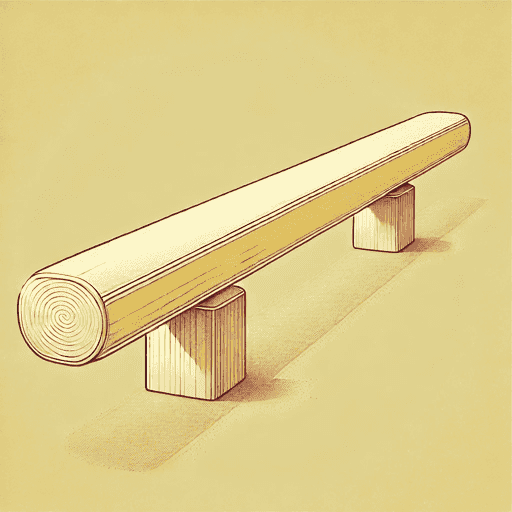
Evie enters a small room under construction, where Heinz stands with a blond man and a teenage boy holding a hammer. The teenager attacks Evie, but Heinz shouts for him to stop. Two women enter: an older woman and the hat shop owner. They are Heinz’s family. Heinz introduces his parents, his brother Werner, and his sister Gretel. They are building a secret room to hide from the Nazis. Heinz’s mother reveals that they are all Jewish, except for Heinz’s father. Heinz can pass for “Aryan” because he resembles their non-Jewish father, so he lives with his Christian aunt and uncle for protection. Heinz joined the Hitler Youth to avoid suspicion, and he lives in constant fear of discovery. He shows Evie the supplies he steals from the Olympic Village for his family. Heinz’s father explains that Heinz and Gretel escaped to England, but the Nazis forced them to return so that Gretel could compete in the Olympics as Germany’s best high jumper.
Chapter 27 Summary: “Secret Keepers”
Gretel explains that she was Germany’s national champion high jumper until 1933, when she was banned from sports for being Jewish. She and Heinz moved to England, but the Nazis threatened to arrest their parents unless Gretel returned for the Olympics. The Nazis brought her back only to counter international boycott threats, but she was cut from the team for alleged poor form despite jumping higher than any woman in the qualifiers. Heinz’s mother mentions Hitler’s open threats to annihilate Jews. When Evie asks why they don’t leave again, Heinz’s father says the Nazis stole all their money and valuables, leaving receipts signed by a fictional “Max Heiliger.” Nazis are now seizing Jewish homes and businesses and sending people to concentration camps. The persecution has paused for the Olympics as the Nazis seek to deceive the world, but once the games end, the Nazis will come for them. Werner voices his distrust of Evie, fearing her betrayal, but Heinz vouches for her, saying they both have secrets. Evie promises never to tell as she and Heinz realize they were on the same side all along. Heinz offers to show Evie the real Berlin.
Chapter 28 Summary: “The Real Berlin”
Heinz leads Evie through Berlin at night, avoiding Nazi patrols. At a government building covered with Nazi flags, he pulls back a banner to reveal crumbling, broken columns, explaining that the Nazis use flags to hide the city’s decay. He shows her public buses that are secretly military transport trucks that can be equipped with machine guns. He points out broken glass swept into the basement stairwells of Jewish homes and a “No Jews Allowed” sign hidden behind a movie poster. In a park, he explains that Jews are only allowed to sit on yellow benches, so to avoid identification, no one uses the benches at all. Evie compares this segregation to the treatment of Black people in America. Heinz retrieves a copy of the antisemitic newspaper Der Stürmer, explaining its hateful content and temporary Olympic ban. At the Olympiastadion, a Nazi rally is underway. Heinz describes the stadium as a symbol of peace by day and a temple to fascism by night. He now wants to show her the one part of real Berlin that the Nazis want everyone to see.
Chapter 29 Summary: “The Reichstag”
Heinz shows Evie the Reichstag, the burnt shell of the German parliament building. It burned three years ago, just after Hitler became chancellor. The Nazis blamed communists, declared a state of emergency, and suspended the constitution, gaining absolute power. Now, they leave the ruin uncovered as a constant reminder justifying the loss of the people’s civil rights. Heinz adds that some believe the Nazis set the fire themselves. Near the Olympic Village, Heinz stops at the house of his former best friend, Otto. He recounts how Otto completely ignored him after the anti-Jewish laws passed, despite years of friendship. When Evie asks why Germans don’t fight back, two Nazi soldiers walk by on patrol, and Heinz gestures to them as his answer. Back at the village, Heinz asks Evie to promise again not to tell his family’s secret, and she agrees. They shake hands as friends. Evie sees German men practicing marching with brooms and realizes the Nazis are preparing for war. She resolves to help Heinz’s family escape.
Chapter 30 Summary: “Takers”
Evie, Ursula, and Mary arrive at a lavish Nazi party in a mansion. Evie reflects on her heist team’s failure to find a secret tunnel entrance, but tonight, she hopes to get the vault combination. (Mary speaks fluent German.) The opulent mansion is filled with Nazi officers and flags. Mary points out Herr Schacht, the Reichsbank president and German minister of economics, and agrees to help. Ursula overhears the hostess saying they had to air out the house to remove the “stink” of the Jewish people who once lived there. Distraught, Ursula reveals her full story to Evie; as the daughter of a Black French soldier and German mother, she was deemed a “Rhineland Bastard,” arrested, brought before a Genetic Health Court, and forcibly sterilized so that she could never have children.
After Ursula leaves to wait in the car, Evie discovers a boy, Gerhard, hiding under a buffet table with his dog Bruno. He tells her that this is his house, but he knows it was taken from another family and thinks it’s unfair. Evie realizes that Gerhard is the son of the Reichsbank president and learns his birthday: December 13, 1929. She now has the vault combination. A commotion erupts when a German officer accosts Mary, who slaps him and breaks free. Avery Brundage, head of the US Olympic Committee, confronts them, demanding that Mary apologize or lose her place on the team. He threatens to remove Evie, too. Defeated, they leave. Evie reflects on Gerhard’s simple sense of fairness and knows that the Nazis must be stopped.
Chapter 31 Summary: “Replaced”
Evie meets Heinz at the Olympiastadion, planning to ask his help with finding the tunnel entrance. They notice something wrong with the men’s 4x100 relay lineup. The coach has replaced the team’s two Jewish runners, Marty Glickman and Sam Stoller, with Jesse Owens and Ralph Metcalfe. Evie assumes that the coach made the change to appease the Nazi hosts. The US team wins easily, but Glickman and Stoller lose their only chance at a medal. Heinz bitterly comments that Jewish people are treated the same everywhere. Ursula arrives and is hostile toward Heinz, calling him a Nazi. Evie insists that she trusts Heinz. Asking Ursula to trust her, she tells Heinz that they’re looking for a door to secret tunnels. Ursula is horrified that Evie has revealed their mission. Heinz asks if they tried the guarded door marked “VERBOTEN,” or forbidden. Realizing this must be the entrance, Evie drags them both inside the stadium to find it.
Chapter 32 Summary: “Verboten”
Heinz leads them to a guards’ break room near the communications room. A soldier guards a door in the corner. Evie confesses that she saw the room before but thought “verboten” meant “bathroom.” Evie pulls a reluctant Heinz inside. The guard refuses them entry. Heinz and Ursula panic, but Evie loudly identifies Heinz as the Hitler Youth poster boy, and Heinz plays along. The guard recognizes him, saying the poster inspired his son to join the Hitler Youth. He asks if they are there to see the Führer. They are horrified to learn that Adolf Hitler uses the room. The guard says Hitler is currently in the stands but will return soon. He unlocks the door and locks the three of them inside to wait.
Chapter 33 Summary: “Hitler’s Hairbrush”
Inside the locked room, Heinz panics about Hitler’s imminent return. Ursula and Evie frantically search the small, windowless space, finding personal items, including Hitler’s hairbrush and a painting signed by A. Hitler. Seeing Heinz’s terror, Ursula is finally convinced that he isn’t a Nazi. In a vanity drawer, Evie finds a black wig and fake mustache, suggesting the existence of a body double, but she keeps this discovery to herself. They find no secret door and realize they are trapped, but Ursula spots a small air vent on the wall and removes the grate. Heinz, the smallest, crawls into the air duct to open the vent cover from the inside in the adjacent room. They hear chairs scraping outside and a shouted salute signaling Hitler’s arrival.
Chapter 34 Summary: “The Tables Turn”
Heinz opens the far vent and crawls into a janitor’s closet. Evie and Ursula follow. Ursula replaces the vent cover just as Hitler’s door opens. They conceal their escape route and slip out undetected. Once safe, Evie and Ursula burst into laughter over their narrow escape. Heinz’s attention is drawn to television monitors in the communications room. Evie sees systematic favoritism toward German athletes in conditions and judging. She sees three women tied for gold in the high jump at the height Gretel achieved in the qualifiers. Evie points out Helene Mayer winning a silver medal, but they are shocked when Mayer gives a Nazi salute. Heinz wanders away, but Evie and Ursula see two Nazi officers emerge from a secret wall panel that closes behind them. They have finally found the entrance to the secret tunnels. As they rush to tell the others, Coach Miele intercepts Evie. He tells her teammate Irma Cumiskey is injured. As first alternate, Evie must immediately take Irma’s place on the uneven bars. Ursula urges Evie to compete, promising to update their heist teammates about the tunnel entrance.
Chapter 35 Summary: “Second Chances”
Evie performs an excellent routine on the uneven bars. The crowd chants her name, and she receives high scores. Her previously aloof teammates embrace her enthusiastically. Connie Lovato suggests they train together if they make the finals, thrilling Evie. Evie realizes her week of training for the heist on an arbor outside her dorm made her stronger. She sees her heist teammates, Ursula and Karl, cheering from the sidelines. Behind a screen, Monday confronts her, explaining that the gymnastics finals and the robbery must happen at the same time. Monday demands that Evie deliberately lose the competition so she will be available for the heist.
Chapter 36 Summary: “Lifeline”
Evie is stunned by Monday’s demand to throw the competition. She walks back to her team in a daze, torn between her Olympic dream and the heist. She weighs her desire for a medal against the heist; while the money would help her own family, she also considers Karl and Ursula’s desperate need for it to help loved ones escape Nazi persecution.
Watching an Italian gymnast, Evie flashes back to her family’s miserable arrival in California after the Dust Bowl. Her mother fell into depression after her brother John’s death, her sister grew angry, and Evie felt directionless and hopeless. She remembers discovering a new gymnasium made by the Works Progress Administration. Joining the Gymnastics Club gave her purpose, life, and hope for a future.
Now, an Olympic organizer calls her name for her final turn on the uneven bars, forcing Evie to decide either to compete to win and claim her dream or lose deliberately to enable the heist.
Chapters 25-36 Analysis
This section of the narrative dismantles the spectacle of the 1936 Berlin Olympics, delving into The Hidden Realities of Corrupt Regimes as Heinz gives Evie a brutally honest tour of “the real Berlin.” When he pulls back a banner to show the crumbling column hidden underneath, he instructs Evie, “When you see a Nazi flag from now on… always ask yourself: What is it hiding?” (175). The author uses this pointed question as a key for both Evie and the reader, transforming the swastika into an emblem of systemic deceit. This pattern of exposure continues with Heinz’s explanation that the public buses are disguised military transports and the movie posters hide antisemitic signs. At the same time, the Reichstag ruin, left intentionally uncovered, functions as the inverse of this strategy, presented as a justification for the Nazis’ suppression of civil liberties. The deception extends to the personal level with the discovery of a wig and fake mustache in Hitler’s private room, suggesting that the image of the Führer himself may be a manufactured illusion. This progression of revelations reinforces the idea that the Nazi state engages in calculated misdirection to mask its toxic mix of decay, aggression, and persecution.
The discovery of these hidden realities catalyzes a crucial phase in Evie’s character development, forcing her to confront The Moral Complexities of Survival and Resistance. Crucially, Evie’s perspective first begins to shift as she becomes a keeper of secrets far more consequential than her own. Upon learning that Heinz, whom she feared as a Nazi spy, is really a Jewish boy posing as a member of the Hitler Youth in order to protect his family, she must abandon her simplistic views on identity and allegiance. Ursula’s revelation that she was forcibly sterilized by the Nazis provides a visceral account of the regime’s brutality. Finally, the contrast Evie perceives between the Nazis’ cruelty and the simple fairness of the young Gerhard solidifies Evie’s moral resolve. Her internal conflict over choosing between her Olympic dream and the heist shows that she is now entangled in a collective struggle alongside the oppressed people of Germany.
Throughout these chapters, the recurring symbol of secret tunnels and hidden rooms gives physical form to the narrative’s thematic tensions. The secret room behind the fireplace represents refuge and familial love even as its very existence signifies the family’s vulnerability and imprisonment within their own home. By contrast, the secret tunnels beneath the Olympiastadion symbolize a more active, subversive pathway to defiance, as this literal underworld connects the epicenter of Nazi propaganda, the Olympiastadion, to the seat of the regime’s economic power, the Reichsbank. By navigating these tunnels, the heist team challenges the regime’s authority from within. Together, these concealed spaces underscore the novel’s premise that beneath the façade of the Nazi state lie hidden realities and covert paths to resistance.
The narrative structure in these chapters utilizes misdirection and accelerating pacing to build suspense. For a significant portion of the story, the author includes details that justify Evie’s suspicion of Heinz, creating a tension rooted in misinterpretation. Although Heinz’s shadowing of Evie is initially designed to appear menacing, the revelation of his true identity reframes his actions as protective. Yet this resolution immediately reveals the painful irony of his circumstances, for the Jewish Heinz must perform the role of a fervent Nazi supporter in order to survive, engaging in a constant, life-threatening deception. In parallel with this personal revelation, the overall pacing escalates in a way that mirrors Evie’s expanding awareness, for the narrative shifts from the discovery of Heinz’s secret to a broader exposé of Berlin’s hidden truths, and finally to an accidental confrontation within the very center of Nazi power. Finally, when Coach Miele offers Evie a second chance at Olympic glory just as the heist becomes possible, Monday’s ultimatum forces Evie into an impossible choice, making it clear that her next move will inevitably become a moral decision of one form or another.
Evie’s climactic choice clarifies the theme of Redefining Victory Beyond Medals and Money. Throughout the novel, her definition of success has been limited to dreams of winning an Olympic gold medal, which she views as a tangible solution to her family’s poverty and a source of personal validation. However, this perspective is challenged when she is reinstated in the competition only to be told that she must deliberately lose for the sake of the heist. Monday’s demand forces her to weigh her personal ambition against the collective good and consider the importance of the moral imperative to resist the Nazis. Amidst her internal anguish, the replacement of the Jewish American runners, Marty Glickman and Sam Stoller, in the 4x100 relay provides a clear example that even the honest camaraderie of the Olympic system can become tainted by unjust compromises made for the sake of political expediency. Furthermore, Helene Mayer’s Nazi salute on the podium introduces an ominous ambiguity, implicitly raising the question of what it means to “win” as a persecuted individual within an oppressive system. In this context, the heist itself is no longer framed as a crime; given the injustices of the Nazi regime, Monday’s goal becomes an act of redistributive justice, and Evie’s final decision will hinge upon whether she clings to a conventional definition of victory or embraces the moral courage to pursue a higher goal.

Unlock all 63 pages of this Study Guide
Get in-depth, chapter-by-chapter summaries and analysis from our literary experts.
- Grasp challenging concepts with clear, comprehensive explanations
- Revisit key plot points and ideas without rereading the book
- Share impressive insights in classes and book clubs