Watch Me
45 pages • 1-hour read
Tahereh MafiWatch Me
A modern alternative to SparkNotes and CliffsNotes, SuperSummary offers high-quality Study Guides with detailed chapter summaries and analysis of major themes, characters, and more.
Symbols & Motifs
Artificial Intelligence
Content Warning: This section of the guide includes discussion of disordered eating, graphic violence, illness, and death.
Artificial intelligence is a motif personified by Klaus, an omnipotent AI created by the Reestablishment. Klaus is described as having a sort of “chemically made” soul that connects with the consciousness of other living beings through a neural network. Klaus can read minds, manipulate behavior, and requires the neurological energies of humans to function, requiring human sacrifice. He is capable of predicting human behavior to an overwhelmingly accurate degree, making him almost like a god who surveils and controls the society.
Because AI is so deeply embedded in the lives of the Reestablishment, James thinks Rosa is a robot when he first sees her. Similarly, Rosa feels completely thrown off and confused when she is imprisoned in the New Republic and does not have any surveillance in her room. In this way, The Tension Between Safety and Freedom comes to be associated with varying degrees of humanity. Living in such a society also means that Rosa cannot trust anyone, not even her sister, as she is the only person not connected to the network. Everything she says and does is watched through the eyes of those around her. Klaus represents the extreme of a system that strips people of agency and uses them for a singular purpose.
Rich Versus Poor
The contrast between rich and poor is immediately apparent in the story, as it opens with a scene of Rosa and Clara opening empty cupboards and realizing once again that they have nothing to eat. Rosa describes the natural world with vivid sensory detail, observing the difference in how it’s perceived by those who have privilege:
It’s still strange to see the birds. They fill the sky with sound and color, rattling roofs and branches. All around us evergreens spiral skyward, never surrendering to the seasons. It’s always damp here; viridescent; cold. Lakes shimmer unprovoked. Distant mountain ranges seem painted in watercolors, layers of teeth made translucent by fog. The warm and well-fed have been known to call this land beautiful (3).
Rosabelle’s reflection makes it clear that being able to appreciate beauty is a luxury afforded to those with enough food, warmth, and safety. With this juxtaposition, Mafi highlights the idea of a hierarchy of needs, in which a person’s basic needs must be met in order for them to engage with aesthetics and other forms of beauty. Rosabelle has lived in “the pit” with other sanctioned people, struggling to survive, and has learned from a young age that the world is harsh, cruel, and dark. Rosa and Clara originally came from a position of privilege, but their father was a traitor, and they were punished with poverty in his stead. Their rations are never enough, and Clara never has the medicine she needs. This is the Reestablishment’s way of deterring rebellion. The motif of rich versus poor is one of the ways in which Redefining Survival as Resistance is explored in the novel, through Rosa’s strength and will to survive despite her circumstances.
Candy
Candy, particularly gummy bears and a chocolate bar, serves as a deeply personal symbol of love and hope to both protagonists. For James, candy becomes associated with memories of Rosa, because he met her just after consuming a packet of gummy bears. After the incident, in which she attempts to kill him, he reflects, “I realize then that I’ll never be able to look at gummy bears without remembering Rosabelle” (156). The taste and texture of the candy become inseparable from his memories and feelings for her.
For Rosa, the chocolate bar she receives at the New Republic is such a rare and unbelievable privilege that she does not eat it. Instead, she saves it for her sister Clara, using it to remind herself that seeing her sister again is a real possibility. Despite everything Rosa has endured, she hopes that she might one day reunite with her sister and gift her a simple joy. Rosa does not express emotion often, so actions like this are some of the story’s major indicators of her concern and care. Because candy is also associated with childhood and innocence, it creates a direct and powerful contrast with the brutal and dark world that Rosa lives in.
The Glass Vial
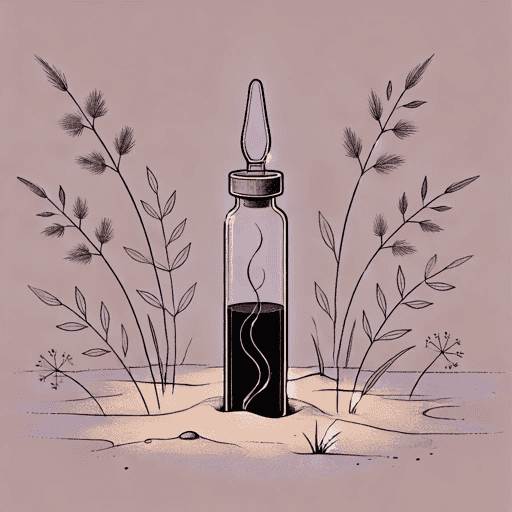
The glass vial filled with black liquid symbolizes the weaponization of human beings, sacrifice, and the loss of bodily autonomy, contributing to the theme of the tension between safety and freedom. Given to Rosa by Leon, who is under Klaus’s control, the vial is supposed to contain the “earth” element, a gene-editing chemical designed to erase superhuman abilities from the New Republic population.
Rosa is instructed to drink the liquid and bury herself alive, a process that will cause her body to decompose, explode, and disperse the chemical throughout the New Republic. The mission, which requires Rosa to sacrifice her life, uses the human body as a delivery system, reducing Rosa to nothing more than a tool of destruction. Leon tells Rosa that she was sent to the New Republic to die, emphasizing how Klaus and the Reestablishment see her as nothing more than a tool or pawn.
The vial thus comes to symbolize the oppression and control that Rosa lives with. Rosa was promised “freedom” upon completing the mission and was never told that “freedom,” in this case, meant death. When the story ends, the vial is no longer in Rosa’s possession, and she is going to maximum security prison; her plan, however, is to find a way to drink it in the cradle and, hopefully, destroy Klaus in the process.

Unlock the meaning behind every key symbol & motif
See how recurring imagery, objects, and ideas shape the narrative.
- Explore how the author builds meaning through symbolism
- Understand what symbols & motifs represent in the text
- Connect recurring ideas to themes, characters, and events