42 pages • 1-hour read
Weasel
A modern alternative to SparkNotes and CliffsNotes, SuperSummary offers high-quality Study Guides with detailed chapter summaries and analysis of major themes, characters, and more.
Symbols & Motifs
Danger
Content Warning: This section includes depictions of anti-Indigenous oppression, settler colonialism, graphic violence, murder, and death.
The motif of danger supports the theme of Needing Others and Self-Reliance to Survive. When the Fowlers are in a precarious situation, they depend on each other to confront the respective threat. While their father is missing, Nathan and Molly tend to the home and farm, ensuring that it doesn’t deteriorate. When Ezra knocks on their door and brings them to Pa, he looks after them on their journey. Nathan notes, “Once I fell, and a strong arm caught and held me until I got my balance. Later I heard Molly stumble and cry out, then whisper, ‘Thank you’” (9). When Weasel kidnaps Nathan, he must rely on himself to survive the potentially lethal situation. The time and place present continuous peril, and the main characters survive and grow by relying on each other and, in some scenes, themselves.
The motif of danger bolsters the theme of Fraught Morals in a Lethal Status Quo. The hazardous context causes people to adopt disquieting beliefs. The white settlers accept the violent norms when they’re aimed at the Shawnees, but when Weasel redirects the brutality at them, they don’t like it. Pa presents a nuanced morality, but he admits complicity when he explains that the deadly displacement of the Shawnees made it safe for him and Mama to move to Ohio and start a family. Paired together, the motif and theme indicate that right and wrong don’t exist in a vacuum. When a person feels imperiled, morals become conditional.
The motif of danger also underpins Accepting Pain and Embracing Positivity. The violent norms create deadly suffering, but Nathan must learn to accept the intrinsic injustice and violence of the world and not let it stop him from appreciating life’s pleasures. Nathan can’t eradicate the danger because Weasel doesn’t have a monopoly on destruction. There will always be other dangerous people who, together, perpetuate systemic oppression. Nathan must face the grim reality and move toward something positive, like learning to play the fiddle.
Andrew Jackson’s Hat
Andrew Jackson’s hat symbolizes reclamation because Ezra undercuts its meaning. Jackson’s hat first appears when Ezra brings Nathan and Molly to his wigwam, reuniting them with their father. About Ezra, Nathan observes,
He wore a tall black hat like I had seen in a picture of Andrew Jackson when he was the president. It was pulled down low over his ears and eyes. With the hat and the way he sat so straight and looked so serious, he was pretty near as dignified as Mr. Jackson himself (12).
In 1839, Jackson was the previous president (the current president in this historical work of fiction is Martin Van Buren). Jackson signed the Removal Act, and he took part in the lethal displacement of Indigenous people. By wearing a hat like his, Ezra shows that he can confront Jackson—and the violent norms he symbolizes—and overturn these associations. Since Ezra identifies as a Shawnee, the hat symbolizes the dignity of the Indigenous people. They are equal to Jackson, so they can wear what he wears.
Arguably, Ezra could have avoided the hat altogether. He could have decided that he didn’t want to be associated with a hat linked to someone like Jackson. Reclamation is central to the symbolism because he wears it, and by wearing it, he turns it into a positive symbol—a representation of equality. In the final chapter, Ezra gives the hat to Nathan to ensure that it will continue to symbolize something constructive.
The Lockets
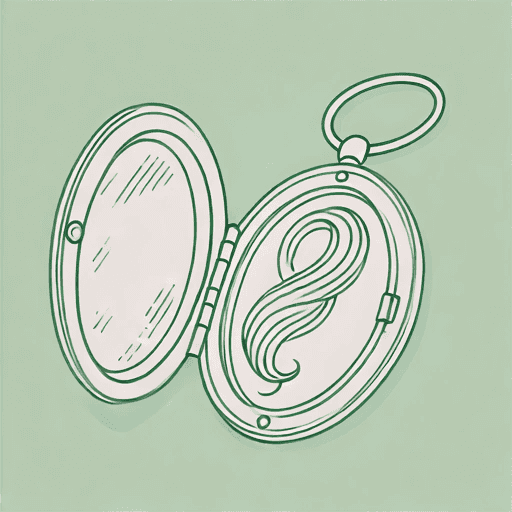
The lockets symbolize union as they join the characters together. The first locket belongs to Mama. In it, Pa put a lock of his hair, Nathan’s hair, and Molly’s hair. Nathan says, “Mama had worn it every day” (4). The locket joins Mama to her family. When she dies, Pa puts a lock of her hair in the locket, and he wears it every day. Nathan says, “[H]e never took it off, not even for washing up” (4). The locket serves the same purpose for Pa, and it takes on additional meaning as it connects him to his late wife. The locket also reunites Nathan and Molly with Pa, and it brings Ezra into the dynamic since Ezra brings the locket to them in Chapter 1. Molly reinforces the symbolic power of the locket as she puts it around Pa’s neck when she first sees him in Ezra’s wigwam. She believes that if he wears the locket, he’ll stay connected to them and won’t die.
In Chapter 19, Ezra makes a locket for Molly to cement their bond. The front features Molly’s likeness, and inside, there’s a locket of his hair. Molly reveals the meaning of the locket, declaring, “So I won’t forget him” (118). Though Molly is the recipient, Ezra’s locket keeps him bonded to Pa and Nathan, as they are all a part of the same family. At the same time, the construction of a new locket indicates that Ezra’s link to them is different: He’s important, but he’s not a legal or biological member of the Fowlers.

Unlock the meaning behind every key symbol & motif
See how recurring imagery, objects, and ideas shape the narrative.
- Explore how the author builds meaning through symbolism
- Understand what symbols & motifs represent in the text
- Connect recurring ideas to themes, characters, and events