What Feasts at Night
52 pages • 1-hour read
T. KingfisherWhat Feasts at Night
A modern alternative to SparkNotes and CliffsNotes, SuperSummary offers high-quality Study Guides with detailed chapter summaries and analysis of major themes, characters, and more.
Summary and Study Guide
Overview
T. Kingfisher’s What Feasts at Night (2024) is a Gothic novella that continues the story of Lieutenant Alex Easton, who was first introduced in What Moves the Dead. Kingfisher—an acclaimed speculative fiction author known for blending folklore, horror, humor, and psychological insight—draws inspiration from Edgar Allan Poe while grounding her work in contemporary understandings of trauma and the uncanny.
The novella combines elements of folk horror, psychological suspense, and supernatural investigation as Easton returns to Gallacia, a fictional Eastern European country steeped in superstition and bleak winter landscapes. The narrative explores themes of such as The Tension between Folk Belief and Rational Inquiry, The Tangible Nature of Trauma, and Caretaking and Camaraderie as Countermeasures to Dread.
This guide is based on the e-book version published by Tor Publishing Group in 2024.
Content Warning: The source material and guide feature depictions of gender discrimination, suicidal ideation, animal death, substance use, graphic violence, sexual violence, cursing, illness, and death.
Language Note: The novella uses nonbinary Gallacian pronoun sets tied to social roles: ka/kan for soldiers like Alex Easton, and va/var for clergy members such as Father Sebastian. These nongendered pronouns reflect cultural convention rather than gender identity, and this guide follows the text’s usage.
Plot Summary
What Feasts at Night follows retired Lieutenant Alex Easton, who returns reluctantly to kan homeland with Angus, kan longtime batman and closest companion. After a restorative period in Paris following the events of What Moves the Dead, Easton travels to rural Gallacia to check on a remote hunting lodge that ka inherited from kan father. The journey begins with Easton’s characteristic humor and war-worn fatalism, but the silence and gloom of Gallacia create an early sense of discomfort that persists as ka approaches the lodge. When Easton arrives, the lodge is cold, untended, and empty. Codrin, the elderly caretaker entrusted with maintaining the property, is nowhere to be found. Easton experiences a creeping sense of wrongness, compounded by the eerie quiet of the landscape and the fungi growing thickly around the neglected springhouse.
Angus travels to the nearby village of Wolf’s Ear for information, returning unsettled by the news that Codrin died two months earlier, although the villagers refuse to say how. Easton decides to visit Codrin’s daughter, Meriam, where an awkward but heartfelt conversation reveals Codrin’s past kindness to Easton during kan postwar convalescence. An undercurrent of superstition permeates Wolf’s Ear, especially around the circumstances of Codrin’s death.
To prepare the lodge for the arrival of Miss Eugenia Potter (Easton’s friend, a British mycologist invited to study local fungi), Angus hires the only villager willing to work there: the Widow Botezatu, a brusque and deeply superstitious woman. Her grandson, Bors, accompanies her. Their presence adds tension, though they competently repair and clean the lodge. When Miss Potter arrives, her enthusiasm for mushrooms brings some warmth and levity to the gloomy setting. Still, her scientific curiosity clashes with the Widow’s pervasive knowledge of folklore, especially regarding the springhouse and the unusual mushrooms growing there.
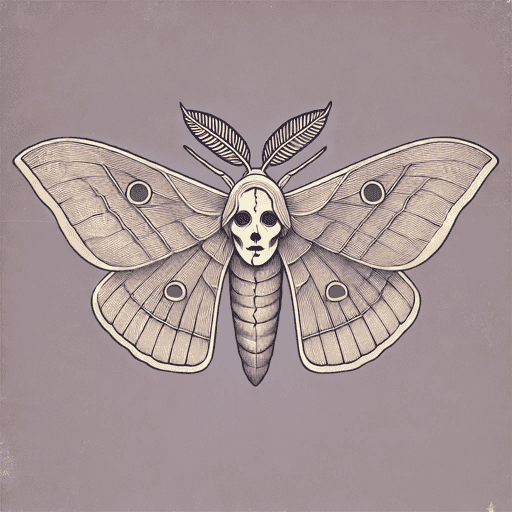
Local fears intensify when villagers whisper that Codrin was killed by a moroi—a folkloric breath-stealing spirit, often female, that is believed to take the form of a moth and prey on sleeping victims. Father Sebastian, the village priest, dismisses this belief but admits that the villagers are convinced they are cursed. Easton laughs off the rumors but is soon disturbed by an ominous dream that undermines kan sense of certainty; in the dream, a moth wriggles through the door and transforms into a woman who kneels on kan chest, suffocating kan. Easton awakes gasping, though ka attributes the nightmare to suggestion and late-night drinking.
Life at the lodge settles into a rhythm: Miss Potter studies fungi, Angus performs chores, and Easton and Bors work around the property. However, Bors soon grows ill. He struggles to breathe, behaves strangely, and insists that a woman with a “broken face” visits him in his sleep. The Widow becomes frantic, using folk methods such as knives, salt lines, and red thread to ward off the spirit, and she refuses both charity and medical help. Alarmed, Easton seeks Father Sebastian out and persuades him to bring the village doctor under a social pretext.
Despite intermittent improvements, Bors deteriorates again. The Widow reveals her fear that a moroi is hunting the boy and insists that Bors must “fight” the creature in his dreams. Easton grows conflicted—ka does not believe in the moroi, yet ka has no rational explanation for the boy’s worsening condition or for kan own dark dreams. Meanwhile, the oppressive silence of Gallacia and Easton’s tinnitus heighten kan sense of danger. The household becomes a battleground of scientific caution, superstition, and fear.
One night, Easton is terrified by another intense dream-vision of the moroi, whose face splits open to reveal the inside of her skull. She tears at kan breath, and Easton awakens struggling for air. In this half-dream, half hallucinatory state, ka stumbles into the stable, only to witness Hob—kan beloved horse—falling apart into moths. Realizing that this cannot be real, Easton attempts to wake but instead falls into a deeper dream. In this new dream-vision, ka is transported to the Bulgarian front lines and relives a barrage of traumatic combat memories as the moroi stalks kan through the snow. Past and present collapse into each other as ka grapples with the supernatural threat and the psychological toll of war.
Driven by terror and guilt, Easton decides to confront the moroi directly. Ka fights the creature in the dream as though ka were fighting an enemy soldier. Easton’s bullet tears into her, revealing grotesque anatomy. Though ka is nearly suffocated, Easton succeeds in shooting the moroi a second time. She collapses on top of kan.
Easton awakens in the lodge, ill with pneumonia; ka is being tended by Angus and Miss Potter, and days have passed since the ordeal. Bors has been taken home by the Widow. Once Easton recovers, ka, Angus, Bors, and Miss Potter excavate the springhouse. Beneath the fallen stone, they discover the skeleton of a woman—likely a past victim of a violent nobleman—whose improper burial may have given rise to the moroi legend. The body is taken to Father Sebastian, who consecrates and buries it properly.
This burial quiets the haunting, and life begins to return to normal. Miss Potter prepares to leave; Angus escorts her to the train. Bors, recovering both physically and emotionally, asks to remain at the lodge as its new caretaker. Easton accedes to this request, moved by the boy’s resilience and struck by the idea that “something bad happened to both of us […] but we don’t deserve to fall apart” (146). As the novella concludes, a tentative peace reigns; trauma remains, but caretaking, community, and the respectful burial of the dead allow the characters to move forward.

Unlock all 52 pages of this Study Guide
Get in-depth, chapter-by-chapter summaries and analysis from our literary experts.
- Grasp challenging concepts with clear, comprehensive explanations
- Revisit key plot points and ideas without rereading the book
- Share impressive insights in classes and book clubs