62 pages • 2-hour read
What Kind of Paradise
A modern alternative to SparkNotes and CliffsNotes, SuperSummary offers high-quality Study Guides with detailed chapter summaries and analysis of major themes, characters, and more.
Symbols & Motifs
Content Warning: This section of the guide includes discussion of death and emotional abuse.
The Internet
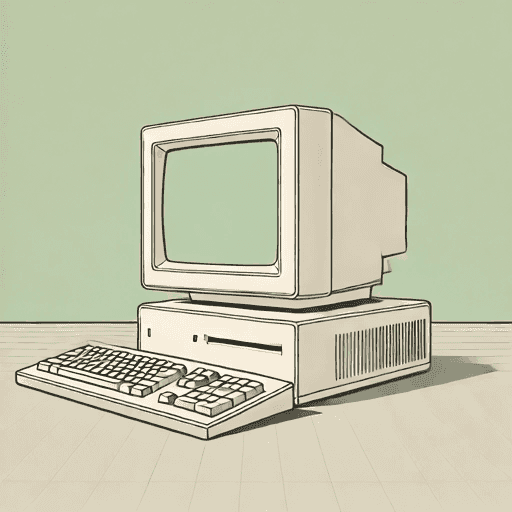
The internet is this novel’s most overt symbol of The Potential Benefits and Harms of Technology. It firmly situates the narrative within the tech-boom era of the 1990s. On the one hand, the internet represents the promise of a changing world. Lionel points out that “nerdy” social misfits, once seen as outcasts, are now using their intelligence to re-shape society. He, Tess, and even Jane/Esme at times see the internet as a powerful equalizing tool: It puts information into the hands of ordinary people and allows for research, ideas, and technological advancements to be readily shared. Jane/Esme is able to travel to San Francisco and change her life because she meets Lionel online. She finds a new career path because she has taught herself rudimentary coding. Initially, the internet represents a whole new, much more open and accessible future for her.
However, the novel also wrestles with the danger that technology and unchecked growth can pose for society. Largely through the character of Saul/Adam, the author explores the impact of computers and artificial intelligence on individuals. He argues that time spent online warps people and that it draws them away from the skills, abilities, beliefs, and values that have molded people, families, and societies. He argues instead for a return to hands-on work like farming, hunting, and gathering. He values books and philosophy over technological advances and develops a curriculum for his daughter that foregrounds ideas over tech. He also worries that the internet has already fallen into the wrong hands: Since he worked on the very first precursor to the contemporary internet, he bore witness to its takeover by the US government and military for use as a defense tool. He left his job because he realized that the internet would not follow an egalitarian model: Information will be controlled rather than openly shared.
Jane/Esme ultimately chooses to walk a “middle path,” acknowledging the dangers of technology without entirely renouncing it. The author thus uses her novel to spark discussion and critical thinking about the role of technology in society without expressly condoning or condemning it.
The “Luddite Manifesto”
A complex and multi-faceted symbol, Saul/Adam’s “Luddite Manifesto” symbolizes his inability to provide his daughter with a functional and stable home life and speaks to the novel’s interest in the tension between technology’s perils and promises. Saul/Adam raises his daughter in a remote cabin with little contact with the outside world. He believes in “embracing the pastoral life” (49) to avoid societal evils and teaches Jane/Esme to value hands-on skills and erudite philosophy over technology and organized society. He is sure that he is doing his daughter a favor, but ultimately, his parenting choices will come between him and Jane/Esme, fracturing their relationship forever.
Saul/Adam summarizes his views in the “Luddite Manifesto.” Named for a group of 19th-century workers in England who unsuccessfully staged a rebellion to stop technological developments that threatened their jobs, it does not initially strike Jane/Esme as alarming. After all, she has heard many of these ideas before and believes many of them herself. However, the consequences of the “Luddite Manifesto” are grave—it is only the first step in her father’s grisly plot to halt technological progress through a campaign of domestic terrorism and murder.
The “Luddite Manifesto” ultimately catapults Saul/Adam to infamous stardom and becomes the catalyst for Jane/Esme’s break with her father. She ultimately cannot condone his actions, and the manifesto’s disastrous outcome becomes part of her search for identity and autonomy. Jane/Esme is horrified by her father’s use of violence to achieve his goals, but his actions also cause her to take a more critical look at his ideology itself. She comes to realize that she does not share his wholesale opposition to technology. She understands technology’s potential to harm society, but she also sees its potential to help society. Since the manifesto is so staunchly anti-technology, Jane/Esme is able to clarify her own views on the subject and differentiate her personal philosophy from her father’s.
Names
Names form an important motif in the novel, speaking to issues of identity and belonging. Both the protagonist and her father use different names throughout the course of the narrative, and each has its own unique meaning.
The protagonist’s evolving names illustrate her search for authenticity and self-determination. The novel begins in the present day, and the narrator does not identify herself by name, which will become important at the novel’s conclusion. It then flashes back to the cabin in which she was raised with her isolationist father, and she introduces herself as Jane. This name, she will find out, was fabricated by her father when he faked their deaths. “Jane,” because of its association with “Jane Doe” (a law-enforcement and legal term given to both unnamed women in court cases and unidentified female bodies), evokes anonymity. It speaks to her father’s efforts to hide their location and mask their true identities. It is deliberately non-descript so as to avoid drawing undue attention to the fugitive pair.
When Jane learns this history and that her birth name was Esme, she casts off “Jane” and begins using her birth name. This represents a step away from her father, her search for identity, and her desire for autonomy and self-determination. It is a symbolic gesture that demarcates her present from her past life. It also represents the potential for connection with her lost mother. She views it as choosing herself over her father but also as choosing her mother. Esme, however, does not easily reconnect with Tess. By the end of the novel, she has rejected both parents and thinks of herself as “me.” Jane represents her father’s wishes for her, and Esme represents the woman her mother wanted her to become. She wishes to chart her own path and ultimately rejects both names.
Her father’s names are also symbolic and are both biblical references. Adam Nowak is Jane/Esme’s father’s original name. Adam, who was, in the Christian tradition, the first man, represents genesis and birth but was later banished from the Garden of Eden in the Book of Genesis. Since the novel’s Adam saw the internet’s inception as a government tool and the rise of technology, his name speaks to beginnings that have the potential for both upward and downward trajectories. The broader message is that the search for innovation and growth does not always result in a positive outcome.
After faking his own death, Adam re-christened himself “Saul,” another biblical name. In the Old Testament, Saul is the first king of Israel. A mighty man, he is fearless in battle. Saul, the character, fancies himself a philosopher king and rules the “kingdom” that he builds surrounding the cabin with an iron fist. He has absolute control over Jane’s life and does not allow her any freedom. The biblical Saul is undone by hubris: He disobeys God’s commands and is ultimately killed on the battlefield. Here, too, there are parallels to Saul, the character: Saul, when he decides to take matters into his own hands and stop the march of technological progress himself, becomes a murderer, is arrested for his crimes, and spends the rest of his life in prison.

Unlock the meaning behind every key symbol & motif
See how recurring imagery, objects, and ideas shape the narrative.
- Explore how the author builds meaning through symbolism
- Understand what symbols & motifs represent in the text
- Connect recurring ideas to themes, characters, and events