What Stalks the Deep
48 pages • 1-hour read
T. KingfisherWhat Stalks the Deep
A modern alternative to SparkNotes and CliffsNotes, SuperSummary offers high-quality Study Guides with detailed chapter summaries and analysis of major themes, characters, and more.
Chapters 4-7Chapter Summaries & Analyses
Content Warning: This section of the guide includes discussion of substance use, addiction, and death.
Chapter 4 Summary
As Easton and Angus Hollow Elk Mine, Easton is surprised by the number of dilapidated buildings surrounding the entrance. The group locates Oscar’s campsite and finds it deserted. They observe that there is only one bed, despite both Oscar and Roger having been present at the mine. After briefly considering possible explanations, they determine that locating Roger is necessary.
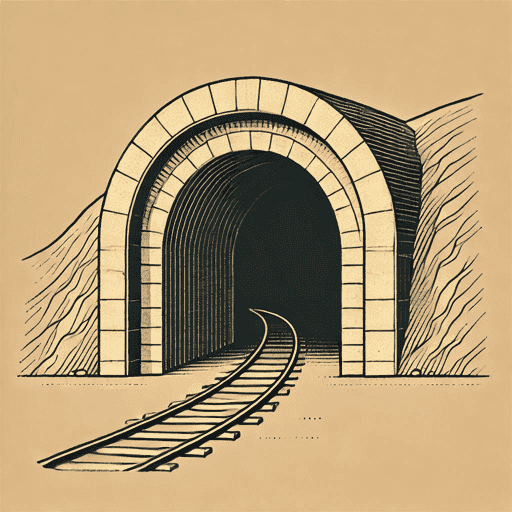
After retrieving lanterns, the group enters the mine, which Easton describes as “uncanny.” Unlike Denton, Easton does not immediately associate the space with Usher’s house but instead feels overwhelmed by the rock overhead. A passing breeze gives Easton the impression that the mine is breathing, though Ingold attributes the airflow to the ventilation system. Easton also reflects on the name “Hollow Elk,” briefly imagining a violent image associated with it.
Ingold leads the group deeper into the mine. When they reach the first shaft, Easton asks about the various “damp” gases, and Ingold remarks that they are likely already breathing them. He produces a lighter and ignites a flame that runs briefly along the wall before extinguishing, explaining that the reaction was caused by firedamp. The group decides to retrieve headlamps before proceeding further. Ingold offers to map the mine as they explore, and they agree that no one will enter the mine alone.
When they exit, Easton senses the mine exhale. Outside, Kent greets them with a prepared meal.
Chapter 5 Summary
The following day, the group travels to the nearby town of Flatwood. Denton and Angus depart to search for Roger, while Easton and Ingold visit the telegram office. The clerk initially claims that she can’t remember someone who sent a telegram a month earlier. However, after Easton adopts a French accent and presents the telegram, the clerk recalls the sender. She describes the individual as tall and silent, noting that the person did not remove their goggles and paid with a “pocketful” of money despite being told the telegram would be expensive.
After leaving the office, Easton and Ingold conclude that the person described was likely not Roger. They then go to a hotel, where Easton asks Ingold how he and Denton met. Ingold explains that they live in the same building and that they met when one of his chemistry experiments went wrong, prompting him to warn Denton to ventilate his apartment. The two quickly developed a connection—”and we became—ah—friends” (46)—leading Easton to suspect a romantic relationship.
Denton and Angus return with information about Roger’s location. The group proceeds to an impoverished section of Flatwood, where they are confronted by a man named Elijah, who questions their intentions. Apparently convinced of their good intentions, Elijah explains that Roger is struggling with alcohol addiction and directs them to his house.
At Roger’s residence, Easton is unsettled by Roger’s large dog, Thunder, whose behavior appears unusual. Roger, groggy from sleep after a night of heavy drinking, invites them inside. While Denton speaks with Roger, Easton remains focused on Thunder. Roger explains that he searched for Oscar but was unable to find him, acknowledging that there is “bad stuff” in the mine, though he cannot identify it. He also mentions a bear in the area that has been killing people, but he doesn’t believe the bear is responsible for Oscar’s disappearance. Denton gives Roger money and promises to remain in contact. As Denton prepares to leave, Roger advises him to look for a red light in the mine.
Chapter 6 Summary
As they return to Hollow Elk Mine, Easton observes the effort Kent has put into improving the campsite and preparing meals. The group discusses plans for exploring the mine, with Ingold particularly interested in locating the “pearl chamber” Oscar described in his letters. Easton reflects on an earlier moment when Ingold showed him a wheel bug, enthusiastically describing its painful bite. Although Easton is not curious about the mine, they are determined to help Denton, admitting that leaving “would have eaten at [them] for the rest of [their] life” (57).
Upon reentering the mine, Easton feels uneasy underground. The group proceeds farther along the main shaft, where Easton hears unusual sounds. They reach a pool of dark water, which Ingold warns is acidic. As Easton approaches the pool, Ingold warns of possible blackdamp in the area and demonstrates the danger by holding out a candle that immediately extinguishes. Ingold remarks that he would rather be “splattered” than suffocated, then apologizes after recalling Easton and Denton’s wartime experiences. He apologizes again for mentioning Easton’s trauma at all.
They return to the third shaft, where Ingold begins mapping the mine. While waiting, Easton hears “squelching” noises and quietly informs Ingold, suggesting they leave. Ingold agrees, citing the need to organize his notes. As they make their way back, Easton realizes the sound is positioned between them and the exit and proposes turning into another tunnel. Ingold leads them through a narrow “squeeze,” and Easton suppresses their claustrophobia as they follow.
While Easton is explaining the sha/shan pronouns to him, Ingold notices signs of danger. Recognizing that they are in an area with blackdamp, he drags Easton forward as they begin to hallucinate. They eventually reach fresh air and recover.
After returning to camp, Easton describes the wet noises they heard in the mine, which correspond to Oscar’s earlier reports. Denton wants to return and investigate the source of the sound. Following a meal, they return to the mine but do not hear the noise again. As they prepare to leave, they see a red light deeper within the mine.
Chapter 7 Summary
The group lowers their lights and follows the red light deeper into the mine, where they find a large pile of debris blocking the passage. When Denton shifts some of the rocks, the red light disappears, and they hear a “flurry of wet slapping sounds” (72). Denton begins clearing the debris, and after a brief hesitation, Easton joins him. Reaching the top of the pile, they discover an empty mining outfit lying face down and a second, larger accumulation of rubble. Denton insists they must continue moving the rocks, while Easton is concerned about triggering another collapse. Ingold states that he has no architectural expertise to guide them and urges the group to return to the surface. Before leaving, Easton finds a receipt from the telegraph office.
The following morning, the group discovers a note warning them to leave the mine or face danger. Easton remarks on the unusual use of the word “humans,” and Ingold observes that the message lacks a direct threat. Angus suggests they arm themselves before reentering the mine, but Ingold argues that discharging a firearm underground would be hazardous.
Denton and Ingold return to the mine to continue clearing the rock, while Easton remains at camp with Angus and Kent. As Easton peels potatoes, they reflect on the similarities in Angus’s and Kent’s roles and their ability to work together. After several hours, Denton and Ingold return.
That night, Easton wakes and goes to the latrine, noticing the loud nighttime sounds, including a distinct whippoorwill call. On their way back to camp, Easton sees the red light in the mine. Impulsively, they follow the light and encounter a flat, human-shaped creature that crawls away. Frightened, Easton retreats to the surface.
Chapters 4-7 Analysis
Over Chapters 4-7, the narrative transitions from preparation for horror to engagement with it. As the group arrives at Hollow Elk Mine, the setting shifts from backdrop to active force. Kingfisher develops the setting through detailed description: “There were buildings everywhere, from windowless shacks to a three-story wooden structure directly in front of the mine, and an immense brick chimney at the top of the hillside, the stones blackened with soot” (33). The range from functional structures to “windowless shacks” establishes uneven development, while the soot-blackened chimney suggests prolonged industrial use. This emphasis intensifies with the observation that the buildings ranged “from ‘dilapidated’ to ‘kindling’” (33). The infrastructure reflects exploitation and abandonment, advancing Kingfisher’s thematic engagement with The Human Cost of Extractive Industry.
Kingfisher animates the mine using multiple literary devices. Easton notes, “It felt like entering a cave, and while the sunlight fell bright and crisp behind us, the far wall of the entrance was smothered in shadows” (33). Light and shadow function symbolically, marking a threshold between known and unknown. As they descend, the oppressive architecture intensifies: “You could feel the weight of the stone pressing overhead, uncounted tons of it, held up by what? A few wooden pillars?” (35). The rhetorical questions emphasize the mine’s potential fragility, while Easton’s exclamation—”what a ridiculous concept that was” (35)—reveals unease masked by incredulity. Kingfisher further animates the space through personification: “Breathing. That was exactly what it felt like, as if the mine was inhaling, dragging air down a steep stone throat” (37). This literary device turns the mine into a living entity rather than a static background. The scent in the mine—”it smelled cold and lifeless, as if all the green and growing things aboveground were very far away” (38)—reinforces isolation and vulnerability. The ominous atmosphere foreshadows the presence of inhuman life and emphasizes that it is an inhospitable environment for humans.
The group’s exploration of the mine foregrounds the text’s thematic focus on How Trauma Shapes Threat Perception. Easton imagines “an elk staggering down the hillside in the dark, hide hanging in tatters. In my mind it moved like the hares from Usher’s lake” (37). The comparison to a past horror explicitly links their present situation to the prior traumatic experience. Rather than generating neutral assumptions, Easton’s mind is biased by past experience—their thoughts are shaped by memory.
The concept of otherness expands beyond Easton to incorporate Fragment. The telegraph clerk’s description of Fragment—”he didn’t talk none […] Just shoved a whole pocketful of money at me” (45)—introduces Fragment as non-conforming before his identity is known. Similarly, Ingold’s description of Denton—"and we became—ah—friends. Lovely chap” (46)—suggests hesitation and reflects a wider anti-gay bias within the American social setting. These moments reinforce American Conformity Versus Otherness, showing that any type of difference in the world of the novella—whether linguistic, relational, or behavioral—is perceived as a threat.
Both Thunder and Fragment sit at The Boundary Between Monstrosity and Personhood. Fragment, whom the humans have yet to meet, is portrayed as potentially monstrous because he does not conform to social expectations. For example, he’s unconcerned with the price of the telegram, and his lack of financial awareness, as well as his silence, create suspicion. Thunder’s portrayal similarly plays on difference to suggest monstrosity, as Easton notes his unusual behavior: “I crouched down and offered Thunder my fingertips to sniff. The dog’s nose didn’t so much as twitch. He stared at me instead. It was unsettling” (50). The deviation in expected behavior reads as a threat to Easton before Thunder’s identity as the Sentry is confirmed. In this way, Kingfisher links the novella’s discussion of monstrosity to its interrogation of otherness, demonstrating how unfamiliar behaviors can be interpreted as a threat and encouraging readers to question whether perceived monstrosity arises from non-conformity.
Across these chapters, Kingfisher employs layered literary devices to sustain ambiguity while increasing narrative tension. Personification transforms the mine into an entity that “breathes,” rhetorical questions undermine Easton’s sense of security, and sensory language immerses the reader in physical vulnerability. Each detail narrows interpretation without yet revealing the existence of the Wholeness and its fragments. By the time the red light appears, Kingfisher has already conditioned the reader to anticipate that whatever inhabits the mine will resist simple categorization, preparing them for the moral complexity that arises as when Fragment and the Wholeness are introduced.

Unlock all 48 pages of this Study Guide
Get in-depth, chapter-by-chapter summaries and analysis from our literary experts.
- Grasp challenging concepts with clear, comprehensive explanations
- Revisit key plot points and ideas without rereading the book
- Share impressive insights in classes and book clubs