What We Can Know
64 pages • 2-hour read
Ian McEwanWhat We Can Know
A modern alternative to SparkNotes and CliffsNotes, SuperSummary offers high-quality Study Guides with detailed chapter summaries and analysis of major themes, characters, and more.
Summary and Study Guide
Overview
Published in 2025, What We Can Know is a literary science-fiction novel by British author Ian McEwan. It is the 17th novel by McEwan, whose celebrated work includes Booker Prize winner Amsterdam (1998) and Atonement (2001), which was adapted into a film starring Keira Knightley and James McAvoy in 2007. What We Can Know takes place in two time periods: 2119 and a period spanning the late 1990s to 2020. In 2119, a literary scholar named Thomas Metcalfe investigates a lost poem, convinced that a copy still exists, though his scholarly obsession alienates him from his romantic partner and colleague, Rose Church. When Thomas and Rose uncover a memoir manuscript, they learn the disturbing truth behind the origins of the poem. McEwan explores themes including The Value of Failure, Dispelling the Myth of the Great Artist, and Living With Hope in Times of Crisis.
This guide refers to the Kindle edition of the novel, published by Alfred A. Knopf in 2025.
Content Warning: The source material and guide feature depictions of illness, emotional abuse, sexual content, death, child abuse, gender discrimination, addiction, child death, and mental illness.
Plot Summary
The first part of the novel begins in the year 2119. A catastrophic nuclear event has worsened the effects of climate change, and the risen Atlantic Ocean has dramatically reshaped the geography of Europe, the Americas, and Africa, called the Inundation. Great Britain continues to exist as an archipelago. The novel also refers to the Derangement, describing a phenomenon in which humans’ reaction to the Inundation was to retreat from meaningful action to confront climate change in favor of focusing purely on survival.
Thomas Metcalfe, a scholar from the University of the South Downs, travels to the Bodleian Library, on Snowdonia, to consult the archive of Vivien Blundy, the wife of renowned 21st-century poet, Francis Blundy. The subject of Thomas’s research is Francis’s lost poem, “A Corona for Vivien,” which he read at Vivien’s 54th birthday dinner, an event now referred to among critical circles as the Second Immortal Dinner. Since Francis is alleged to have destroyed all notes and earlier drafts of the poem, the copy that he read at the dinner is believed to be the only one in existence. Thomas relies on archival materials to meticulously reconstruct the sequence of events that night.
Adding to the poem’s mythos is the fact that its first audience, beyond Vivien, included lauded artists and writers like the novelist Mary Sheldrake, editor Harry Kitchener, and journalist Harriet Gage. Mary and her husband, Graham, arrived at the Blundy estate fighting about their mutual infidelity. The next guests to arrive were botanist Tony Spufford and veterinarian John Bale. They were soon followed by Harry Kitchener, his wife, and Francis’s sister, Jane. During the dinner preparations, Mary accidentally destroyed the salad bowl that Jane gave Francis and Vivien as a wedding gift. The last two guests to arrive were Harriet Gage and her husband, Chris, coming in the middle of Francis’s denialist screed on climate change.
During the dinner, Harry toasted Francis, prompting him to introduce his new poem. Though anxious at first, Francis read all 15 sonnets of the corona. They were received with stunned silence and warm applause. In truth, however, none of the dinner guests gave the poem their full attention, each one preoccupied by their own concerns. The only people who were known to have followed sections of the poem were the writers—Harriet, Mary, and Harry. Later that night, the Grahams reconciled after their argument.
Though the poem was ostensibly an ode to the Blundys’ relationship, the following day, Vivien wrote in her journal that the narrative voice of the poem was inconsistent with Francis’s true character. Part of the tension underlying Vivien’s reaction stemmed from her previous marriage to a violin maker named Percy Greene. Some of the actions described in the poem were derived from the Greenes’ marriage, not the Blundys’. Vivien’s marriage to Percy ended when he died of causes related to his Alzheimer’s disease, though by then, Vivien was already engaged in an affair with Francis. As Percy’s symptoms intensified, Vivien became impatient and put him in a temporary care facility so that she could spend time with Francis.
Public interest in Francis’s poem began after the writer’s guests at the dinner spoke about it in the press, driving demand for its publication. Vivien, however, refused to share her copy of the poem with anyone else, further driving its mystique. The poem remained unpublished as Harry, and later Francis, died. Vivien moved in with Jane in Scotland, where she spent the rest of her life.
Unable to find anything new at the Bodleian, Thomas returns to the South Downs campus. One of his only remaining leads may reside in Harry Kitchener’s archive at the University of Ardnamurchan in Scotland. However, the perilous journey to Scotland discourages Thomas from traveling.
His deepest wish is to live as Blundy’s contemporary, inhabiting the world of the 2000s and 2010s before it was ruined by the Inundation. Thomas also laments the ongoing crisis of the humanities, with students having no interest in historical thinking. Thomas tried to combat this trend by spearheading an English literature program from 1990 to 2030. This focus led to Thomas working with a colleague named Rose Church, with whom he had a brief romantic relationship. Thomas misses Rose and longs to work with her again.
Thomas and Rose resume their relationship in the summer of 2120. Their romance motivates their research projects, though Thomas remains reluctant to visit the Kitchener archive in Scotland. Rose criticizes Thomas’s preoccupation with the past, urging him to give up the quest for the poem in lieu of the knowledge they can glean from available sources. Rose and Thomas marry, but their relationship is strained by Thomas’s insistence that the past was a better time to live in. This is exacerbated by a disastrous lecture on historical thinking, which Rose and Thomas’s students walk out of.
Thomas retreats to the Bodleian, where he meets another scholar, Lars Corbel. While they get along well, Corbel criticizes Thomas for his ignorance of the larger social issues prevalent in present-day communities. Thomas feels defeated by his lack of progress and revisits a series of emails in which Vivien complained to Francis about Percy’s symptoms. When Thomas returns home, he finds that Rose is having an affair with a student.
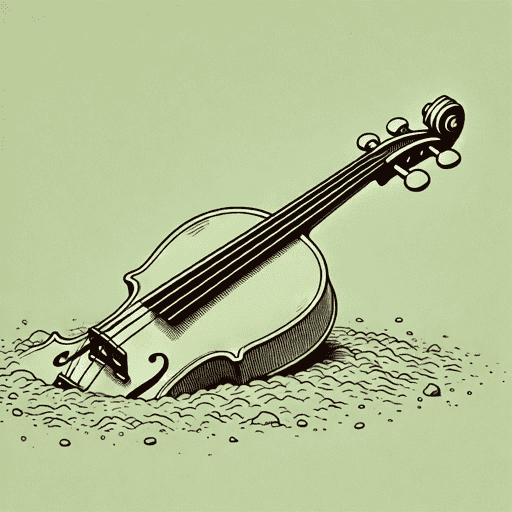
Thomas immerses himself in a study of Vivien’s life. The few times he engages with Rose, they argue over his failure to meet her emotional needs. One evening, Thomas discovers a forgotten note from a Bodleian archivist named Donald Drummond in his coat. Drummond has realized that a sequence of numbers in one of Vivien’s last journals is actually a coordinate set. Rose and Thomas follow the coordinates to the former Blundy estate, where they unearth a container holding a violin and a manuscript. Thomas is dismayed to learn that the manuscript is not the poem.
The second part of the novel relates the contents of that manuscript, a memoir by Vivien.
Vivien marries Percy in the late 1990s, while engaged in an affair with Harry Kitchener. Though she attempts to end the affair, Vivien is drawn to Harry’s literary knowledge, which Percy does not possess. In 1999, Vivien reveals to Percy that she was previously a mother, but her daughter, Diana, died from neglect. This confession coincides with the discovery that Percy is experiencing the earliest symptoms of Alzheimer’s disease.
Vivien tries to stay optimistic through Percy’s developing symptoms, but the emotional toll of caring for him makes her more reliant on Harry. When Harry ends their affair, Vivien takes revenge by courting Harry’s brother-in-law, the poet Francis Blundy. Francis and Vivien began a passionate affair, and Vivien’s sister, Rachel, steps in to care for Percy. During a getaway trip, Vivien observes Francis’s controlling personality for the first time. When she returns home, she learns that Percy attacked Rachel’s son, Peter, alienating both mother and child from Vivien.
Vivien grows desperate to escape her life with Percy and start anew with Francis. Francis offers to murder Percy, but Vivien rejects the idea. She continues to think about it, however, and changes her mind, although she never tells Francis. One night, Francis visits the house and, without Vivien’s help, stages Percy’s death to appear as an accidental fall down the stairs. The police believe that his death is accidental. Seven months later in Greece, Francis blackmails Vivien, threatening to frame her complaint emails as an expression of murderous intent. She marries him.
Shortly after the Second Immortal Dinner, Vivien reviews Francis’s poem and realizes that it includes a depiction of Percy’s murder. Francis denies the accusation, but Vivien doesn’t believe him. As revenge against Francis for murdering Percy and documenting it in the poem, Vivien destroys the only copy of the corona.
Following Harry and Francis’s deaths, Vivien conspires with Jane to sabotage the Kitchener archive, rendering it useless to future scholarship. She acknowledges her implication in Percy’s death and buries her memoir manuscript with one of Percy’s violins. The novel ends in 2125 with Thomas publishing Vivien’s memoir, including critical notes from himself, Rose, and Drummond.

Unlock all 64 pages of this Study Guide
Get in-depth, chapter-by-chapter summaries and analysis from our literary experts.
- Grasp challenging concepts with clear, comprehensive explanations
- Revisit key plot points and ideas without rereading the book
- Share impressive insights in classes and book clubs