When Giving is All We Have
17 pages • 34-minute read
Alberto RíosWhen Giving is All We Have
A modern alternative to SparkNotes and CliffsNotes, SuperSummary offers high-quality Study Guides with detailed chapter summaries and analysis of major themes, characters, and more.
Symbols & Motifs
The Color Green
“You gave me blue and I gave you yellow / Together we are simple green” (Line 13). Drawing on its association with nature, particularly the arrival of spring after winter, the color green has long symbolized renewal and growth, vitality and newness. It is suggestive of rich fertility and the promise of growth and hope. In Stanza 7, the poem uses the fact that in pigments, green is made by mixing blue and yellow as a metaphor for the reciprocal nature of giving to others: Only when one person brings yellow and the other blue can green emerge.
The verb choice is important to note here: “Together we are simple green” (Line 14). It is not that we make green. Rather we become this color, which is “simple” in the sense of “pure” and “absolute.” Although the bearers of blue and yellow are marked by their unlikeness (which can be read as diversity of background, ethnicity, race, or heritage), they come together, creating something greater than our “difference” (Line 17).
The River
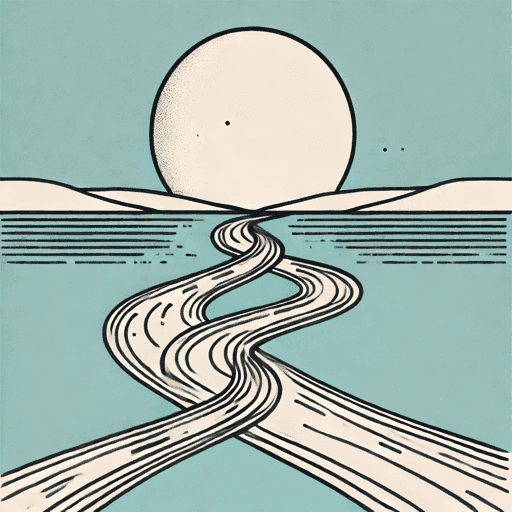
The poem opens with a two-line italicized epigraph about a river’s “journey” toward other rivers. The poem uses the river to symbolize the potential of things coming together. One river flows until it joins another; the implication is that eventually, this pattern creates a network or a large body of water. The epigraph suggests that the river “gives / Its journey” willingly to the next waterway. This end result is more formidable than any stream can be on its own.
The imagery also plays on the Spanish word for rivers, rios. In thus alluding to Alberto Rios’s name, the epigraph uses self-reference to playfully break the normal boundaries between poet and reader. In the same way, later in the poem, the speaker describes reaching out to the reader, “hand to hand, / Mine to yours, yours to mine” (Lines 11-12). This relationship is similar to the network of rivers: The poet relies on the reader and vice versa. Only together they create literature, what the poet describes in the closing line as “something greater from the difference” (Line 17).
A Diamond in Nails
Caring about others and giving to others are abstract concepts. The speaker avoids narrowing the idea of giving by supplying specific examples of what giving comprises. However, Stanza 4 does quantify more concretely the value of giving. Generous acts come in different degrees, from seemingly insignificant to grand, from “quiet” to “loud” (Line 7). All are equally necessary and precious. Even a “small” act of generosity is as “big” as a “diamond in wood-nails” (Line 8)—rare treasure found unexpectedly in a pile of ordinary carpentry tools.
The image of carpentry nails has many symbolic resonances. Christianity’s key figure, Jesus Christ, was a carpenter before turning to ministry; the association underscores the importance of selfless charity to moral and spiritual belief systems. The image also reflects the poet’s own identity: Wood nails are a basic fastener in construction—an industry that employs many people of Alberto Rios’s immigrant background. Finally, the image is earthy and grounded in everydayness—the wood nails keep together structures like houses, symbolizing the hearth, home, and community.
Diamonds also carry many symbolic meanings. They are the proverbial signal of wealth, status, and privilege; although in reality, they are a quite commonplace mineral, diamonds are thought of as rare and precious. Diamonds are also associated with the lifelong bond of marriage, adding to the home and family life imagery of the wood nails in which they appear in this poem.

Unlock the meaning behind every key symbol & motif
See how recurring imagery, objects, and ideas shape the narrative.
- Explore how the author builds meaning through symbolism
- Understand what symbols & motifs represent in the text
- Connect recurring ideas to themes, characters, and events