Wild Reverence
73 pages • 2-hour read
Rebecca RossWild Reverence
A modern alternative to SparkNotes and CliffsNotes, SuperSummary offers high-quality Study Guides with detailed chapter summaries and analysis of major themes, characters, and more.
Symbols & Motifs
Content Warning: This section of the guide includes discussion of graphic violence, physical abuse, and death.
Moonstones
Moonstones serve as a symbol of understanding, particularly with regard to Matilda’s understanding of herself, throughout Wild Reverence. The first moonstone appears on Orphia’s thumb as she reads the newborn Matilda’s horoscope. Orphia is the first to glimpse Matilda’s true power as the soul-bearer, though she doesn’t share this information with Zenia or any of the other Underlings. Orphia keeps the understanding of Matilda and her magic private, even from Matilda herself. Moonstones appear again when Zenia pierces Matilda’s ear near her 13th birthday, and Matilda notes that “the brief throe of pain made [her] feel like [she] had cracked the shell of [her] childhood, ready to step out of it” (21). The moment Matilda wears moonstones herself, she gains a greater understanding of herself during the crucial transition from childhood to adulthood.
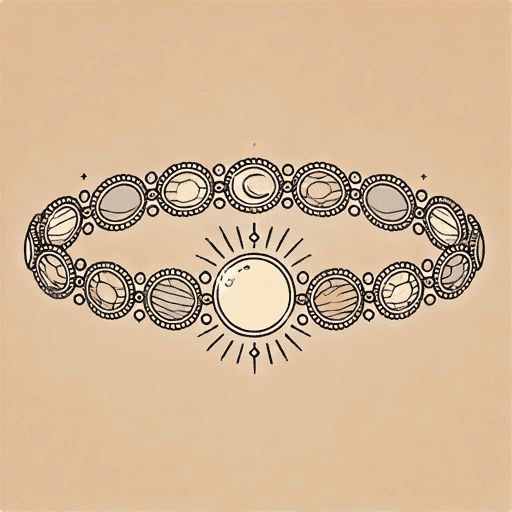
The most important moonstones in the novel appear on the belt that Zenia and Phelyra craft for Matilda. The belt is made of moonstones, but Matilda notices that one appears strange: “I glanced down, shocked to see that the stone with the uncanny streak had changed again. It no longer mimicked a closed eye with long lashes. It was opening, exposing a half-moon blue iris and a pupil dark as obsidian” (49). The strange moonstone is actually the eye of the Gatekeeper, the entity that decides which souls pass to the mists. Matilda doesn’t know this until she travels to the wasteland herself, at which point she gains greater knowledge about herself and the world around her. The Gatekeeper doesn’t tell Matilda that she’s a soul-bearer, but Matilda finds the wastes, marking the first step in her journey toward understanding the full breadth of her godly abilities.
The Lone Eithral
The lone eithral that appears throughout the narrative is a symbol of freedom. The eithrals are dragon-like creatures owned by Dacre, lord of the Underlings. He badly abuses them to ensure their loyalty, and he frequently unleashes them upon the mortal world to torment people and sow discord. The eithrals are typically entirely under Dacre’s control, but a single eithral appears frequently when Matilda returns to the mortal world after 13 years. The eithral attacks at random until Matilda uses her Skyward abilities to control her, seeing through her eyes and using her to attack Grimald’s men. Matilda suffers the consequences, but her experience with the eithral frees her from the pressure to hide her abilities: “My twelve-point constellation was fully lit in the sky. I had the power to direct eithrals. I could carry souls back from the dead. The news of my power was going to spread, no matter how much I strove to keep it buried” (377). Matilda cannot hide from her destiny, which frees her from the pressure of suppressing the more powerful elements of herself.
Though Matilda doesn’t know it, taking control of the eithral sets the eithral free. When Matilda approaches her after Thile’s whipping, she thinks she’s brave enough to go close because of their moment of collective consciousness: “I had broken Dacre’s hold on her. We had shared each other’s mind once. I had nearly lost myself within her vastness, and perhaps she had also lost herself within mine” (386-87). Matilda notes that both she and the eithral entered each other’s minds, building empathy for each other. Just as the eithral frees Matilda from having to hide the truth of her power, Matilda frees the eithral from Dacre’s brutality, allowing both of them to choose their own futures.
Eithral Scales
Eithral scales serve as a symbol of power throughout Wild Reverence. They first appear in the narrative when Phelyra and Zenia obtain a discarded scale from their lair beneath the under realm. Phelyra and Zenia frequently steal eithral scales and sell them to the Skywards, since an eithral scale is one of the few things that can kill a god, making them immensely valuable. When Matilda first sees the scale, Zenia says, “To possess one equates to power” (35). Phelyra kills Zenia with an eithral scale, taking power over Zenia and stealing her magic. Thile obtains four to make his whip, demonstrating his desire to hoard power over the Skywards. Warin obtains an eithral scale and uses it to attempt to rob Bade and Matilda of their power. During most godly power shifts in the novel, an eithral scale is present, highlighting its symbolic meaning.

Unlock the meaning behind every key symbol & motif
See how recurring imagery, objects, and ideas shape the narrative.
- Explore how the author builds meaning through symbolism
- Understand what symbols & motifs represent in the text
- Connect recurring ideas to themes, characters, and events