Will's Race for Home
45 pages • 1-hour read
Jewell Parker RhodesWill's Race for Home
A modern alternative to SparkNotes and CliffsNotes, SuperSummary offers high-quality Study Guides with detailed chapter summaries and analysis of major themes, characters, and more.
Character Analysis
Content Warning: This section of the guide features racism, graphic violence, and death.
Will Samuels
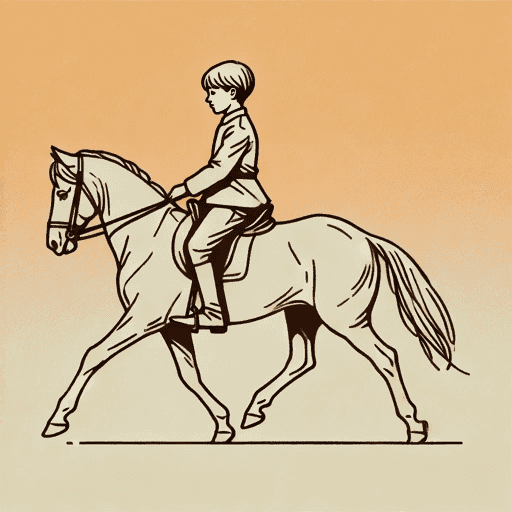
As the protagonist and narrator of the novel, Will Samuels undergoes a significant transformation that serves as the coming-of-age story’s central focus and illustrates the theme of The Journey From Boyhood to Manhood. At the outset, twelve-year-old Will resents his family’s life as sharecroppers in Texas. He is lonely and isolated, with only his mule, Belle, for companionship. He yearns for adventure, unaware of the trials such a life entails. His initial perspective is characterized by a boyish desire for excitement and a limited understanding of the burdens his father carries. From Will’s immature point of view, his father is a distant and “boring old man” (8) who cares little for his son. However, his boyish outlook begins to change with the announcement of the Oklahoma Land Rush, which ignites a hope for a different future. Will’s ability to read the flyer aloud marks a pivotal moment, establishing his role as a bridge between his family’s past and its future through his use of reading and literacy as a tool for empowerment.
Will’s maturation is advanced through a series of formative experiences on the trail. The first major turning point occurs when he single-handedly kills a rattlesnake to protect Belle. This act of bravery is not born from a desire for adventure but from a protective instinct, signaling a shift from a boy’s fantasy to a young man’s assumption of responsibility. His bond with his father, George, deepens as they travel, evolving from one of silent distance to shared vulnerability and respect. After the snake incident, his father begins to share stories of his past, allowing Will to see him not just as a stoic figure but as a man shaped by hardship. This growing connection is further solidified by the arrival of Caesar, a former Union soldier who becomes a mentor to Will. Caesar introduces him to a different model of masculinity, one forged in conflict, and teaches him about the moral complexities of violence, a lesson that proves crucial in the novel’s climax.
By the end of the narrative, Will has transitioned from a boy into a young man. Entrusted with riding Caesar’s horse, Midnight, to the starting line alone, he accepts the immense responsibility of securing his family’s future. His confrontation with the claim jumpers forces him to wield Caesar’s gun to defend his home. In this moment, he embodies the lessons learned from both his father and Caesar, demonstrating courage tempered by a deep understanding of the cost of violence. He ultimately rejects the gunslinger’s path, choosing to defend his claim through force of will rather than bloodshed. His final declaration that he wants to raise horses, a dream distinct from his father’s, shows that he has become his own person. He is now a “far-thinking man” (190), like his father, but one whose vision for the future is uniquely his own, forged through a grueling journey of sacrifice, loyalty, and moral growth.
George Samuels (Father)
George Samuels, Will’s father, is a round, dynamic character who functions as the deuteragonist and the primary catalyst for the family’s journey. Initially, he is portrayed as a “far-thinking man” (1) who is emotionally inaccessible to his son. His constant gaze toward the horizon symbolizes his relentless focus on a future free from the oppressive cycle of sharecropping. For George, land ownership is the only path to true self-determination, a belief that drives him to leave Texas for the promise of Oklahoma. His grim and taciturn demeanor is a result of a life of hardship and the unspoken trauma of his past, specifically the secret he and his father share regarding the death of a Louisiana overseer and the loss of friends and family to the horrors of slavery. This burden and his desire to protect Will from similar painful experiences make him emotionally distant.
The journey northward serves as a crucible for George’s character, forcing him to rely on his son and gradually breaking down his emotional reserve. As Will proves his courage, first by killing the rattlesnake and later by saving Belle in the Red River, George’s perception of him transforms from that of a child to that of a capable partner. This shift allows him to open up, sharing stories about his own boyhood and his journey from enslavement to a precarious freedom. His friendship with Caesar is also instrumental in his development. In Caesar, George finds an equal, another man who understands the weight of a violent past and the deep yearning for peace and stability. Their bond provides him with a sense of camaraderie he has long been missing, allowing him to express a warmth and joy that had been suppressed by years of toil and disappointment.
George’s ultimate transformation is marked by his willingness to trust his family’s dream to his son. Recognizing that they will not make the land rush in time, he makes the difficult decision to send Will ahead on Midnight. This act represents the culmination of his journey as a father, demonstrating his faith in the young man Will has become. He relinquishes control, placing the future he has so desperately pursued into his son’s hands. In the end, upon successfully claiming their land, George achieves the freedom he sought. He becomes the joyful, expressive father Will always wanted, his happiness rooted both in the ownership of property and in the strength and unity of his family. His final acceptance of Will’s dream to raise horses illustrates how he recognizes and respects his son’s identity as a man with his own “far-thinking” vision.
Caesar
Caesar is a round and largely static character who serves as a mentor and protector to Will and George. A former sergeant in the Union army, he embodies the theme of The Psychological Cost of Violence. He is introduced as a mysterious and powerful figure who rescues Will and his father from thieves, demonstrating a calm authority and proficiency with his twin revolvers. These weapons symbolize his identity; they represent both his capacity for protection and the violent past from which he cannot escape. Unlike George, whose strength is rooted in his connection to the land and physical labor, Caesar’s is defined by his experience as a soldier, a past that has made him perpetually alert and wary. He is honorable and loyal, quickly forming a deep, brotherly bond with George and taking on the role of a teacher for Will.
Despite his formidable presence, Caesar is a man haunted by the psychological costs of war. He confesses to Will that “Once you pick up a gun, it’s hard to put it down” (64), revealing the internal conflict that defines him, one characterized by a journey not for land but for peace. This quest is represented by his dream of reaching California and the Pacific Ocean, where he hopes to “wash himself clean” of his traumatic memories (178). However, Caesar’s past proves inescapable, materializing in the form of the sandy-haired ex-Confederate officer who relentlessly tracks him. Despite his longing for peace, the conflict with the Confederate officer illustrates the continued need to fight racist violence, even after emancipation and the end of the Civil War. Caesar keeps fighting, willing to sacrifice himself so that the next generation, young men like Will, can grow up unscarred by the trauma of violence.
Caesar’s role in the novel is pivotal to the Samuels family’s success, yet he remains a tragic figure. He provides the strategic knowledge and protection they need to survive the journey’s dangers, from navigating the treacherous Red River to facing down human threats. For Will, he is a crucial mentor who teaches him about courage, honor, and the heavy responsibility that comes with wielding a weapon. However, Caesar understands that his own path is incompatible with the domestic peace the Samuels family seeks, and he ultimately chooses to confront his past alone and continue his journey west. Caesar remains a wanderer, a man defined by a war that, for him, is a burden he must carry alone.
Ezekiel Samuels (Grandpa)
Ezekiel Samuels, Will’s Grandpa, is a flat, static character who serves as the elder and the keeper of the family’s history. He is the first generation of the Samuels family to experience emancipation and embodies the foundational desire for freedom that motivates his son and grandson. Having made the original journey from Louisiana to Texas, he is the one who first instilled in George the belief that land ownership is essential for a Black man to be truly free. He is proud and stubborn, acting as a living link to the family’s past under slavery and its immediate aftermath. His passing of the family Bible to George is a symbolic act, representing the transfer of leadership and the responsibility for forging the family’s future in a new “promised land” (41). Although his physical presence is limited to the beginning and end of the novel, his principles and historical perspective provide the moral and contextual framework for the entire journey.
Anna Naomi Perry (Ma)
Anna Naomi Perry, Will’s Ma, is a flat, static character who represents the heart and home that George and Will are striving to secure. Though she remains in Texas, her presence is a constant motivating force throughout their journey. She is depicted as a calm, nurturing, and quietly brave woman. Her most significant contribution to the family’s quest is her secret education of Will. By teaching him to read, she provides him with a crucial tool for empowerment, which directly leads to the family learning about the land rush and later allows Will to thwart the claim jumpers. This act underscores the importance of reading and literacy as a tool for liberation. Anna’s emotional plea to join the journey, and her subsequent quiet acceptance of her role in staying behind, highlight her deep love for her family and her understanding of the sacrifices required to achieve their dream. She is the anchor of the family, embodying the stability and peace they hope to find in Oklahoma.
John
One of the novels most menacing antagonists is the sandy-haired man named John, an ex-Confederate officer who relentlessly pursues Caesar. With his Confederate States belt buckle, he is a direct foil to Caesar and represents the unresolved conflicts of the war. He represents a systemic and ideological threat, embodying the racist belief that Black men have no place in the West.
Bill
Another antagonistic force appears in the final chapters in the form of Bill, a gunslinger, who attempts to steal the family’s claim through fraud and intimidation. Bill and his cronies represent the lawlessness of the land rush, where claims are defended not by law but by force. Will’s confrontation with them is the final test of his manhood. He foils their plot by using his literacy to expose their fake document and his courage to stand his ground with Caesar’s pistol. Bill, the leader, is a slightly more complex figure; he ultimately concedes the claim out of a grudging respect for Will’s bravery, remarking, “[m]ost don’t have the courage to hold what’s theirs” (168). Together, these antagonists illustrate the varied forms of opposition, from petty crime to deep-seated racism and opportunistic greed, that threaten the Samuels family’s Pursuit of True Freedom Through Land Ownership.

Unlock analysis of every major character
Get a detailed breakdown of each character’s role, motivations, and development.
- Explore in-depth profiles for every important character
- Trace character arcs, turning points, and relationships
- Connect characters to key themes and plot points