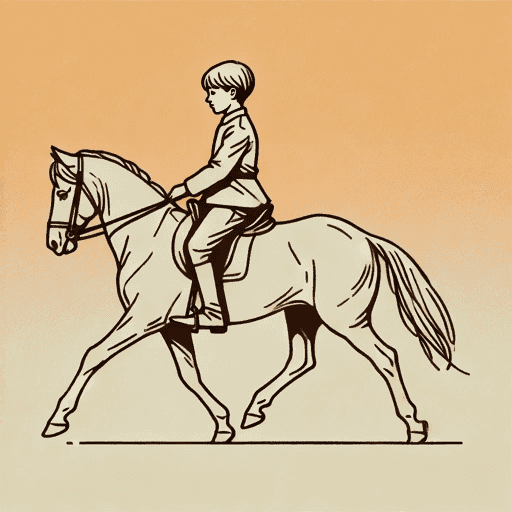
Will's Race for Home
45 pages • 1-hour read
Jewell Parker RhodesWill's Race for Home
A modern alternative to SparkNotes and CliffsNotes, SuperSummary offers high-quality Study Guides with detailed chapter summaries and analysis of major themes, characters, and more.
Themes
Content Warning: This section of the guide features racism, graphic violence, and death.
The Journey From Boyhood to Manhood
In Will’s Race for Home, the transition from boyhood to manhood is portrayed not as a single event but as a grueling process of moral and emotional maturation. Through the character of Will Samuels, the novel argues that true manhood is earned through acts of bravery, loyalty, and the deliberate assumption of responsibility. Over the course of his journey, Will achieves maturity through the sacrifice and defense of his family and principles, even when it comes at a great personal cost. His growth is measured in moments of crisis where he must act decisively, transforming from a passive observer into an active agent of his and his family’s destiny.
At the start of the text, Will is a young boy for whom the hardships of adulthood are largely a mystery. He can’t understand his father’s emotional distance or why he stares longingly at the horizon. He knows there are secrets between his father and grandfather, but he cannot fathom their depth or why they keep them. He imagines that the journey to Oklahoma will be a great “adventure,” but the trials they face soon open his eyes to the dangerous realities of the world.
Will’s maturation begins with instinctive acts of bravery that place the well-being of others before his own safety. When a rattlesnake threatens his beloved mule, Belle, Will does not hesitate to grab a log and fight the snake until he crushes its head. This confrontation is a pivotal moment, marking his first significant step toward a protective role. This shift toward manhood is also marked by an immediate change in his relationship with his father. George begins to open up more, sharing secrets and communicating openly with his son for the first time, expressing a vulnerability that suggests he is beginning to see Will as his equal. Later, during the perilous Red River crossing, Will dives into the rushing water to place a plank beneath Belle’s hooves, saving her and the family’s wagon from being swallowed by quicksand. This selfless act, performed in the face of immense danger, demonstrates a courage that transcends youthful fear and highlights his developing sense of duty.
Beyond physical courage, Will’s journey into manhood is defined by his acceptance of profound responsibility. Tasked with riding alone to the land rush starting line, he carries the full weight of his family’s dream on his shoulders. This solitary ride forces him to rely on his own resilience and judgment. This newfound maturity is fully tested when claim jumpers attempt to steal his family’s staked land. Confronting them, Will is forced to weigh the moral cost of violence, ultimately declaring his readiness to defend his home, stating, “I’ll shoot if you make me” (168). In this moment, he embodies the protective strength his father and Caesar modeled. By the novel’s end, Will’s evolution is complete. He is no longer simply a son following his father’s dream but a young man with a vision of his own, ready to build a future on the land he helped secure.
The Pursuit of True Freedom Through Land Ownership
Will’s Race for Home uses the Samuels family’s quest for land to take the definition of freedom one step further from emancipation from slavery toward the attainment of self-determination, dignity, and a place to call one’s own. Through this journey, Rhodes argues that economic independence through land ownership is essential for African Americans to escape the cyclical oppression of systems like sharecropping and build a lasting, independent legacy for future generations.
In Texas, the Samuels family’s life as sharecroppers is a form of bondage only marginally better than the institution of slavery they escaped. Will’s father, George, argues that “[s]harecropping isn’t much better than being enslaved” (6); his labor enriches a white landowner while leaving his own family trapped in poverty. To George, land represents power, possibility, and control over one’s own destiny, rights that are still largely reserved for white men. The arrival of the land rush flyer transforms George’s abstract hope for the future into a tangible goal. The flyer represents a chance to break free from economic servitude and achieve a status that has been denied to Black men: that of a landowner, beholden to no one.
The family’s difficult journey to Oklahoma underscores the immense value they place on this vision of freedom, as well as the lengths to which the dominant white society is willing to go to keep marginalized people dispossessed. The land grab itself is a key example of this point: The “unassigned land” the Samuels go to claim was previously home to forcibly removed Indigenous Americans, indicating the violent history of land ownership and marginalization of people of color in the United States. The Samuels sacrifice their meager savings and endure constant peril, from thieves to a treacherous river crossing, demonstrating that the possibility of owning land is worth any risk. The land becomes more than just soil; it represents a “promised land” (41) where they can build a home and a future on their own terms. This idea culminates in Will’s own aspirations for the property. He envisions not just farming but raising horses, a dream distinct from his father’s. This generational evolution of the dream signifies that the land provides the foundation for true freedom, allowing each individual to pursue a life of their own making, free from the constraints of the past.
The Psychological Cost of Violence
Will’s Race for Home explores the psychological cost of violence through the characters of George and Caesar, two men whose lives have been shaped by conflict, violence, and loss. The text argues that violence, no matter how justified it might feel, leaves profound scars on all who are touched by it. The text questions whether someone can ever be truly free from a legacy of violence, suggesting that peace is a more difficult and noble pursuit than continued conflict.
Caesar, a former Union soldier haunted by the violence of his past, embodies the central tension between violence and morality. As a soldier, he developed the skills of a killer, yet he used his capacity for violence to fight for the freedom of enslaved African Americans in the Civil War. Now, he fights primarily to protect the innocent, as when he saves Will and his father from thieves. He doesn’t regret fighting in the war, saying that he would do it “all over again” to see boys like Will grow up into free young men (179). However, Caesar’s past is a heavy burden, and he feels the need to “wash [him]self clean” of his trauma (178).
George also exemplifies the psychological toll that violence takes on a person. When he was a boy, he witnessed the accidental death of an overseer who attacked him and his father. Even though the overseer was trying to kill George, George feels “regret” for the rest of his life, claiming that there is no such thing as a “just” death. George and Caesar’s experiences exemplify the complex tension between morality and violence and illustrate how violence leaves deep psychological wounds, whether or not one feels the conflict was justified.
This conflict between violence and morality becomes central to Will’s own maturation. When he confronts the claim jumpers, he must decide whether he is willing to kill to protect his family’s land. In that moment of decision, Will is caught between his father’s belief that killing is never justified and Caesar’s example that someone must sometimes fight for what they believe in. Will realizes that he is capable of killing for his and his family’s sake, which frightens and confuses him. Just this proximity to violence marks Will, and Caesar can sense a change in the boy when they meet again. While Caesar is “proud” of his role in the war, he recognizes how violence has damaged him and urges Will not to follow his example. Caesar’s ultimate choice is to head west toward the ocean, hoping to cleanse himself in the water. This desire for purification suggests that true freedom for a man like Caesar lies in escaping the cycle of violence that has defined him. The novel thus posits that the greatest test of manhood is not the willingness to fight but the wisdom to know when to seek peace and the courage to leave the battlefield behind.

Unlock every key theme and why it matters
Get in-depth breakdowns of the book’s main ideas and how they connect and evolve.
- Explore how themes develop throughout the text
- Connect themes to characters, events, and symbols
- Support essays and discussions with thematic evidence