Wind
Wind
A modern alternative to SparkNotes and CliffsNotes, SuperSummary offers high-quality Study Guides with detailed chapter summaries and analysis of major themes, characters, and more.
Symbols & Motifs
Wind and Weather
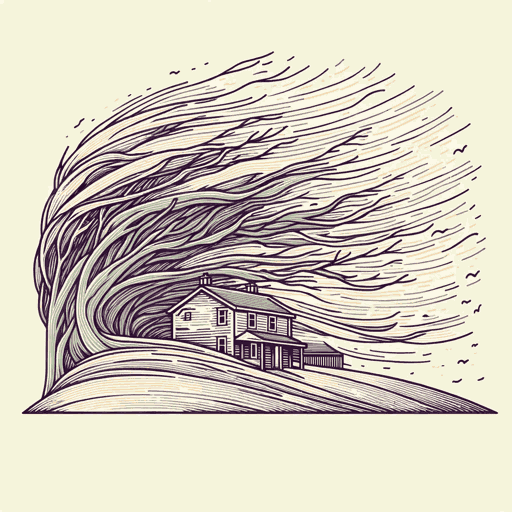
In addition to being the poem’s main topic, the wind is both literal and a symbol for a violent and destructive power commanding both weather and human relationships. Not only does the wind ravage the landscape— its “crashing” (Line 2), “booming” (Line 2), “stampeding” (line 3), and “flexing” (Line 8) cause the natural environment to “flounder” (Line 4), “quiver” (Line 13), “tremble” (Line 23), and “cry out” (Line 24)—but also the domestic world within the house is destroyed by the shifting landscape. Although wind cannot be seen, its presence is an obvious force of nature. The power of the wind is so strong that it does not seem to come from any one place; rather, the wind is all around and is therefore both merciless and destructive. Wind as a symbol also suggests change, and in the case of this poem, the seemingly arbitrary shifts coupled with the sheer power of the wind’s force shows the couple to be as internally storm-tossed as the landscape outside. Rather than clutch at each other for comfort, the domestic wind forces the couple to be separate. The agitation and disruption caused by the literal wind of the ongoing storm is mirrored in the couple's silent argument.
The Magpie and the Gull
The malevolence of the wind and its indifference to life is shown in the way it affects the only beings in the poem besides the couple: a magpie and a gull. A magpie is a small bird that traditionally possesses the positive connotation of intelligence as well as the negative connotation of something being a mirage, or not what it appears to be. The wind “flings” the magpie “away” (Line 15), and in so doing suggests that the couple’s verbal cleverness is also flung aside, with all illusion stripped away. The black-back gull is a much larger bird than the magpie; in fact, it is the largest species of gull. Yet the wind bends this bird “like an iron bar slowly” (Line 16). Traditionally representative of family and safety, a gull is also a symbol for optimism and resourcefulness, qualities which are quite clearly driven from the couple’s relationship.
The House
As with the wind, the house in the poem is both a literal and symbolic entity. It connotes home, safety, and love, and is also a symbol for the couple’s relationship. The poem begins and ends with the house at the mercy of a great storm, suggesting the couple has been clashing and fighting with each other for some time. While the natural world suffers under the wind and the weather, the couple suffers under the combative presence of one another. Like the flimsy “tent” (Line 12) hills outside, the house is beaten and ravaged by the wind. It does not provide the expected shelter and safety but is instead a construct of insecurity and instability. The same can be said for the relationship in question.

Unlock the meaning behind every key symbol & motif
See how recurring imagery, objects, and ideas shape the narrative.
- Explore how the author builds meaning through symbolism
- Understand what symbols & motifs represent in the text
- Connect recurring ideas to themes, characters, and events