Winter in Paradise
47 pages • 1-hour read
Elin HilderbrandWinter in Paradise
A modern alternative to SparkNotes and CliffsNotes, SuperSummary offers high-quality Study Guides with detailed chapter summaries and analysis of major themes, characters, and more.
Part 2, Chapter 21-Part 3, Chapter 31Chapter Summaries & Analyses
Content Warning: This section of the guide contains discussion of death.
Part 2: “Little Cinnamon” - Part 3: “Love City”
Part 2, Chapter 21 Summary: “Irene”
Irene wakes before dawn and swims at the villa’s private beach. Seeing three chaise lounges on the sand, she realizes they were for Russ, Rosie, and their daughter, Maia. The swim triggers memories of summers at Clark Lake, her strained relationship with her parents, and her dying grandmother. Irene reconstructs the timeline of Russ’s travel and concludes he met Rosie and conceived Maia during a trip 13 years prior. Resolving not to be ruled by jealousy like her mother, Irene decides to forgive Russ. She remembers that she asked Huck if she could meet Maia.
Part 2, Chapter 22 Summary: “Ayers”
Ayers takes Maia to lunch. Mick arrives and joins them, questioning Ayers about her date with Baker and confessing he still loves her. Ayers realizes she doesn’t know Baker’s last name. Maia observes the tension between Ayers and Mick with maturity and quotes her mother’s philosophy that love is messy, complicated, and unfair.
Part 2, Chapter 23 Summary: “Cash”
Baker is stunned by Anna and Floyd’s arrival. Anna informs Cash, then Irene, that she is leaving Baker for Louisa. She tells Baker she and Floyd are flying back to Iowa City on Friday. After Baker drops Anna at her hotel, he and Cash have a fierce argument about Ayers and their lifelong rivalry. In retaliation, Cash reveals his stores have failed. When Baker laughs, Cash storms out, gets drunk at a bar, and calls Ayers. He reveals that Baker is married with a son and then confesses his own love for her. Before hanging up, Cash tells her his father’s full name: Russell Steele.
Part 2, Chapter 24 Summary: “Huck”
On Wednesday, Huck takes Maia on his boat for a private memorial for Rosie. At the crash site, Maia deploys a memorial buoy and drops two of Rosie’s favorite bath bombs into the water—one for her mother and one for Russ. Huck learns that Rosie left significant savings for Maia. Maia reveals that Rosie and Russ had recently told Maia he was her father, and that she and her mother nicknamed him the Pirate. She says her mother promised to tell her the whole story when she was older. Huck tells her the rest of the truth—that Russ was married to Irene and had two sons. He explains that Russ’s other family is on the island and wants to meet her. Maia agrees, on the condition that she can leave whenever she wants.
Part 2, Chapter 25 Summary: “Baker”
The villa’s property manager delivers a box containing Russ’s ashes to the villa. Later, Irene gathers her sons in the kitchen. She opens the box, and the reality of Russ’s death and betrayal causes her to break down, screaming and flinging the bag of ashes across the room. She makes her sons promise never to lead secret lives like their father. She shows them the locked bedroom with the name Maia on the wall and tells them Russ has a daughter on the island. Stunned, Baker calls Ayers and leaves a long, confessional voicemail, telling her the entire truth. Irene gets a text from Huck, confirming he will bring Maia to meet them the next day.
Part 3, Chapter 26 Summary: “Maia”
Flashbacks show recent events from Maia’s perspective. She asks Ayers about the term “love child” in an attempt to understand the island’s perspective on her and her mother. Without Rosie, she feels “empty—like if someone did surgery and cut her open, they would find nothing inside her but sad, stale air” (278). She grieves for her mother and worries about things left unsaid between them. She also reflects on the ways she and her mother were different, grappling with the parts of her mother than live on in her and the parts of herself that are wholly her own.
When Huck tells her the truth about Russ’s other family, Maia attempts to reconcile the deep connection she feels to Rosie and the acute grief of her loss with the disconnect she feels from the Steeles, who are strangers and yet related to her by blood. She agrees to meet them, insisting that both Huck and Ayers accompany her. On Thursday, Ayers drives Maia to the villa. Overcome with nerves, Maia throws up in the driveway. After composing herself, she walks into the house with Huck and Ayers and is introduced to Irene, Baker, and Cash.
Part 3, Chapter 27 Summary: “Irene”
In the villa kitchen, Irene is struck by Maia’s resemblance to Russ’s mother, Milly, and decides she must go home to tell Milly the truth. When Irene questions Maia about Russ’s work, Maia says she doesn’t know what he did, just that he was “away a lot” (292). Irene bristles and emphasizes that Russ wasn’t away during those times; he was at home. Maia diffuses the tension by sharing Rosie’s wisdom that love is messy, a sentiment everyone shares. The moment is broken by a dog barking.
Part 3, Chapter 28 Summary: “Ayers”
Irene asks for a moment alone with Huck and Maia, so Baker and Cash take Ayers outside. By the pool, Ayers confronts both brothers, calling them liars like their father. Baker and Cash attempt to defend their actions, but Ayers is unmoved. She condemns Russ and accuses them of using her for information. Ayers then announces she is back with Mick, ending her relationship with them both.
Part 3, Chapter 29 Summary: “Cash”
The group reassembles and walks to the villa’s private beach to scatter Russ’s ashes. They perform the ritual in silence. Irene saves some ashes for Milly and tells Maia again that she looks just like her great-grandmother. As he walks back to the villa, Cash reflects on Ayers’s words about his father. While remembering some of his father’s good qualities, Cash ultimately feels relieved to be free of the ashes and the painful memories.
Part 3, Chapter 30 Summary: “Huck”
Irene, Huck, and Maia discuss finances. Irene offers to provide for Maia, but Huck politely declines, insisting he can provide for her and explaining her ambitions to attend a top university and start a microlending business. Later, Huck drives Ayers home. She tells him she was briefly dating Baker and that she plans to get a petroglyph tattoo like Rosie’s. Huck tells her that loving and losing someone on the island has earned her the right to a local’s tattoo. Moved, Ayers asks Huck to go with her, and he agrees.
Part 3, Chapter 31 Summary: “Irene”
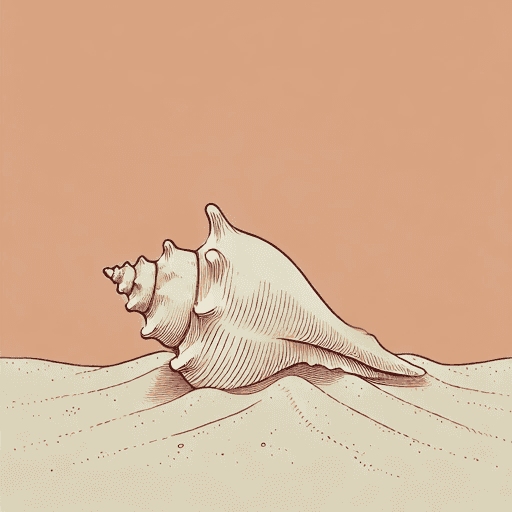
Baker goes back to Houston with Anna and Floyd, and Irene and Cash fly home to Iowa with the remaining ashes. Irene remembers her farewell boat trip with Huck the day before, when he dove for a conch shell as a gift for her. Upon landing, they learn that Milly is dying. They rush to her retirement community and sit vigil until she passes away. They both receive calls from a Puerto Rican area code, but are too preoccupied to answer. Meanwhile, on St. John, Huck receives a call from FBI Agent Colette Vasco, who informs him the helicopter crash is now being re-investigated because they suspect foul play.
Part 2, Chapter 21-Part 3, Chapter 31 Analysis
The final chapters dismantle the core deceptions of the novel, exploring how the consequences of a secret existence ripple outward to force a painful reevaluation of identity. The arrival of Russ’s ashes in a plain cardboard box serves as the physical catalyst for this reckoning. Irene’s subsequent breakdown represents both her grief and her rejection of the entire foundation of her marriage. Her cry that she was “[married] to the house” (265) points to her belief that she was complicit in her own ignorance, valuing material security over emotional truth. This moment solidifies the central theme of The Complexities of Living a Double Life, illustrating that such duplicity leaves behind a legacy of fractured trust. The novel extends this theme to the next generation through Baker’s and Cash’s deceptions, suggesting a pattern of dishonesty as a learned familial trait. Irene’s demand that her sons promise not to “lead secret lives” is a direct confrontation of this inherited flaw—a desire to break a destructive cycle of learned behavior.
The narrative advances its exploration of Redefining Family in the Wake of Tragedy by staging a tense but pivotal meeting between the Steeles and Maia. This encounter moves beyond the shock of discovery into the complex process of accepting a new reality. The villa, once the headquarters of Russ’s secret life, becomes a neutral ground where two fractured families must confront one another. Irene’s immediate recognition of her mother-in-law’s features in Maia’s face creates an instantaneous connection rooted in lineage. This physical resemblance serves as undeniable proof that Russ is her father and provides a bridge for Irene, allowing her to see Maia not as the daughter of a mistress but as a true, if unexpected, extension of her family. Maia’s mature observation that her mother believed “love is messy, complicated, and unfair” (236) becomes a recurring motif and a guiding philosophy for this new family. The phrase, repeated during the meeting, absolves the adults of pretense and forces them to acknowledge the messy reality of their situation. The scattering of Russ’s ashes functions as a somber ceremony that solidifies this redefined family, marking a solemn acceptance of their shared, complicated history.
The novel’s narrative structure, employing multiple perspectives, highlights the far-reaching impact of Russ’s actions. By giving voice to Irene, Baker, Cash, Huck, Ayers, and Maia, the narrative becomes a polyphonic exploration of grief and betrayal. Maia’s perspective grants her agency and interiority, preventing her from becoming a mere symbol of Russ’s transgression. Through her flashbacks, the reader understands her complex relationship with the man she knew as both the “Invisible Man” and the “Pirate,” a figure of both affection and mystery. This insight transforms her from a plot device into a fully realized character navigating her own loss. Similarly, Ayers’s point of view allows her to function as the narrative’s moral compass. Her perspective contextualizes the Steeles’ drama within the island’s social fabric, exposing them as outsiders whose secrets disrupt the lives of St. John residents. This technique ensures that the consequences of Russ’s double life are understood not as a private family matter, but as a communal wound.
Ayers’s confrontation with Baker and Cash, set against the idyllic setting of the villa’s poolside, emphasizes Hilderbrand’s thematic engagement with Paradise as a Facade Versus an Emotional Reality. The tranquil, luxurious environment becomes the stage for a raw indictment of the Steele brothers’ moral failings. As a local who has been deceived, Ayers pierces the illusion that St. John is an escape from accountability. Her accusation that they are “both liars […] [l]ike [their] father” (294) is the novel’s most direct statement linking the sons’ behavior to their father’s legacy of deceit. This moment exposes the brothers not as romantic tourists but as inheritors of a toxic pattern. Ayers’s decision to reconcile with her unfaithful ex-boyfriend, Mick—a flawed, but known entity—reinforces this theme. Her choice suggests a preference for the familiar imperfections of her island life over the imported deceptions embodied by the Steeles and their paradisiacal villa.
The final chapters use juxtaposition and a critical plot twist to shift the narrative’s trajectory from a family drama to a burgeoning thriller. The return to Iowa reinforces the stark contrast between the two worlds Russ inhabited. The quiet, natural death of Milly in a mundane Iowa retirement home marks the definitive end of the family’s old life and the secrets she is ultimately spared from learning. Her passing symbolically closes the chapter on the illusion of the stable family Russ purported to lead. Milly’s peaceful death is juxtaposed with the violent, unresolved nature of Russ’s death, which has just birthed a new, complicated family structure. The final, startling revelation from an FBI agent that the helicopter crash involved “foul play” (310) fundamentally recontextualizes the entire story. The tragedy is no longer a random accident that exposed a secret life—it was potentially the result of that life, giving rise to additional mysteries that the subsequent novels in the series will attempt to solve. This pivot transforms the characters’ search for emotional truth into a more dangerous quest for legal truth, ensuring their entanglement with Russ’s deceptions is far from over.

Unlock all 47 pages of this Study Guide
Get in-depth, chapter-by-chapter summaries and analysis from our literary experts.
- Grasp challenging concepts with clear, comprehensive explanations
- Revisit key plot points and ideas without rereading the book
- Share impressive insights in classes and book clubs