Wolfsong
60 pages • 2-hour read
T. J. KluneWolfsong
A modern alternative to SparkNotes and CliffsNotes, SuperSummary offers high-quality Study Guides with detailed chapter summaries and analysis of major themes, characters, and more.
Themes
Queer Love as Liberation
In Wolfsong, queer love combines romantic fulfillment with survival and liberation. Klune builds a world where love between men heals the emotional and spiritual wounds inflicted by the violence of patriarchal norms. Every time the world threatens to silence or consume them, Ox and Joe’s connection reaffirms life and love and choice.
Klune does not treat queerness as tragedy but as an opportunity. Ox’s hesitation to confess his attraction to men—first to Carter and then to his mother—introduces the possibility of homophobic rejection but also the opportunity to be accepted on his own terms. The risk pays off, and his community meets him with love and acceptance. Kelly tells Ox, “I don’t know if werewolves identify as anything but fluid,” cementing the safety and belonging of the pack and discarding the importance of sexual identity in a world that treats it as an individual’s defining trait.
The novel’s insistence on emotional openness frees queer identity from heteronormativity’s false binaries: strength versus tenderness, male versus female, human versus monster. When Joe confesses the pull towards monstrosity left in him by Collins’s torture, Ox’s response is not fear or condemnation, but empathy. Queer love, in this moment, is acceptance and a lack of judgment.
By the time Ox and Joe lead side-by-side as Alphas, their union has placed queerness in the center of the community rather than on the periphery. This shows that there are no contradictions between queerness and insiderness, authority, and trustworthiness, as there are in the patriarchal human world.
Their final bonding, marked by sexual consummation and the mating bite, includes their human and werewolf identities, providing another example of how queerness is a form of inclusivity and liberation in the novel. One species identity does not dominate or obscure the other in this important moment; both human and wolf are valid, authentic, and necessary expressions of the self. This offers a contrast to the human world, which rewards conformity to narrow identity standards and encourages suppression of characteristics that don’t fit those established norms.
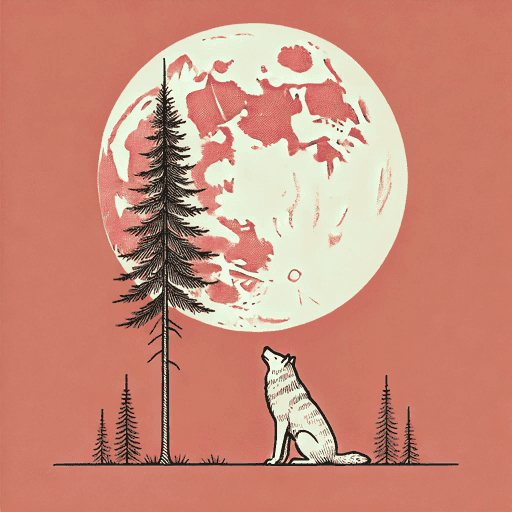
The wolves’ howling also symbolizes the freedom of queer love: Klune closes the novel with the pack’s song rather than silence, establishing a world where love dares to speak. It is the story’s proof that liberation is found not in suppressing identity but in living it fully.
The Importance of Chosen Family
In Wolfsong, family is not a matter of blood but one of deliberate belonging. Klune uses the language of choice to undermine biological determinism: people are not bound by the families that originate them but by the ones they decide to build. The first act of the novel establishes this when Gordo gives Ox a work shirt with his name embroidered on it and tells him, “You belong to us now,” giving Ox the fatherly acceptance and validation he craves (17).
Gordo’s unquestioning acceptance contrasts Ox’s father approach of shaming Ox into a narrow version of manhood. He leaves Ox with a belief in his inadequacy, declaring that Ox must “be a man now” and that people are going to give him “shit” for being different (3). The Bennetts and Gordo offer him another narrative, one in which being a man means cultivating connection, not isolation. The novel’s repeated domestic scenes—meals, Sunday dinners, shared labor—function as rituals of chosen kinship, strengthening bonds rather than taking them for granted. Klune treats love as communal work rather than mere sentiment. Each character—human and wolf—participates in this building.
Touch is another declaration of chosen family; Joe’s endless hugs and the pack’s physical closeness express the bonds they continually choose to reaffirm. This startles Ox at first, until he realizes that touch isn’t a form of affection reserved for romantic or sexual love, and it can be shared among men without fear of judgment. Early in the novel, Klune introduces Jessie to Sunday dinners to emphasize the inclusion of Ox in the physicality of the pack even with a relative outsider.
The idea of choice in family extends from group belonging to defining selfhood. In a chosen family, independence and interdependence are intertwined: the ability to choose connection is a product of self-discovery. When Ox steps into the role of Joe’s tether, his decision is both personal and ideological: He chooses Joe and chooses to define himself through care rather than through the isolation his father modeled. Later, when Joe and the others leave Green Creek to hunt down Richard Collins, Ox continually chooses to reject bitterness even though it is tests his bond with Joe. He continues to feed, lead, and protect those who remain, proving that chosen family is an act of will that can and must be sustained even in grief and loss.
The novel also shows that a parent’s abandonment does not have to rob a child of a nurturing family experience. Biological ties are only important in the novel if they translate into community participation. Here, family is a practice rather than a static state: something lived daily and built through small, cumulative, intentional gestures. The dirt road between the Matheson house and the Bennett’s becomes an enduring symbol in the novel—a path walked in both directions, over and over. Family, the novel insists, is not where someone is born but where they keep showing up.
The Transformative Power of Loyalty and Belonging
Extending the theme of chosen family, throughout the novel, loyalty operates both as an emotional glue and a moral catalyst. It transforms those who practice it, reshaping identity through devotion. The pack’s structure—its literal bonds of scent and song—are a metaphor for human attachment. Belonging is physical, spiritual, and ethical all at once; it is the force that keeps wolves from going feral, a counterpart to humans not falling into isolation and despair.
Loyalty in Green Creek is never blind. It asks for discernment, for choosing to stay when it would be easier to leave. Ox agrees to be tether for both Gordo and Joe not out of duty but out of faith; a faith that compassion and love will hold the chaos of evil at bay. Ox also realizes that power is strongest when it’s collective and rooted in love. He doesn’t have to choose one tether over the other: the capacity for connection isn’t finite. Thomas Bennett’s mentorship articulates this principle most clearly. He teaches Ox that a leader’s most important duty is not to command a hierarchy but to expand loyalty through emotional labor and choice. Community and belonging require continual effort, forgiveness, and vulnerability.
The pack’s shared grief after Maggie and Thomas’s deaths tests this philosophy. In howling together, they enact what the novel believes about loyalty, that it is emotion embodied and expressed, a promise kept aloud. Later, Ox’s steadfastness during the years of separation expands the theme: true belonging is not contingent on presence but on faithfulness. Even when bonds are stretched by time, distance, or the possibility of betrayal, loyalty endures as a choice.
By the novel’s end, the blending of Ox and Joe’s packs into one—despite early tensions with Robbie—embodies the two Alphas’ choice to lead through harmony rather than hierarchy. Their blended pack is interspecies, a testimony to the power of Ox’s inclusive vision. Through the prism of his connections to the men at the shop, to his mother, to Jessie, to the Bennetts, and through his acceptance of Robbie, Ox proves that belonging can transcend difference. Though the humans are surprised to learn about werewolves, the werewolves are equally surprised to learn that humans can be equal partners in pack and trust. Their compassion can be its own form of magic.

Unlock every key theme and why it matters
Get in-depth breakdowns of the book’s main ideas and how they connect and evolve.
- Explore how themes develop throughout the text
- Connect themes to characters, events, and symbols
- Support essays and discussions with thematic evidence