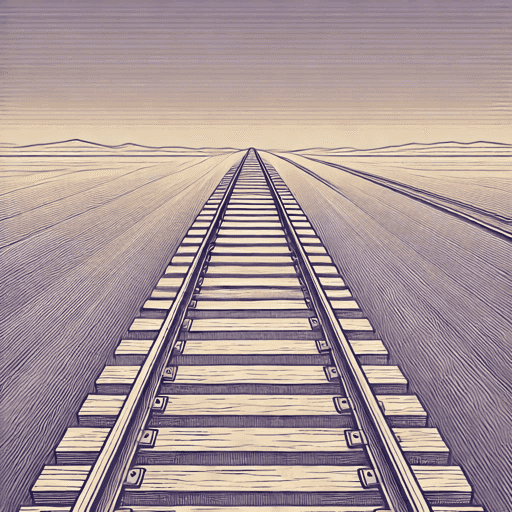
Wreck
54 pages • 1-hour read
Catherine NewmanWreck
A modern alternative to SparkNotes and CliffsNotes, SuperSummary offers high-quality Study Guides with detailed chapter summaries and analysis of major themes, characters, and more.
Prologue-Chapter 11Chapter Summaries & Analyses
Content Warning: This section of the guide includes discussion of death, mental illness, illness, death by suicide, and sexual content.
Prologue Summary
From high in an Eastern white pine, a great horned owl watches over a quiet town at night. The owl is aware of everything from a vole under a lawn to a mother's worried heartbeat and a body's rogue cells. It observes a car and a train moving on a collision course toward the same crossing. Though the owl cannot calculate the exact moment of impact, it anticipates the impending horror, and the scene ends with the sound of a great screeching.
Chapter 1 Summary
At 3:38 am, in late August, Rocky lies awake with insomnia, reading by headlamp. She discovers a series of red bumps on her arm just below her elbow. She considers asking her husband, Nick, about them but decides against it, knowing he would be unhelpful or dismissive. Instead, she lies in the dark listening to crickets, trying to fall back asleep before morning.
Unable to resist the urge to know what the bumps are, Rocky goes to the kitchen to retrieve her phone, followed by her two cats, Chicken and Angie. Back in bed, she photographs the bumps and researches them online. She finds a Reddit thread where one user comments that just because someone is a hypochondriac does not mean a condition is not malignant. The rash does not resemble serious skin cancers, though it could be basal cell carcinoma. Chicken stands on her chest, purring and drooling, while Angie sleeps curled on her pillow. Rocky resists waking Nick to show him how cute Angie looks.
After settling Chicken on her hip, Rocky checks the local news and reads a headline about a fatal train collision. Goose bumps rise on her arms as the morning birds begin singing.
Chapter 2 Summary
The following morning, Rocky is on hold with the dermatologist’s office while attempting to fix a broken ceiling fan. Nick enters and takes over the repair. The office initially offers an appointment five months away, but when Rocky claims urgency, she secures one for the coming Friday. Her daughter, Willa, enters complaining about the sticky floor and requests watermelon despite admitting she is being cranky.
Rocky’s father arrives from his in-law apartment behind the house, which they jokingly call “the shack,” and asks his daily question about removing his shoes. He complains about the temperature in his apartment and wryly questions whether anyone in the family actually works. (Nick, a physical therapist, and Rocky, a writer, both have unconventional schedules. Willa works in a lab studying fruit fly brains, while her older brother, Jamie, works for a consulting firm, Dickens, in New York.)
Willa suddenly announces that Miles Zapf, a classmate of Jamie’s, has died in a collision between a car and a train. Willa becomes emotional, crying because the death feels close to home. While comforting her, Rocky reflects on Willa’s anxiety disorder.
They discuss whether Miles did tech crew for a school musical. Rocky’s father recalls that Miles’s grandmother, Chris Zapf, was a “screwball” (12) with whom he may have played bridge. Willa scolds him for insensitive language about mental illness. Rocky mentions the accident involved a freight train at a crossing in Hampton, which Willa identifies as a particularly difficult intersection. Nick seemingly repairs the fan, but it immediately smokes and breaks down completely.
Chapter 3 Summary
That night, Rocky lies awake, browsing her local Buy Nothing group on her phone before searching for information about Miles Zapf’s death. She feels voyeuristic to be investigating someone else’s tragedy. News articles reveal the train was owned by a freight company called RCX, and the investigation involves the National Transportation Safety Board, the Federal Railroad Administration, local police, and the highway patrol. No witnesses have come forward. The train driver was unharmed. Miles’s family has requested privacy, and RCX has not commented.
Rocky views a photo of the obliterated car and quickly navigates away, imagining Miles’s mother rushing to the scene. She recalls playing the game Rivers, Roads, and Rails with her young children and remembers how the train tracks running close to roads always triggered her anxiety. Her enormous love for her children, then and now, is combined with an intense fear of loss.
Reading the comments section, Rocky notes condolences and prayers, but two comments stand out: one sarcastically asking if the shareholders are okay, and another cryptically stating, “Accidents do not happen by accident” (18).
Chapter 4 Summary
On Friday, Rocky visits the dermatologist, who gleefully announces that he believes she has her first skin cancer. Rocky chides him for his enthusiasm. He explains it is likely basal or squamous cell carcinoma rather than melanoma and will require a Mohs procedure later. Today, he will perform a biopsy. A nurse prepares Rocky, and the doctor tells an ill-advised story about scarring his ex-girlfriend’s jaw during his first biopsy.
Rocky reflects on her shoebox full of various skin medications at home, each labeled with Sharpie annotations like DANDRUFF or VAG. She recalls Willa pointing out that a cream labeled EYE was not for ophthalmic use. Back in the present moment, the doctor completes the biopsy and instructs Rocky to keep it covered for 24 hours and wait for his call about the pathology results rather than looking at them online. At the front desk, Rocky schedules a follow-up appointment but thinks to herself that she will not return.
Chapter 5 Summary
At their community farm share, while picking tomatoes, Rocky asks if Nick thinks Miles Zapf died by suicide. Nick says he has wondered but notes that authorities often suppress details in suicide cases to prevent copycats. Rocky cannot understand how the crash could be accidental. Nick speculates that loud music or noise-canceling headphones could have prevented Miles from hearing the train, then says it sounds like the barrier arm at the crossing may not have deployed properly. This information makes the accident feel more plausible to Rocky. Nick adds that the warning lights may have also malfunctioned and that the train should have had sensors to automatically apply brakes, suggesting Miles was not simply sitting on the tracks. They consider that multiple safety systems may have failed simultaneously.
A mother and her daughter pick tomatoes nearby. The child insists on picking green ones, and Rocky finds the moment relatable. Rocky and Nick walk to pick wild Concord grapes. Nick notices early fall foliage, and seeing the plants makes Rocky miss her late mother, who could identify all flora. A man with a Yankees cap disapproves of them picking wild grapes without permission, then later makes a bitter comment about access to spaghetti squash.
In the car, Nick tells Rocky that Jamie and his wife, Maya, might visit in October. Rocky is overjoyed. Nick notices the rash has spread to Rocky’s other arm.
Chapter 6 Summary
That night, Rocky lies awake, listening to crickets. She recalls a family debate about how many crickets they could hear. Downstairs, she admires the grape jelly she made and remembers telling Nick to label her preserved foods if she receives a terminal diagnosis. Back in bed, she searches for Miles Zapf on Facebook and discovers he was active in a dance community called Melody of Song and Dance. She finds an old birthday post from his grandmother, Chris Zapf.
Clicking on Chris’s profile, Rocky sees a recent post blaming the train company for Miles’s death due to faulty equipment. A comment from Christine Zapf, Miles’s mom, asks her mother to take the post down. On Christine’s page, she finds details for a memorial service and a GoFundMe for funeral expenses. She sees a photo of Christine and Miles in matching pajamas and feels intense empathy. Rocky notices she has mutual friends with Christine and nearly sends a friend request but stops herself. Instead, she donates $100 anonymously to the funeral fund.
An email arrives with her biopsy results. Rocky considers what she sarcastically calls Schrödinger’s rash: Until she looks, she simultaneously does and does not have cancer. She briefly shops online, recalling a past scam involving a fake Eileen Fisher website. Finally, she opens the results: granulomatous dermatitis, not cancer. Relieved, she takes a melatonin gummy and decides to research the diagnosis tomorrow.
Chapter 7 Summary
Rocky sits on the kitchen couch, mending Willa’s jeans instead of writing an article about spatchcocking chicken. She recalls Jamie and Willa convincing her in high school that spatchcocking was vulgar sexual slang; it is actually a cooking method in which a chef “butterflies” the chicken, making a cut that renders the meat thinner and quicker to cook.
The dermatologist calls to confirm that Rocky’s skin condition is not cancer. Rocky points out that the rash is still something, and he correctly guesses that she has already looked at the results. He initially suggests the inflammation could be a foreign body reaction, such as a splinter. When Rocky informs him the rash has spread to her other arm and shin, he concedes that this makes his theory less plausible. Having researched her diagnosis online, she asks if she could have occult tuberculosis. He decides to order blood work and tells her to wait for his call with the results.
After the call, Nick enters, eating a large bowl of Corn Chex. Rocky explains that the rash is likely autoimmune. Nick jokes that the problem is “coming from inside the house” (41) and expresses relief he is not responsible. He shares a spoonful of cereal with Rocky, who is struck by how he still opens his own mouth encouragingly when feeding her, as he did when their children were babies. Nick invites her to run with him, but she declines, citing her work. After he leaves, she goes online to research granulomatous inflammation and skin cancer risk.
Chapter 8 Summary
Rocky waits in a crowded medical lab for blood work, passing time with word puzzles and texting Nick. She observes other patients and notes the waiting room’s state of neglect. On Instagram, she sees that Maya has posted a picture of Jamie with their cat, Angus Beef. Rocky reflects that when children adopt parental traditions, it feels like validation.
She recalls a recent family dinner where Jamie declared he likes lamb, a food the family has always collectively disliked. The conversation turned to family culture and the difficulties in straying from it. Willa shared her own example of differentiation: realizing that she does not need to arrive extremely early at concerts like her mother had always done. Then, she posited a hypothetical about marrying a religious person and converting, but Rocky said they would be fine with that. Jamie eventually admitted that a second attempt at eating lamb was unsuccessful, and Nick declared that the family simply does not like lamb.
In the waiting room, Rocky opens Facebook and sees a post from Christine Zapf. Christine has linked to a news story in which RCX defends its safety record and blames automobile drivers for most collisions. The article notes that RCX owns the train tracks. Rocky contrasts benign images of trains from children’s books with the ruthless capitalism of the game of Monopoly. A phlebotomist calls her name, draws her blood, and advises her to wait for her doctor’s call about results. Rocky agrees, even though she knows that she will look at the results immediately.
Chapter 9 Summary
At home, Rocky encounters Willa leaving for work. Willa persuades Rocky to take her to Juice Bomb, and Rocky’s father joins them. At the juice bar, Rocky’s father is overwhelmed by the menu, asking numerous questions about unfamiliar ingredients like pitaya, maca, matcha, and açaí. As Rocky and Willa shout answers over the loud reggae music, Rocky is reminded of her children’s endless childhood questions. Her father finally orders a Brazilian Queen smoothie with coconut milk and power greens.
While waiting at a table surrounded by lush plants, Rocky removes her sweatshirt in the heat, revealing Band-Aids on both arms. Her father and Willa immediately demand explanations. Rocky downplays the situation, mentioning routine blood work and a small mole biopsy. Her father tastes his smoothie and declares it to be delicious, saying Rocky’s late mother would have loved it. He recalls his wife putting bran in their food and making carob desserts. He tells a story about them once sharing a carob pot brownie at a party, where Rocky’s mother laughed uncontrollably before falling asleep on the couch. The story triggers Rocky’s intense grief for her mother. Willa and her father comfort her.
Chapter 10 Summary
That night, Rocky, Nick, and Willa lie in bed together. Nick watches a YouTube video on rewiring their broken ceiling fan. Rocky reads a condescending, all-caps email from a new editor dismissing her essay pitch. Willa expresses sympathy and calls the editor a turd. Rocky composes a sarcastic reply but saves it as a draft.
Willa shares random thoughts about veal and prune juice while Rocky eats a croissant in bed. Rocky sees that her blood work results are available in the patient portal. Nick provides the etymology for veal, and Willa considers canceling her plans to stay home. The family cats, Chicken and Angie, are also in bed.
Willa and Rocky admit that they are both obsessed with the Miles Zapf story. Willa attributes her obsession to the fact that they knew him somewhat, and she notes that the accident could have happened to anyone. She mentions reading that the railroad company may have failed to update its safety equipment. As night falls, Rocky thinks about Miles Zapf’s mother and imagines her grief, feeling the fragility of life.
Chapter 11 Summary
After Willa leaves, Nick flirts with Rocky but notices she is reviewing her blood test results on her phone. Rocky examines the abnormalities: high total protein, very high C-reactive protein, slightly elevated liver enzymes, and a low white blood cell count. She finds an ANA result with a value of 1: 10,240. Googling reveals that this detail suggests an autoimmune disorder like lupus or rheumatoid arthritis. When Nick asks if she has joint pain, Rocky mentions occasional thumb pain and her ankles popping. Then, she observes a new patch of rash on her shin and on her wrist: The rash is still spreading.
Rocky tells Nick the results do not look good. He offers blanket reassurance, then apologizes, acknowledging she dislikes that. He offers to make popcorn and watch television. Rocky continues researching her results, reading about enzymes associated with organ damage and picturing her cells leaking like chicken juice. Nick returns with popcorn. Rocky decides to stop looking and morbidly instructs Nick that if she dies, he should not continue their Christmas stocking tradition.
They begin flirting again. Rocky reflects on life’s fragility—her elderly father, her children in the world, Miles Zapf’s death, her own failing body. She changes into a slinky hockey-themed nightgown and striped tube socks for Nick. Getting back into bed, Nick opens his arms to her.
Prologue-Chapter 11 Analysis
The novel’s opening chapters establish a narrative structure built on dual, intersecting crises: Rocky’s discovery of a mysterious rash and a news report of a fatal train crash involving a local teenager. By juxtaposing a private medical mystery with a public tragedy, the narrative immediately introduces the theme of The Precariousness of Happiness in the Face of Random Tragedy. Both events represent an intrusion of the chaotic and uncontrollable into the carefully managed domestic sphere. Rocky expounds on this when she reflects on when her kids were little, and she articulates the conflicting emotions she feels as a mother, reflecting, “The enormity of my love for these tender, fleshly beings was twinned with a potential for loss so unimaginably deep and powerful” (18). Her love is paired with fear, specifically the terror that something so tragic could happen that she would lose her children. The intersecting plot lines of the rash and the train crash both explore Rocky’s sentiment. Specifically, these crises illuminate how individuals confront existential threats that originate from within the body and from the complex, external systems of the modern world. This juxtaposition suggests that a person’s happiness is constantly threatened by disasters that could arise from any aspect of daily life.
This theme is reinforced in the domestic details that characterize Rocky as a woman whose identity is deeply embedded in her familial roles, creating a contrast to the encroaching chaos. Her daily actions are ordinary: mending her daughter’s jeans, making grape jelly, and managing family dynamics. These acts of care, particularly the motif of cooking and sharing food, function as attempts to impose order and express love in a world where loss feels imminent. Her pre-existing anxiety, such as her long-held fear of train tracks near roads, is a rational response to the world’s inherent dangers. The train crash and her mysterious illness are not the source of her anxiety, but these pressures do confirm that her anxiety is still present in her life. The domestic setting thus becomes a fragile bulwark against the randomness of tragedy, with Rocky’s caretaking rituals serving as a form of resistance against the powerlessness she feels.
Furthermore, Rocky’s experience with her ailment explores the theme of The Vulnerability of the Human Body through the lens of modern technology. Her first instinct is not to wake her husband but to research her medical results online, treating her body as a text to be interpreted by online forums and search engines. This act establishes Rocky’s anxiety and the body’s fragility, for she copes with her fear by trying to view her physical ailment as a collection of symptoms to be deciphered from an alienated distance. The internet offers vast information that simultaneously fuels her hypochondria and provides a sense of proactive engagement. This is crystallized when she encounters a Reddit comment stating, “Just because you’re a hypochondriac doesn’t mean it’s not malignant” (4). This statement fuels her anxiety, which highlights the fact that Rocky’s vulnerability is both physical and mental.
Two of the novel’s central symbols, the rash and the train, represent destructive, seemingly random forces. Specifically, the train symbolizes an external, systemic threat—a product of industrial and corporate power that can obliterate a life without warning. It embodies the dangers inherent in a world governed by profit and complex technologies, where responsibility is often diffuse. In contrast, The rash is an internal, biological force, symbolizing the body’s capacity for self-betrayal and the terrifying prospect of an autoimmune revolt. Rocky’s obsessive online research into the crash mirrors her investigation into her own symptoms; in both narratives, she seeks a clear cause and a locus of accountability for events that defy simple explanation. The initial diagnosis of “granulomatous dermatitis” (36) offers a name but no real understanding, much as the initial news reports on the crash provide facts but no sense of justice or reason. The pairing of these two symbols fuel the themes about the tenuous nature of happiness and the vulnerability of the physical body.
The narrative also introduces The Diffusion of Moral Responsibility in a Corporate World by framing the train crash as a potential systemic failure. However, the stance of the novel itself is clear when anonymous online comments question the freight company’s priorities and hint at negligence, shifting the focus from individual error to corporate accountability. Yet even then, the narrative asserts that RCX, the company that owns the train and the tracks, “has defended both their driver and their safety record, and has asserted that the vast majority of car-train collisions are the fault of the automobile” (47). RCX’s lack of accountability shows that on a broader, systemic level, the accident is viewed within the framework of capitalism. When Rocky contrasts the benign imagery of childhood trains with the ruthless accumulation of property in a game like Monopoly, her contrast stresses the degree to which modern society trains its citizens to commodify everything. Ultimately, the collision is meant to highlight the fact that corporations often function with impunity despite their many transgressions against the individual.
All of these narrative techniques work in conjunction with Rocky’s first-person perspective to shape a distinctive voice that blends dark humor, acute anxiety, and sharp observation. Her perspective allows for a fluid shifting of tone, moving from the comedic absurdity of her father’s encounter with a smoothie menu to the profound grief she feels for her late mother. This dexterity reflects the complex and often contradictory ways individuals cope with fear and mortality. For instance, her morbidly practical instruction to Nick about discontinuing Christmas stockings if she dies follows directly from her alarming online research of her blood results. This juxtaposition of the pragmatic and the existential captures a psychological realism, grounding the abstract fear of death in the tangible details of family life. Through the use of shifting tone, the complexity of Rocky’s experiences, both physical and emotional, are emphasized.

Unlock all 54 pages of this Study Guide
Get in-depth, chapter-by-chapter summaries and analysis from our literary experts.
- Grasp challenging concepts with clear, comprehensive explanations
- Revisit key plot points and ideas without rereading the book
- Share impressive insights in classes and book clubs