Wreck
54 pages • 1-hour read
Catherine NewmanWreck
A modern alternative to SparkNotes and CliffsNotes, SuperSummary offers high-quality Study Guides with detailed chapter summaries and analysis of major themes, characters, and more.
Symbols & Motifs
Content Warning: This section of the guide includes discussion of illness, death, and mental illness.
The Train
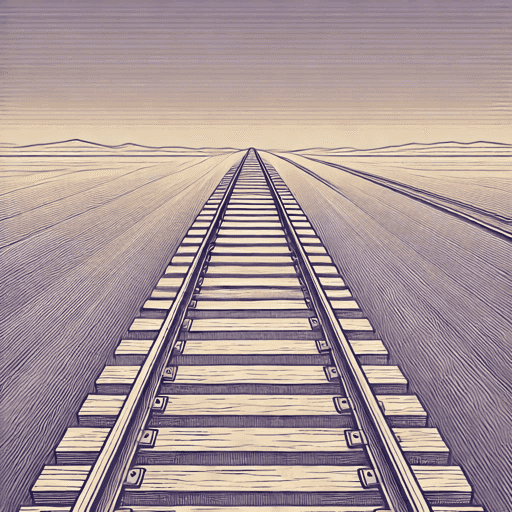
The train represents an impersonal, destructive force and serves as a motif that is linked to the themes of The Diffusion of Moral Responsibility in a Corporate World and The Precariousness of Happiness in the Face of Random Tragedy. It is the literal wreck between the train and the car that shatters the life of Miles Zapf and serves as a constant, looming threat in the background of Rockey’s family’s consciousness. Its presence forces a confrontation with the modern world’s “complicated web of responsibility” (47), where blame is diffused across corporate entities, making accountability nearly impossible. The train itself is not malicious; it is a machine operating according to calculations of “acceptable risk” (133) made by distant consultants like Jamie. The accident highlights how corporate decisions, driven by profit, create a dangerous distance from their human consequences. The train thus symbolizes a world where individual lives can be destroyed not by targeted evil, but by the cold, systemic logic of capitalism, a force as powerful and indifferent as the locomotive itself. Furthermore, Rocky’s initial reaction, a “flush of goose bumps” (5) upon reading the headline, immediately establishes the train as a visceral symbol of life’s fragility and the suddenness with which happiness can be derailed.
The Rash
The recurring, spreading rash on Rocky’s body is a powerful motif that externalizes her internal “wreck.” It serves as the physical manifestation of her anxiety and her loss of control while also developing the novel’s focus on The Vulnerability of the Human Body. While the train represents an external, systemic threat, the rash is an intimate, personal danger from within. Rocky’s sense that the affliction is “coming from inside the house” (41) in a horror-movie way captures the terror that arises when the self becomes a source of inscrutable danger. Her journey through the medical system, with its provisional diagnoses and impersonal patient portals, mirrors the larger investigation into the train crash, highlighting the limits of certainty. The rash is a constant, visible reminder of the body’s vulnerability, a “dermatological shooting star” (3) that signals not a cosmic wonder but the random, chaotic nature of an unnamed illness. When Rocky notes that “the rash is everywhere” (102), she acknowledges its literal, physical presence all over her body; however, the rapidly spreading bumps have also heightened her anxiety, negatively affecting her mental state and appearing “everywhere” in her emotional landscape as well. Ultimately, this motif suggests that the body can be mysterious, uncontrollable, and susceptible to external forces that threaten one’s physical body and mental stability.
Cooking and Sharing Food
The constant preparation and sharing of food is a central symbol representing the deliberate practice of love, nurturing, and family cohesion in a world fraught with anxiety. In the face of a mysterious internal illness and a shocking external tragedy, the acts of making coffee for her father, preparing waffles for her children, or simmering short ribs become rituals of care that attempt to impose order and normalcy on chaos. When Willa finds out that Jamie consulted for RCX, she locks herself in the bathroom to get sick, and all Rocky can do is bake muffins. Furthermore, the day before Jamie and Maya plan to visit, instead of writing an article for work, Rocky is “simmering lentils in a slow cooker full of wine and herbs” and baking “a huge pan of rosemary-scented focaccia” (123). In both instances, Rocky turns to comfort when faced with helplessness. Because she cannot nurse Willa and because she has no idea how the visit with Jamie will go, Rocky turns to cooking to create a sense of comfort, normalcy, and order. Food is the family’s primary love language, a tangible expression of connection that pushes back against the novel’s pervasive sense of dread. For Rocky, whose love for her children is “twinned with a potential for loss so unimaginably deep and powerful that it was like a black hole lurking just outside our window” (18), cooking is an act of defiance against the precariousness of happiness. It is a way to nourish and protect the bodies of her loved ones, creating moments of shared joy and sensory pleasure that anchor them in the present. This is evident when she prepares everyone’s favorite dishes for Thanksgiving. The symbol of cooking and preparing food suggests that while happiness is fragile, the daily, intentional acts of care are the essential tools for sustaining it, offering a powerful, if temporary, antidote to the randomness of tragedy.

Unlock the meaning behind every key symbol & motif
See how recurring imagery, objects, and ideas shape the narrative.
- Explore how the author builds meaning through symbolism
- Understand what symbols & motifs represent in the text
- Connect recurring ideas to themes, characters, and events