Year One
66 pages • 2-hour read
Nora RobertsYear One
A modern alternative to SparkNotes and CliffsNotes, SuperSummary offers high-quality Study Guides with detailed chapter summaries and analysis of major themes, characters, and more.
Symbols & Motifs
Content Warning: This section of the guide includes discussion of death and suicidal ideation.
Crows
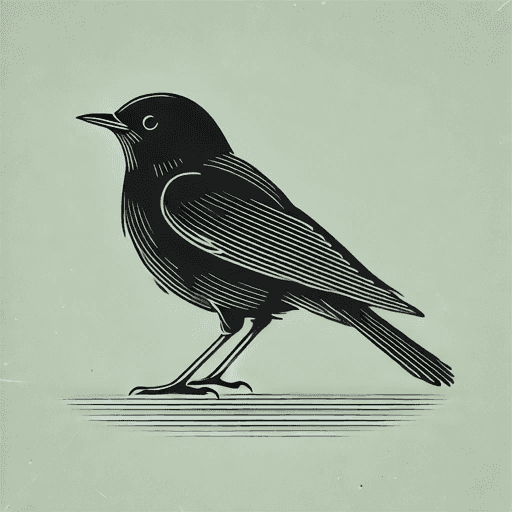
Crows serve as one of the most potent recurring symbols in Year One, linking to The Interplay Between Prophecy and Free Will. Their presence marks turning points and heralds dark moments of foreshadowing, illustrating the idea that destiny is not a passive force but is instead shaped by people’s choices. The novel’s opening sequence cements the role of crows in the narrative, for when Ross MacLeod shoots a pheasant, a crow knocks the dying bird into the ancient stone circle. This small, seemingly random action unleashes the Doom and activates the prophecy tied to Fallon Swift. The crow’s intervention therefore highlights the inevitability of prophecy, becoming the agent that unleashes the Doom upon the world. However, the crow’s act only matters because Ross first exercised his own free will by pulling the trigger and killing the pheasant. Thus, although destiny unfolds as prophesied, human choice sets it in motion.
Beyond the opening, crows function as harbingers of corruption, circling over places where dark magick thrives or where violence is imminent, thereby signaling that evil is lurking nearby. Their presence blurs the line between omen and agency, and the novel does not clarify whether they simply announce what is already happening or actively drive events toward darkness. This deliberate ambiguity reflects the novel’s larger focus on the dynamics of prophecy. For those struggling to survive, the circling crows symbolize the constant temptation to embrace despair and destructive power. To acknowledge the crows’ presence is to be reminded of danger, but to act against what the birds foretell requires resilience and will. In this way, the image of the crow becomes a test: They are a sign of what may come but also an invitation to resist it.
Light and Dark
Light and dark in Year One operate as more than simple markers of good and evil; they symbolize the struggle between despair and endurance, illustrating the importance of embracing Resilience in the Face of Grief and Instability. Darkness spreads with the Doom, and this contagion erases lives, dismantles institutions, and tempts survivors toward hopelessness. The novel repeatedly places characters at the edge of this symbolic darkness, as when Lana grieves for Max, when Jonah contemplates suicide, and when Katie buries her husband and parents. In each case, darkness embodies the weight of grief and the instability of a collapsing world.
Against this backdrop, light becomes the emblem of resilience. Fallon appears in Lana’s dreams as a luminous presence against a starless sky, urging her mother to rise and keep moving, and her radiance offers Lana the strength to resist the creeping effects of despair. Similarly, small sparks of light appear in the community of New Hope as Fred’s wards shield companions from danger and the glow of the town’s fires spreads comfort to everyone. These sources of light symbolize the choices that the survivors make to endure their grief together rather than allowing themselves to be consumed by it.
The symbolic contrast between light and dark also highlights the idea that resilience itself is not the absence of darkness but the act of carrying light within it. The world after the Doom never escapes instability; Raiders and dark magick remain constant threats. However, the decisions to nurture hope, protect children, and build community keep the darkness from becoming overwhelming. Light, in this sense, does not banish grief but reframes it as part of the journey toward survival. Through this imagery, the novel binds resilience to choice; those who turn toward the metaphorical light find purpose and stability, while those who embrace the darkness, like Eric and Allegra, unravel and ultimately destroy the essence of themselves. In a shattered world, resilience is measured by who can still kindle the light.
Wolves and Dogs
Wolves and dogs appear throughout Year One, illuminating the themes of Found Family as a Survival Mechanism and Resilience in the Face of Grief and Instability. In a novel that blurs the line between the natural and the supernatural, dogs and wolves embody both loyalty and wildness, serving as reminders of what it means to survive together. Joe, the puppy rescued by Eddie, becomes an early emblem of found family, for Eddie’s first instinct when confronted with strangers is to plead for Joe’s safety rather than his own. That moment sets the tone for Eddie’s character and also highlights the idea that showing compassion for the vulnerable will become a binding force in the new world. As time goes on, Joe’s presence adds a sense of comfort and stability to the group dynamics, reminding everyone that even in devastation, bonds of loyalty and care are absolutely vital.
Flynn’s wolf, Luna, complicates this form of symbolism by embodying both danger and kinship. Throughout literature, wolves often represent the very spirit of the wild, representing a force beyond human control. However, Luna accepts a connection with the survivors, particularly when she plays with Joe. This unlikely interaction between predator and domestic pup becomes a powerful image of coexistence. In a world where humans must negotiate new differences between the magickal and the ordinary and between the Uncanny and those prejudiced against them, Luna and Joe’s bond symbolizes the potential for finding harmony across seemingly impossible boundaries. The wolf does not devour the puppy, and the puppy does not cower. Instead, they both create a fragile but meaningful bond, just as the human survivors endure by forming families that cross divisions to forge a new sense of unity.

Unlock the meaning behind every key symbol & motif
See how recurring imagery, objects, and ideas shape the narrative.
- Explore how the author builds meaning through symbolism
- Understand what symbols & motifs represent in the text
- Connect recurring ideas to themes, characters, and events