A Killing Cold
64 pages • 2-hour read
Kate Alice MarshallA Killing Cold
A modern alternative to SparkNotes and CliffsNotes, SuperSummary offers high-quality Study Guides with detailed chapter summaries and analysis of major themes, characters, and more.
Important Quotes
Content Warning: This section of the guide includes discussion of death, graphic violence, physical abuse, and cursing.
“I’ve never liked the way snow makes the world go quiet, stifling sound and creating the illusion of stillness. I can’t shake the feeling that the silence is one of waiting. Of watching.”
(
This opening establishes snow as both an element of the setting and a symbol, creating an atmosphere of quiet menace that permeates the novel. The personification of silence as something that watches introduces the theme of surveillance that follows Theo throughout her time at Idlewood. The language conveys Theo’s hypervigilance—a survival mechanism developed from past trauma—while foreshadowing the predatory dynamics she will encounter with the Dalton family.
“The buck’s antlers branch to ten long points. Steam rises from its heaving flanks. It stands with its legs splayed, head down, and for a moment I think it’s going to charge the Jeep, but then I see the bright crimson rimming its nostrils. Pattering onto the snow beneath it. The black shaft of an arrow protrudes from its ribs, a slash of red and yellow fletching at the end.”
(
This visceral description introduces the key motifs of hunting and predator-prey dynamics. The imagery of blood and branching antlers directly connects to Theo’s recurring nightmare of the “antlered man,” suggesting her subconscious recognition of danger at Idlewood. The injured deer’s vulnerability and imminent death foreshadow Theo’s own precarious position among predators, while the bright fletching on the arrow in an otherwise gray wintry scene symbolizes the aberrance of human violence as a deliberate intrusion into natural spaces.
“‘Aren’t there five cabins, though?’ I ask. There should be enough for everyone without Trevor and his mother sharing one. There’s a pause. The silence holds weight I can’t fathom, a strained quiet no one seems willing to break.”
(
This charged silence reveals how the Dalton family maintains its secrets through collective avoidance and unspoken agreements. The metaphor of describing silence as something with “weight” makes the unspoken truth feel tangible. Theo’s innocent question accidentally penetrates the careful façade that the family has constructed, demonstrating how wealth enables the Daltons to control which narratives are acknowledged and which remain buried.
“‘There are arguments for both, and I could tell you all the reasons why my way’s better, but the truth is, it’s what my father did, so it’s what I do,’ he tells me. ‘We are what our parents make us, after all.’ He takes hold of my hand, the one holding the knife, and walks me through half-remembered steps.”
(
In this scene with Magnus, the butchering of the deer becomes a metaphor for how violence and power are inherited through generations. By guiding Theo’s hand with the knife, he symbolically takes her agency away, creating an unsettling intimacy that mirrors how the Daltons will attempt to shape her identity to serve their purposes. Magnus’s statement about becoming what our parents make us carries tragic irony given Theo’s unknown parentage, while simultaneously revealing the novel’s central concern with how identity is formed, erased, and reclaimed.
“I’ve never minded blood. It’s a trail to follow, back through my memories. I always feel as if there’s something else there, a final step lost in the gloom—before the Scotts, before any of it. Blood holds a promise that someday I might remember what it is.”
(
This passage illustrates The Reclamation of Identity Through Memory, with blood becoming both literal evidence and a metaphorical pathway to truth. The image of memory as a “trail” with “a final step lost in the gloom” is a visual metaphor for trauma’s fragmentary nature and suggests Theo’s subconscious understanding that violence is central to her forgotten past. Marshall inverts conventional trauma narratives by positioning confrontation with violence not as something to escape but as necessary for psychological liberation, foreshadowing how Theo must follow her memories to their violent origin.
“My nightmare usually steals familiar things. The bookstore, my apartment, even the grocery store. The cabin was new. The door—it looked just like the fifth cabin, neglected out there in the woods.”
(
This moment marks a crucial shift as Theo’s subconscious begins connecting her recurring nightmares to her physical surroundings at Idlewood. The intrusion of the fifth cabin into her dreamscape indicates her subconscious recognition of its significance before her conscious mind can process it. Marshall’s technique of having memories emerge through dreams creates tension between knowing and not knowing that mirrors Theo’s fractured identity. The juxtaposition of “familiar” spaces with the “new” cabin demonstrates how the past and present are beginning to converge despite the Daltons’ efforts to keep them separate.
“‘Theo. You don’t ever go by Teddy, do you?’ he asks. My lips part. Breath slides from my lips. Teddy. The Scotts chose my name, and they never once called me by that particular nickname. And yet I can almost hear it. Teddy, let’s go.”
(
Nick’s seemingly casual question triggers a profound physical reaction that reveals how deeply buried memories can resurface through sensory triggers like sound. The name “Teddy” functions as a bridge between Theo’s fragmented identities, creating cognitive dissonance as she simultaneously recognizes and doesn’t recognize a name that was once hers. The italicized thought “Teddy, let’s go” represents the emergence of her mother’s voice from repressed memory, demonstrating how Marshall uses typography to distinguish between present consciousness and recovered past.
“I’ve seen photos like this before. Because I took photos like this once. An inventory of harm. She’s not me, but she could be—I recognize that blank expression in her eyes, the way her body is tense and limp at the same time. There’s only one reason to take photos like these. As evidence. As ammunition.”
(
Theo recognizes the purpose of the bruise documentation photos that she finds in Alexis’s suitcase, connecting them to her own past trauma. The phrase “inventory of harm” transforms physical injuries into cataloged items, creating a detached clinical perspective that serves as a coping mechanism. The paradoxical description of the body as “tense and limp at the same time” evokes the combination of stress and helplessness that can accompany trauma and abuse. The staccato final sentences—“As evidence. As ammunition”—highlight the emotional impact of this recognition.
“‘He was keeping a woman here. A fuck-buddy stashed away where he could visit her without anybody knowing about it […] [k]id, too. They were up here for months.’ He’s trying to sound like he doesn’t care.
‘A kid.’
‘I mean, she wasn’t his kid,’ Trevor clarifies, and I am glad the darkness hides my relief. ‘She was up here when he died, you know. So Mom has to deal with her husband being a cheating piece of shit and being dead, all at the same time. Bastard.’”
(
Trevor’s crude language and affected indifference mask the emotional impact of his father’s supposed betrayal, demonstrating how family trauma is processed differently across generations. The dialogue’s staccato rhythm and fragmented sentences mirror the broken family narrative, with Trevor’s reluctant clarification about the child not being Liam’s revealing both relief and lingering resentment. Marshall uses this conversation to provide crucial plot information—and misdirection, given the later revelation that it was Nick, not Liam, who had an abusive relationship with Mallory—while simultaneously characterizing Trevor through his speech patterns and emotional deflection. The final, one-word sentence, “Bastard,” functions as both literal description and emotional verdict, encapsulating the theme of The Thin Line Between Loyalty and Complicity.
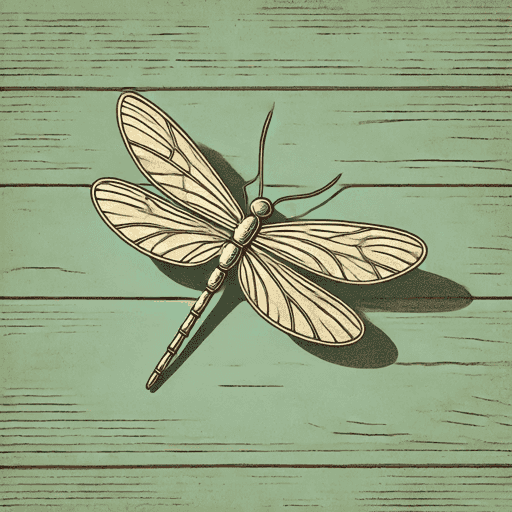
“I stare until the screen goes dark. Trevor was telling the truth. Connor and I didn’t meet by happenstance. He saw my photo and tracked me down. Why? Had I looked familiar to him, too? My hand goes to my wrist. To the dragonfly that almost perfectly matches the ornament on the cabin door—a tattoo that was on full display in that portrait.
He hunted me down.
He brought me here.”
(
Theo’s discovery about Connor’s deliberate pursuit transforms her understanding of their relationship and leads her to fear that she is being manipulated. The dragonfly symbol connects Theo’s unconscious memory to her present identity, functioning as a physical manifestation of her suppressed past. The metaphor “hunted me down” reframes romantic pursuit as predatory, connecting to the novel’s recurring motif of hunting and predator-prey dynamics. The short, definitive statements that conclude the passage reflect Theo’s growing certainty about being manipulated, contrasting with the questioning that precedes them.
“I fall in love so easily. It’s always been one of my worst qualities. Because I don’t know how to love. I don’t know how to be loved. I always thought it went back to the root. My first parents didn’t want me, and neither did the second set. But that can’t be true. It can’t be. My mother loved me, I remember it now, but something terrible happened. And so maybe that’s what it is, this desperate hunger to get that love back. It was stolen from me, and so I try to steal it, too.”
(
Theo’s introspection reveals how her habit of stealing small objects from those she loves functions as a metaphor for her attempt to reclaim the love she lost when she lost her mother. The repetitive structure of short sentences emphasizes her emotional struggles. The passage demonstrates Theo’s evolving self-awareness as she rejects her previous belief that she was unwanted, instead recognizing that love existed but was violently taken from her. Marshall uses this interior monologue to establish the psychological foundation for Theo’s pattern of collecting items from loved ones, portraying theft as both a symptom and symbol of emotional deprivation.
“‘You have to help me out here,’ he says. ‘You have to start telling me things.’
‘I tell you the important things,’ I say.
He shakes his head. ‘You’re so hard to read. Hell, you’re a blank book.’
I flinch back. He’s dug his fingers into a wound, a fear I always hold myself curled protectively around. Who am I? Maybe I’m no one and there’s nothing inside me except all the little pieces I’ve collected from the people I’ve wanted to love.”
(
Connor’s metaphorical characterization of Theo as a “blank book” inadvertently targets her core fear of lacking a cohesive identity, highlighting the theme of the reclamation of identity through memory. Theo’s physical response—“I flinch back”—and the wound metaphor transform an abstract insecurity into bodily vulnerability, emphasizing how psychological damage manifests physically. The rhetorical question “Who am I?” transitions to an extended metaphor where Theo’s selfhood is reduced to stolen objects, transforming her from a person into a collection. This dialogue scene demonstrates how Wealth as a Means to Suppress the Truth manifests in personal relationships, as Connor demands truth while concealing his own deceptions.
“‘He didn’t fall,’ she whispers. And then all at once she pulls inward—shoulders retracting, head coming up sharply, teeth clicking together. My lips part, beginning to shape a question. The door opens, and she jerks, guilt flashing over her face as Connor steps in.”
(
Alexis’s revelation about her father’s death uses physical description to convey psychological withdrawal, with the short, declarative statement standing in stark contrast to the detailed depiction of bodily retreat that follows. The author employs the technique of interruption—as Connor’s entrance interrupts Alexis’s confession—to maintain narrative tension while embodying the family’s pattern of truth suppression. The bodily details of “shoulders retracting” and “teeth clicking together” show how family secrets become physically contained within the body. This moment encapsulates the novel’s central mystery about Liam’s death while demonstrating how wealth enables the family to control which version of the truth becomes accepted reality.
“It is dangerous to corner a wild animal. Even a wounded one. You brought me here, Connor. I still don’t understand why. But I’m going to find out.”
(
The animal imagery evokes the motif of hunting and predator-prey dynamics, foreshadowing Theo’s metamorphosis from prey to predator and her determined pursuit of truth. This terse, staccato passage transitions from third-person axiom to direct second-person accusation, reflecting Theo’s psychological shift from abstract fear to focused suspicion of Connor. The final line demonstrates her reclamation of agency through active investigation, contrasting with her earlier passive role as a potential victim.
“‘Her mother called her Teddy,’ Vance says, and I nod. It has to be enough, I suppose. ‘But her real name was Rowan.’”
(
This pivotal revelation provides Theo with her birth name, creating tension between her current identity and her recovered past. Vance’s disclosure functions as both exposition and catalyst, marking the moment when Theo’s suspicions transform into certainty about her connection to Idlewood. The juxtaposition of multiple names—Theo, Teddy, and now Rowan—underscores the theme of fractured identity and the power of naming in determining one’s sense of self.
“‘It is not a test,’ Louise says, her voice hard as granite. ‘I promise you that I have entirely made up my mind about you. You are never going to win me over. You are never going to be part of this family. And you will not get to keep Connor. Either way, you will be leaving here, and you will not be returning.’”
(
Louise’s granite-like voice metaphorically establishes her unyielding protection of family reputation and wealth. The repetitive structure with “you are never” and “you will not” creates a ritualistic rejection that emphasizes the power dynamics between this wealthy, insular family and an outsider. This confrontation exemplifies the theme of wealth as a means to suppress the truth, as Louise attempts to assert absolute control over who belongs in their family circle.
“You told me that you knew what it felt like to be dead. That it was very, very cold. But you weren’t alone, because the princess was there with you. You woke up. She didn’t. And then the fairies took you away to find a new family.”
(
Joseph reveals how young Theo processed her near-death experience through fairy-tale frameworks. The symbolism of cold links her physical experience of hypothermia with emotional numbness and death, establishing the recurring connection between cold and memory throughout the novel. The princess metaphor suggests Theo’s early understanding of her mother’s death, showing how children construct narratives to comprehend otherwise incomprehensible trauma.
“The girl knows how to hide. She knows how to stay quiet. When the monster is angry, you do not run; you do not make a sound. The door bursts open. A beast steps into the room—a beast with the shape of a man, and antlers springing from his temples—and she screams—
But it’s only Liam. Not the monster at all.”
(
Marshall shifts to the third-person perspective to represent Theo’s dissociation from her traumatic memories, creating emotional distance. The antlered man motif, previously presented as threatening, undergoes significant recontextualization as Theo recovers the true memory of Liam as a rescuer rather than attacker. The fairy-tale structure of a beast revealing himself to be a savior reverses traditional expectations, mirroring Theo’s inverted understanding of past events.
“The girl lies on the floor, her cheek pressed against the wood. It’s cold in here, but not as cold as it was before. She can’t feel her fingers. It’s hard to open her eyes, but she does, and when they focus, her mother is lying across from her. Her neck is a dark red; the red is cracked like river mud.”
(
This flashback reveals the core traumatic memory that has haunted Theo throughout the novel. The third-person perspective creates emotional distance, reflecting the dissociative nature of trauma. The simile comparing blood to “cracked river mud” evokes imagery of drying, suggesting the passage of time and mortality.
“‘They’re going to kill me.’
He looks at me sadly. He already knows. ‘It was supposed to be quick. So you wouldn’t know,’ he says.”
(
This exchange between Theo and Vance reveals the calculated nature of the Dalton family’s violence. The brief sentences create a stark rhythm that emphasizes the coldness of their planned murder. Vance’s concern that Theo “wouldn’t know” paradoxically reveals both his humanity and his willingness to make excuses for predatory behavior, exemplifying the theme of the thin line between loyalty and complicity.
“The light isn’t the glowing end of a cigarette but the headlight of the UTV, and the silhouette cutting through it is Nick. He has to turn to face the slope to descend safely, his back to me. Farther along the hillside, I can make out Connor’s brown coat, the bulk of his body. He isn’t moving.”
(
This passage employs visual imagery—the light, silhouette, and motionless body—to create tension and disorientation. The careful description of Nick’s positioning with “his back to [Theo]” establishes vulnerability and opportunity, while the observation of Connor’s stillness creates uncertainty about his condition. The contrasting elements of movement and stillness heighten the scene’s suspense.
“Alexis knows that sometimes you have to do more than endure. Her dad’s been teaching her how to drive. She’s not old enough for a license. But she looks older, especially when she borrows her mother’s clothes, wears her favorite sunglasses.”
(
This flashback shifts to Alexis’s perspective, humanizing the character previously positioned as an antagonist. The introduction of Alexis’s teenage perspective demonstrates how trauma creates ripple effects across multiple lives, complicating the novel’s exploration of victimhood and culpability.
“‘Should have made sure I was dead,’ I tell him. And I drive the knife up beneath his jaw.”
(
This moment represents Theo’s transformation from a victim into a survivor who claims agency through decisive action. The statement creates narrative continuity between this moment and the moment from Theo’s childhood when Nick left her to freeze to death. The simple, direct language reflects Theo’s clarity in this moment of survival, emphasizing the novel’s theme of the reclamation of identity through memory.
“She says ‘Thank you’ the same moment you put the knife in her chest. The same hunting knife you’ve kept on your belt every time you come up to this place, the talisman that tells you that you’ve tripped over the boundary between the outside world and the world of the mountain.”
(
Magnus’s confession reveals his brutal murder of Mallory through second-person narration that forces readers into the perpetrator’s perspective. The juxtaposition of Mallory’s gratitude with Magnus’s betrayal heightens the horror of the scene. The description of the knife as a “talisman” connects to the hunting motif while suggesting the ritualistic nature of violence at Idlewood, where normal moral boundaries dissolve.
“Wherever she is, the wildflowers are blooming.”
(
This final line provides emotional closure despite the lack of complete justice or knowledge of Mallory’s burial place. The wildflowers symbolize both natural beauty and the continuation of life despite violence. The shift to present tense creates a sense of continuity that transcends the novel’s trauma narrative, suggesting that healing exists alongside unresolved grief.

Unlock every key quote and its meaning
Get 25 quotes with page numbers and clear analysis to help you reference, write, and discuss with confidence.
- Cite quotes accurately with exact page numbers
- Understand what each quote really means
- Strengthen your analysis in essays or discussions