A Stranger in the House
52 pages • 1-hour read
Shari LapenaA Stranger in the House
A modern alternative to SparkNotes and CliffsNotes, SuperSummary offers high-quality Study Guides with detailed chapter summaries and analysis of major themes, characters, and more.
Character Analysis
Karen Krupp/Georgina Traynor
Content Warning: This section of the guide includes discussion of domestic abuse, death by suicide, and mental illness.
Karen Krupp is the protagonist of A Stranger in the House. She is a complex, deceitful character whose true nature is not revealed until the end of the novel. One can think of the character as having essentially two identities: Karen Krupp, quiet suburbanite and loving wife, and Georgina Traynor, scheming thief and murderer.
Karen Krupp is the character who is introduced at the beginning of the novel. She is a 30-year-old part-time bookkeeper for Cruikshank Funeral Homes, a job that her best friend and neighbor, Brigid Cruikshank, helped her get. Karen met her husband, Tom, three years ago while working as a temp at his accounting firm. They married two years prior to the start of the novel. Karen does not have any family or friends from before she moved to upstate New York. She claims to be from Milwaukee, Wisconsin.
It is eventually revealed that Karen Krupp’s real name is Georgina Traynor. She was married to a man in Las Vegas named Robert Traynor, the murder victim, for three years. She meticulously planned to rob him of the money he was laundering through his antiquities business. Once she got the cash, she purchased a fake identification online, faked her death, and left him.
Karen Krupp pretends to be a sweet, innocent woman, but she is actually deeply manipulative and calculating. Karen has been able to hide her past convincingly from her second husband for years. She is so good at lying that when Tom presses her on her lack of “old ties,” she is able to explain it away by saying, “[S]he wasn’t good at staying in touch with people” (72). He does not think to question this claim until after the accident. When Karen’s past as Georgina Traynor is somewhat revealed, she continues to lie about the nature of her relationship with Robert. She convinces Tom and the police that Robert was abusive, just as she once convinced a counselor at a battered women’s shelter. Her act is persuasive: She “looks up at [Tom], her eyes filled with tears,” as she weepily insists that, “if I left him, if I tried to leave him, he would kill me” (161). This behavior is designed to garner sympathy from Tom, and it works.
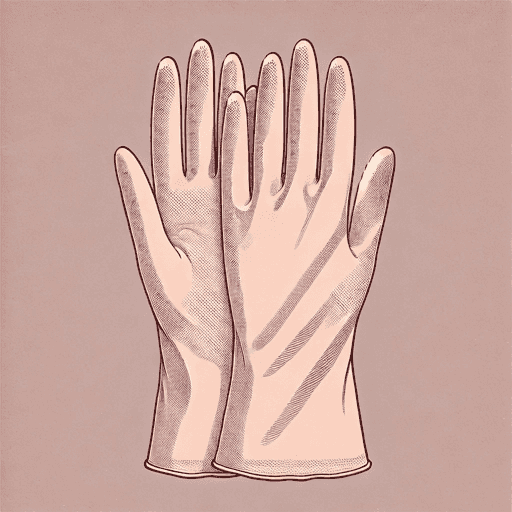
At the end of the novel, it is revealed that Karen’s murder of Robert was not a reaction to his supposedly abusive behavior at all. Indeed, she states unequivocally that, “Robert had never been abusive. He’d been a decent enough man” (300). His murder was entirely premeditated. She always intended to murder him if he located her. This is symbolically represented throughout the novel in Karen’s decision to bring the rubber gloves with her to meet him: She intended to hide her fingerprints in the commission of the crime. With this revelation, Karen’s repeated insistence to Tom and her lawyer that she is not “capable” of committing murder is a total lie: Not only is she capable of murder, but she is capable of cold-bloodedly planning and executing a murder.
The only true element of Karen’s self-presentation is her love for Tom. When she is in jail, she longs for his company. She wishes “they could comfort each other” (209). She later reflects that “she loves him so much that it surprises her a little” (299). However, she recognizes that “Tom loves who she thinks she is” (300, emphasis added). This indicates a dark element of Karen’s love for Tom: Despite her love for him, she will never be entirely honest with him.
Tom Krupp
Tom Krupp is Karen’s husband. He is a complex secondary protagonist. Tom works as a chartered accountant at a large firm. Tom is trusting, an idealist, and something of a romantic, which leads him to overlook the darker aspects of life.
At the opening of the novel, Tom is entirely convinced of his wife’s essential innocence. Although he found her lack of past ties a little odd, it did not lead him to become suspicious of her in any way. His understanding of her begins to shift following the car accident and the subsequent revelations about the murder. He is troubled by the lies she has told. He is particularly troubled by the realization that “on the day of their wedding, she was already legally married to someone else […] Her vows were meaningless” (173). His focus on this aspect of her fraud is telling. He is most concerned that the idealized life he was living—married in the suburbs—was not what it had seemed. Tom’s focus on his feelings about Karen’s admission of having left an abusive husband makes him seem a little callous, as he should be more concerned with what she went through. However, he is not cruel; he is simply inexperienced, immature, and overwhelmed.
Tom’s immaturity is most evident in his affair with Brigid. He largely blames the affair on her, thinking to himself that she “had tricked him into an affair” (147, emphasis added) by coming on to him and claiming that she was going to leave her husband. This reasoning shows Tom’s reluctance to accept his own agency: As an adult, he was an equal party to the affair. After the affair ended, he further showed his immaturity by not only not disclosing it to his wife, but also by feeling resentful of Brigid’s close relationship with Karen. Tom tries to evade thinking through the consequences of his poor decision-making by drinking excessively when under strain. This intoxication in part leads to his “succumb[ing]” to Brigid’s flirtations when Karen is in jail.
Tom redeems himself by the end of the novel. He cuts off all contact with Brigid, fully devotes himself to Karen, finds another job, and does not blame Karen for the events that have transpired. He is profoundly changed by the ordeal. He reflects that he will “never again live in a comfortable, unsuspecting bubble, thinking that nothing bad is ever going to happen. He knows better now” (297). It is strongly implied that Tom knows his wife is a murderer, but he is willing to stay with her because he believes her a victim.
Brigid Cruikshank
Brigid Cruikshank is the complex antagonist of A Stranger in the House and a foil for Karen. A foil is a character who contrasts with the protagonist to emphasize their character. Brigid is married to Bob Cruikshank, the owner of three funeral homes in the area. She is unhappy in her marriage because she desperately wants to have a child, but she has thus far been unable to conceive with her husband. She left her job as a manager to devote herself more fully to fertility treatments which “hadn’t worked.” Over time, her desire to have a child and her resentment of those who do have children has made her bitter and isolated. For instance, she left her knitting circle because there were “too many women happily knitting baby things” (89). She has a giant hole in her life, which she fills by obsessing over Tom and Karen Krupp.
Brigid pursues an affair with Tom Krupp seemingly as an escape from her unfulfilling marriage and life more generally. She becomes infatuated with him. This infatuation apparently leads her to act irrationally and obsessively. As Tom states, “[S]he’s obsessed with you, Karen, and even more obsessed with me. She sits in that living room window and […] watches everything we do because she’s in love with me” (253). When Tom marries Karen, Brigid’s resentment of her boils over and she uses the events of August 13th as an opportunity to get Karen out of Brigid’s life on a more permanent basis.
Brigid’s manipulative behavior toward Tom and Karen and her desire to take over Karen’s identity present an important parallel with Karen’s manipulation. Like Karen, Brigid will do whatever it takes to get what she wants. They both recognize that Tom is “easy enough to manipulate” (147). Brigid plans to adopt a new identity—that of Karen’s—just as Georgina adopted Karen’s identity. Brigid thinks to herself, “If she is going to slip into Karen Krupp’s life, she’s going to do it right” (238). Unlike Karen, however, Brigid plans are thwarted when she goes too far by planting the gun in the Krupp residence, making herself a suspect in the investigation. Further, Brigid’s husband Bob does not stand by her as Tom stands by Karen. She is ultimately left alone, but she is not without hope: She still plans to be in Tom’s life because she is pregnant with his child.
Detectives Rasbach and Jennings
Detectives Rasbach and Jennings are stereotypical police investigators. They are competent, diligent, and dedicated to catching the murderer. Detective Rasbach is the lead investigator. Like many detectives, he wears a “smart, expensive suit” (64). He is an experienced, weary detective who is not thrown by the smell of the rotting corpse. He immediately identifies crucial details about the crime scene, such as the fact that the dead man has a “pale shadow around the finger where a ring has recently been removed” (65). Rasbach is sympathetic to Karen’s story of abuse. Nevertheless, he recognizes some inconsistencies in her account, such as the fact that she brought rubber gloves to the scene, suggesting premeditation and that Robert Traynor let her leave the restaurant.
Rasbach bounces his ideas off of his junior detective Jennings, or, as Karen calls him, his “sidekick.” When they learn new information, they discuss their theories of the case, no matter how absurd or outlandish they may seem. This is how investigators are supposed to approach cases so that they consider all possibilities. For instance, Jennings suggests that perhaps Brigid and Karen are “lovers and they planned this together to get rid of Robert” (276). Rasbach commends Jennings on his “creative thinking,” but they both agree such a possibility is unlikely.
Both detectives are ultimately disappointed when they are unable to charge Karen for the murder of Robert Traynor, due to the reasonable doubt created by Brigid’s obsession with Tom and hatred of Karen, which led her to plant the murder weapon in the Krupp home.

Unlock analysis of every major character
Get a detailed breakdown of each character’s role, motivations, and development.
- Explore in-depth profiles for every important character
- Trace character arcs, turning points, and relationships
- Connect characters to key themes and plot points