A Stranger in the House
52 pages • 1-hour read
Shari LapenaA Stranger in the House
A modern alternative to SparkNotes and CliffsNotes, SuperSummary offers high-quality Study Guides with detailed chapter summaries and analysis of major themes, characters, and more.
Prologue-Chapter 9Chapter Summaries & Analyses
Content Warning: This section of the guide includes discussion of graphic scenes of death and injury and mental illness.
Prologue Summary
Karen Krupp, a 30-year-old bookkeeper and suburban resident in upstate New York, runs out of an abandoned restaurant into her car. She is panicked and speeds away. In her panic, she drives through a red light into a utility pole.
Chapter 1 Summary
Shortly after Karen’s accident, her husband, Tom Krupp, returns home to 24 Dogwood Drive from work. Karen and Tom have been married for two years. He notices that Karen’s car is missing from the driveway. The front door is unlocked, which is unusual. He notices that Karen was in the middle of making dinner when she left. Assuming she has simply gone to the corner store to pick up something, he finishes making dinner.
When Karen still hasn’t returned, he begins to worry. He goes into their bedroom and finds her phone and purse there. He realizes something is wrong and begins to call her friends. Then, he calls 911.
Officer Kirton reports to the scene of Karen’s accident. He wonders what a suburban woman is doing in the bad part of town.
Officer Fleming goes to the Krupp residence.
Chapter 2 Summary
Three teenage boys go into the abandoned restaurant. They find the body of a man who has been murdered. They steal his wallet, cell phone, watch, belt, and ring. Then they leave.
Meanwhile, Officer Fleming tells Tom that a woman has been found in Karen’s car badly injured. They are not sure if it is Karen because the injured woman does not have ID on her. Tom speculates someone stole Karen’s car, but then worries because if it is not his wife who was in the accident, then Karen is still missing.
Chapter 3 Summary
Officer Fleming takes Tom to the hospital to identify the injured woman. The nurse hands Tom the woman’s personal effects and he recognizes them as belonging to his wife.
Officer Fleming and Officer Kirton talk about the accident at the police station. Fleming assumes Karen is hiding something from Tom.
Tom’s younger brother Dan joins him at the hospital for support. Dr. Fulton tells Tom that his wife has suffered a serious concussion but that she will heal.
Chapter 4 Summary
Tom goes to see Karen in her hospital room. She is too badly injured to speak much. Tom is relieved to see she is alive, even if he is troubled by the extent of her injuries. She tells him she does not remember what happened.
Tom leaves Karen to rest and speaks with Dr. Fulton. The doctor tells him that it is typical for patients to have retrograde amnesia after a severe concussion like Karen’s but that Karen’s memories will likely come back “in their own time” (23).
Chapter 5 Summary
The next morning, Brigid Cruikshank, Karen’s neighbor across the street and good friend, goes to the hospital. Tom tells Brigid that Karen was in a car accident and that she does not remember “the accident, or anything leading up to it” (25). Brigid is surprised to hear that the police are investigating the incident. Brigid offers her support to both of them. Tom tells her that Karen is likely not up to seeing anyone yet, but Brigid ignores him and goes to see Karen in her hospital room. Brigid reassures Karen that the accident was not her fault. Tom comes in, and Brigid leaves. Karen wonders why Tom does not like Brigid.
Later, Dr. Fulton talks to Karen. He tells her that her memories will likely come back, but it is hard to say exactly when.
That night, two teenagers looking for a place to make out go into the abandoned restaurant. They see the dead man on the floor. The girl wants to call the police, but the boy warns her not to get involved. They leave quickly.
Chapter 6 Summary
The next morning, Brigid’s husband Bob, owner of a funeral home, tells her he will not be home that evening because he has to work. Brigid thinks all he cares about is if she is attending her fertility appointments.
Dr. Fulton tells Officers Fleming and Kirton that Karen has amnesia and remembers nothing of the accident. Karen tells them the same thing. Officer Fleming gives Karen a ticket for “reckless driving” and counsels her to get a lawyer.
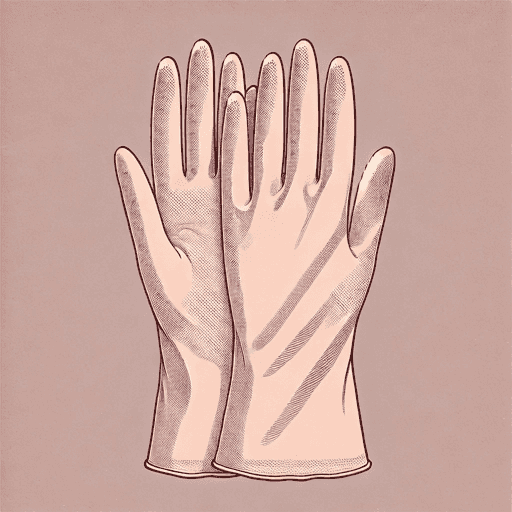
Tom goes home and cleans up the house in advance of Karen’s return. He notices he cannot find her rubber gloves.
That evening, Dr. Fulton tells Karen that she kept saying the name “Robert” when she came in. Karen’s heart races. She tells him she does not know anyone by the name of Robert, but she nevertheless asks Dr. Fulton not to mention it to Tom. He agrees.
Chapter 7 Summary
The next morning, Officer Fleming goes to the Krupp residence. He tells Tom they are pressing charges for reckless driving. He asks Tom about their marriage. Tom says he loves Karen and that he has no idea why she was in that part of town on the day of the accident. Tom insists Karen was not running away from him. Tom tells Officer Fleming that Karen has never been in trouble with the law, as they are “rather dull.” Tom works as a chartered accountant and Karen as a bookkeeper. He refuses to let Officer Fleming search the house. After the officer leaves, Tom searches the house but finds nothing to explain what happened.
Across the street, Brigid sees the officer arrive and enter the Krupp home. She reflects on how she made an effort to befriend Karen when she moved into Tom’s house two years prior. She helped Karen get a job as a bookkeeper for her husband’s funeral home chain.
Chapter 8 Summary
Three days after the accident, Tom drives Karen home from the hospital. Karen is comforted by being home and grateful Tom cleaned up, but she is dizzy and has to go lie down. Once in her bedroom, she reflects on how “frightened she’d been” because, over the past few weeks, she had “come home and found things slightly out of place, subtle signs that someone had been going through her things” (48). She has not told Tom about this.
Tom makes dinner and they eat together. Tom reflects that things between them have changed. Karen wishes she could remember what happened.
Chapter 9 Summary
The next morning, Tom tells Karen they have an appointment with a lawyer. They meet with the lawyer, Jack Calvin. Calvin seems skeptical that Karen does not remember what happened and, like the police, wonders what Karen was doing in the bad part of town. Karen reassures the lawyer she does not have a record. Tom drops Karen off at home and then goes in to work. He wonders “what secrets his wife might be keeping” (56).
Prologue-Chapter 9 Analysis
The domestic thriller A Stranger in the House uses a structure similar to others in the genre to create suspense and intrigue. The narrative is written in a shifting third-person limited perspective. This means that the narrative provides insight into the knowledge and understanding of individual characters without ever providing a universal or omniscient overview of events. This structure is commonly used in thrillers because suspense and intrigue are generated using two key methods. First, the shifting third-person limited perspective creates dramatic irony, where the reader knows something that the characters do not. For instance, in Chapter 2, a group of teenage boys find a dead body in the restaurant. Thus, while Karen is convalescing in the hospital, the reader is aware that she may be involved in a murder, even as the other characters are unaware of this fact. This creates tension because it is unknown when the body will be found by the police.
Second, the shifting third-person limited perspective creates suspense because it provides insight into the internal thoughts and experiences of the characters of which the other characters are unaware. This contributes to the theme of The Impact of Secrets on Relationships, as the characters acknowledge to themselves the secrets they are hiding from others. For instance, the third-person limited perspective reveals that Karen’s “heart is racing” when Dr. Fulton tells her she was saying the name “Robert” when she was brought into the emergency room (38). This physical response suggests that the name does mean something important to her, contrary to what she tells the doctor. This creates mystery around what secrets Karen is hiding from her husband and everyone else about this person named Robert.
The narrative of A Stranger in the House is written in chronological order with some overlapping time points, such as when the teenage boys find the body at approximately the same time that Officer Fleming informs Tom that his wife Karen was in an accident in Chapter 2. As is typical of a murder thriller, the narrative begins in the moments immediately after the crime has taken place. However, the twist in this story is that Karen, the suspect, is suffering from retrograde amnesia. She has no knowledge of what occurred. This also creates suspense, as she is finding out what happened along with the reader, the detectives, and the other characters.
The opening passages of A Stranger in the House establish the key theme of The Façade of Suburban Perfection. This is a classic theme found throughout mysteries, soap operas, dramas, and thrillers, like My Husband, The Stepford Wives, and The Last Party. The suburbs are aesthetically neat and uniform, which gives the impression of safety and social conformity. Works like A Stranger in the House explore what happens beneath the surface of this aesthetic and how such appearances can be deceiving. The opening paragraphs of Chapter 1 emphasize the prosperous, regular, and calm environment of Henry Park, where the Krupps live: “The house sits on a gently curving street that ends in a cul-de-sac. The surrounding houses are all equally attractive and well maintained, and relatively similar […] as if the American dream has continued to live on here, smooth and unruffled” (3).
This calm, idyllic image will later be undermined by events in the novel. The difference between this façade and who the people who live within this image actually are will be developed further on in the work. The novel illustrates how things are not as “smooth and unruffled” as they appear.

Unlock all 52 pages of this Study Guide
Get in-depth, chapter-by-chapter summaries and analysis from our literary experts.
- Grasp challenging concepts with clear, comprehensive explanations
- Revisit key plot points and ideas without rereading the book
- Share impressive insights in classes and book clubs