A Stranger in the House
52 pages • 1-hour read
Shari LapenaA Stranger in the House
A modern alternative to SparkNotes and CliffsNotes, SuperSummary offers high-quality Study Guides with detailed chapter summaries and analysis of major themes, characters, and more.
Themes
The Façade of Suburban Perfection
Content Warning: This section of the guide includes discussion of domestic abuse, death by suicide, graphic descriptions of death and injury, and mental illness.
The façade of suburban perfection is a common theme in many domestic thrillers, including A Stranger in the House. This theme examines the differences between the safe, serene appearance of the suburban idyll and the secret, dangerous, chaotic lives of those who live there. This theme is developed in three key ways throughout the novel: In the opening, in the character of Karen Krupp herself, and in the contrast between her suburban town and the “bad side of town” where the murder took place.
The opening passages of Chapter 1 emphasize the suburban idyll of Henry Park. It is a “quiet, prosperous suburb in upstate New York,” where it seems “as if the American dream has continued to live on […] smooth and unruffled” (3). The Krupp residence itself is described as a “handsome two-story home […] set behind a generous lawn and framed with beautiful old trees” on a cul-de-sac (3). This description emphasizes the seeming perfection of the setting. This perfect image soon begins to unravel when it is revealed that Karen Krupp is mysteriously missing from the house. It continues to unravel as the secrets of the neighborhood are revealed, namely that Brigid is not a friendly neighbor but in fact an obsessed, vindictive stalker of the Krupps and that Karen is a murderer.
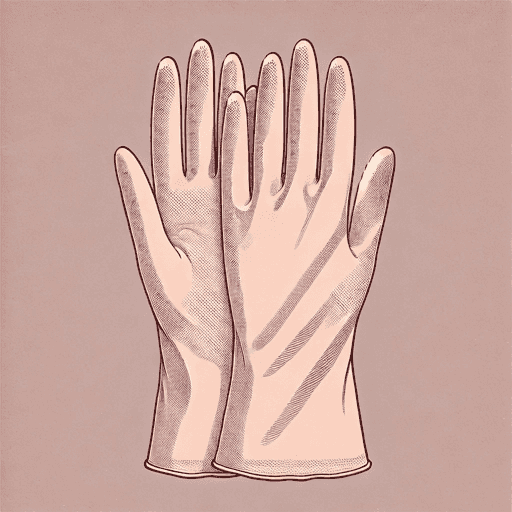
The difference between Karen’s stereotypical suburbanite persona and her true cool, calculating, murderous self further reveals how deceptive appearances in this idyllic setting can be. Karen first appears to be a sweet, “rather dull” woman who works part-time as a bookkeeper. Detective Fleming describes her as “a regular housewife” (71). However, it is this description that definitively puts her into the frame for the murder of Robert Traynor as Detective Rasbach “remembers the pink rubber gloves he picked up and bagged near the murder scene” (71). As discussed in Symbols & Motifs, the pink rubber gloves are closely associated with suburban femininity. Over the course of the novel, Karen’s true self is revealed. It is discovered that Karen Krupp is an assumed identity and that as Georginia Traynor, she stole $2 million, faked her own death, and fled. She later murdered Robert Traynor when he discovered her new identity. Far from being a typical suburban wife, she is a calculating, manipulative thief and murderer.
Finally, the crime scene is described as taking place in the “bad part of town” (211). The detectives and other characters are surprised a suburban woman like Karen Krupp would ever find herself in an area known for crime and drug use. Her presence and actions in this part of town illustrate that although the residents of the suburbs seem like they are “oblivious to the problems of the small city that surrounds it” (3), the two locations have more in common than one might immediately assume based on appearances. In other words, the perfect façade of the suburbs masks the criminality of the people who live there.
The Impact of Secrets on Relationships
The dynamics between the three main characters in A Stranger in the House are defined by the secrets they are keeping from one another. In this way, the novel illustrates the impact of secrets on relationships. It shows how secrets create tensions in relationships, tensions that may or may not be resolved when those secrets are revealed.
Karen Krupp is the character with the darkest and most profound secrets. She has hidden her past from her second husband, Tom Krupp, for almost three years. As this past is gradually revealed, Tom’s faith in her is shaken. Although he loves her, he begins to question everything. He transforms from feeling as if “he knows his wife” (12) to the slow realization that “he doesn’t know that much about his own wife” (73). He is most shaken by the revelation that she was already married to Robert Traynor when he married her. He feels as if “her vows were meaningless” (174).
This dynamic illustrates two key aspects of their relationship. First, it shows how convincing an actor Karen can be. She is even able to convince her husband that Robert was abusive, even though it was a complete fabrication, like her identity as Karen Krupp. Second, it shows how when these secrets are revealed, it can be destabilizing and even frightening. Tom feels as if he has been living a lie. However, instead of these revelations driving them apart, and despite his insecurities, Tom feels more desperate than ever to reinforce his bond with Karen.
Tom Krupp has his own secret. He had a brief affair with Brigid before meeting Karen. As a result, he is deeply uncomfortable with Karen and Brigid’s close relationship. He also has sex with Brigid after Karen’s arrest. When this secret is revealed, Karen is shocked. She “think[s] of all the times she spent with Brigid, not knowing that she’d slept with her husband. She feels sick” (254). However, Karen quickly overcomes her shock to recognize that it is a boon in her case. It creates “reasonable doubt.” This quick about-face is illustrative of Karen’s cold, calculating nature—she is willing to put things aside to focus on what will benefit her.
Brigid Cruikshank also harbors secrets that impact her relationships with her husband Bob, Karen, and Tom. Brigid and her husband have been attempting to get pregnant unsuccessfully for some time. As a result, she has become “depressed and moody,” and her husband has “withdraw[n] from her” (44). In response to this, Brigid pursued an affair with Tom. She kept this affair secret from her husband, which further alienated them from one another. After Tom ended the affair and married Karen, Brigid was furious and began to scheme to get Tom back. She decided to do that by pretending to be Karen’s “good friend” and then using the accident as a pretext to ensure Karen is imprisoned. Karen is shocked by the revelation that “[Brigid] hates [her]” (254). By keeping these secrets and acting upon them, Brigid has alienated everyone in her life and isolated herself. This is illustrated at the end of the novel when her husband divorces her, leaving her alone in the house.
The novel’s ending also reinforces the sense that some secrets remain, even though not every character is aware of them. Brigid’s secret pregnancy could further upend Tom and Karen’s relationship, creating further problems for them, of which neither spouse is currently aware. Meanwhile, Karen’s recovery of her memory reveals that she did murder Robert and lied about experiencing abuse. The novel thus ends on a cliffhanger, raising the specter of more deep secrets that could continue to poison the relationships between the main trio.
The Reinvention of Identity
Over the course of A Stranger in the House, the identities of the main characters, Karen and Brigid, are established only to have these identities challenged and transformed. They intentionally seek to completely reinvent their identities to get what they want.
Karen undergoes the most substantial identity transformations over the course of the work. In her past, Karen was Georgina Traynor. While living as Georgina, she portrays herself as an abuse victim. She goes to a domestic abuse counselor and represents herself as someone who felt “trapped” because “the man she was married to was a real bastard” (225). This is the first instance of Karen/Georgina adopting a new identity. She then reinvents herself in an even more radical way: She “faked her death and ran away and on a false identity” (200), that of Karen Fairfield from Milwaukee, Wisconsin.
In this new persona, she meets Tom Krupp and marries him. This is her third transformation. She has become Karen Krupp, a slightly “dull” suburban wife with a part-time job as a bookkeeper and a doting, loving husband. Karen changes her identity so many times so that she can have the life she wants. She was attracted to Robert Traynor’s money, and she adopts a new identity so she can get away with stealing $2 million from him. She misrepresents herself and manipulates those around her in furtherance of this goal. The identity of Karen Krupp is thus a fabrication designed to deceive others, including the reader.
Similarly, Brigid attempts to reinvent herself to get what she wants: A relationship with Tom Krupp. She delusionally believes that with Karen in prison, she will be able to take on Karen’s role in Tom’s life. As she thinks once Karen is arrested, “Brigid is the one who’s entitled to everything—including Tom. She will have all of Karen’s nice things, including her husband” (238). Brigid even takes material steps to adopt Karen’s identity: She gets “her hair cut short, in the same pixie style that Karen wears” (238). During the haircut, Brigid feels “her old life, and her old self, falling away” as she plans to “slip into Karen Krupp’s life” (239).
Brigid’s feelings about this physical transformation mirror how Karen feels when Karen changes her clothes after faking her own death, as Karen describes “feeling like she could almost fly” (140). Unlike Karen, however, Brigid’s attempt at reinventing herself largely backfires. Tom is “appalled” by Brigid’s new appearance. He has no interest in rekindling a relationship with her. However, the ending of the novel ends on a cliffhanger, as it is revealed that Brigid is pregnant with Tom’s child, suggesting that she may yet be able to insinuate herself into Tom’s life and the new identity she dreams of.

Unlock every key theme and why it matters
Get in-depth breakdowns of the book’s main ideas and how they connect and evolve.
- Explore how themes develop throughout the text
- Connect themes to characters, events, and symbols
- Support essays and discussions with thematic evidence