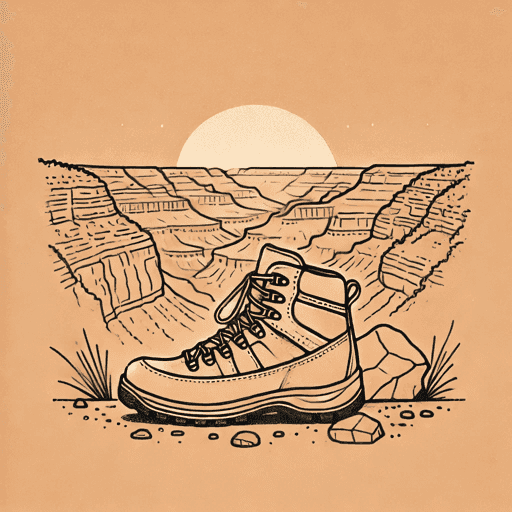
A Walk in the Park: The True Story of a Spectacular Misadventure in the Grand Canyon
54 pages • 1-hour read
Kevin FedarkoA Walk in the Park: The True Story of a Spectacular Misadventure in the Grand Canyon
A modern alternative to SparkNotes and CliffsNotes, SuperSummary offers high-quality Study Guides with detailed chapter summaries and analysis of major themes, characters, and more.
Part 9-EpilogueChapter Summaries & Analyses
Part 9: “Boneland and Bedrock” - Part 10: “Lost and Found”
Part 9, Chapter 32 Summary: “All In”
Content Warning: This section of the guide includes discussion of death.
Fedarko recounts his father’s fragile health and their shared determination for him to continue the expedition. He and McBride were given the autonomy to traverse a remote section of the Grand Canyon without direct supervision, navigating the rugged Esplanade and its surrounding wilderness.
This segment of their journey revealed artifacts from multiple cultural eras, ranging from ancient petroglyphs to relics of Depression-era ranchers, underscoring the canyon’s layered human history. The harsh desert environment tested their survival skills as they relied on scarce water sources, extracting life-sustaining puddles teeming with toads and shrimp.
Part 9, Chapter 33 Summary: “Ghosts of a Former World”
Fedarko and McBride developed a rhythm in their journey through the canyon, marked by physical endurance and an evolving connection to the land. Their bodies adapted to the desert environment, becoming leaner and encrusted with a layer of dirt that reflected their immersion in the landscape. Along the way, they encountered breathtaking polychrome pictographs over 4,000 years old, which blurred the lines between human, animal, and supernatural forms. These vibrant images evoked awe and mystery, representing a time when humanity was deeply intertwined with the natural world.
The duo also marveled at the stars, experiencing an unparalleled sense of humility and wonder beneath the celestial expanse. Interactions with Bighorn Sheep and reflections on ancient stories led Fedarko to meditate on nature, history, and the unknowable forces that shape the canyon and its inhabitants.
Part 9, Chapter 34 Summary: “Smelling the Barn”
Fedarko and McBride, invigorated by the realization of how far they had come, found themselves fueled by an almost euphoric energy as they approached the final stages of their journey. Having traversed nearly 500 miles, they began to push themselves harder, including an impromptu three-hour run across the slickrock.
Reaching Toroweap, the most remote ranger station in the Grand Canyon, they prepared for their final segment—a grueling 260-mile trek through the western Grand Canyon, aiming to finish before the desert’s searing heat and water scarcity made it impassable. Their plan combined audacity and overconfidence, with the men ignoring the lessons of humility that the canyon had already taught them.
Part 9, Chapter 35 Summary: “Badlands”
The men entered the western reaches of the Grand Canyon, marked by volcanic remnants, scorching temperatures, and barren landscapes. They navigated fields of basalt, depleted water supplies, and treacherous terrain, pushing themselves to their physical limits.
The harshness of the environment took its toll, resulting in dehydration, injuries, and tensions between the two friends. Encounters with mining debris and environmental degradation highlighted the fragility of the canyon’s ecosystem, contrasting sharply with its natural beauty. Despite their struggles, Fedarko and McBride persevered.
Part 9, Chapter 36 Summary: “Rock Bottom, Again”
Chapter 36 chronicles the lowest point of the pair’s journey as they endured physical exhaustion, oppressive heat, and depleted morale. Pushing through grueling days and nights in the harsh western Grand Canyon, they faced punishing terrain, scarce water, and escalating tensions. Injuries and environmental obstacles, such as jumping cacti and an anthill, exacerbated their suffering.
Despite their determination to finish the traverse, the canyon’s unyielding conditions forced them to confront their limits. Ironically, the pair found fleeting companionship in nightly replays of Desert Solitaire by Edward Abbey, whose cautionary wilderness musings mirrored their own desperation. Realizing the growing danger of continuing, they reluctantly called for extraction. Their departure marked the second time the canyon has defeated them, underscoring its overwhelming power and their own vulnerability.
Part 10, Chapter 37 Summary: “Hard Days Ahead”
Fedarko recounts a return to the canyon’s westernmost reaches, an arid and treacherous region defined by its vast benchlands and sparse water sources. Fedarko and McBride, joined by Rudow, navigated the unforgiving Sanup Plateau, where survival hinges on access to hidden potholes and expert guidance. The narrative contrasts the austere beauty of the region with its deadly potential, illustrated through the tragic disappearance of an experienced hiker, Floyd Roberts.
The group endured grueling days of water scarcity, oppressive heat, and taxing descents, culminating in a nightmarish journey through a foul, debris-filled slot canyon. The chapter concludes with Fedarko recounting a disheartening encounter with modernity as a steady stream of tourist helicopters disrupted the canyon’s remote serenity.
Part 10, Chapter 38 Summary: “The Combat Zone”
Chapter 38 explores the dramatic shift in the western Grand Canyon, which has transformed into a hub of commercial air tourism. Fedarko and his companions encountered a relentless stream of helicopters, tallying over 250 flights in a single day. These flights cater to tourists seeking brief, luxurious canyon experiences, often landing for minutes before returning to the rim.
Fedarko takes a look at the historical and economic forces behind this phenomenon, focusing on the Hualapai tribe’s innovative yet controversial tourism ventures, including the Skywalk and helicopter tours. While these initiatives have brought significant financial benefits to the tribe, including jobs, education funding, and infrastructure, they also disrupt the canyon’s natural tranquility. Fedarko critiques the commercialization of the landscape while acknowledging the Hualapai’s resilience and resourcefulness in navigating economic survival within a system shaped by historical injustices.
Part 10, Chapter 39 Summary: “Evensong”
Fedarko and his companions left the chaos of Helicopter Alley, retreating into a quieter tributary of the Grand Canyon. As they ascended through rugged terrain, the natural sounds of the canyon gradually replaced the overwhelming noise of aviation. The climb was arduous, punctuated by reminders of the canyon’s raw and unforgiving nature, such as the remains of a bighorn sheep.
Reaching the Sanup Plateau, the group reflected on the immense challenges posed by industrial tourism and the Hualapai’s controversial air-tour operations. Fedarko explores the conflicting perspectives on these developments: the tribe’s economic gains and cultural preservation versus the environmental and spiritual toll on the canyon. As twilight fell, a moment of natural beauty—a flock of Piñon jays—offered a fleeting sense of peace, highlighting the fragile balance between preservation and progress.
Part 10, Chapter 40 Summary: “Unfinished Business”
Fedarko and his companions approached the conclusion of their arduous Grand Canyon traverse, reflecting on the journey’s trials and its transformative effects. As they neared the Grand Wash Cliffs, marking the canyon’s western edge, the group experienced a mix of awe and melancholy at leaving the wilderness behind. The Sanup Plateau’s raw beauty was contrasted with the encroachment of industrial tourism, underscoring the urgency of preserving the canyon’s natural state.
Rudow shared his motivations for helping them complete the trek, emphasizing the need to tell the canyon’s story before it succumbs to further development. A passing echo of Edward Abbey’s meditations on wilderness hinted that the canyon’s final gift might be its profound silence rather than any grand vista. The trio floated down the Colorado River in pack rafts, leaving the canyon behind while carrying with them the memories and lessons of the journey.
Part 10, Chapter 41 Summary: “Pilgrims All”
Fedarko reflected on the lessons of his Grand Canyon journey while completing a final segment of the trail with his brother, Aaron. They traversed the Tonto Trail, recounting childhood memories, their father’s legacy, and the environmental and personal significance of the canyon.
As they concluded at the Bright Angel Trail, Fedarko observed a diverse crowd of visitors and reconsidered what it meant to experience the canyon’s magic, realizing that even brief encounters with nature can carry deep meaning.
Epilogue Summary
In the Epilogue, Fedarko reflects on the transformative journey he shared with McBride and how it shaped his understanding of the Grand Canyon, the land, and his own life. Fedarko recounts the small, vivid details of the canyon’s beauty and the lessons of his adventure. He reflects on the challenges faced by the Grand Canyon, including tourism and development pressures, while acknowledging the role of Indigenous tribes in preserving its legacy. He also highlights the Grand Canyon Trust’s support for tribal advocates like Renae Yellowhorse, showcasing how institutional partnerships bolster grassroots efforts to protect sacred sites.
Ultimately, Fedarko emphasizes the power of gratitude and the idea that even incomplete journeys can be meaningful. He concludes with a heartfelt reflection on his late father and the enduring significance of shared experiences, both in the canyon and beyond.
Part 9-Epilogue Analysis
Fedarko’s concluding chapters pivot from the immediacy of physical struggle to an introspective exploration of the journey’s deeper significance. The narrative shifts to a tone of reflection as he grapples with the immense lessons that the Grand Canyon imparted. The canyon emerges as a figure of immense authority—unyielding, humbling, and eternally indifferent to human ambition. Through self-deprecating humor and poignant realizations, Fedarko underscores the canyon’s role as a relentless teacher, imparting humility and perspective. These reflections frame the journey not as a triumph over adversity but as a partnership with the land, where survival demands deference rather than domination.
Central to these chapters is The Tension Between Human Ambition and the Forces of Nature. Fedarko’s self-awareness deepened as he acknowledged the arrogance that led him and McBride to underestimate the canyon’s dangers. The statement, “[T]he canyon didn’t appear to be in any particular hurry to be done with us” (391), personifies the environment as a force operating on its own time, indifferent to the travelers’ desperation. Fedarko conveys the futility of trying to impose human will on such an immense, ancient landscape. The imagery of survival, framed by moments of deprivation and awe, illustrates the canyon as both an adversary and an ally, challenging the hikers while revealing their capacity for resilience.
The idea of imperfection and unfinished journeys resonates strongly in these chapters, symbolized by Fedarko’s use of the Navajo “spirit line,” a deliberate flaw woven into traditional Navajo textiles, symbolizing humility and the idea of imperfection as part of the human experience (See: Index of Terms). By likening his experience to the intentional flaws woven into Navajo rugs, he embraces the beauty of incompletion and the humility it fosters. This metaphor suggests that the value of the journey lies not in conquering the canyon but in recognizing its mystery and resisting the urge to fully “master” it. Fedarko’s narrative reflects a broader philosophical acceptance of life’s unpredictability and impermanence, connecting the physical trek with emotional humility and self-discovery.
The Importance of Environmental Conservation also plays a significant role as the narrative draws to a close. Fedarko critiques the encroachment of industrial tourism, particularly in Helicopter Alley, where the canyon’s serenity is disrupted by commercial air traffic. The juxtaposition of this modern intrusion with the untouched beauty of regions like the Godscape highlights the precarious balance between progress and preservation. Fedarko’s statement, “Landscapes don’t have voices, they can’t speak for themselves” (429), emphasizes the vulnerability of the canyon to human exploitation, reinforcing it as a pressing concern. By voicing these challenges, the narrative urges readers to consider their own role in safeguarding natural spaces for future generations. Fedarko’s mention of the Grand Canyon Trust further underscores the importance of collaborative action, highlighting the ways institutional advocacy can amplify tribal voices and grassroots conservation.
Fedarko’s reflections also emphasize the interconnectedness between humans and the natural world, adding more insights into The Complexities of Friendship and Collaboration. As he and McBride adapted to the canyon’s demands, they underwent a physical and spiritual transformation: “[W]e had become moving, breathing embodiments of the canyon itself” (361). This symbiotic relationship suggests that survival requires not just physical endurance but also a deep attunement to the rhythms and textures of the environment. This theme of interconnectedness extends to the canyon’s historical and cultural significance, particularly through the lens of the Havasupai’s enduring connection to their ancestral land. Fedarko weaves their stories into his own, bridging the gap between the modern journey and the timeless human ties to the canyon. The bonds between hikers and the shared respect for the land became integral to the journey’s meaning.
The Epilogue offers a notable conclusion, reframing the trek as both a physical and emotional odyssey. Fedarko’s reflections on his late father, interwoven with gratitude for the canyon’s lessons, provide a heartfelt coda to the narrative. The canyon’s indifference contrasts with its ability to inspire awe and connection, leaving Fedarko with a sense of reverence. By embracing the journey’s imperfections, Fedarko ultimately conveys that even incomplete experiences can hold immense value, echoing the narrative’s overarching themes of humility, resilience, and interconnectedness.

Unlock all 54 pages of this Study Guide
Get in-depth, chapter-by-chapter summaries and analysis from our literary experts.
- Grasp challenging concepts with clear, comprehensive explanations
- Revisit key plot points and ideas without rereading the book
- Share impressive insights in classes and book clubs