Across The Desert
Across The Desert
A modern alternative to SparkNotes and CliffsNotes, SuperSummary offers high-quality Study Guides with detailed chapter summaries and analysis of major themes, characters, and more.
Summaries & Analyses
Quizzes
NEWReading Tools
Symbols & Motifs
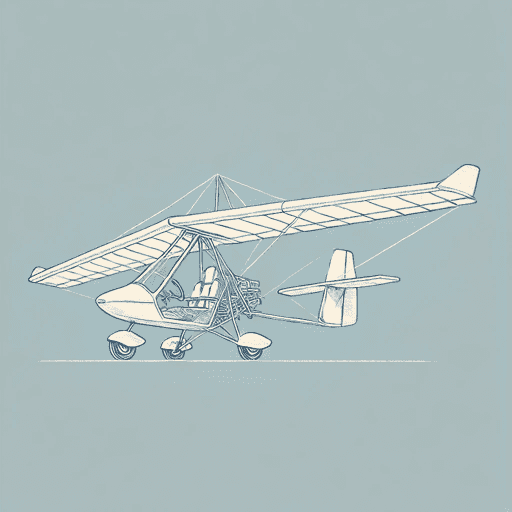
The Ultralight
Content Warning: This section of the guide includes discussion of addiction as well as grief due to the loss of immediate family members (father and sister).
Addie’s ultralight is a symbol of security to Addie, who associates the plane with fond memories of her father before he passed away: “My dad used to take me up in it. I always felt safe with him. And happy. After he died, I wasn’t happy anymore. Flying the ultralight makes me feel like he’s still with me” (234). After crashing, the plane returns to its role as a symbol of safety and security when Jo and Marty disassemble it to create the makeshift stretcher for Addie.
For Jo, the ultralight also symbolizes safety and security at the novel's start; she has little else to look forward to while coping with her mother’s addiction and craves the stability of each day’s consistent viewing of The Desert Aviator. The ultralight also provides a vicarious feeling of adventure for Jo, so it represents freedom and release from her worries. Once the ultralight crashes, the plane’s symbolism changes for Jo. Her ideas for its new use as a stretcher prove she is capable and resourceful, so the plane’s parts stand for her future potential as a problem solver. Although she will never fly in Addie’s ultralight, Jo learns that the adventure it symbolizes is a realistic possibility.
Maps
The motif of maps begins in the novel’s first chapter and continues throughout the book. Maps represent a path forward for Jo, and although her initial pessimism will not allow her to admit it, they symbolize the way toward a hopeful and fulfilling future. Jo holds dear the map of Alamo Lake that she created; not only does her discussion of the map in her interior monologue reveal indirectly that she is a visual learner and a talented artist, but it also shows how she esteems adventurers and dreams of becoming one: “Figuring out where Addie flies has been fun. It makes me feel like Marie Tharp, who mapped the ocean floor, or Kiea Shingareva, who mapped the moon. Alamo Lake isn’t exactly the moon, but it’s pretty cool to discover something, even if it’s something small” (4). Her map is a crucial item to take along on her quest. The map motif is also evident in the plot complication with the bike accident: The map is soaked by spilled water.
Later, the map motif surfaces when Jo uses the wall map of Alamo Lake in the Flipside Café to update and detail her own. Joanie Cash sees Jo’s handiwork and boosts Jo’s confidence regarding her skills: “You’re quite the cartographer” (164). Jo’s updating and revising the map shows that she understands the need for accuracy and change in undertaking serious endeavors. Her updates prove lifesaving, as the three girls rely on Jo’s map in the desert. It provides a visual way for Addie to communicate the path out; she wisely draws the best route on the map before falling unconscious. This literal value of mapping suggests a figurative meaning echoed throughout the novel on the tools and support needed to follow any unfamiliar path; as Jo says to Addie after her mother’s treatment begins, “[…] at least I won’t be going through the hard stuff alone anymore” (298).
Travel
The author uses the motif of travel to help demonstrate Jo’s significant character arc. Throughout their early direct message conversations, Jo and Addie excitedly plan to travel to distant places like Paris and Egypt in the ultralight. When reality comes back to Jo, however, her negative outlook regarding their travel dreams reveals her inner dread that results from her mother’s addiction and its impact: “You can get excited about trip, remember?” “That’s never going to happen. Nothing ever changes or gets better. Everything is always the same” (192).
Jo’s dreams of future travel surface in the middle of her quest to find Addie. She tells Joanie Cash she has never flown before, and Cash’s reaction—“My dear, you must remedy that as soon as possible” (169)—prompts Jo to pause in her forward progress and watch Cash fly away: “I pretend I’m taking off too” (171). In a fitting conclusion to the book, Jo’s return to hopefulness after saving Addie and prompting her mother’s treatment is symbolized by her first flight far above Phoenix and her consequent new perspective on her life.

Unlock the meaning behind every key symbol & motif
See how recurring imagery, objects, and ideas shape the narrative.
- Explore how the author builds meaning through symbolism
- Understand what symbols & motifs represent in the text
- Connect recurring ideas to themes, characters, and events