Against the Loveless World
Against the Loveless World
A modern alternative to SparkNotes and CliffsNotes, SuperSummary offers high-quality Study Guides with detailed chapter summaries and analysis of major themes, characters, and more.
Summaries & Analyses
Quizzes
NEWReading Tools
Games
Parts 2-3Chapter Summaries & Analyses
Part 2: “Iraq” - Part 3: “Jordan”
Part 2, Chapter 4 Summary: “The Cube West”
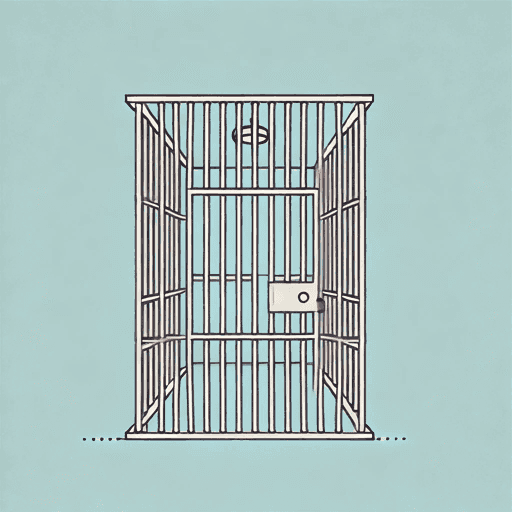
The Cube is a small, technologically advanced room in an Israeli prison. It contains a bed, a concrete sink, and a shower which Nahr has named “Attar.” The shower comes on intermittently, without any set schedule, and sprays water out for seven minutes exactly. She loves this shower, and is always grateful when she is able to bathe.
Nahr recalls a journalist once coming and trying to talk to her about Iraq’s invasion of Kuwait. She reflects that the journalist’s worldview is biased and his understanding is limited. He thought that the invasion itself, and not what happened when Iraq withdrew, was horrific. He was also sure that the Kuwaitis held it against the Palestinians that Yasser Arafat had sided with Saddam.
Part 2, Chapter 5 Summary: “Six Months”
Kuwait was once a small village in the Ottoman province of Basra. During the breakup of the Ottoman empire, the British noticed Kuwait’s strategic oil reserves and gave it statehood, reasoning that such a small, new country would be easy to exploit.
When Iraq invades, Nahr initially does not care about the politics of the invasion because the invasion saved her life from her attackers. Additionally, the Kuwaitis treat Palestinians poorly, as they resent the presence of foreigners in their country. The Iraqi soldiers treat the Palestinians better. Nahr’s brother Jehad, however, follows current events closely and does not support Saddam or his incursion into Kuwaiti territory. He points out the human rights violations being committed in Kuwait, and also notes the big-picture problem with Saudi Arabia’s choice to allow American troops to amass on their border: The Middle East, he argues, does not need the presence of more Americans.
The war causes major disruptions to life in Kuwait. The store where Nahr works closes, so she opens up a makeshift salon in Um Buraq’s home. In October, Um Buraq’s two servants flee back to India and Jehad returns home from Amman, where he has been studying Russian before beginning his degree program in Moscow. Not long after his return, rumors of an American invasion begin to circulate with greater frequency. The country is split between those who welcome the advance of the US army and those who resent American meddling in the region. Jehad tries to get Nahr, their mother, and grandmother to flee to Jordan, but they will not go.
Nahr’s friend Sabah is already in Amman and says that it is unpleasant and corrupt. Although the Palestinian leader Yasser Arafat supports Saddam and Palestinians are even less welcome in Kuwait than they were before the war, no one foresees the anti-Palestinian crackdown that comes when the Iraqis are driven out of the country. The police come and arrest Jehad. They forge documents purporting to prove that he collaborated with Iraqis during the occupation, in spite of the fact that he was in Amman for all but the last few days of it. They keep Jehad in custody, just because he is Palestinian. Nahr returns home, where their landlord, angry at Yasser Arafat, evicts them. He cites their probable support for Saddam as his justification for the eviction.
With the help of a human rights lawyer, the family secures Jehad’s release. Kuwaiti authorities beat him and he will not speak about his experiences. Nahr approaches Um Buraq for financial assistance, but Um Buraq has no money. The Kuwaiti government is beginning to unfreeze everyone’s bank accounts, but the banks are only allowing small withdrawals, and the lines are long. Um Buraq suggests Nahr approach one of her former customers, the man who impregnated her. He works at a bank, and although he subjects her to a brutal sexual assault, he does give Nahr the balance in her accounts. During the rape, she memorizes his personal identification number (PIN) and steals his bank card. In the days and weeks that follow, Nahr and Um Buraq slowly drain his savings account. Due to Jehad’s treatment in prison and the continuing pressure on Palestinians in Kuwait, the family finally flees to Amman.
Part 3, Chapter 6 Summary: “The Cube North”
On the north wall of Nahr’s cell, there is a set of automated shackles and a toilet. The shackles produce a screeching noise when she is supposed to chain her wrists to the wall, and Israel cites its willingness to decrease the volume as evidence of its interest in human rights. They deny Nahr all visitors except family, although her particular family members have been blacklisted and are not allowed to see her. She was also denied a pencil until she began defacing the walls of her cell with menstrual blood and feces. The toilet, like the shower, operates only intermittently. Flushes are random and, as a result, Nahr’s cell often has a foul odor. She prefers it to the harsh chemical scent of the cleansers that, also intermittently, are released into the cell.
Part 3, Chapter 7 Summary: “Unsteady Earth”
The family initially struggles in Amman. They can afford only a small, one-bedroom apartment. The city feels bleak and hostile. Nahr’s mother and grandmother, who were internally displaced within Palestine’s borders before becoming refugees in Kuwait, adjust more readily to their new home. Nahr, who has never been a refugee and knew only Kuwait, feels adrift. Nahr’s mother gets a job sewing elaborate, traditional wedding gowns, and she suggests that Nahr open her own salon. Nahr finds out that Um Buraq is in prison: One of her neighbors turned her in for collaborating with the Iraqi army.
Most Palestinians in Amman remain glued to media coverage of the ongoing crisis in the Middle East. When news breaks that American President Bill Clinton has brokered a peace deal between Palestine and Israel, Jehad is hopeful that they will be able to renew their residency permits—long denied to them by the Israeli government—and return home. He reveals a connection within the Palestinian Liberation Organization who might be able to help him. Shocked that he knows someone in the militant Palestinian rights group, Nahr questions whether or not it is even worth it to return to Palestine. Jehad argues that it is only a matter of time before they will be forced out of Jordan, and they have a right to reside legally in their home country. He is successful in his endeavors, but only for himself and Nahr. Their mother and grandmother, having not had the same kind of documentation as the younger generation, are denied the right to return to Palestine as anything other than visitors.
Jehad and their mother make the first visit to Palestine while Nahr remains home with her grandmother. Palestine is like a different country, her mother observes. Palestinians are treated like unwelcome foreigners, while Jewish men and women from Europe and the United States now hold all of the important positions in business and politics. Palestinians are forced to go through militarized checkpoints through which Jewish citizens pass without stopping.
Jehad shares news of Bilal, an important dissident and brother to Nahr’s husband. He has recently been freed from an Israeli prison and is now tending sheep. Jehad notes quietly that he is still active in the resistance movement: The Oslo Accords, he claims, are mostly for show, and Palestinians are still organizing in hopes of fighting for their freedom. He tells Nahr that he spoke to Bilal about the issue of her divorce and Bilal has been authorized to help facilitate it.
Parts 2-3 Analysis
Although each section of the novel begins in the Cube, in this section Nahr quickly progresses to a discussion of the post-Ottoman history of the Middle East. She notes the role that the British government played in the drawing of new regional borders following World War I and the dissolution of the Ottoman Empire. The British helped to establish Kuwait as its own state because they felt its small size would render it easy to control, and they wanted access to its strategic (and lucrative) oil reserves. In recounting the creation of this small, unstable state and Iraq’s invasion of it many decades later, the author emphasizes how Western powers have often been involved in creating or perpetuating Middle Eastern conflicts.
History becomes personal for members of the Palestinian diaspora in part because they have been left effectively stateless, and they are not always able to leave unstable areas when conflict arises. Their uneasy situation links The Impact of Displacement and Diaspora to wider geopolitical events. Nahr notes that “[g]eopolitical news was a staple in local conversations, especially among the two hundred fifty thousand Palestinians who were kicked out of Kuwait” (124). Palestinian communities are often impacted by forces beyond their control, and because they are refugees everywhere they go, they frequently face discrimination. Since the Palestinian leader supported Saddam Hussein’s invasion, they are stigmatized in Kuwait and quickly become unwelcome there.
Nahr remains resilient during the war in Kuwait, making money both through sex work and as a jack-of-all-trades beautician. Nahr’s attitude toward The Complexities of Sexuality and Women’s Autonomy begins to change in this section. Nahr takes a more pragmatic and survivalist approach to sex work during this time period, especially since Um Buraq, who is struggling financially herself, can only point Nahr in the direction of men Nahr could potentially take advantage of. When Nahr is brutally raped, she steals banking information from her rapist so that she can drain his bank accounts. After his horrific treatment of her, Nahr begins to understand what Um Buraq means when she rebukes men and claims that sex work is ultimately about exploiting men rather than women. Nahr’s character development is particularly evident during these scenes, as she begins to feel that the only way a woman can wield power in a patriarchal society is to forcefully take it.
The family ultimately flees Kuwait and moves to Amman, where Nahr feels markedly lost. Her mother and grandmother are familiar with life as a refugee, but Nahr feels cut off from everything she’s ever known. This situation emphasizes another angle of The Impact of Displacement and Diaspora: Each generation has their own understanding of what it means to be part of the diaspora, and the different generations are not always able to understand and empathize with one another’s feelings and experiences.
Nahr’s relationship with Palestine is, however, about to undergo a significant change. Nahr receives, for the first time, a residency card entitling her to stay in her family’s home country. Through conversations with her brother, Nahr learns about life under Israeli occupation. She begins to understand that there is a two-tier system of citizenship in Palestine and that Palestinian residents do not have freedom of movement. As she experiences Palestine directly for the first time in the next parts of the novel, Nahr’s understanding of Resistance in the Face of Occupation and Oppression will continue to grow.

Get in-depth, chapter-by-chapter summaries and analysis from our literary experts.
- Grasp challenging concepts with clear, comprehensive explanations
- Revisit key plot points and ideas without rereading the book
- Share impressive insights in classes and book clubs