Against the Loveless World
Against the Loveless World
A modern alternative to SparkNotes and CliffsNotes, SuperSummary offers high-quality Study Guides with detailed chapter summaries and analysis of major themes, characters, and more.
Summaries & Analyses
Quizzes
NEWReading Tools
Games
Parts 4-5Chapter Summaries & Analyses
Part 4: “Palestine” - Part 5: “Jordan, Again”
Part 4, Chapter 8 Summary: “The Cube South”
Part 4, Chapter 9 Summary: “The Layers of Absence”
With some difficulty, Nahr is able to enter Palestine. The border guards refuse to recognize her new identification card and issue her a tourist visa instead. Nahr is to stay with her mother-in-law and brother-in-law, Bilal.
Bilal apologizes for the way that his brother Mhammad treated Nahr, and does his best to make sure that she is comfortable. He explains to her that the Oslo Accords divided the country into different zones, and that the zone where he and his mother live is being heavily colonized by Israeli settlers. So far, they have managed to keep their house, but they are the last Palestinians in the area. It is not likely that they will be allowed to remain for much longer.
Bilal arranges for Nahr to visit her mother’s childhood home in Haifa. There, in the garden, the home’s Jewish occupier begins screaming at Nahr in Hebrew. She slaps Nahr, and Nahr repeatedly punches her in response. Nahr’s driver helps her out of the garden and back into his car. He explains that the woman first approached him with a story of another Arab woman who had visited a couple of months ago. The Arab woman had been crying, and the Jewish woman responded not with kindness, but anger. The Arab woman had been Nahr’s mother, overcome with emotion upon visiting her childhood home.
Nahr spends more time with Bilal, and begins to suspect that he is part of the Palestinian resistance movement. She confronts him and finds out that he, not sure of her motives, has been spying on her. The two argue, but Bilal decides that he trusts her. His friend Jumana invites Nahr to one of their group’s meetings.
Part 4, Chapter 10 Summary: “A World Beneath and ‘Our Spot’ Above”
Nahr attends a resistance meeting. It is in a secret network of rooms and tunnels below the beauty salon that Jumana operates. A small group of people has gathered, and they share a meal with Nahr. They explain to her that, because she has a tourist visa, she is allowed to enter Jerusalem. They would like her to transport weapons for them: As Palestinian locals, they are not allowed to enter the city, nor are they allowed inside of cars with special license plates that denote free movement.
Nahr does not want to take this risk, so she gets up to leave. Jumana then makes a disparaging remark about Nahr’s sex work, and Nahr flies into a rage. She tells Jumana that it is only privileged women who get to choose how they make money, and that a “truly revolutionary” ideology is to relinquish the idea that it is appropriate to judge another woman for her actions. Jumana begins to cry, and Nahr, still in a rage, exits.
Nahr wants to immediately leave Palestine, but Bilal asks her to stay so that they can talk. He tells her that he thinks that she is more courageous and revolutionary than any of his friends, and that even when rumors began to circulate about her after the divorce, he and his mother quelled them. Bilal then reveals that Nahr’s husband Mhammad has always been secretly gay, and that he left Nahr because he did not want to be married to a woman. Bilal tells her that he once discovered Mhammad with his lover, an Israeli soldier, and that two other Israeli soldiers also stumbled upon the pair right after Bilal did. Bilal and Mhammad killed the two soldiers, but the incident forever altered their relationship and they do not have contact. Nahr is relieved to finally understand the dissolution of her marriage, and heads back to Amman.
Part 5, Chapter 11 Summary: “The Cube Up and Down”
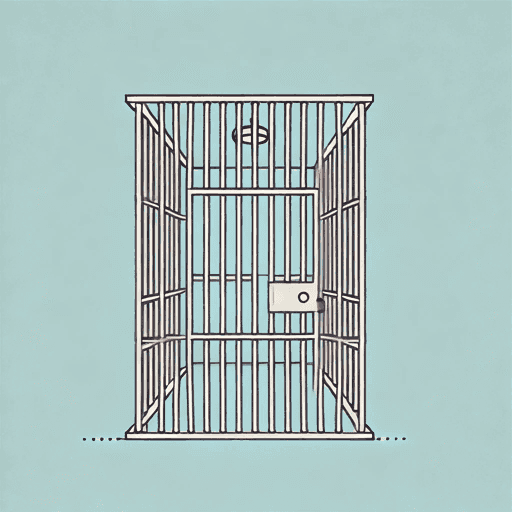
There is a camera in the top of Nahr’s Cube. Sometimes Klara, the friendly prison guard, comes to her cell. The two are not able to talk very much. Nahr shares that because her muscles began to atrophy, the guards began to take her, blindfolded, on walks. Sometimes she is even taken outside. The sun, even through a blindfold, is beautiful.
Part 5, Chapter 12 Summary: “Money Softens the Heart”
Jehad is waiting for Nahr upon her return to Amman. She has been gone for nine weeks, and much has changed. Her grandmother has come into a sizeable inheritance, with money arranged for her through an organization interested in archaeology in her home village. Nahr’s mother has, after years of finding work only as a seamstress, found a desk job. She is filled with a newfound sense of dignity and pride, and is happier than she has ever been.
Nahr also finds a new job, but the pay is abysmal, and she is miserable in Amman. After receiving an email from Bilal, she decides to return to Palestine. Israelis murder Bilal’s friend, also a shepherd. Nahr is not sure that a happy life awaits her in Palestine either, but she feels that it is her destiny to return. After standing up to Jumana, she feels empowered and free.
Parts 4-5 Analysis
Parts 4 and 5 focus on Palestine and the conditions for Palestinian citizens there, introducing Bilal’s role in the Palestinian liberation movement. Nahr’s experiences in Palestine leave her more aware that there is a two-tier system of rights in the country, with the Israeli occupation disenfranchising the Palestinian people. Although initially leery of getting involved, the plight of Palestinians moves Nahr and she grows more interested in Resistance in the Face of Occupation and Oppression.
Nahr’s introduction to Palestine is framed through observing multiple kinds of inequality. At the border, she receives a temporary tourist visa in spite of her right to return as a citizen. She begins to understand that Palestinians are subject to strict restrictions that Israeli citizens are not. She learns that the country has been divided into different zones, and that although they are supposed to be residential designations, the government uses the zone system to deny Palestinians freedom of movement. Israeli citizens can travel between the zones, but Palestinians cannot. When staying with her mother-in-law, she learns that the family property is located in an area desirable to Israeli settlers, and that with the blessing of the government, they occupy properties that belong to Palestinians. Nahr is horrified to realize that her mother-in-law is likely to be forced out of her home in the near future. These experiences help sow the seeds of Nahr’s interest in the resistance movement.
Nahr’s feelings crystallize after one critical scene in which she returns to visit her mother’s childhood home. The Israeli woman who now lives on the property attacks Nahr. She learns that the woman also attacked her mother when she visited, and she is horrified that she is perceived as the aggressor during this incident because she fights back. Nahr regards the situation as deeply immoral, and this scene becomes a turning point for her. She remarks, “The ceaseless accumulation of injustice made me want to fight the world” (212). Although she will continue to wrestle with the decision to become a resistance fighter, this becomes a key moment in the development of her political beliefs and identity.
This section of the novel also showcases Nahr’s burgeoning relationship with her husband’s estranged brother, Bilal. Bilal provides important context for the dissolution of Nahr’s marriage. She learns that Mhammad is gay and that he has been for many years romantically involved with an Israeli soldier, which adds another important dimension to Nahr’s understanding of The Complexities of Sexuality and Women’s Autonomy. While Mhammad, as a man, has the power to end his marriage to Nahr without being blamed for his behavior, he also faces oppression for his sexuality. Since relationships between men are forbidden in Arab society, both gay individuals and the people they come into contact with suffer. Nahr realizes that if Mhammad had been able to live openly and freely gay, he never would have married her. She would have escaped the stigma of being an abandoned woman, and might have had an entirely different life. Mhammad’s own difficulties thus explore another significant dimension of the sexual politics of Arab society, with his own sexual oppression echoing the oppression that Nahr experiences as a woman.
Nahr also faces discrimination in Palestine for her past sex work. Jumana judges Nahr openly, and this moment because an important way for Nahr to show the relationship between sex work and autonomy. She explains to Jumana that self-determination for women in Arab society is a privilege, and that the true “revolutionary act” is to refrain from judging women who are less empowered. She takes back her own narrative, and as a result both Jumana and Bilal recognize her as strong and resilient. Bilal tells her, “You, more than any of us, are a revolutionary” (186). His willingness to accept Nahr’s past without judgement foreshadows their romantic connection.

Unlock all 51 pages of this Study Guide
Get in-depth, chapter-by-chapter summaries and analysis from our literary experts.
- Grasp challenging concepts with clear, comprehensive explanations
- Revisit key plot points and ideas without rereading the book
- Share impressive insights in classes and book clubs