Against the Loveless World
Against the Loveless World
A modern alternative to SparkNotes and CliffsNotes, SuperSummary offers high-quality Study Guides with detailed chapter summaries and analysis of major themes, characters, and more.
Summaries & Analyses
Quizzes
NEWReading Tools
Games
Parts 6-7Chapter Summaries & Analyses
Part 6: “Palestine Always” - Part 7: “Between Freedom”
Part 6, Chapter 13 Summary: “The Cube, the Space Between”
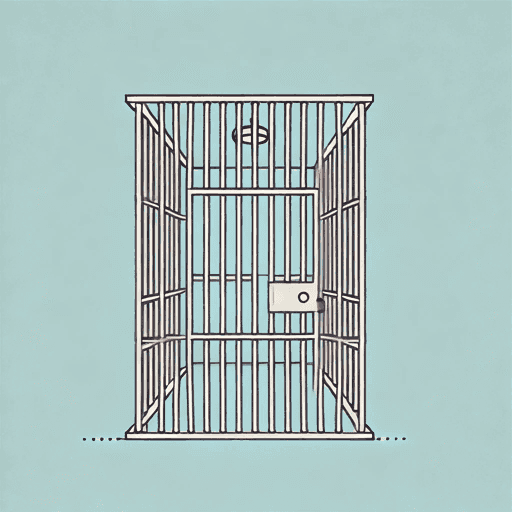
Nahr finds out that her grandmother has died. She is bereft. Solitary confinement is increasingly difficult. Her days are characterized by a silence that is not calming or comforting. Klara, the Russian guard, disappears. The new guards do not speak to Nahr.
Part 6, Chapter 14 Summary: “Anatomy of Home”
Nahr returns to her mother-in-law’s home in Palestine. She is happy to be back and has even forgiven Jumana after Jumana apologizes. She agrees to meet with her, and feels true warmth in her presence.
Nahr learns that there is a resistance group even amongst the elderly women in the area, “Aisha’s Army,” which organizes prison visits for women whose relatives have been incarcerated by the Israeli army. This time around, Nahr agrees to help Bilal, Jumana, and their cell of resistance fighters. There is a smuggling operation to transport weapons, and Nahr and Jumana will create a diversion if anything goes awry. Nahr feels a sense of purpose and contentment. There is also a growing attraction between her and Bilal that she can no longer ignore.
The operation goes smoothly and the group’s illicit activity is not detected. On their way back, Jumana and Nahr learn that Jumana’s shop is on fire. Bilal rushes to the scene and, although he tries to assure her that the damage is minimal, Jumana worries that the series of caves and tunnels underneath her building will be discovered. The cause of the fire was a hot plate that was left on, and Nahr realizes that it was she who forgot to turn off the device. She feels guilty, but Jumana does not blame her.
The two women work to re-paint the shop as Bilal and Jumana’s brothers fix the carpentry. Again, Nahr feels a sense of community, belonging, and peace.
Part 6, Chapter 15 Summary: “Chaos Theory”
Bilal inspects the smuggled weapons. They are largely outdated Soviet models and most are useless. The group is unsure how to proceed: Some argue that their goal should be to kill Israeli soldiers, while others argue that they should try to amass more weapons. Nahr wants to sow chaos amongst Israeli troops who are used to Palestinians complying with even the most ludicrous orders. They agree on the need for a website, and set up an informational portal with a restricted link to a message board, accessible to only a few people. They hope to use the site to communicate and spread the word about future plans. They also decide to attack Israeli soldiers at a checkpoint using long-range wasp and hornet killer, hoping to steal weapons from soldiers after they mace them with the inspect spray.
Bilal asks Nahr to help him with a clandestine operation to restore water access to his almond trees. The Israeli government helps settlers build irrigation systems, stealing water from Palestinian farms. They then seize the Palestinian land holdings, citing the inadequate care Palestinian farmers take of their land. Bilal has acquired enough tubing to divert some of his water back to his own trees from the settlers who have stolen it, and Nahr helps him to set everything up.
Not long after the operation, Bilal is arrested. He is held in an Israeli prison for 18 months without charges, and then released. At his homecoming, there is a large feast. Nahr misses her family, but thinks that she belongs in Palestine.
Part 6, Chapter 16 Summary: “Harvest”
It is obvious to the entire community that a romance is blooming between Nahr and Bilal, so Nahr moves out of his mother’s home. She decides to stay with Jumana, who is worried because her own love interest, Bilal’s friend Ghassan, was also imprisoned by the Israelis and has not yet been freed.
Nahr, Jumana, Bilal, and all of their other friends and family gather to help with the olive harvest. Olives have become the main source of income for many Palestinians, and the harvest is an important event. Nahr initially enjoys the labor and again feels a sense of kinship. Suddenly, Israeli settlers gather at the edges of the olive groves and throw rocks at the Palestinians working. When the Palestinians begin to fight back, also with rocks and sticks, a group of Israeli soldiers rushes to their defense. They kill a small Palestinian boy and set fire to the groves. These kinds of actions are commonplace, and although it is horrific to experience, no one present is surprised. Bilal is arrested again. In his absence, his brother Mhammad returns and his mother dies. Nahr and a large crowd of mourners organize a funeral.
In prison, Bilal goes on a hunger strike. Everyone agrees that he and Nahr will marry upon his release, and this prospect excites Nahr. The two have not spoken of it formally, but Jumana assures Nahr that Bilal, too, is sure that marriage is in their future. His hunger strike begins to gain media attention, and ultimately he is freed.
In the days leading up to his return home, Ghassan and the others begin to organize a new operation. They stockpile a large number of crossbows in anticipation of conflict with Israeli officers.
Part 6, Chapter 17 Summary: “Homecoming”
Bilal returns home, weakened by his hunger strike. He and Nahr discuss marriage, and she asks him to tell the rest of the story about Mhammad and his Israeli lover, Itamar. Nahr learns that the entire altercation was Mhammad and Itamar’s plot to make Itamar appear heroic for surviving a brutal Arab assault that killed several of his fellow soldiers. They had hoped to advance Itamar’s career. Bilal is not sure if Mhammad has always been secretly spying for the Israeli army or if the plot was a one-time attempt to help his beloved.
In retaliation for the dead Israeli soldiers, the Israeli army launched a campaign of terror that saw many Palestinians tortured and displaced from their homes. Although the authorities were never able to prove that Bilal had been part of the incident, he lost his childhood home as a result. Nahr contemplates Mhammad’s role in the incident and reflects on how strange it is that she was married to someone who was ultimately a stranger to her.
Part 6, Chapter 18 Summary: “A Time for Us”
Four months later, Nahr and Bilal marry. Nahr’s mother and grandmother attend the wedding. Her mother has made her a symbolic wedding dress sewn with colors and patterns that pay homage to the various areas of Palestine. After the wedding, they are happy to be alone. It feels to Nahr as if they have been married for their entire lives. Bilal tearfully explains to her that because he was tortured so severely, he is not sure he can have sex with Nahr or provide her with children. Nahr confides in Bilal that she feels she might be too emotionally damaged for physical intimacy. The two agree that their relationship will be whatever they want it to be, and that for now they are happy just to hold each other.
Ariel Sharon is now in power. The Second Intifada is underway. He begins a bombing campaign that targets Palestinians. A curfew is imposed and Palestinians are forced to remain inside of their homes. Bilal, who is a trained chemist, begins making an endocrine-disrupting compound that he intends to put into Israeli water supplies. When Palestinians are once again allowed outside, Nahr goes to water the family’s olive groves. Although Palestinians have been told that it is permissible for them to be on the street, Israeli soldiers kill people, seemingly indiscriminately.
Part 6, Chapter 19 Summary: “Redeeming History”
People in Nablus, Ramallah, and Bethlehem fight back against the Israeli army. Bilal and Nahr read a newspaper article about a series of strange symptoms that the Israeli settlers near his family’s land have begun to experience: Women are unable to conceive children and men are growing breasts. Knowing that an investigation is imminent, the two return to the almond grove’s irrigation system, remove the chemicals, and clean the equipment.
By the time that Israeli authorities test the water supply, no trace remains of the endocrine disrupters that they pumped into the pipes. After the investigation is closed, they resume their activities, and the settlers once again begin to show troubling symptoms. Believing they have been cursed by Arabs, they begin to leave. Itamar raids Bilal’s house with a group of soldiers, but Bilal stands up to him and he leaves, seemingly defeated.
The violence of the Second Intifada continues, and Bilal and his friends work secretly for the resistance movement. They are sure that many of them will be arrested soon. Nahr discovers that she is pregnant, and then learns from Jehad that their grandmother has died. Bilal is forbidden to leave the country, but he arranges for a car to take Nahr to the border. On the way, she hears news on the radio that the Palestinian resistance has carried out two operations. She realizes that Bilal rushed her off in her taxi because he was planning something.
Nahr finds a letter from him amongst her things confirming her fears. She learns that Bilal and the others have put the hornet-spray plan into motion, and that the ensuing chaos was the result of a massive military response. The taxi is hit by helicopter fire and Nahr is injured. Israeli soldiers pull her from the wreckage. They know her name.
Nahr wakes up in an Israeli prison hospital and is soon taken to a small room to be interrogated. She is questioned, beaten, and then imprisoned with Israeli women who hate her. She confesses to sabotaging the water pipes. Bilal remains free, and she is happy that he escaped.
Nahr is tried and convicted of terrorism, but during the trial she sings Palestinian songs. She feels a sense of freedom in spite of being in chains. Images are shown in the media, taken years ago, of Nahr dancing for men and money in Kuwait. She is called a “whore.” She does not care.
Part 7, Chapter 20 Summary: “The Cube The Unreachable Beyond”
Nahr is taken in chains to the Jordanian embassy. She is being released.
Part 7, Chapter 21 Summary: “Week Two”
Part 7, Chapter 22 Summary: “Week Three”
Nahr struggles. She is happiest when she is alone, and is always unhappy when her mother allows visitors, even well-wishers, into the house. She and her mother argue. She is not at peace.
Part 7, Chapter 23 Summary: “Weeks Four and Five”
Part 7, Chapter 24 Summary: “Weeks Six, Seven, Eight, Nine”
Part 7, Chapter 25 Summary: “Joy”
One day at the bathhouse, the attendant secretly gives Nahr a small envelope. It contains a coded letter from Bilal. He is alive and has been in hiding. He tells her that he loves her and asks to meet. She knows that they cannot be together openly, but she feels a sense of gratitude and triumph that the two survived everything that they have endured.
Parts 6-7 Analysis
When Nahr returns to Palestine, she feels a sense of group cohesion and acceptance, particularly among the women involved in the resistance. This sense of belonging heightens her interest in Resistance in the Face of Occupation and Oppression, eventually leading to her direct involvement with the movement. She learns about Aisha’s Army, a network of women who organize prison visits. Nahr observes the inherent inequality between the Israelis and the Palestinians as they fight for control of the country: The Israelis have an American-funded army and access to a wide range of weapons and military artillery, while the Palestinians fight back with rocks, sticks, insecticide, and homemade weapons. In spite of this lopsided arrangement, Nahr is even more determined to fight back because, when she looks at Palestine, she believes that, “We are being erased from her story” (289).
Nahr becomes more convinced of the need to fight back when a group of Israeli settlers gather to throw rocks at Palestinians as they harvest olives. Although the Palestinian characters regard such behavior as commonplace, they decide to fight back, also with rocks and sticks. They then realize that the Israeli army has been waiting for their act of self-defense. They begin shooting at the Palestinians and kill an innocent Palestinian child. Such moments fuel Bilal, Jumana, and now Nahr’s belief in the validity of fighting to regain control of their country, and although they are outgunned, they feel they have no other choice.
Against the backdrop of this upheaval, Nahr and Bilal marry, offering a happy conclusion to Nahr’s experience of The Complexities of Sexuality and Women’s Autonomy. They accept each other without judgment, and Bilal’s willingness to look past the sex work that so many men in their community have judged Nahr for speaks to his willingness to accept Nahr’s autonomy as a woman. Bilal thus becomes an important contrast to the violent masculinity Nahr has experienced throughout the novel, with his character representing the possibility of change and greater acceptance of women’s freedom within Arab society.
The novel ultimately reinforces heteronormative relationships, juxtaposing Nahr and Bilal’s relationship, which serves as a source of strength and hope, with Mhammad and Itamar’s relationship, which becomes a source of death and destruction. The text offers a negative and potentially problematic portrayal of Mhammad and Itamar, the novel’s only two gay characters, painting them as scheming and manipulative figures who attempt to advance Itamar’s career at the expense of other people’s lives.
Nahr shows her strength and determination in these final chapters. She survives 16 years in an Israeli prison with her resilience and dignity intact. As she readjusts to life outside of the Cube, it becomes obvious that incarceration did not break her spirit. The novel’s ending, featuring the planned meeting between Nahr and Bilal, embodies hope for the future of Palestine. In spite of the novel’s dark subject matter and many moments of pain and trauma, the final image is thus one of positivity, love, and optimism.

Unlock all 51 pages of this Study Guide
Get in-depth, chapter-by-chapter summaries and analysis from our literary experts.
- Grasp challenging concepts with clear, comprehensive explanations
- Revisit key plot points and ideas without rereading the book
- Share impressive insights in classes and book clubs