50 pages • 1-hour read
All Things Bright and Beautiful: The Warm and Joyful Memoirs of the World's Most Beloved Animal Doctor
A modern alternative to SparkNotes and CliffsNotes, SuperSummary offers high-quality Study Guides with detailed chapter summaries and analysis of major themes, characters, and more.
Chapters 1-11Chapter Summaries & Analyses
Content Warning: This section of the guide includes depictions of substance use, animal cruelty, illness, and death.
Chapter 1 Summary
One night, James Herriot, who goes by “Jim,” gets into bed with his wife Helen and thinks about all that he is grateful for. It’s winter in Darrowby, the town in the Yorkshire Dales where he lives, and it is very cold. Jim is grateful that ever since he married Helen, he has someone to keep him warm.
A phone call from local farmer Harold Ingledew interrupts Jim’s peaceful reverie. Harold needs help with a ewe. Jim is one of the Darrowby veterinarians and often gets calls at odd hours. He tears himself out of his warm bed and heads into town. Harold is drunk when they meet up and sings loudly throughout the interaction. Jim tries to temper his annoyance while helping the ewe, who’s having trouble giving birth. However, his happiness returns when he successfully delivers the lambs. On the way back home to Skeldale House, he remembers his blessings and rejoins Helen in bed.
Chapter 2 Summary
Jim and Helen live at the top of Skeldale House. The veterinary surgery is below. Jim’s boss Siegfried Farnon and his brother Tristan Farnon have let him and Helen stay there for free. Jim appreciates the space and the view from the window.
Later in the day, Jim reports to Robert Corner’s farm to help with an injured foal. During the examination, Robert’s dog Jock patiently watches Jim work. However, Jim notes that there’s Jock isn’t always so placid. He is a sheepdog and loves to run. Oftentimes, Jim lets him run alongside his car. He recalls how Robert once got new puppies, and Jock would compete with them. Jim noticed how they wore Jock out. After Robert sold the puppies, Jock returned to his normal self. Jim imagines he was relieved to be on top again.
Chapter 3 Summary
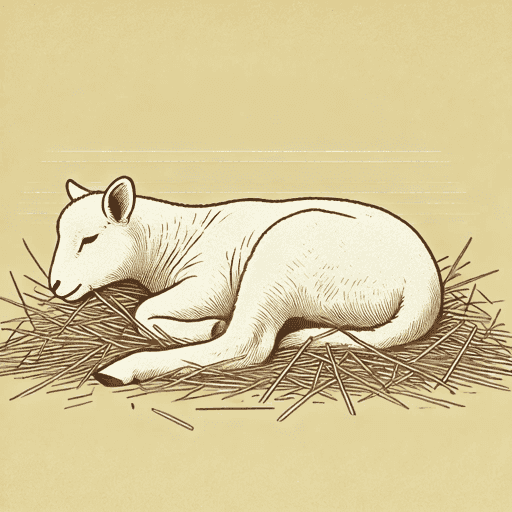
Next, Jim reports to Rob Benson’s farm to assist in lambing. Jim is familiar with lambing, as he’s been a country vet in the Dales for three springs. While assisting one ewe give birth, Jim notices a runt lamb from another ewe searching for milk. Rob calls this lamb Herbert because he reminds him of his own son.
All of the ewe’s lambs die in childbirth. Worried that the ewe will die, too, Jim and Rob assign her as Herbert’s new mother since Herbert’s mother rejected him. They skin one of the dead lambs, put its skin onto Herbert, and push him near the ewe. She takes an immediate liking to him. A week later, Jim discovers that Herbert and the ewe are inseparable. Jim studies the landscape and marvels at the natural world.
Chapter 4 Summary
Joe Mulligan brings his dog Clancy to the surgery. Clancy has been vomiting and Joe doesn’t know why. Jim gives him some medicine but can’t find anything wrong with him. Over the following weeks, Joe continues asking Jim or Tristan about Clancy’s condition. Siegfried discovers the situation and insists that Jim and Tristan need to conduct a more thorough examination before asserting that he’s fine. Finally, Siegfried takes it upon himself to do the job. Jim later discovers that Siegfried only inspected the dog for one minute before declaring that he was okay. Like Jim and Tristan, Siegfried was unnerved by Clancy’s growling.
Chapter 5 Summary
Jim meets with Mr. Pickersgill about a problem with his cows: They’ve been producing milk with flakes in it and their teats are swollen. Jim asserts he doesn’t know what the problem is but in fact suspects it has something to do with Mr. Pickersgill’s aggressive milking technique. However, Jim doesn’t want to scold Mr. Pickersgill because he’s a know-it-all and doesn’t take criticism well. Finally, one day, Mr. Pickersgill suggests they put a balm on the cows’ udders. He then complains to Jim about his bad back. Jim has a revelation and suggests that Mr. Pickersgill take a break from milking to rest his back. He can let his daughter Olive (who has a more gentle milking technique) take over and use the balm in the meantime. Over the following weeks, the cows’ condition clears up and Mr. Pickersgill’s back improves.
Chapter 6 Summary
On the way home from a morning call, Jim drives out to a picturesque spot by Drovers’ Road and luxuriates in a nearby field. He studies the sky and landscape and reflects on his life. Afterward, he returns to the surgery. Realizing he left his hoof knife behind, he sneaks around in search of Siegfried’s spare knife for his next job. Siegfried catches him and scolds him for leaving his tools around, and he gives Tristan the same lecture. Then, they’re called to Mr. Kendall’s to complete a few jobs. While working with Mr. Kendall’s animals, Kendall informs Siegfried that he left one of his tools behind on his last visit. He tells Jim and Tristan that Siegfried never visits without leaving something behind.
Chapter 7 Summary
Jim appreciates how well Helen, Siegfried, and Tristan get along. He attributes their closeness to the Farnon brothers’ involvement in his and Helen’s courtship. He remembers this time and all the advice he asked from the Farnons. One time, Jim was nervous because Helen invited him to her house after two dates. He really liked Helen but something always went wrong when they got together. The Farnons assured him otherwise.
Jim reported to Heston Grange, where Helen lived with her father Mr. Alderson, her aunt Lucy, and her two siblings. (Her mother had died years prior.) Helen made them an elaborate lunch. The conversation was awkward, and Jim especially worried about impressing Mr. Alderson. After lunch, the men retreated to the sitting room. They were relieved when Helen burst in, announcing that a cow needed urgent help. The men raced out to the field. The cow’s condition was severe, and Jim wasn’t sure he could save her. He explained the situation to Mr. Alderson, who agreed Jim should administer the proposed injection. Almost as soon as he injected the cow, she died. Mr. Alderson seemed unaffected but Jim despaired, convinced he’d ruined things with Helen.
Chapter 8 Summary
Jim reports to Albert Crumps’s farm to examine his horse. After the examination, Albert invites Jim inside for some of his homemade wine. They drink and talk for some time. Jim enjoys the wine and rapidly becomes intoxicated. Then, he gets a call to report to the Bamford farm and heads out in the pouring rain. He helps the Bamfords deliver a calf. Despite his inebriation, Jim is proud of himself.
The next day, Jim has a terrible hangover. Tristan fixes him a hangover cure at the surgery. When he tells Siegfried what happened last night, Siegfried scolds him, saying the Bamfords are staunch Methodists and are strongly against alcohol. Jim realizes they knew he was drunk.
Chapter 9 Summary
An elderly local man gets upset with Jim for letting a student operate on his cat. Confused, Jim insists he did the surgery himself. The man explains that a nosy local woman, Old Mrs. Donovan, inspected the cat and declared it student work. Mrs. Donovan is a fixture in Darrowby. A seemingly ageless woman, she wanders around town and inserts herself in other people’s business.
One day, Mrs. Donovan calls Jim to say her dog has been hit by a car. Jim reports to the scene but can’t save the dog. Mrs. Donovan is devastated.
Not long later, a police officer calls Jim to help him with an abandoned dog. The dog is locked in a shack, starving, and covered in sores. Jim insists that the police officer arrest the abusers, but the officer says the owners aren’t well and can’t be held responsible. However, he thinks Jim should put the dog down. Jim initially agrees but feels sorry for the dog, who is only a year old and has a trusting, kind demeanor. Suddenly, Mrs. Donovan appears and volunteers to take the dog. The officer isn’t sure, but Jim agrees. He patches the dog up and brings him to Mrs. Donovan’s. Over the following weeks, the dog (named Roy) improves. He and Mrs. Donovan become inseparable. Roy always shows affection to Jim when they see each other, too. Roy remains a fixture in town throughout the following years, and the whole community loves him.
Chapter 10 Summary
Jim reflects on how much his life has changed since marrying Helen. One turning point in his life was the Darrowby Show. Siegfried was going out of town and asked Jim to take his place officiating the show and judging Family Pets. Jim agreed. When he arrived, he hung out with Tristan in the beer tent. There, they saw Mr. Alderson, Helen, and Richard Edmundson. Jim despaired, convinced that Helen was Richard’s date.
Jim got called to the stewards to help with a ram. While assisting the animal with a broken horn, he noticed Helen and Richard looking on. Afterward, he had to officiate the classification of the show animals. One man got upset when Jim insisted his dog couldn’t compete because he had a fever. Others tried to trick Jim to get their pets into certain classes. The man with the dog continued bothering Jim, telling him lies about other animals and begging him to let his dog in. Then, Jim saw Helen and Richard in his periphery again. Overwhelmed, he retreated to the beer tent and rejoined Tristan.
Chapter 11 Summary
The atmosphere in the tent was more intense now. People were upset with Jim for his classification decisions. They got even more upset when Jim judged the Family Pets. (He made his decision by asking the animals’ owners about their care routines.) In the tent afterward, Jim overheard people yelling and screaming about the winner he chose: a goldfish. Feeling defeated, he headed to his car. On the way, he passed Helen’s party again. Then, his car wouldn’t start. He sat in the driver’s seat, studied the field, and felt ready to give up.
Chapters 1-11 Analysis
The opening chapters of All Things Bright and Beautiful establish the structure, style, conflicts, and themes that shape the memoir. A sequel to the bestselling All Creatures Great and Small, this volume continues Herriot’s reflections of working as a rural veterinarian in Darrowby. Like the earlier book, Herriot structures the narrative as a series of loosely connected adventures and misadventures, rendering each with detail, humor, and reflection. In each chapter, he presents a new problem, ranging from sick animals, difficult farmers, unexpected weather patterns, or relationship conflicts. From each of these personal anecdotes, Herriot draws insights into rural life and the emotional stakes of his profession.
A key theme that emerges in these chapters is that of Personal and Professional Growth. This theme is established immediately in Chapter 1, with the image of Herriot “crawl[ing] into bed and “put[ting] [his] arm around Helen” (1). The scene sets a reflective tone as Herriot compares his past life as a bachelor to his present life with Helen—this helps him to recognize the recent positive changes he’s seen in his personal life. He recalls that in his single years, he “often lay exhausted for over an hour, longing for sleep but kept awake until [his] icy limbs and feet had thawed” (1). Words like “exhausted,” “longing,” “icy,” and “thawed” capture the physical and emotional discomfort of loneliness. However, since his marriage, he can count on Helen’s presence, and he feels “the blissful warmth envelop [him] and almost immediately the events of the last two hours [begin] to recede into unreality” (1). The juxtaposition between these two periods of his life are rendered with sensory detail that mirror his emotional state. His contentment with his marriage has also altered his outlook on life. This scene—placed at the forefront of the text—establishes Herriot’s overarching way of viewing the world with gratitude, humility, and self-awareness.
In tandem with his personal development, Herriot also focuses on The Bond Between Humans and Animals, doing so with humor and emotional depth. Herriot treats all of his patients with empathy and care. While he wryly asserts that “[t]hey don’t give vets medals for bravery” (6), he always goes out of his way to treat each animal with determination, even when the situation is challenging. The reference to “medals for bravery” is an allusion to World War I, which ended before the memoir’s start; the reference also lends levity to the narrative. Herriot gets out of bed in the middle of the night to deliver lambs; he makes late night calls to treat sick cows; and he bonds with various neighborhood dogs. The anecdotes surrounding Jock and Roy particularly capture Herriot’s distinct relationship with animals. In Jock’s story, for example, Herriot inhabits Jock’s consciousness to try understanding his experience:
I suppose it sounds silly to say you could read a dog’s thoughts but everything in his posture betrayed the mounting apprehension that his days of supremacy were numbered. Just round the corner lay the unthinkable ignominy of being left trailing in the rear of that litter of young upstarts and as I drew away Jock looked after me and his expression was eloquent (15).
By imaginatively entering into Jock’s world, Herriot demonstrates his deep empathy for the dog. He doesn’t dismiss Jock’s behaviors; instead, he tries to embody his experience. This gesture of understanding affirms Herriot’s belief that animals, like people, possess individual personalities and emotional complexities.
Similarly, the story of Roy—a severely neglected dog—is about empathy and the redemptive power of love. Instead of putting the sick dog down, Herriot honors the immediate bond he feels with Roy and offers him a second chance at life. His empathy and care not only keep Roy alive, but also help Mrs. Donovan to overcome her sorrow over her deceased dog. This act transforms Roy and Mrs. Donovan’s lives, and it also infuses the larger community with joy and delight as Roy’s comic, affectionate personality becomes a mainstay of Darrowby. These two stories are rendered with wit and humor, assigning distinct personalities to the dogs and showing how human-animal connections can be transformative.

Unlock all 50 pages of this Study Guide
Get in-depth, chapter-by-chapter summaries and analysis from our literary experts.
- Grasp challenging concepts with clear, comprehensive explanations
- Revisit key plot points and ideas without rereading the book
- Share impressive insights in classes and book clubs