Audre & Bash are Just Friends
56 pages • 1-hour read
Tia WilliamsAudre & Bash are Just Friends
A modern alternative to SparkNotes and CliffsNotes, SuperSummary offers high-quality Study Guides with detailed chapter summaries and analysis of major themes, characters, and more.
Chapters 31-37Chapter Summaries & Analyses
Content Warning: This section of the guide includes discussion of child abuse, emotional abuse, physical abuse, antigay bias, illness, sexual content, substance use, death by suicide, and death.
Chapter 31 Summary
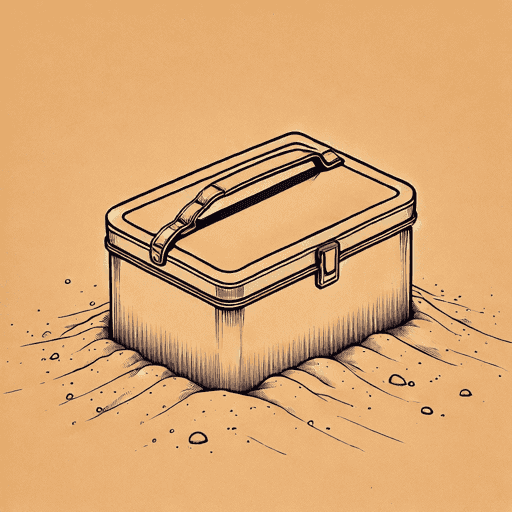
Bash sprints to the restaurant where Audre is waiting for him, and he arrives right as she’s debating leaving and never speaking to him again. Audre’s bearing is cold and distant. When he asks her about the lunchbox, she says that she needed to do something that frightens her to complete the fifth challenge and that she wanted to prove that she was strong enough to do this without him. Audre tells Bash about the memoir and how it makes her question everything she thought she knew about herself, her mother, and their family.
Bash apologizes for the way that his secrecy has contributed to her confusion and pain. He opens up about his father’s obsession with turning him into the Olympic champion Miton couldn’t be. Milton abused Bash by making him go a day without food or sleep on the bathroom floor if he didn’t win every race. By the time he was 14, he’d already endured countless athletic injuries. His father despised his love of art and surfing, his gentle nature, and his powerful emotions.
Milton belongs to a church with a virulent antigay bias, and he disowned Bash because he kissed a boy named Jaden, who was on a rival track team. The boys had been flirting with each other for years, and Jaden was in love with Bash. Jaden was heartbroken when he learned that Bash was moving to California, and his mother sent him to a boarding school in Washington because of the scandal. Bash has tried to contact him with no success. When Bash arrived in Brooklyn, he learned from his mother that Milton has prostate cancer and will likely live for only a few more months.
Bash tells Audre that he wanted nothing more than to forget about his past when he first came to Brooklyn, but now, he wants her. Audre tells Bash that she wants a tattoo.
Chapter 32 Summary
Audre and Bash go to his secret tattoo parlor in the Just Because stockroom. Until recently, Audre never thought that she would ever get a tattoo due to her aversion to needles and her discomfort with making such a permanent commitment. She hopes that the tattoo will help her feel grounded because every part of her life, except for her connection to Bash, seems unsteady. Bash admits that he’s dreamed about sharing his art with Audre in this way.
As Bash inks the number 333 on her wrist, Audre feels powerful and joyfully immersed in the present moment. After Bash completes and bandages the tattoo, Audre teasingly asks him how his dreams about having her in his tattoo chair went. Taking care not to disturb her wrist, Bash climbs on top of her. The teenagers’ kissing is interrupted by a text from Eva demanding to know if Audre read her manuscript.
Chapter 33 Summary
Audre rushes outside the gift shop and calls for a rental car. Bash encourages her to make things right with her mother, but he wants to discuss their relationship before she goes. He asks her to be his girlfriend, and she says yes.
Just then, Clio and Reshma walk down the street. Clio announces that she broke up with her boyfriend, and both Reshma and Audre assume that she’s referring to Bash. Clio explains that she and Bash are half-siblings: Milton had three ex-wives before he married Jennifer, and Bash has half-sisters in several states. Clio’s repeated calls and texts to Bash have been attempts to convince him to make peace with Milton before he dies. Bash didn’t explain the situation to Audre sooner because he was worried the truth would lower her opinion of him. Audre is surprised to learn that Bash deals with insecurity and reassures him that she understands.
Bash mentions that Clio wanted to make her boyfriend jealous this summer, which makes Reshma feel used. Audre makes Reshma admit that she started pursuing Clio because she thought Clio was dating her best friend’s crush. Reshma insists, “I fell for you. For real. I’ve never felt like this before” (320). Clio storms off, and Reshma leaves with a defeated air. Audre and Bash share an “airtight, healing hug” before Audre goes to face her mother (321).
Chapter 34 Summary
When Audre returns home, Eva is the only other person in the apartment. She conceals her tattoo before joining her mother in the kitchen. The teenager opens up about the severe pressure to be perfect she’s felt all her life, and Eva says that she hid their family’s history because she was worried her daughter would repeat it. She shows her daughter a shoebox full of family mementos she’s gathered while researching her book, including photographs of Great-great-grandmother Delphine, Great-grandmother Clothilde, and Grandma Lizette. Eva explains that each of these women was powerful but complicated. Delphine was subjected to an exorcism when she was 13 because the people around her didn’t understand her migraines, and she murdered her husband years later. Clothilde entered New Orleans’ affluent society by passing as white and died by suicide. After Lizette grew too old to compete in pageants, she became an escort and uprooted her and her daughter’s lives every time she found a new arrangement.
When Shane and Eva dated in high school, they enabled one another’s destructive behavior. She overdosed after they ran away together in 12th grade, and the police ordered her to be committed to a psychiatric hospital as a result. She apologizes for hiding much of their family history from Audre and explains that she did it because she wanted the past to be a source of strength rather than a burden. Audre forgives her mother and praises the strength with which she fought to protect her and Baby Alice from generational trauma.
Audre opens up to her mother about the way she felt replaced by Baby Alice, the incident with Ellison on prom night, and the panic attacks she’s had ever since. Eva identifies a doctor who can help with the panic attacks and promises to try to be less overprotective about boys. When Audre asks for advice about her self-help book, Eva suggests that she write the book for herself since most of her rules are personal and specific to her experiences. When Eva notices the bandage on Audre’s wrist, the teen gives her an honest answer about her tattoo. Her mother is furious because she sees this as proof that Bash is a bad influence. She orders Audre to break up with him because she refuses to let him “unravel all [she’s] worked so hard to instill” in her daughter (332). Audre feels hopelessly torn because she loves Bash, but she obeys her mother.
Chapter 35 Summary
The narrative moves to Bash’s point of view. As he carefully repairs the Smurf lunchbox, he looks forward to his and Audre’s movie date that night with giddy anticipation. During a phone conversation with Clio, he encourages his half-sister to forgive Reshma since both girls were keeping secrets. He reveals that he turned down Mack Rhodes’s offer so that he could stay in New York.
Bash decides to email his father, but he isn’t sure what to say to the man who is both his “first champion” and “fiercest enemy” (338). Looking at the repaired lunchbox, he realizes that he wants to write about how his father’s abuse made him obsessed with fixing everything around him. Bash closes the message by saying that he forgives his father but won’t waste his time trying to repair their broken relationship. He feels powerfully liberated when he sends the email.
Later that afternoon, Bash meets Audre at the cinema. When he tells her that he turned down Mack Rhodes’s offer and is staying in Brooklyn for her, she sobs and tells him that they have to break up because of her mother. Bash feels as if his “world crumbled to dust” when she says those words (343), and he pleads that he needs her. Audre tells him that she’s sorry, kisses his cheek, and leaves.
Chapter 36 Summary
The narrative shifts to Audre’s perspective. Audre spends the week after the breakup crying on the couch, reading relationship self-help books, and despising her mother for destroying “her only real chance at happiness” (345). On the seventh day, she gets dressed and goes to the library to work on her book. She titles it What I Learned This Summer and pours her heartache into the pages. She discusses the ways the women in her family faced hardships and broke rules. Based on their history and her relationship with Bash, she now believes that the secret to life isn’t to invent more rules but rather to “learn from your bumps in the road” (348). As the days pass, Audre works diligently on her book and feels her heart stop every time she sees a stranger with a passing resemblance to Bash.
One day, Audre decides to try art again. Reshma finds her while she’s painting in Prospect Park. Audre has been ignoring her for days because she’s still upset that Reshma went behind her back and didn’t believe that she could win Bash’s heart on her own. Reshma apologizes for trying to orchestrate drama and admits that she loves Clio. Audre isn’t ready to forgive Reshma completely, but the friends reconcile with a hug. Audre encourages Reshma to make up with Clio and bring her to Eva and Shane’s wedding.
Ellison texts Audre, and she blocks his number. Thinking about how Bash punched him makes her feel better about the situation, and she resolves to finally tell her therapist what happened at prom so that she can find closure.
Chapter 37 Summary
Eva and Shane’s wedding reception is held in Prospect Park. Clio accepts Reshma’s apology and attends with her. Audre plays her role as the cheerful, dutiful daughter during the ceremony and the reception, but she’s inwardly miserable about Bash and angry at her mother. While the adults dance, she takes care of her baby sister. Audre warns Alice about the pressure that she’s likely to experience from their mother when she grows older and encourages her to be her authentic self rather than conforming to others’ expectations and ideas of excellence.
Audre is astonished when Bash arrives at the reception wearing a tuxedo. He explains that he felt lost after their breakup and that he joined Shane’s mentorship group to help him work through his problems. Shane convinced Eva to give Bash a chance instead of making the young couple “pay for crimes Shane and [she] committed a thousand years ago” (361). Eva invited him to the wedding to make amends. As Audre embraces her mother, she feels lighter than she has in months.
Shane and Eva give Audre and Bash some privacy, and Bash tells her that he’s written his own list of Experience Challenges that he’d like her help completing. The first challenge is to find an apartment in Brooklyn because he got a job at a tattoo parlor in Bed-Stuy. The second challenge is to help Audre and the construction team finish her bedroom. The third is to practice his public speaking skills. The fourth is to apologize to Sparrow because she mistakenly believes that he likes her. The fifth and final challenge is to “[t]ell the most important person in [his] life how [he] feel[s] about her” (365). Bash sweeps Audre into an embrace and tells her that he loves her. She tells him that she loves him, too, and they share a kiss.
Chapters 31-37 Analysis
Williams brings the romance to a happy ending in keeping with genre conventions. Paving the way for this resolution are the revelations that Clio is Bash’s half-sister, that he was disowned for kissing a boy, and that his father has cancer, fulfilling the story’s foreshadowing and resolving misunderstandings between the two main characters. Bash’s honesty with Audre also develops the theme of First Love as a Source of Self-Discovery because the realization that he wants a serious relationship with her empowers him to stop running from his past. In these final chapters, references to the idea of destiny underscore the couple’s growing seriousness towards their relationship. For example, in Chapter 31, Bash posits that he was born an exceptional sprinter so that he could “be fast enough to catch [Audre] before [she] went home” and broke off contact with him (295). In Chapter 36, Audre thinks of her relationship with Bash as “her only real chance at happiness” (345), even though she previously criticized the idea of soulmates. Even the couple’s separation builds towards the joyful resolution because the teenagers’ heartbreak makes them both more keenly aware that they are bonded by genuine love rather than infatuation. Happy endings are a key expectation of the romance genre. Williams meets this expectation by having Audre and Bash profess their feelings for one another, and she brings the narrative full circle with Bash’s list of Experience Challenges to indicate that the main characters and their love will continue to grow.
Navigating the Pressure of Family Expectations exerts a major influence on Audre’s relationships with Eva and Bash in the final section. Audre tries to resist these pressures by opening up to her mother about the psychological damage they inflict, but she nonetheless obeys her mother’s command and stops seeing Bash. This demonstrates that despite Audre’s efforts to live more authentically, familial expectations still outweigh her personal feelings and happiness when it comes to key decisions. The breakup is a significant example of the damaging effect of unfair family expectations because it ends a healthy relationship and plunges Audre into depression. The final section juxtaposes the main characters’ relationships with their mothers and current stages in life. Despite her growth over the course of the novel, 16-year-old Audre still lacks the independence necessary to defy her mother’s orders. In contrast, Bash is legally an adult and has a job by the end of the novel. In another key contrast, Bash’s victory is about rejecting his mother’s attempt to impose parental expectations on him because she is a virtual stranger to him, whereas Audrey loves her mother and has only recently begun to mend their complex relationship.
For these reasons, the teenagers cannot achieve their desired resolution on their own, and Eva must facilitate the happy ending instead. In Chapter 34, Eva reveals the origins of the motto that serves as a motif of familial expectations: “I taught you that ‘Mercy girls do what can’t be done’ instead of ‘Mercy girls are cursed’ on purpose. To make us sound like superheroes instead of victims” (328). The fact that the current family motto is a revision indicates that familial expectations can also be revised. Eva engages in the work of repairing her relationship with her daughter and managing her expectations in a healthy way by inviting Bash to her wedding.
In these chapters, Williams uses the novel’s symbols and motifs to advance the theme of Learning to Embrace Authentic Experience. The number 333 represents Bash’s love and care for Audre, and this symbol gains prominence when he gives Audre her tattoo: “It was so personal, this mark he’d made on her. So intimate. No matter what happened to them, or between them—Audre would remember it forever” (310). The tattoo’s permanence emphasizes that the protagonist will be forever changed by the love Bash shows her. In addition, the tattoo advances the theme of authenticity: It is a bold choice that Audre makes for herself, and she would not have had the confidence to do this at the start of the book. In Chapter 32, Williams’s vivid descriptions of the tattooing process demonstrate that the protagonist has learned to “live only for the next breath” instead of dwelling on the past (310). The author also develops the theme through the motif of Audre’s self-help book. Audre’s new vision for her book crystallizes what she has learned about embracing authenticity. She eschews the rules she previously prescribed, having learned that it’s “more valuable to learn from your bumps in the road” (349). Audre’s transformation from an overwhelmed overachiever to a more confident and self-compassionate young woman speaks to the importance of learning to embrace authenticity.

Unlock all 56 pages of this Study Guide
Get in-depth, chapter-by-chapter summaries and analysis from our literary experts.
- Grasp challenging concepts with clear, comprehensive explanations
- Revisit key plot points and ideas without rereading the book
- Share impressive insights in classes and book clubs