Audre & Bash are Just Friends
56 pages • 1-hour read
Tia WilliamsAudre & Bash are Just Friends
A modern alternative to SparkNotes and CliffsNotes, SuperSummary offers high-quality Study Guides with detailed chapter summaries and analysis of major themes, characters, and more.
Symbols & Motifs
Audre’s Self-Help Book
Audre’s self-help book serves as a motif that contributes to the theme of Learning to Embrace Authentic Experience. The main character sets out to write a book of advice for teenagers with the goal of impressing Stanford’s admissions board. However, what begins as a way for the overachiever to push herself to a new level of curated excellence becomes an opportunity for her to engage in authentic experiences. Williams also uses the self-help book to shape the novel’s structure. Audre seeks out Bash’s help because she doesn’t think that she can “write a book about living your best life without, well, living her own” (65). She initially accepts Reshma’s Experience Challenges in the hope that they will strengthen her writing, and completing the challenges with Bash gives her opportunities to live authentically and grow closer to her love interest.
Just as the self-help book shapes the novel’s love story, the love story shapes the self-help book. Audre originally calls her project 1, 2, 3, 4…THRIVE! A Teen’s Rules for Flourishing on This Dying Planet. This awkward working title illustrates how the teenager struggles to write the book when it’s structured as a curated list of rules for others. However, after her breakup with Bash makes Audre realize that she doesn’t have all the answers, the “words spilled out of her” in an authentic outpouring of her personal emotions and experiences (350). The prologue to Audre’s newly focused book argues that “there are very few hard-and-fast, one-size-fits-all rules that apply to everyone” because life is messy and unpredictable (348), a perspective that proves she has learned to embrace authenticity. She renames the project What I Learned This Summer, a title that conjures up images of school reports to underline Audre’s realization that she is still young and has much left to experience and learn. Audre’s self-help book develops the theme of authenticity and reflects the protagonist’s growth over the course of the novel.
The Mercy Family Motto
The Mercy family motto functions as a motif representing Navigating the Pressure of Family Expectations. At various points in the novel, Audre recites the motto when she’s thinking about her mother and grandmother’s achievements, particularly when she feels inadequate by comparison: When Reshma tells Audre, “You don’t have to act perfect all the time, babe,” Audre replies, “Yes, I do,” thinking to herself, “Mercy girls do what can’t be done” (62). However, the original family motto that Grandma Lizette taught to Eva was that “Mercy girls are cursed” (328), referring to the Mercier women’s struggles and the absence of Audre’s grandfather, great-grandfather, and great-great-grandfather.
Eva rewrote the motto and concealed the painful and complicated aspects of the family’s history because she “wanted the past to give [Audre] strength instead of weighing [her] down” (328). Despite Eva’s good intentions, the family motto becomes a motif of the enormous pressure Audre feels because of her family’s high expectations. After learning the truth about her family’s past, Audre experiences disillusionment and betrayal at how she has practiced damaging patterns of behavior in an attempt to live up to a mythical standard: “I bury everything down to please some ‘Mercy girl’ ideal that doesn’t even exist. It’s not even our real last name!” (296). Audre’s evolving relationship with the Mercy family motto demonstrates how she shifts from striving to live up to the lofty expectations set by her mother to resisting the pressures her family places upon her.
333
The number 333 symbolizes Bash’s love and care for Audre. He demonstrates these qualities when he researches panic attacks and suggests that she use the 333 method, a grounding technique in which a person with anxiety focuses on “something u can see, hear, and touch” (210). Later in the novel, this symbol gains prominence when Audre asks Bash to tattoo the number 333 on her wrist. Her decision to have the number permanently inked on her skin signifies that she wants to remember Bash’s love forever, no matter how their relationship may change over time.
Eva’s opposition to the tattoo has a major impact on the novel’s love story, structure, and Audre’s relationship with her mother. Instead of recognizing the love that the tattoo represents, Eva initially sees it as proof that Bash is a bad influence, prompting her to demand that her daughter dump him. The tattoo of the number 333 is mentioned during the novel’s happy ending when Eva tells her daughter, “I hate your tattoo. But I love you” (363). Eva and Bash’s shared care for Audre’s well-being and happiness changes her stance on him, reinforcing the number 333’s symbolic significance.
The Lunchbox
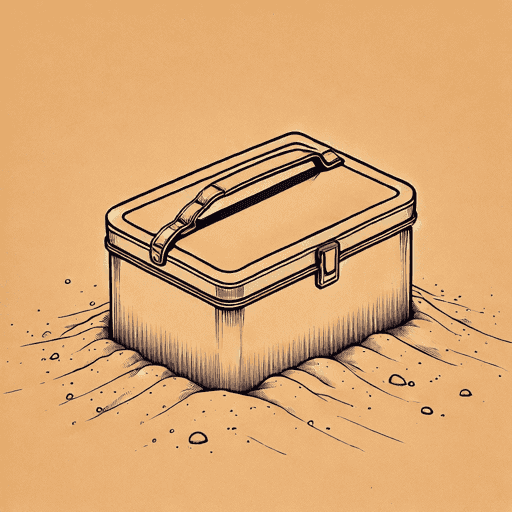
The Smurf lunchbox symbolizes the lessons that Audre and Bash learn through their relationship. The box that Audre finds at Rockaway Beach was manufactured in the 1980s and is “battered” and “faded” after being submerged in seawater for decades. Retrieving it from the ocean teaches Audre that she can be brave and take bold action “just to impress herself” instead of seeking others’ approval (282). When she gifts the lunchbox to Bash, he is deeply moved by her courage and finds the bravery to confront his mother for abandoning him.
The breaking of the lunchbox teaches Bash that life is fragile and precious, prompting him to tell Audre about his past. Gluing the shattered Smurfs lunchbox back together in Chapter 35 helps him realize that he is “addicted” to “trying to make things perfect” because of the destructive pressure his abusive father placed upon him (340). Bash’s relationship with Audre gives him the sense of safety and distance that he needs to reach out to his father, and the repaired lunchbox helps him determine what he needs to say to Milton to gain closure.

Unlock the meaning behind every key symbol & motif
See how recurring imagery, objects, and ideas shape the narrative.
- Explore how the author builds meaning through symbolism
- Understand what symbols & motifs represent in the text
- Connect recurring ideas to themes, characters, and events