Baseball in April and Other Stories
A modern alternative to SparkNotes and CliffsNotes, SuperSummary offers high-quality Study Guides with detailed chapter summaries and analysis of major themes, characters, and more.
Summaries & Analyses
Quizzes
NEWReading Tools
Games
Stories 1-2Chapter Summaries & Analyses
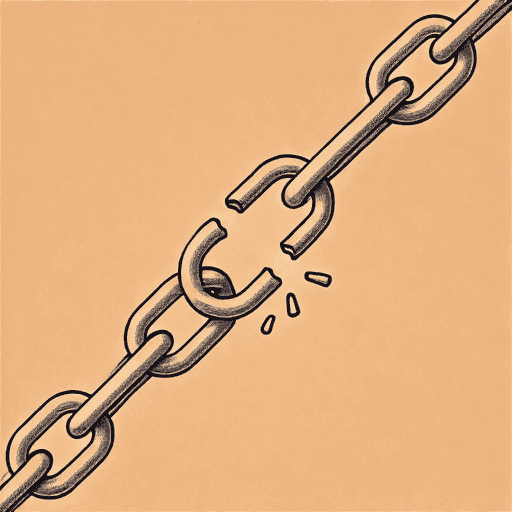
Story 1 Summary: “Broken Chain”
Alfonso, a boy in junior high, is obsessed with cultivating an appealing style to attract girls’ attention. He longs for defined abdominal muscles, and he cuts his hair in the latest style. Lately, he has been worrying about his crooked teeth. When his mother tells him that braces are too expensive, Alfonso pushes on his teeth with his thumbs, sometimes for hours at a time. One Saturday, he grows bored with this when he sees no improvement in his smile, so he goes outside to clean his bike. As he wipes down the 10-speed, his brother, Ernie, arrives, looking upset. Alfonso asks what happened, and Ernie admits that some girls stood him up.
Later, Alfonso sits outside working on his teeth, then jumps on his bike and rides through the neighborhood. At his old elementary school, a boy hangs upside down from a fence. The boy’s pants are stuck, and his sister looks on. Alfonso helps the boy down and introduces himself to the girl, Sandra. He walks them home, and he and Sandra stand on the corner and talk nervously. Eventually, Alfonso asks if she wants to ride bikes with him sometime. She says yes, even though she does not have a bike to ride. Promising to loan her his brother’s bike, Alfonso agrees to meet her on Monday afternoon.
That night, after exercising and styling his hair, Alfonso tells Ernie about Sandra and asks to borrow his bike. When Alfonso describes her, Ernie is convinced that she is one of the girls who stood him up and vows to get revenge. They argue all night and into the next morning. Secretly, Ernie is jealous that his younger brother may have a girlfriend.
On Monday, Alfonso worries all day about getting a bike for Sandra to use. When he sees Sandra in the hallway at school, he hides in a classroom. He does not know what to talk to girls about. After school, Alfonso completes all his chores, exercises, pushes on his teeth, and showers. Then, he decides to clean his bike chain. However, when he takes the chain off the back wheel, it snaps. Devastated, Alfonso angrily throws the chain but only manages to snap it again and hurt himself. After tending to his cut, he begs Ernie again to borrow his bike, but Ernie refuses, claiming to have plans to catch frogs with a friend.
At four o’clock, Alfonso walks to Sandra’s house, terrified that she will be disappointed and mock him. At the corner by her house, he stops and hides behind a hedge, wondering how to explain the situation. Moments later, as Sandra looks for him, footsteps approach. It is Ernie with a bag of frogs. Peeking through the hedge, Ernie declares that Sandra is not the same girl who stood him up, so he offers Alfonso his bike. Elated, Alfonso promises to do some of Ernie’s future chores.
Once Ernie leaves, Alfonso explains to Sandra that his bike is broken. He asks her to ride with him, so she sits on the crossbar, and they take off. The pair has a fun time. Sandra screams with delight, and Alfonso feels like he is in love.
Story 2 Summary: “Baseball in April”
Brothers Michael and Jesse are excited for Little League tryouts the next day and proclaim that this will be the year they make the team. The next day, at the playground, swarms of kids line up for the tryout. Jesse, the younger brother, is up first. He only manages to field a couple of ground balls. Despite this, Michael shouts encouragement to him. Then, when it is Michael’s turn, he fields grounders and catches fly balls and notices that a coach makes notes about him on his clipboard. After a break for lunch, the boys return to the playground for the batting portion of the tryout. Feeling proud, Jesse walks with a spring in his step and feels more confident with Michael’s advice.
However, once they return, Jesse grows nervous again. When it is his turn to bat, he is physically trembling. Mimicking baseball players who tap their bat on home plate, Jesse enters the batter’s box. After fouling off a few balls, he manages three hits. Later, Michael looks strong, garnering 10 hits. Jesse is convinced that his brother will make the team. However, a week later they have not heard anything, so they know that have been cut. Michael is frustrated, and the boys hit grounders to each other outside.
Their friend Pete tells them about a team that practices at a nearby field called “Hobo Park.” After school, the boys bike there, and when the coach, Manuel, arrives, he has them take the outfield. Manuel is kind and patient with the boys, and after a few weeks, he announces their first game against a team called the Red Caps. By this time, Michael has quit to spend time with his new girlfriend.
Jesse has improved and plays catcher. Without any chest protector or shin guards, he is often hurt by baseballs that fly into him, but he does not complain. Unfortunately, his batting has not improved. On game day, the kids pile into the back of Manuel’s pickup truck. At the field, they see that the Red Caps, like them, are mostly Mexican American kids. The coaches talk to each other in Spanish. The Red Caps seem more organized in their matching uniforms. Jesse’s team, who call themselves “the Hobos,” just wear jeans and random t-shirts.
Despite all their practice, Jesse’s team does not play well, and they argue. When Jesse approaches the plate to bat for the fourth time, his team groans because they consider him a sure out. Then, when the pitcher throws a ball low and inside, he stays still until the ball strikes his leg. Jesse is awarded first base and is excited to be on base for the first time. The boys’ team unfortunately loses this game, as well as the four other games against the Red Caps. As time passes, fewer kids show up to practice, and Manuel even stops coming. When Jesse stays home one day, he feels guilty at the thought that someone else might show up.
Stories 1-2 Analysis
In the first two stories, the main characters demonstrate a childlike tendency to exaggerate their small problems, believing that it is of the utmost importance to go on a successful date or win a baseball game. In both cases, the protagonists learn more about the everyday flow of life and gradually embrace The Challenges in the Coming-of-Age Journey. In “Broken Chain,” for example, Alfonso demonstrates a childlike self-absorption and believes that his problems are monumental. This attitude can be seen in the way he obsesses over his appearance and frets over the opinion of his crush, Sandra. Faced with the ostensibly disastrous fact that his brother Ernie will not loan him a bike for his upcoming date, Alfonso panics and imagines the worst. In this moment, Soto uses short, staccato sentences with an increasingly frantic tone to convey the boy’s tense state of mind. As the narrative states, “Shame colored his face. How could he disappoint his first date? She would probably laugh. She might even call him menso” (10).
By assuming that Sandra will mock him and call him a “dummy,” Alfonso engages in catastrophic thinking, but the conclusion of the story reflects the life lesson that such momentary fears are childlike, and interpersonal problems are rarely as dire as they initially seem. By juxtaposing the crescendo of Alfonso’s distress with the mundane solution of a brother who relents and loans him the needed bike, Soto crafts a fraternal dynamic that deescalates the previous conflict. The fully successful date with Sandra also creates a teachable moment, suggesting that situations can be salvaged even when they do not go as planned.
Much like Alfonso, Jesse, the protagonist in “Baseball in April,” is similarly focused on his appearance. When he tries out for Little League with his brother, Jesse is hyper-aware of how he looks. At one point, he sees himself as “look[ing] strong standing at the plate, bat high over his shoulder” (16). However, his attitude contrasts with Alfonso’s because rather than seeing himself as unworthy, he naïvely believes that his “look” of strength will help him make the team, not quite realizing that skill is the deciding attribute, not the appearance of skill. His attention to appearance also emerges when he and Michael return to tryouts after lunch, and Jesse “felt proud walking to the playground,” almost “as if he were a soldier going off to war” (15). With this hyperbolic description, Soto conveys the boy’s deeply self-conscious pride—as well as his expectation that other kids will admire him. When he compares himself to a soldier departing for war, Jesse assigns a level of importance to the game that would border on farcical if he weren’t so serious in his perceptions. By emphasizing Jesse’s immaturity and self-absorption, Soto presents these childlike moments as the foundation for the novel’s broader examination of The Challenges of the Coming-of-Age Journey.
In light of this theme, the two stories’ resolutions highlight different aspects of the hard road to young adulthood. In Alfonso’s case, he realizes that his problem is far from insurmountable, and the concluding descriptions are symbolic of his entire struggle. When he asks Sandra to ride on his bike with him, he struggles to pedal at first, “but once he got going, it got easier” (12). Likewise, his personal problems work themselves out as he keeps on forging a path ahead. By contrast, when Jesse’s makeshift team fails to improve and gradually loses interest in the game, he learns that baseball and looking cool are not the most important things in life. It is only April, but interest in his team fizzles out as “fewer and fewer of the players came to practice” (22), and then “one day Manuel didn’t show up” (22). As the boys and the coach lose interest, so does Jesse. As he moves on to other activities, his passing twinge of guilt over giving up baseball represents the inevitability of shifting childhood interests and the wistful disillusionment that comes with reassessing those faded passions and wondering what might have been. In this way, both Jesse and Alfonso work through their moments of immaturity and gain greater life experience by confronting and overcoming different types of disappointments.

Get in-depth, chapter-by-chapter summaries and analysis from our literary experts.
- Grasp challenging concepts with clear, comprehensive explanations
- Revisit key plot points and ideas without rereading the book
- Share impressive insights in classes and book clubs
Related Titles
By Gary Soto








Featured Collections
Chicanx Literature
View Collection
Childhood & Youth
View Collection
Class
View Collection
Class
View Collection
Coming-of-Age Journeys
View Collection
Family
View Collection
Hispanic & Latinx American Literature
View Collection
Pride & Shame
View Collection
School Book List Titles
View Collection