Bob
A modern alternative to SparkNotes and CliffsNotes, SuperSummary offers high-quality Study Guides with detailed chapter summaries and analysis of major themes, characters, and more.
Summaries & Analyses
Quizzes
NEWReading Tools
Important Quotes
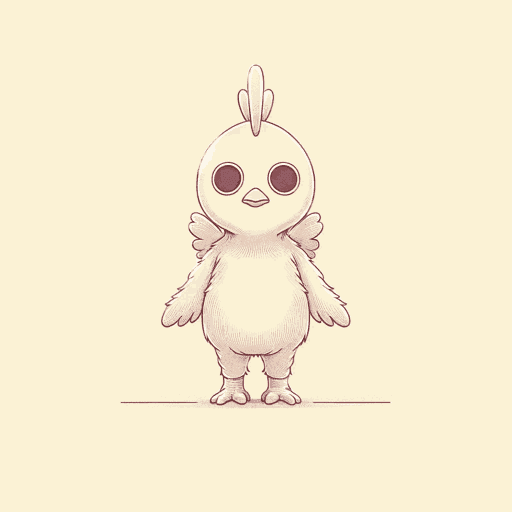
“Actually, maybe I do remember one thing. I think I remember a wrong chicken. I remember chickens, and one chicken that was different. One chicken was not like the other chicken, is what I remember.”
(Chapter 1, Page 3)
It becomes clear that the “wrong chicken” is actually Bob. That Livy disguised Bob as a chicken to hide him among the chickens displays her creativity and imagination but is also indicative of Livy’s understanding that she must keep Bob hidden from adults. Similarly, the novel’s conflict is dependent upon Livy remembering the promise she made to Bob five years ago. Here, she begins to remember parts of that promise.
“She said my name. Bob. It makes me feel. . . well, seen. And heard. Like I’m a person. Or whatever I am. I’m glad I’m not invisible after all.”
(Chapter 4, Page 41)
That he exists and that his existence is acknowledged by others is important to Bob. To be seen is in contrast with the way in which Bob must remain hidden in the closet or must sneak about disguised as a chicken when he ventures outside. His desire to be “seen” is his desire to have connections and bonds with others, instead of being isolated.
“‘I’m glad you’re remembering some things from last time,’ [Livy’s mother] tells Livy. ‘It’s always nice to return to somewhere you’ve already made happy memories.’”
(Chapter 4, Page 43)
Livy’s mother’s words are intended merely as conversation. However, readers recognize that Livy’s remembering is key to discovering who Bob is and where he comes from. The verbal irony is lost on Livy’s mother, but they speak to the importance of memory to connect Livy to her past and her promise to help Bob.
“‘Look at the clouds!’ [Livy] shouts, stabbing her finger upward a bit too frantically. But it works. Everyone looks up, even the baby, which gives me the chance to escape. But I don’t. Something holds me there. We hear thunder, and everyone cheers.”
(Chapter 6, Page 69)
Bob interprets Livy’s pointing at the clouds as a means of distracting the adults so that Bob can sneak back into the house unseen. While her gesture does indeed serve this purpose, it is more likely that Livy is simply excited about the presence of the rain clouds. Their presence is of great importance given the drought that Gran’s town suffers from. Bob himself does not understand this, nor does he remember the role he plays as a well dweller in bringing rain.
“He picks up the pawn and waves it at me. ‘Everyone underestimates the little guy. But the pawn is the key to the game.’ I laugh. ‘Where are you getting this stuff?’ His face grows serious. ‘The pawn protects every other piece on the board,’ Bob says, ‘even though it can’t make as many different moves. And if you can get it to the other side of the board safely, it becomes a much more powerful piece, like a knight or a queen.’”
(Chapter 7, Page 76)
Bob’s words are fraught with more meaning than either he or Livy realizes at the time. The pawn is indeed an important piece, though not entirely for the reason Bob gives. The magical power of the black pawn will become clear to both Livy and Bob as the novel unfolds. This ironic mention of the pawn’s protective power is accidentally foreshadowed by Bob as they play a game of chess.
“[...] I realize that Gran is reading the letter that the neighbor was twisting in his hands this morning. He looked miserable when he was holding it, and now that Gran has it, she looks kind of miserable. Even though she’s still smiling at me. When Gran turns away, I tilt my head and read the words at the top of the page: BANK OF AUSTRALIA.”
(Chapter 7, Page 75)
The contents of the letter are never revealed. However, given Danny’s insistence that his grandfather is at risk of the bank seizing his farm, it is logical to assume that this letter informs Gran that she faces the same fate. Livy is perhaps too young to understand the financial impact of the drought, but she can accurately interpret Gran’s concern and worry.
“But I can’t remember what I want. I look around at all the stuff—it’s nothing fancy, just different kinds of t-shirts and a few handmade things in baskets—and I can’t even remember why I wanted to come here in the first place. It’s like I’m reaching for something in my brain that isn’t there anymore.”
(Chapter 7, Page 80)
This is the first indication that something is wrong with Livy’s memory. It seems, initially, that she may in fact suffer from some type of psychological or physical condition that impedes her memories. This would explain why Gran and Livy’s mother are so eager to jog her memory of the previous visit upon Livy’s return to Gran’s house. However, as the novel unfolds, it becomes apparent that Livy’s forgetting is through Bob’s “magic.”
“I look at the pawn in my hand, and it’s like a door swings open in my hand. Bob. Bob is that green chicken in our drawing. Bob is who I am meant to buy clothes for! I promised him! And then I forgot him. Again.”
(Chapter 7, Page 87)
Livy remembers Bob in this moment because she touches the black chess piece. She is excited upon remembering this and relieved as the premonition that there was something she was supposed to remember but could not is resolved. But she is quickly saddened as she thinks of how she has forgotten him, breaking the promise she made to him. The tone suggests that she blames herself for this forgetting, but later it will become clear that Livy cannot control her memory of Bob unless she possesses the black chess piece.
“The name comes back to me in a flash. Bob. And I realize that I’ve forgotten all about him. Again. ‘Hey,’ Sarah says, ‘you never told me about the chess piece. Is that your lucky charm or something?’ I stare at that pawn and I finally get it: Something is wrong.”
(Chapter 7, Page 90)
Livy does not understand that the pawn is magical. That Livy suggests that “something is wrong” prepares the reader for a complication in the novel’s plot and conflict. Indeed, it is from here that the explanation for Livy’s forgetting Bob is revealed. This moment serves as an important plot point that will shape the novel’s outcome, solidifying the pawn’s importance.
“This action, this coming together, it linked us somehow. Livy is right about the magic. For some reason people forget about me when they get a certain distance away. But this pawn resists it.”
(Chapter 8, Page 95)
Neither Bob nor Livy understand how the pawn’s magic works or why Bob is forgotten when he is physically distant from humans. However, they trust in the pawn’s magic and do not question it. The pawn proves to be an important symbol throughout the remainder of the novel.
“This means Livy didn’t really forget about me when she left five years ago! Well, she did, but not on purpose, because she didn’t have the pawn. Knowing this makes a huge difference!”
(Chapter 8, Page 95)
Bob often draws a distinction between “Old Livy” (the five-year-old he initially met) and “New Livy” (present-day Livy). In many respects, he worries that Livy’s forgetting of him indicates that she has changed and that she no longer admires him and values their friendship as she once did. When Bob obtains facts that explain Livy’s forgetting of him, he is reassured that she does indeed value him and thus intends to keep her promise to help him find his family.
“What if I didn’t save you? What if you saved—me?”
(Chapter 9, Page 101)
Bob is adamant that Livy saved him from a monster, though Livy is skeptical of this. She acknowledges that she may have prevented Bob from being harmed by a chicken or a cat but remains confused by why she was wet when Bob encountered her. She applies the logic of Gran and her mother warning her away from the well to reach a logical hypothesis—that she fell into the well when she was five and Bob rescued her. “Saving” can take on a metaphorical meaning as well, as the friendship that develops between Bob and Livy aids them both in emotional ways.
“I close my eyes to think. If Livy’s mom doesn’t see me at all, and a kid like Danny, who doesn’t know me like Livy knows me, sees a chicken, then maybe age is another clue to my magic.”
(Chapter 10, Page 117)
Bob, like Livy, attempts to use logic to puzzle out who he is and where he comes from. The reason that he cannot be seen by adults is never made clear in the novel, and this gap allows readers to make their own inferences as to why this may be. Danny, who knows of the well dwellers and desires to see one, cannot recognize Bob as one. This suggests that there is something unique or special about Livy.
“My little green heart is beating so fast (at least I think my heart is green). AM I AN INVISIBLE FRIEND? Is that what I am? No superpowers or magic? Is that why Livy’s mom couldn’t see me? And perhaps most importantly, IS THERE SOMEONE ELSE LIKE ME?”
(Chapter 12, Page 132)
Bob is desperate to know who and what he is and where he comes from. He latches on to any idea that arises. Part of his longing to be with others like him results from his witnessing Livy’s interactions with her mother and others who care for her. Bob desires these kinds of connections for himself with someone like him.
“Sarah’s invisible friend wasn’t real. Not in the same way I’m real. I feel foolish and slump down to the floor.”
(Chapter 12, Pages 134-135)
Bob is eager to learn who he is and where he comes from and quickly latches onto any possible explanation, including that he may be invisible. The disappointment he feels here upon learning that Sarah’s friend is not like him shows just how important this dilemma is for Bob. Like humans, he experiences a full spectrum of emotions, quickly evolving from joy to disappointment to embarrassment.
“This book must tell us what you are. It’s been here all along! C’mon!”
(Chapter 14, Page 150)
Livy is certain the book contains the answers she and Bob have searched for regarding Bob’s identity. Ironically, Bob and Livy’s instinct to search the dictionary for answers was wise—they were merely consulting the wrong dictionary. Likewise, that “Old Livy” buried a clue to Bob’s existence demonstrates not only that she feared forgetting Bob in the future but also that she recognized the importance of keeping Bob a secret from adults.
“Gran is alone, too. I don’t know why I never thought of it before. I think of the last five years, and Gran and Bob living in the same house all that time. I can’t decide if it’s nice or just really sad.”
(Chapter 17, Page 166)
The Importance of Family and Friends is evident here as Livy shows concern for Gran. This demonstrates, too, Livy’s compassion and ability to empathize. Further, she recognizes the irony present in Bob hiding in Gran’s house during Livy’s five-year absence: Both were certainly lonely for others at times and yet were not able to take advantage of the other’s presence.
“I frown. ‘But I don’t feel like I came from a well. And visiting it yesterday didn’t bring back any memories.’ ‘I know, but maybe that’s part of how your magic protects you or something.’ ‘Protects me by making me forget where I came from? What kind of second-rate magic is that?’”
(Chapter 18, Pages 174-175)
Like Livy, Bob’s memory is impeded, and this lack of memory about Bob’s background is the key obstacle that drives the novel’s plot. Livy suggests that forgetting, despite the frustration it brings, may be beneficial in ways that are unclear to them both. They hypothesize that Bob may have magical powers. Indeed, neither of them knows that they are correct in their assumption.
“‘Livy!’ [Bob] says between bites. ‘I am remembering so many things! This is my mother! And this is my well! We have many wells. And they are everywhere! [...] Livy. We are important.’”
(Chapter 19, Page 187)
Bob has been bothered by his inability to remember who he is and where he comes from. Finally obtaining this information excites him, making him feel complete. To know that he has a purpose provides Bob with a sense of meaning and fulfillment, reassuring him that he matters.
“Is Bob about to disappear? I’ve been so worried about finding Bob’s family that I never for even one second thought about what it would feel like when he left.”
(Chapter 19, Page 189)
Livy realizes the importance of her friendship with Bob and the depth of her connection with him. She values her own parents, and this understanding has motivated her in finding Bob’s own family. That the resolution of the novel’s conflict means a sacrifice for Livy is important—Livy’s acceptance of this indicates maturity and selflessness.
“I think I lost something [...] Whatever it was, I know we’ll never find it. And anyway, I don’t even know what to look for.”
(Chapter 19, Pages 191-192)
Livy refers to the black pawn, though, unfortunately, she has already forgotten it and, therefore, will forget Bob as well. Importantly, Bob’s mother does not want Livy to remember Bob, nor vice versa. In this way, she seeks to protect Bob from being tempted to return to Livy’s world again in the future.
“Life is grand below, too. Except—and this is a big one—EXCEPT I’ve left behind a very smart and brave friend who doesn’t remember all the smart and brave things she did because someone’s mom (okay, mine) acted all scary and took her pawn away.”
(Chapter 20, Page 196)
Bob is happy upon his return to his home and family, but this contentment requires a trade-off: Bob must leave Livy behind and live without their friendship. In a sense, he chooses his family over his friend. Bob wishes he could have both, but his mother’s seizing of the black pawn suggests she disapproves of Bob’s interactions with Livy.
“Livy’s not just Old Livy or New Livy, she’s every age she’s ever been, and sometimes they get jumbled, but they’re all in there. All the Bobs are in me too. All the things I choose to put in my head are what make me, me. I plan to choose wisely.”
(Chapter 20, Pages 199-200)
Here, Bob solidifies the two versions of Livy that he has come to know, demonstrating that he recognizes that humans—as well as well dwellers—are complex and multifaceted. In this way, he can admire Livy not only for her positive traits but also for her flaws. Likewise, though Livy may age and change as she grows, the fundamental aspects of her person will remain the same. Bob’s assertion that he is made up of “all the things [he chooses] to put in [his head]” shows that he plays an active role in determining his own identity and personality.
“I want to thank [Livy]. She protected me, the way a pawn protects a king. Livy got me across the board, and all the way home.”
(Chapter 20, Page 200)
Here, Bob uses the game of chess as a metaphor for the process by which Livy helped him determine who he is and where he comes from. Livy’s protection of Bob involved keeping him out of sight of adults, who presumably would banish him from Gran’s home. Bob’s gratefulness to Livy is an important character trait.
“‘Keep moving toward what makes you feel most alive, Livy,’ I whisper.”
(Chapter 20, Page 201)
Though both Bob and Livy are saddened by their separation, both understand that it is for the greater good. Bob briefly risks being seen, however, to return the pawn to Livy, in hopes that she will be able to remember him. His advice to Livy is full of warmth and care, demonstrating the love and admiration Bob feels toward her.

Unlock every key quote and its meaning
Get 25 quotes with page numbers and clear analysis to help you reference, write, and discuss with confidence.
- Cite quotes accurately with exact page numbers
- Understand what each quote really means
- Strengthen your analysis in essays or discussions
Related Titles
By these authors










Featured Collections
Appearance Versus Reality
View Collection
Books & Literature
View Collection
Childhood & Youth
View Collection
Earth Day
View Collection
Family
View Collection
Fear
View Collection
Friendship
View Collection
Guilt
View Collection
Juvenile Literature
View Collection
Magical Realism
View Collection
Memory
View Collection
Mothers
View Collection
Safety & Danger
View Collection
School Book List Titles
View Collection
The Past
View Collection
Valentine's Day Reads: The Theme of Love
View Collection