Chapterhouse: Dune
87 pages • 2-hour read
Frank HerbertChapterhouse: Dune
A modern alternative to SparkNotes and CliffsNotes, SuperSummary offers high-quality Study Guides with detailed chapter summaries and analysis of major themes, characters, and more.
Chapters 1-8Chapter Summaries & Analyses
Chapter 1 Summary
Content Warning: This section discusses graphic violence, death, sexual content, addiction, and religious discrimination.
Mother Superior Darwi Odrade is celebrating the successful production of a ghola baby from the first Bene Gesserit axolotl tank. A ghola is an artificially produced baby created from DNA scraped from a different body. The ghola can gradually recollect its former body’s memories. Odrade orders the two members of her council, Tamalane and Belladona, to attend to it. The ghola is of Odrade’s father, Bashar Miles Teg, the former military leader of the Bene Gesserit.
They are fleeing from the Honored Matres, a violent, xenophobic rival order who emerged out of The Scattering. They have destroyed 16 Bene Gesserit planets. Odrade decides that they will not sit in defensive enclaves; they will proactively respond to the Honored Matres threat.
Chapter 2 Summary
The Great Honored Matre, who is referred to as the Spider Queen or Dama by the Bene Gesserit, is interrogating a Bene Gesserit Reverend Mother, who has resisted torture. Dama asks the Reverend Mother her name, and she introduces herself as Sabanda.
Dama asks her if she wants to see her capture weak males. Sabanda responds that she would rather die. She spots orange specs in Dama’s eyes, a sign of anger, and Dama kills Sabanda with an injection of drugs.
Chapter 3 Summary
Miles Teg, the ghola child, is aware of his origin but doesn’t fully understand it. He quickly develops prodigal skills and abilities. He can sense the memories from his original life but cannot recall them. Odrade reveals he was cloned from cells scraped from Bashar Teg’s neck. Miles Teg has dim recollections of Bashar Teg. The garden is planted with scented plants that may help trigger his memory.
The Bene Gesserit see themselves as stewards of the land. Odrade elaborates on the long-term planning and symbiotic nature the order has with the planet they are on. Miles kicks a clump of grass, and Odrade scolds him, telling him about the important niches several plants hold, including the grape vines the farmers are cultivating.
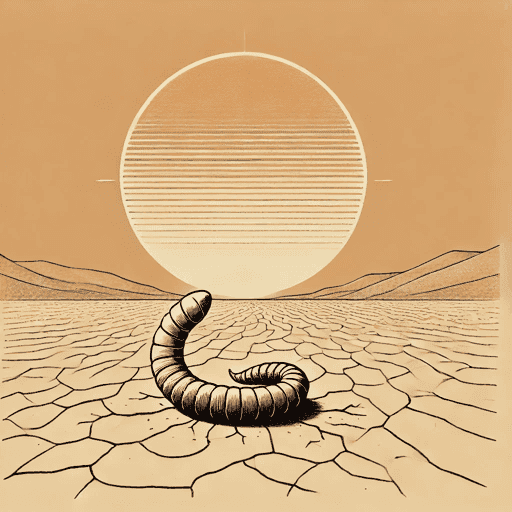
They discuss a desert spreading across the south of the planet. Miles learns of the giant sandworm the Bene Gesserit took from Rakis. When it died, it gave birth to smaller worms called sandtrout, who are the reason the desert is spreading. Odrade says the vines will be the first thing to die when the desert expands for the sandworms, which will create Spice.
When the threat of the Honored Matres comes up, Miles instinctively refers to himself as Bashar, the genetic memories of his forbearer seeping through.
Chapter 4 Summary
It is pitch black in Great Honored Matre’s sleeping chamber. Logno, a grand dame, enters. There are grunts and moans in the darkness. A voice in the darkness tells Logno to sit on the floor. She thinks about poisoning Dama.
She is asked about her discussion of The Weapon with the Ixians. This is a planet killer device that they used to destroy Rakis. They have 300, each is single use, and it can only be used when activated by The Council.
Logno reflects on The Ones of Many Faces, the great enemy that invented The Weapon and Futars and chased the Honored Matres into the Old Empire.
They discuss the planet Buzzell, which is undefended despite its abundance of precious gems. Dama suspects a trap. She also tells Logno to continue encouraging the Ixians to duplicate the technology of the weapon.
Chapter 5 Summary
Odrade sits in her workroom. She recalls her childhood sea excursions, her father and mother, and how those early years influenced who she would become. She thinks about her time on Al Dhanab, a place designed to prepare those who were going to live on Dune.
The sea child within her remains intact. It warns her of danger, and she wonders if it is her touch of prescience, an artefact of her Atreides heritage. Bene Gesserit attempted to remove this from her genetic line to avoid another Kwizatz Hadderach.
She is suffering from vivid recurring dreams. She is walking a tightrope, and someone behind her is approaching with an axe to cut the rope. She feels that if she falls, the Sisterhood will fall. She reflects that some of her order have already fled, and those present on Chapterhouse are also ready to flee should the Honored Matres arrive. However, they are all prepared for destruction over surrender, leaving nothing for the Honored Matres to use.
If the Matres capture Duncan or Miles Teg, the Bene Gesserit will never be able to hide again. Bashar Teg developed minor prescience, including the ability to see normally undetectable no-ships. This suggests normal humans may be able to develop the ability to detect no-ships.
Odrade uses her holographic display to inspect her grounded no-ship. On board, there are three captives: Scytale—a Tleilaxu Master—and Murbella and Duncan Idaho, who are sexually bonded. Keeping the no-ship cloaked is a resource-intensive process.
Bellonda walks in with Ridulian crystal records and throws them down. She reports that the planet Lampadas has been attacked with no survivors. Outside, weather control has started winter. Odrade is horrified by the brutality of the Honored Matres. Tamalane joins. She is withdrawn, and Odrade foresees her replacement by Sheeana.
Chapter 6 Summary
Lucilla thinks to herself that she is going to die. She wants to pass on the knowledge in her mind first. Her no-ship has been Damaged by the Honored Matres and won’t travel any further, and all the possible escape routes she could flee through have cloaked traps. She is hiding in a farmhouse awaiting a contact, a Suk doctor. She knows a deeper secret about his identity, a special classification not normally shared in the Sisterhood. She is only aware of it after veiled remarks made by Odrade about a secret society on Gammu: Jews. Lucilla must die before revealing knowledge of them—this is the price of their cooperation with the Bene Gesserit.
In flashback, Lucilla uses a memory crystal to learn about the Jews. Long ago, they decided to vanish from public perception due to persistent pogroms, hiding on countless planets. At some point, they struck up an accord with the Bene Gesserit to assist each other under certain circumstances.
In the present, Lucilla looks out of the farmhouse and notices a large produce carrier has entered the grounds. She reflects on her task and how she is changing to specialize in it. She recalls that she had trouble accepting that the Honored Matres sought to kill her. Her Rabbi host called it a pogrom.
The Rabbi revealed that there is a guild navigator helping search for her. She has Siona blood, meaning that the navigator can’t see her. The Rabbi reveals that he and the other Jews have a similar gift. However, the navigator’s presence means that she can’t safely leave the planet.
In the present, Lucilla notes that the Rabbi has been gone a long time and wonders if she was right to trust him. She uses a mental exercise to reflect on her previous interactions with the rabbi. The Rabbi returns and apologizes for his lateness. The Navigator summoned him, suspecting him of harboring Lucilla.
The Rabbi says that the economic view behind the activities of the Honored Matres is interesting. Lucilla fears that he’s selling her out and says there’s no way to get her off Gammu alive. He makes her promise not to turn on them if he reveals his solution to this dilemma. He opens a door to reveal Rebecca, an elder woman of her people. She has gone through The Agony that the Bene Gesserit do and can access her ancestor memories. She communes with Lucilla telepathically, and Lucilla says she must get back to her sisters. Rebecca promises that she will. She then reveals that they were going to turn her over to the Honored Matres to get her off the planet alive.
Chapter 7 Summary
Bellonda is feeling the pressure of their evasion of the Honored Matres. She is organizing a list of who will flee in no-ships and who will remain. Odrade and Bellonda discuss the Duncan ghola. Murbella, his sexually bonded partner, has borne him three children. Each was removed at birth by the Bene Gesserit. They try to exploit Duncan’s sexual bond with Murbella to find out more about the Honored Matres sex addiction techniques, but she blocks up when asked. She threatens to kill Duncan, but that is psychologically impossible for her.
The Bene Gesserit are fascinated and repelled by the sexual control of the Honored Matres and their martial abilities. They hope they can use Murbella’s daughters to put these techniques into the Bene Gesserit bloodlines, but they fear becoming like the Honored Matres. Odrade worries that the original Matres were perhaps Bene Gesserit Reverend Mothers.
Watching footage of Duncan and Murbella, Bellonda suspects that he is a Mentat, a person with superhuman intelligence. This is something he has yet to admit as he fears the reaction of the Bene Gesserit. They speculate on the condition of their axolotl tanks and wonder if Scytale has deceived them to keep bargaining chips. The tanks are made from female humans, volunteers from the Bene Gesserit. Bellonda suggests that they kill Duncan and that Murbella will never allow herself to become a Bene Gesserit Reverend Mother.
Chapter 8 Summary
Rebecca is kneeling on the floor before Dama. She has waited for two hours while Dama eats lunch. She has eye implants to hide the fact that she has been through the Spice Agony. Another implant seeps Spice into her system to help disguise her dependence. She reflects on the changes she has felt in herself after absorbing the minds that Lucilla left Lampadas with.
Finally, Dama asks her to approach. Dama wants Rebecca to tell her about the lore of Truthsay, as she was married to one who is now dead. Dama then interrogates her about the Bene Gesserit, asking about their wealth, and the Gammu. Rebecca tries to flatter Dama by asking to enter her service, and Dama releases Rebecca.
Rebecca reminisces on her and her husband discussing how she should use total innocence and naivete to analyze statements. She recalls condemning the Rabbi for the acts of their ancestors, which she can now recall.
Chapters 1-8 Analysis
The first section of the novel creates a vast web of context and relationships, as many chapters are narrated from different characters’ perspectives. Namely, the differences between the Bene Gesserit and their enemies, the Honored Matres, are outlined. The latter intends to destroy the former, but the Great Honored Matre Dama first wants to learn the Bene Gesserit’s powerful abilities. The aims of the Bene Gesserit—to guide humanity and act with a wise perspective on the past—is lost on Dama and her faction. The Bene Gesserit value growth and balance, as they understand The Connection Between Domination and Cultivation. They seek to infiltrate structures of power and manipulate political movements for their own aims, but they don’t seek to destroy and are reciprocal in their relationships with others. This is represented as Odrade speaks to ghola Miles Teg. When Miles asks about the garden the Sisterhood tends on Chapterhouse, Odrade remarks, “Fungi won’t grow except in the company of friendly roots. Each has a symbiotic relationship with a special plant. Each growing thing takes something it needs from the other” (23). She impresses upon him the importance of symbiosis—a relationship that help maintains balance in nature and informs the culture of the Bene Gesserit. In contrast, the Honored Matres value domination. This contrast between orders reflects a central ideological divide: The Bene Gesserit believe power must be wielded with restraint and deep historical understanding, while the Honored Matres use brute strength and fear. The text presents these worldviews as representative of long-term versus short-term thinking, inviting readers to question which survival strategies—adaptive, cooperative, or domineering—ultimately endure.
Odrade demonstrates thoughtfulness in her approach to her role as Mother Superior. She offers Miles another lesson in relation to the garden, namely that their culture cannot—or should not—survive by cutting themselves off from others. When Miles asks about enclosing the garden to protect it, she relates it to her order and tells him: “‘Enclosures of any kind are a fertile breeding ground for hatred of outsiders,’ she said. ‘That produces a bitter harvest’” (27). Odrade understands their purpose is to engage with others and guide humanity, not run from danger. This invites the risk of bringing unexpected influences or changes unto the Bene Gesserit, but she recognizes The Importance of Change and Adaptation to Survival. After all, the Sisterhood currently resides on Chapterhouse because they had to flee Rakis, and they are now changing the terrain of Chapterhouse to desert to make a home for the sandworms. The metaphor of enclosure versus openness becomes symbolic not just of political strategy, but of emotional and philosophical flexibility. By embracing permeability—both in ecosystems and ideologies—Odrade models a new kind of leadership that departs from the Bene Gesserit’s rigid traditions.
Odrade’s reflective mindset arises from her fortitude of self. She embraces her past and, secretly, her emotions. She loved her foster mother, and though she hides this information from the Sisterhood—who rebuke expressions of love—she allows herself to carry these feelings without shame. When reflecting upon herself and the manifestation of her inner child, the Sea Child, she thinks, “At root, I am happy with myself. I do not mind being alone” (33). She acknowledges this is because she doesn’t allow the restraints of the Bene Gesserit to make her ashamed of her feelings. This demonstrates how she allows herself to change to develop and improve. This tension between institutional repression and private truth runs through many characters’ arcs in Chapterhouse: Dune, but Odrade’s internal resolve signals an evolutionary step. She believes that survival depends not only on strength and cunning, but on emotional integration—a radical position within the Sisterhood, and one that sets her apart from earlier Bene Gesserit leaders.
This section explores other key characters and important dynamics. Rebecca and the Rabbi are trapped together and take the opportunity to discuss the conflict between the Honored Matres and the Bene Gesserit. The topic leads to ideas of faith and fate. The Rabbi asks Rebecca, “Do we interfere with God’s plan? Is it the right of humans to set limits on the nature of God?” (78). This relates to Free Will and Prescience, a key tension that reoccurs throughout the Dune novels. Many characters demonstrate prescience or honor the prophecies created by those who supposedly predict the future; however, others disagree on whether these destinies are resolute or if they are caused because people alter the course to make them occur. This uncertainty surrounding the fate of their cultures will progress throughout Dune: Chapterhouse. Rebecca, as a “wild” Reverend Mother outside the formal Sisterhood, brings a fresh theological and ethical lens to the struggle. Her inherited memories and outsider status challenge the institutional arrogance of both the Matres and the Bene Gesserit, hinting that true spiritual evolution may lie not within dominance or discipline, but in collective memory and moral nuance.
Taken together, these early chapters establish the novel’s key thematic concerns: identity, survival, legacy, and the necessity of transformation. Odrade emerges as a transitional figure who blends ancient traditions with a willingness to adapt. Meanwhile, characters like Rebecca and Miles Teg suggest new paths forward—one through spiritual inheritance, the other through genetic memory. The world of Chapterhouse: Dune is on the brink of both collapse and renewal, and these early scenes seed the central discussion of what must be preserved and what must be risked for a civilization to truly evolve.

Unlock all 87 pages of this Study Guide
Get in-depth, chapter-by-chapter summaries and analysis from our literary experts.
- Grasp challenging concepts with clear, comprehensive explanations
- Revisit key plot points and ideas without rereading the book
- Share impressive insights in classes and book clubs