87 pages • 2-hour read
Chapterhouse: Dune
A modern alternative to SparkNotes and CliffsNotes, SuperSummary offers high-quality Study Guides with detailed chapter summaries and analysis of major themes, characters, and more.
Themes
The Connection Between Domination and Cultivation
The core conflict of Chapterhouse: Dune is between the Honored Matres and the Bene Gesserit. These two groups share a common root and desire to accrue power, but their methods diverge radically. The starkest is how they wield power: The Honored Matres use raw strength to conquer their territory, while the Bene Gesserit use suggestion and careful planning to shape their society. This is exemplified by the Bene Gesserit’s connection with nature. The Chapterhouse keep has a large orchard on its grounds. This is maintained by the Sisterhood, who even go as far as to bury their dead there so their bodies can nourish the trees. This is a metaphor for how the Sisterhood approach power. They take great care in seeing that it is well-organized, in balance, and gives back what they take from it. This approach symbolizes their belief in long-term investment—power that grows slowly, is tended carefully, and is meant to endure. Their reverence for cycles of death and rebirth reflects their commitment to a structured and purposeful legacy, rather than conquest for its own sake.
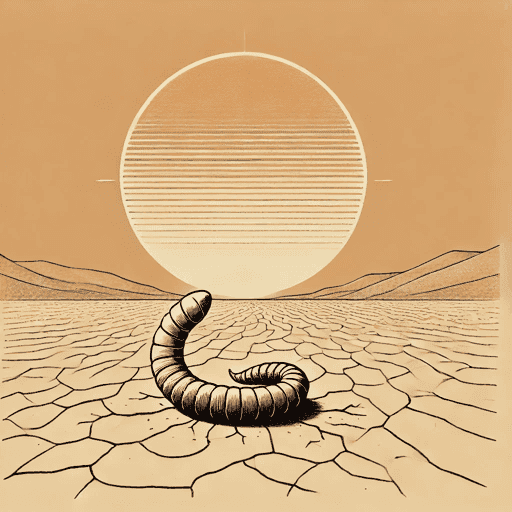
Nonetheless, as the weather control satellites change the climate of the planet, the orchard begins to die. Many Bene Gesserit express the wish to save the orchard, but Odrade, the Mother Superior, understands that this is impossible. For the greater good, change must occur, even if that means losing something precious. For example, the desertification of the planet by the fledgling sandworms causes the ocean to recede, something Odrade urges on; she understands that the production of Spice by the worms is necessary to the order’s survival, even if it comes at the cost of their delicate connection with nature. This presents a different form of cultivation: the reintroduction of the sandworms as a species and the growth of the Bene Gesserit as a culture. Odrade must choose the best paths forward to maintain them, which contrasts with the Honored Matres’s gleeful violence, disrespect for life, and destruction of planets as a form of maintaining power. Her choices reflect a more nuanced form of domination—one that acknowledges the cost of progress but is willing to bear it for what is perceived as the greater good. Even in cultivation, a measure of control and sacrifice is required.
Though the Bene Gesserit may have less destructive methods, they still manipulate and seek power for their own aims. This is a more subtle and slow form of domination. They have abilities like The Voice, which allows them to control the individual who hears it; this is very direct metaphor for someone with a silver tongue, or a person that can easily manipulate others by talking to them. They also have a flat, cool affect and resist the outward expression of passion, as they feel it dangerous. Where the Bene Gesserit scheme and plan, sometimes over centuries, the Honored Matres seize control through aggression, particularly through their signature technique of sexual domination, which they use to enslave men. This portrays intimacy as a sign of conquest and control rather than vulnerability or connection, a rare factor that unites them with the Bene Gesserit, who refuse to display love. When the Honored Matres can’t control someone through sex, they use overwhelming numbers. So reliant are they on these direct displays of strength that they hesitate to go anywhere they are not assured of victory. Though these traits are antithetical to the Bene Gesserit, Odrade and the Sisterhood possess a growing interest in developing their sexual abilities, implying that they are adapting to more direct forms of domination. In doing so, they risk losing the very distinctions that once defined them. The slow blurring of lines between the two factions raises the question of whether the method of control matters if the outcome—subjugation—is the same.
Ultimately, the relationship between domination and cultivation is presented as delicate yet undeniable. To continue cultivating something—nature, a species, or a culture—other things must be sacrificed. To sustain the Bene Gesserit, the terrain of Chapterhouse must be overcome with a foreign species, the sandworms, who also need the planet to survive. Their life cannot exist without the death of something else. While the Honored Matres are portrayed as messier and crueler than the Bene Gesserit, their intentions are the same: to preserve their own populace through the domination of others. Their downfall comes through their inability to cultivate more long-lasting connections, such as political alliances or a loyal and steadfast order. Leaders are often assassinated, and any dissent is responded to with violence. Meanwhile, the Bene Gesserit maintain themselves through careful planning. The fate of the two groups is prepared at the end of Chapterhouse through their union under Murbella, who will have to cultivate a relationship between them in order to safeguard their futures. This final fusion reinforces the novel’s claim that survival demands more than brute strength or tradition alone. It requires the capacity to dominate wisely and to cultivate strategically, even if it means reshaping the very core of one’s identity.
Free Will and Prescience
The universe of Chapterhouse: Dune is shaped by prescience and predeterminism. The reign of the Tyrant Emperor Leto II was guided solely by his prescient abilities, which caused him to brutally suppress the human race to ensure they arrived at his Golden Path. Prescience is such a threat that a special class of ships, “no-ships,” were developed to guard against it. Since Paul Atreides had his visions of Jihad and attempted to avoid it, free will and prescience have been at war in Dune. Odrade, thanks to her Atreides heritage, has some measure of prescient abilities. She is very cautious about it, banishing it to another personality in her mind, the Sea Child, along with her compassion. She relies on the prescient nudges of the Sea Child early in the narrative, but as she learns about the need and value of adaptation, she eventually lets go of the Sea Child and learns to rely on herself and her own free will. This is a major representation of how people can or should strive to dictate their own life, even if they are aware of the future that may be fated for them. Her arc suggests that true leadership requires not just knowledge of possible futures, but the bravery to act in uncertainty. Rather than clinging to the illusion of foresight, Odrade chooses personal agency.
Duncan Idaho keeps the fact that he has memories from every one of the hundreds of ghola iterations he was grown from a secret. He fears that he might be seen as a Kwisatz Hadderach, a male with a capacity for prescience, who are viewed as quite dangerous because of Leto II. His own free will is also tethered to Murbella, thanks to their mutual sexual bond. He knows he could escape from the no-ship but wouldn’t be able to go far without her. He thus struggles with the balance between prescience, or destiny, and free will as well. Being surrounded by the Bene Gesserit—who value careful planning and strict control—his desires are an outlier, but they eventually take hold of many. At the end of the book, free will wins for him. Duncan, Sheeana, Miles Teg, and a splinter of the Bene Gesserit flee Chapterhouse in the no-ship prison. Duncan deletes the ship records—the tethers to the past and means of planning for the future—to ensure that they can’t be tracked. When Sheeana protests, Duncan says, “We’re an unidentifiable ship in an unidentifiable universe […] Isn’t that what we wanted?” (554). Sheeana is someone still controlled by destiny, as she was predicted to begin her own religion and is fulfilling that prophecy, but Duncan is willing to sacrifice the security of fate and familiarity in order to chart his own path. His decision marks one of the purest moments of autonomy in the novel—an act of erasure that places full trust in personal instinct over inherited design. For Duncan, freedom lies not in knowing the future but in refusing to be owned by it.
There is no definitive assertion of whether prescience or free will ultimately has more power, but Herbert presents the two as constantly at odds, and the latter as being essential in making crucial decisions. This tension gives the novel its philosophical gravity: While prescience offers clarity, it demands obedience. Free will, on the other hand, requires risk, rebellion, and self-doubt but also permits transformation. In a universe governed by institutions obsessed with control, the rare exercise of individual choice becomes an act of radical defiance.
The Importance of Change and Adaptation to Survival
As the Bene Gesserit struggle with the Honored Matres, they learn time and again that change and adaptation are essential to survival. The climate of planet Chapterhouse is being artificially changed to turn huge swathes of the surface into arid desert. This is to give the sandtrout they rescued from Rakis a habitat to grow in. Though this plan causes massive displacement and destroys the Sisterhood’s precious trees, it is the only way they can begin producing Spice again, and Spice is vital for the operation of the sisterhood. Miles Teg, as a ghola child, asks why the orchards can’t be enclosed and preserved, and Odrade warns that it could encourage stagnation: “‘Enclosed,’ she said. ‘How tempting it is to raise high walls and keep out change. Rot here in our own self-satisfied comfort.’” (27). Though Odrade understands the Bene Gesserit’s attachment to ritual, she is also wise enough to see that strict adherence to tradition can become a weakness. This relates to the Sisterhood’s growing interest in developing the abilities of the Honored Matres, despite the two orders’ opposition.
Odrade recognizes, throughout the course of the plot, that the Bene Gesserit need to change some fundamental attitudes to survive. For a long time, they shunned strong emotion, seeing it as a weakness and distraction. However, in the face of the passionate Honored Matres, Odrade realizes that they must harness it to survive. She mentors Murbella and tries to learn about the Honored Matres technique of sexual impression. It is perceived as a cruder and more aggressive form of manipulation, in comparison the Bene Gesserit’s own powers, yet Odrade recognizes its value. It is why—despite the moral implications—she gives the order to have Miles Teg’s memories resurfaced through sexual impression. It is not the way of the Sisterhood, but she views it as essential to progressing her own aims and aiding the survival of the Bene Gesserit against the Honored Matres.
Murbella is a living example of change and adaptation for survival. Though the Bene Gesserit adhere to tradition, change within the self is a major part of Bene Gesserit culture, as becoming a Reverend Mother comes with a serious change to one’s identity. Murbella is a captured Honored Matres who is slowly trained in the ways of the Bene Gesserit, becoming something new and stronger than both factions. In the climax of the book, she uses Bene Gesserit misdirection and Honored Matres’s dynamism to seize control of the Matres order and fuse it with her newly inherited role of Mother Superior of the Bene Gesserit. She embarks on a great plan to merge these groups, ending the conflict and strengthening both. The Bene Gesserit gain numbers and new pragmatism, and the Honored Matres gain stability and an escape from The Ones of No Faces, the mysterious enemy that chased them into the Old Empire with biological weapons. Murbella’s transformation is the book’s final thesis on survival: Real strength comes not from preserving purity, but from absorbing what was once repellent. Her hybridity—social, ideological, emotional—is a risky bet on a future where survival means becoming something unrecognizable.

Unlock every key theme and why it matters
Get in-depth breakdowns of the book’s main ideas and how they connect and evolve.
- Explore how themes develop throughout the text
- Connect themes to characters, events, and symbols
- Support essays and discussions with thematic evidence