Cheaper By The Dozen
Cheaper By The Dozen
A modern alternative to SparkNotes and CliffsNotes, SuperSummary offers high-quality Study Guides with detailed chapter summaries and analysis of major themes, characters, and more.
Summaries & Analyses
Quizzes
NEWReading Tools
Games
Symbols & Motifs
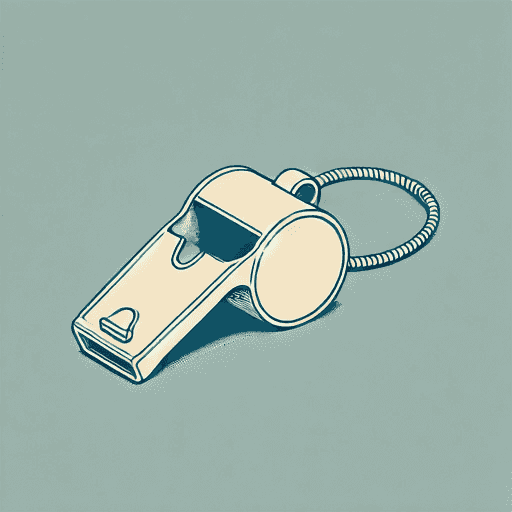
The Assembly Whistle
Frank Gilbreth’s signature assembly whistle is a recurring motif that represents his unique blend of industrial efficiency and playful paternal authority, turning family life into a public performance. The whistle, a tune Frank composed himself, functions as a summons that merges the logic of the factory floor with the chaos of the family yard. Its call meant the children must “drop everything and come running—or risk dire consequences” (4), a command as absolute as any factory bell. This practice directly supports the theme of Discipline as Affectionate Spectacle, transforming a simple drill into a theatrical event, often for the benefit of an audience. When a friend was present, Frank clicked his stopwatch, measuring the family’s response time and showcasing them as a highly trained unit. The whistle was a tool for control, an instrument of performance, and a way to reinforce family unity via a shared, entertaining routine.
The whistle’s multifaceted significance reflects Frank’s complex character as both a stern taskmaster and a doting father. While blowing it could signal an inquiry into misbehavior or a fire drill that evacuates the house in record time, it most often preceded “some wonderful surprises, with the biggest and best going to the one who reached him first” (5). This conditioning left the children in a state of perpetual anticipation, never knowing whether to expect “good news or bad, rags or riches” (5). This uncertainty solidified Frank’s larger-than-life presence, casting him as the unpredictable arbiter of both discipline and delight. Ultimately, the assembly call encapsulates the performative nature of Frank’s authority.
Foolish Carriage
The family’s first automobile, a Pierce-Arrow affectionately nicknamed “Foolish Carriage,” is a symbol of the identity of the Gilbreth clan. The name, which Frank chose because “it was foolish for any man with as many children as he to think he could afford a horseless carriage” (9), reveals his awareness of traditional optics of his oversized family and his progressive attitudes towards education and engineering. The vehicle became a mobile stage for the family’s public spectacles, turning every outing into a performance. Frank’s theatrical driving, complete with three horns and shouts of “road hog” (11), transformed a simple drive into a traffic-stopping event. The car was the platform from which he delivered his famous “cheaper by the dozen” line, cementing the family’s public identity as a traveling curiosity, a “circus parade” (17) that both embarrassed and united the children.
The automobile demonstrates Modernity Testing Family Order. Frank, a master of industrial machinery, “never really understood the mechanical intricacies of our automobile” (9), which kicked, spat, and squealed in defiance of his control. The family’s response to his perilous driving was to create their own system of order, assigning lookouts to scan for dangers from every direction. This system was a microcosm of their entire household: a collaborative effort to impose efficiency and safety onto an inherently chaotic situation. The car was thus a symbol of progress and a source of constant risk, forcing the family to adapt their unique principles of management to the unpredictable realities of the modern world.
Motion Study
Motion study, the scientific principle of eliminating wasted effort, is the dominant motif in Cheaper by the Dozen, illustrating Frank Gilbreth’s relentless project of Turning Family Life into a Laboratory. Frank applied this core philosophy to every facet of domestic life, from the mundane to the medical. He filmed his children washing dishes to analyze and reduce their movements, awarded irregular jobs on a “low-bid basis” (2), and even shaved with two brushes because it “could cut seventeen seconds off his shaving time” (3). By imposing the logic of the factory onto the home, Frank attempted to engineer a more efficient, productive, and ultimately, he believed, happier family. The household became an experimental space where industrial management principles were tested on children, normalizing the fusion of domesticity and scientific methodology.
The pervasiveness of the motion study motif reveals a worldview where time is a resource that must never be squandered. Frank identified activities like dressing and eating as “unavoidable delay” (23), which he sought to fill with productive tasks like listening to French and German language records in the bathroom. This drive to optimize every moment extended from chores, to education, and even to surgery. When several children needed tonsillectomies, Frank seized the opportunity to film the operations, intending to analyze the surgeon’s movements and reduce operating time. This application of his professional obsession to a medical procedure involving his own children shows the complete dissolution of boundaries between his work and his family, demonstrating his unwavering belief that the “One Best Way to Do Work” (168) was also the one best way to live.

Unlock the meaning behind every key symbol & motif
See how recurring imagery, objects, and ideas shape the narrative.
- Explore how the author builds meaning through symbolism
- Understand what symbols & motifs represent in the text
- Connect recurring ideas to themes, characters, and events