Dragons in a Bag
42 pages • 1-hour read
Zetta ElliottDragons in a Bag
A modern alternative to SparkNotes and CliffsNotes, SuperSummary offers high-quality Study Guides with detailed chapter summaries and analysis of major themes, characters, and more.
Chapters 5-8Chapter Summaries & Analyses
Chapter 5 Summary
Content Warning: This section of the guide includes discussion of death and racism.
After he storms out of Ma’s apartment, Jaxon realizes that he’s still holding L. Roy Jenkins’s book about lizards. He never wants to see Ma again, so he decides to ask his mother to return the book for him later. Jaxon worries that he and his mother may have to move in with Ma unless Alicia and her lawyer win their court case. He wants to go to Vikram’s house, but he thinks that he should call his friend to let him know that he’s on his way first. He doesn’t have a cell phone, so he sits down on the front steps of a building next to Ma’s apartment and tries to think of a plan.
An out-of-breath Ma hurries after Jaxon, tells him that she needs to make a delivery, and asks him if he’ll accompany her. Although she doesn’t apologize for the things she said to the boy earlier, her tone is softer. Jaxon tells Ma to stop referring to him as “boy.” She asks him if he’s named after his father, but Jaxon doesn’t like to talk about him. He invites Ma to call him “Jax,” which is the nickname his mother uses for him. Ma explains that she’s an old friend of his family and that she “used to look after [Alicia] when she was a girl” because Jaxon’s grandmother struggled to raise her daughter on her own (34). Ma says that she’s helped to raise many children. She had hoped that the bright and curious Alicia would become her apprentice, but Alicia wanted a normal life. Jaxon begins to wonder if Ma has magical powers.
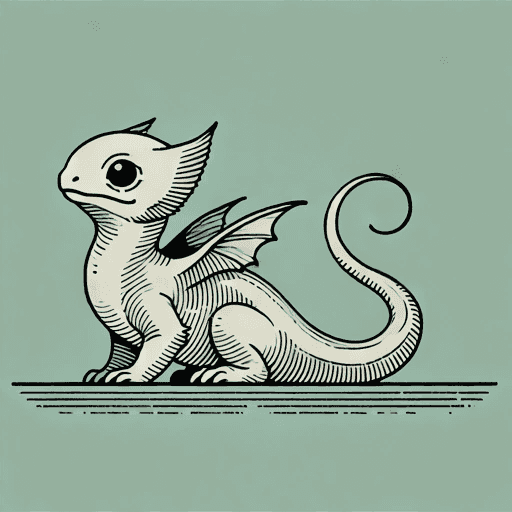
Jaxon asks Ma if Jenkins is the friend who sent the box from Madagascar and if it contains lizards, and she confirms that he guessed correctly. When he asks why she didn’t want the squirrel to give the lizards marshmallows, she explains that sometimes taking care of living creatures means being firm when they want something that isn’t good for them. If she feeds the baby lizards the sweet, sticky things that they crave, they’ll imprint on her and think that she’s their mother. This would prevent them from learning how to be lizards. Jaxon volunteers to help her raise the lizards, but she says that they can’t remain in Brooklyn because the borough has changed and lost its magic: “These drag—uh—lizards can’t stay here, Jax. They came from one world, and they’re on their way to another” (38). Jaxon guesses that she’s a veterinarian given her interest in animals, but she matter-of-factly states that she’s a witch.
Chapter 6 Summary
Ma and Jaxon go to the stone gate at the entrance to Prospect Park, which is one of his favorite places in Brooklyn because it contains a zoo, a playground, and a carousel. Jaxon feels anxious now that he knows that Ma is a witch, and he grows more nervous as storm clouds swirl overhead and it starts to rain. Pigeons congregate around Ma and Jaxon as they sit on a bench outside the park. An unhoused man named Ambrose joins them and expresses surprise that a seasoned professional like Ma is making a delivery. Jaxon realizes that Ambrose is bundled in layers of clothing because he’s invisible. Ambrose tells Jaxon to be careful because Ma’s last apprentice ran into danger during his training.
After Ma whispers a password to Ambrose, he unlocks one of the park’s unused guardhouses. He warns her that the transporter has been behaving irregularly lately. Ma tells Jaxon that the three lizards that Jenkins sent her are actually dragons and that she needs to take them to another world because there isn’t enough magic in Brooklyn to sustain them. She invites him to stay behind with Ambrose if he doesn’t want to accompany her. However, she looks disappointed when he doesn’t immediately follow her into the guardhouse. Jaxon wonders, “How many new recruits have walked away when Ma needed their help?” (54). He hurries to join her. Ma puts her hands on Jaxon’s shoulders and tells him to brace himself.
Chapter 7 Summary
The guardhouse swoops like a roller coaster as it travels through time and space. After the transporter shudders to a stop, Jaxon tries to be brave as he ventures out into the sweltering, tropical world they landed in. This is not the destination that Ma had in mind, and she doesn’t detect any magic, making the location unsuitable for the baby dragons. The travelers explore their surroundings and see dinosaurs fleeing from a volcanic eruption. At Ma’s request, Jaxon climbs down to a ledge on a cliff and gathers pieces of quartz.
As they hurry back to the guardhouse, Jaxon senses something pursuing them through the jungle. When the transporter doesn’t start, Ma tells the boy to stay in the guardhouse with her purse while she goes outside and investigates. Even though he’s scared, Jaxon follows her because he wants to help. He suggests that he could carry on Ma’s work after she retires. He thinks that he would make a good apprentice because he has the intelligence and perseverance of his mother, who didn’t give up when his father died or the landlord tried to evict her. When a creature in the jungle growls and lunges toward them, Jaxon flees to the guardhouse. Ma uses her magic to close the transporter’s door and send “blue currents of electricity” through the transporter (72). Jaxon bursts into tears and whispers, “I just want to go home” (72). Suddenly, the transporter begins to move.
Chapter 8 Summary
Jaxon tumbles out of the guardhouse and is relieved to see that he’s back in present-day Prospect Park. He finds Ambrose and tells him that Ma is stuck in the Mesozoic era. Ambrose is relieved to hear that she has her cane, pocket watch, and piece of quartz with her. Ambrose contacts an interdimensional navigator named Charlie “Trouble” Randall who can find Ma. He tells the boy that Trouble is “a not-so-distant relation” of Jaxon’s (78). Jaxon begins to cry as he thinks about how he left Ma behind, but Ambrose reassures him that he’s still helping Ma and that everything that’s happened might be part of her plan.
Jaxon asks Vikram to meet him at the park because he possesses extensive knowledge about dinosaurs. Soon after Ambrose leaves, Vikram arrives with his sister, Kavita, who threatened to tattle on her brother unless she was allowed to accompany him. When Jaxon warns his friend that his story may be hard to believe, Vikram tells him about a phoenix that some of their classmates found a few months ago. Jaxon tells Vikram about the witch and the three baby dragons. While the boys are distracted, Kavita opens the tin and feeds the baby dragons a milk-based sweet called peda. Two of the dragons have wings, and the third has plates along its spine. The purple-scaled dragons grow rapidly and nuzzle against Kavita affectionately. The boys reprimand her for looking through someone else’s things and making the dragons imprint on her, but she argues that the dragons sounded sad. Jaxon returns the dragons to Ma’s purse. A man with a gold tooth and bushy eyebrows introduces himself to Jaxon as Trouble and invites him to call him “Trub.”
Chapters 5-8 Analysis
In the novel’s second section, Ma and Jaxon’s efforts to bring the dragon hatchlings home underscore The Importance of Family and Community. The dragons, which the narrator sees for the first time in Chapter 8, serve as a motif of the theme because they seek a nurturing parental figure to imprint on. Jaxon empathizes with the hatchlings and wants to help them because his own home situation is in peril because of his landlord: “‘Everybody should have a home,’ I say, ‘and get to stay there as long as they want’” (40). Gentrification poses a threat not only to Brooklyn’s historically Black communities but also to fantastic creatures like the dragons: “All kinds of creatures used to call this place home. But not anymore” (39). Elliott also advances the theme by introducing the protagonist to more members of the magical community, including Trouble, who is actually Jaxon’s grandfather. In Chapter 8, Jaxon and Ambrose both demonstrate the power of connection and lean on their communities by asking for help from their friends. By making real-world issues a threat to both humans and fantasy creatures, Elliott emphasizes the importance of working together to preserve families and communities.
Fantasy elements figure prominently in these chapters, illustrating The Magic and Wonder in Everyday Life. Jaxon becomes more aware of the extraordinary aspects of his familiar neighborhood after he learns that Ma has magic at the end of Chapter 5: “[N]ow that I know Ma’s a witch, nothing seems normal” (48). Elliott makes Ambrose, an unhoused man and a trusted keeper of the city’s supernatural secrets, invisible to the human eye. These authorial decisions develop the theme of the magic in everyday life and provide social commentary about how unhoused individuals are often ignored by society. In addition, Prospect Park’s seemingly abandoned guardhouses serve as motifs of the theme because they are actually transporters that can move through space and time. The phoenix that Vikram mentions in Chapter 8 also demonstrates that magic and wonder can be found amid the ordinary. Phoenixes symbolize rebirth in literature and folklore, and the author uses this symbol to offer hope amid the changes that Brooklyn is experiencing. The boy’s schoolmates found a firebird of an advanced age while they were “fixing up the backyard of this rundown building” (82). Just as a phoenix dies and is reborn from the ashes, Elliott offers hope that the borough’s fading Black communities can find a way to survive the transformations sweeping the city. Elliott uses fantasy elements to encourage people to find wonder in their everyday lives and better appreciate their homes and fellow community members.
Ma teaches Jaxon a lesson about responsibility and offers an important insight into her character in Chapter 5: “‘Sometimes you can’t let your love show,’ Ma says in a soft but firm voice. ‘Sometimes you have to say no when you want to say yes, because it’s the responsible thing to do’” (39). These words help to explain her gruff behavior, and they foreshadow the key plot point of Kavita feeding the dragons. It’s irresponsible to make the dragons imprint on a human, but the young girl doesn’t understand this: “They sounded sad, so I opened the tin and gave them some of my snack” (86). The contrast between Kavita’s overly simplistic understanding of what it means to care for living things and Ma’s wisdom develops the theme of responsibility.
Jaxon’s decision to become Ma’s helper on her interdimensional delivery advances his journey toward responsibility and personal growth. For example, he enters the transporter even though the thought of leaving his world behind scares him: “I’m here to help—not be helped. So I clear my throat and say, ‘Ready, Ma,’ with more confidence than I actually feel” (56). The protagonist’s determination to be of assistance helps him face challenges, such as climbing down the cliff to retrieve the quartz crystal. However, Chapter 7 presents a crisis that causes Jaxon to momentarily abandon his convictions. Within minutes of asking Ma if she would “pass the torch” to him and accept him as her apprentice (67), the boy runs away and leaves Ma in danger. This marks a turning point in the novel’s plot and makes Jaxon determined to take responsibility for his actions. Although he feels “scared and guilty” after leaving Ma behind (74), he’s also more purposeful: “I’m Ma’s helper, and I have to find a way to bring her home, too” (73). This resolve guides the protagonist’s character development and the structure of the rest of the novel.

Unlock all 42 pages of this Study Guide
Get in-depth, chapter-by-chapter summaries and analysis from our literary experts.
- Grasp challenging concepts with clear, comprehensive explanations
- Revisit key plot points and ideas without rereading the book
- Share impressive insights in classes and book clubs