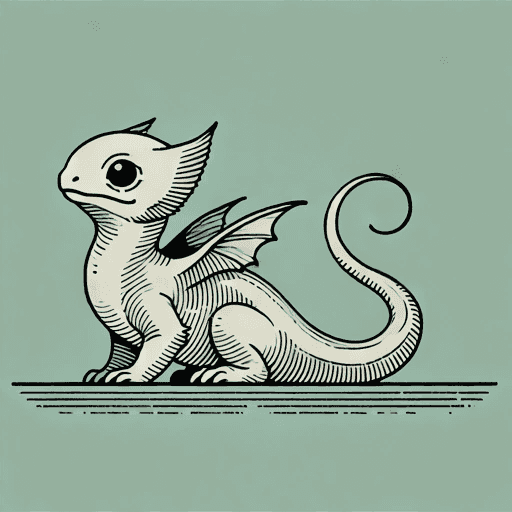
Dragons in a Bag
Dragons in a Bag
A modern alternative to SparkNotes and CliffsNotes, SuperSummary offers high-quality Study Guides with detailed chapter summaries and analysis of major themes, characters, and more.
Summaries & Analyses
Quizzes
NEWReading Tools
Important Quotes
“A heavy body shuffles toward the door. Mama and I wait patiently as at least three locks are turned. The chain stays on and lets the door open just a crack. I cringe as a raspy voice asks, ‘What you want?’”
(Chapter 1, Page 2)
Elliott builds up the anticipation in this scene by focusing on auditory imagery, such as Ma’s shuffling to the door and the sound of the locks turning. The author uses diction to show how the elderly woman intimidates Jaxon at first, such as through precise verbs and adjectives like “cringe” and “raspy.” Elliott’s decision to tell the story from the nine-year-old’s perspective helps her to highlight his emotions and create suspense.
“I sigh with relief and take Mama’s hand. Just as we start to walk down the stairs, I hear the chain slide, and the door opens once more. ‘One day. Give me your word, Alicia. One day.’ Mama says, ‘I promise, Ma.’”
(Chapter 1, Page 5)
The usage of repetition and italics in Ma’s dialogue emphasizes her reluctance to watch Jaxon, which is one of the main reasons why she seems forbidding to him at first. The “relief” that the boy feels when he thinks that he won’t have to stay with Ma indicates the rocky start of the characters’ relationship and makes the closeness and trust that they gain over the course of the story all the more significant. This development supports The Importance of Family and Community, which is one of the novel’s major themes.
“I let my eyes adjust to the shadows before searching for my grandmother. The apartment smells musty, but it looks tidy. The living room has two big windows with heavy curtains that shut out the spring sunshine.”
(Chapter 2, Page 6)
Elliott depicts Ma’s apartment through visual imagery, such as “shadows” and “heavy curtains that shut out the spring sunshine,” and olfactory imagery, such as the space’s “musty” smell. The dark, stifling setting adds to the tense mood as Jaxon enters Ma’s home for the first time. The passage offers clues about Ma’s loneliness and efficiency by describing her home, and the detailed descriptions offer an example of Jaxon’s observant and detail-oriented narrative voice.
“Her white hair shudders like an angry cloud as she smears peanut butter onto the bread, all the while mumbling to herself. I’m pretty sure she’s talking about me, but her voice isn’t quite loud enough for me to hear, so I figure she’s not actually talking to me.”
(Chapter 2, Page 7)
The simile comparing Ma’s “white hair” to “an angry cloud” offers a visual description of one of the novel’s key characters while also underlining the gruffness that typifies her behavior at the start of the story. The italics on the prepositions in the final sentence make it clear that she doesn’t appreciate having a child entrusted to her care and that Jaxon is keenly aware of her ire.
“Then I hear a scratching sound at the window, which is open just a crack. At first, I think the breeze is making the crisp, yellowed paper blind scrape against the window frame. But when the sound keeps up, I realize there’s something moving out on the fire escape.”
(Chapter 3, Page 15)
Elliott captures the moment when the squirrel begins her attempt to enter Ma’s apartment through visual imagery, such as “the crisp, yellowed paper blind,” and auditory imagery, such as “a scratching sound.” The author raises the suspense by supplying these sensory details before revealing the source of the noises.
“For several seconds, the kitchen is silent. I can hear Ma’s voice in the other room. It sounds like she’s arguing with someone. Finally, the squirrel lets go of the box and bursts into a fast-flowing stream of screeches and chirps. I can’t understand what she’s saying, of course, which seems to frustrate the squirrel.”
(Chapter 3, Page 16)
The emphasis on sound in this passage draws out the suspense and sets the tense mood. For example, sources of tension include the sounds of Ma arguing on the phone in the background and the squirrel’s frustrated attempts to communicate with Jaxon. The “screeches and chirps” are a literary device called onomatopoeia that imitates the squirrel’s sounds and conveys her sense of urgency.
“I open my mouth to tell Ma that I’m usually a very obedient boy, but no words come out. I almost never break the rules at home, but things feel different here. I feel different here. I want to ask Ma a dozen questions, but the stern look on the strange old lady’s face tells me I’d better keep my questions to myself for now.”
(Chapter 4, Page 22)
The repetition of the words “feel different” emphasizes that meeting Ma contributes to the protagonist’s development in ways that contrast with his usual careful, “obedient” behavior. In addition, the passage offers an example of anaphora because each sentence in this paragraph begins with the word “I.” This literary technique creates a sense of rhythm.
“Ma tries to block my view with her body, but not before I figure out that the clump of paper isn’t just packing material—it’s a nest! And the purple fragments are broken eggshells. Something hatched inside that box! And the mysterious creatures must be strong to have rocked the box as they were being born. Yet they’re small enough to fit inside Ma’s empty mint tin.”
(Chapter 4, Page 28)
The author uses punctuation in ways that support the flow of Jaxon’s narration and reflect his emotions as he gathers clues about the mystery of the box’s contents. For example, the dash before “it’s a nest!” highlights the moment of realization, and the exclamation points underscore the narrator’s excitement as he discovers that “[s]omething hatched inside that box!”
“Just as I turn to go, we both hear a low, menacing growl coming from inside Ma’s old-lady purse. Ma scowls, grabs her cane, and whacks the bag. There’s a sharp squeal, and then whatever was growling inside the tin in her bag grows quiet.”
(Chapter 4, Page 31)
Elliott provides vivid descriptions of the scene by using multiple onomatopoeia, such as “growl,” “whacks,” and “squeal.” The sound effects contribute to the flow of the action, and the diction of the precise adjective “menacing” adds suspense. As a whole, the passage is an example of foreshadowing because the sounds coming from “Ma’s old-lady purse” hint at the titular dragons in a bag.
“The tap-tap-tap sound doesn’t stop, though, and soon Ma is standing before me on the sidewalk. She’s wearing black leather sneakers, but I can see the hem of her purple housecoat hanging below her beige overcoat. Ma must have hurried to catch up with me. She’s a little out of breath, so neither of us says anything for a minute.”
(Chapter 5, Page 33)
Elliott’s use of sound effects helps the reader imagine the scene and offers insight into the novel’s characters. The onomatopoeia “tap-tap-tap” captures the rhythmic rapping of Ma’s cane on the sidewalk as she nears Jaxon. The sound of her breath indicates that she “hurried to catch up” with Jaxon, signifying that she cares about the boy’s safety and is not as forbidding as she initially appears to be.
“‘Back then, I needed a different kind of help. Another name for that kind of helper is…apprentice.’ Ma pushes herself forward and starts walking once more. I want to move, but all the thoughts suddenly swirling in my head are making me dizzy. I take a deep breath and try to focus. Apprentice. The only time I’ve seen that word is when it comes after another word: sorcerer. If Mama was the apprentice, does that mean Ma is a…?”
(Chapter 5, Page 36)
The author uses diction, italics, and punctuation to illustrate the narrator’s dawning realization that Ma possesses magic. The italics on the words “Apprentice” and “sorcerer” underline that the word “apprentice” has magical connotations for Jaxon. The ellipsis at the end of the passage indicates that Jaxon can hardly believe the possibility that Ma might have supernatural abilities.
“‘Where are you taking the lizards? Prospect Park Zoo?’ Ma shakes her head. ‘These lizards are, um, special. They need a whole lot of space so they can spread their—I mean, they need room to grow. L. Roy sent them to me because he knew I wouldn’t put them in a cage.’”
(Chapter 5, Page 41)
Elliott uses the idiom “spread their wings” to provide humor and foreshadowing. This figure of speech is literal for the lizards, but Ma interrupts herself because she is trying to keep Jaxon from discovering that they’re dragons.
“Turns out we aren’t actually going inside the park. Instead, we stand before the tall stone gate while Ma examines the tumultuous sky. The dark clouds above us look like water swirling down a drain.”
(Chapter 6, Page 43)
“It looks like the tiniest castle ever built, with round stone walls and a pointed red-tiled roof. Two steps lead up to a black door that has no knob, just a gold keyhole in the center. The guardhouse used to have windows on the sides and in its door, but metal plates and black bars weave across the space where glass ought to be.”
(Chapter 6, Page 49)
Elliott paints a vibrant picture of the guardhouse using colorful visual imagery, such as “a pointed red-tiled roof,” “a black door,” “a gold keyhole,” and “black bars.” The simile likening the guardhouse to “the tiniest castle ever built” offers a visual description and also suggests that there is something special about the structure. Prospect Park is a real place in Brooklyn, and the park’s guardhouses serve as interdimensional transporters for Ma and the other characters in the novel, making them a motif of The Magic and Wonder in Everyday Life.
“Ma pulls the door shut with a bang. It’s pitch-black inside the cramped guardhouse, but my racing heart slows down a bit when Ma puts her hands on my shoulders. ‘All right, Jax—hold on. This could be a bumpy ride.’”
(Chapter 6, Page 55)
The author employs literary techniques to build up the suspense before the transporter activates. For example, the onomatopoeia “bang” as the door shuts and the visual imagery of the “pitch-black” guardhouse contribute to the tension. In addition, the diction in phrases like “racing heart” and “bumpy ride” adds to the sense of excitement and anticipation.
“Ma was right—the guardhouse moves through time and space the same way the cars on the ninety-year-old Cyclone rattle along the wooden tracks. My hands reach out for something to hold, but the round walls of the guardhouse are smooth. There are no levers to pull or buttons to push. We just swerve and swoop for the longest minute of my life.”
(Chapter 6, Page 56)
By comparing the transporter to a ride on Coney Island’s “ninety-year-old Cyclone,” Elliott weaves in another connection between the story’s fantasy elements and the Brooklyn setting. This comparison also illustrates the thrill and fear that Jaxon feels as he travels in a transporter for the first time. The alliteration in “swerve and swoop” adds a poetic quality to the final sentence and accentuates the guardhouse’s unpredictable movements.
“We’re standing at the edge of a steep cliff, and in the distance is an erupting volcano! Dark clouds of ash spew out of the top, and red lava snakes down the side of the mountain. Far below us I can see creatures fleeing from the eruption, and even from a distance, it’s clear that they’re dinosaurs.”
(Chapter 7, Page 60)
The author captures the scene of a volcanic eruption through dramatic visual imagery, such as “dark clouds of ash” and “red lava.” The dinosaurs that Jaxon sees provide the suspenseful revelation that he and Ma are in the Mesozoic era, far from both their intended destination and their own time period.
“The creature’s growl builds into a full-blown roar and then—Ma’s eyes flash open. She pulls the crystal out of her pocket and holds it high above her head. Then she looks straight at me and points her cane at the guardhouse. The black door slams shut, leaving me alone in the dark.”
(Chapter 7, Page 69)
Elliott uses onomatopoeia like “growl,” “roar,” and “slams” to intensify the scene’s suspense and action. While the sounds of the unseen creature signify danger, the slamming of the guardhouse’s door means safety for Jaxon. The author also raises suspense through her choice of punctuation, particularly the dash before “Ma’s eyes flash open” in the first sentence. The visual imagery of Jaxon’s sudden plunge into darkness evokes a sense of the narrator’s fear.
“There are plenty of rats in Brooklyn. They’re dirty and nasty and carry disease (remember the Plague?), so I definitely keep my distance. I’m expecting this giant rat to take a big bite out of my grandfather’s leg, but instead he asks, ‘Hey, Trub—got any grub?’”
(Chapter 9, Page 100)
Polysyndeton is the stylistic addition of coordinating conjunctions where none are grammatically necessary. The repetition of “and” in the second sentence is an example of polysyndeton that gives the sentence a rambling, breathless tone to emphasize Jaxon’s horror and disgust toward rats. The question in parentheses adds to the passage’s flow, which follows the narrator’s stream of consciousness. The rhyme in the rat’s dialogue adds some playfulness to the scene, humorously undercutting Jaxon’s dismay.
“Ma believed in me, and that made it easy to believe in myself. I thought I could just wrap that world up in a rainbow and give to Alicia. But she didn’t want no part of it—or me, after that.”
(Chapter 9, Page 104)
Trouble uses metaphorical language when he expresses his desire to “wrap the [magical] world up in a rainbow” and present it as a gift to his daughter. This language reflects the great beauty he sees in magic and makes the revelation that Alicia rejected him and the world he tried to share with her more impactful.
“I don’t need Trub to tell me that we’ve landed in the realm of magic. This world is totally different from the land of dinosaurs I visited with Ma. The lavender sky above us shimmers with light even though I can’t see the sun or the moon. The air is cool and dry, and butterflies twirl by on a gentle breeze. I take a deep breath and wonder if we’re near the sea. I can’t tell if the sun has just set or if it’s about to rise, but everything in this world seems to be at peace.”
(Chapter 10, Page 112)
Elliott’s imagery creates a mystical, tranquil mood. Descriptions of the “lavender sky” appeal to the reader’s sense of sight, the “gentle breeze” and “cool and dry” air appeal to the sense of touch, and the salty scent in the air that makes Jaxon wonder if he’s “near the sea” appeals to the sense of smell. Additionally, diction in word choices like “peace” and “shimmers” adds to the scene’s sense of tranquil beauty.
“Trub steps back so I can greet Ma, but I still don’t move—I can’t. My feet that flew over the dirt road a moment ago now feel like lead. Ma sits on the mat calmly peeling the golden fruit. I want to throw my arms around her and squeeze her as tight as I can, but right now she seems harder to hug than the baobab trees.”
(Chapter 11, Page 122)
The author uses similes to compare Jaxon’s feet to “lead” and note that Ma “seems harder to hug than the baobab trees.” These comparisons express Jaxon’s sudden hesitation to close the final bit of distance between him and Ma, revealing that he still feels a measure of uncertainty toward his standing with her even though he has undertaken an interdimensional rescue mission to find her.
“At least a dozen butterflies circle her head and shoulders, wrapping her in a rainbow veil. ‘The lost dragon must be returned to me,’ Sis says solemnly. ‘The girl is no thief—she now feels bound to the creature just as it feels bound to her. But those dragons—all of them—belong here, with me. They do not belong in your world.’”
(Chapter 12, Page 134)
The visual imagery of the butterflies forming a “rainbow veil” around Sis depicts the beauty of magic. The repetition of the words “bound” and “belong” emphasizes the urgency of the situation and underscores the importance of family and community.
“As she climbs the stairs, Ma puts a hand on Mama’s shoulder, but Mama doesn’t respond. I watch Ma go inside her building, and then I take a seat next to my mother. Her fingers are laced together, and she holds them over her mouth like a net that will catch words she doesn’t want me to hear.”
(Chapter 13, Page 147)
Elliott uses a simile to compare the positioning of Alicia’s interlaced fingers over her mouth to “a net that will catch words she doesn’t want [Jaxon] to hear.” This simile captures Alicia’s efforts to maintain some composure even though she feels overwhelmed when she learns that her son wants to be Ma’s apprentice.
“‘Why don’t you tell me what it was like for you…in that other world?’ I open my mouth to say ‘Sure!’ but suddenly my stomach growls—no, roars—with hunger. Mama laughs and pokes me in the belly. ‘You got a dragon in there?’ she asks with a smirk. I laugh, too, and clutch my empty stomach. ‘Can I tell you about the dragons…and the dinosaurs…and the baobabs over supper?’”
(Chapter 13, Page 149)
This passage provides some comic relief after the tension of Alicia and Ma’s argument and Jaxon’s conversation about sensitive topics with his mother. The onomatopoeia “roars” and the italics on the word emphasize the ferocious volume of Jaxon’s growling stomach. Alicia’s invitation for Jaxon to share his experiences and her ability to make a joke are positive signs that she’s beginning to process and accept the situation. In the last sentence, the repetition of “and” is an example of polysyndeton used to give dialogue a realistic flow. This final sentence offers a summary of the protagonist’s adventures in this book, and the excerpt as a whole suggests that he might be able to change his mother’s negative perception of magic as the series continues.

Unlock every key quote and its meaning
Get 25 quotes with page numbers and clear analysis to help you reference, write, and discuss with confidence.
- Cite quotes accurately with exact page numbers
- Understand what each quote really means
- Strengthen your analysis in essays or discussions