59 pages • 1-hour read
Fear of Flying
A modern alternative to SparkNotes and CliffsNotes, SuperSummary offers high-quality Study Guides with detailed chapter summaries and analysis of major themes, characters, and more.
Chapters 16-19Chapter Summaries & Analyses
Content Warning: This section of the guide includes discussion of sexual content, mental illness, racism, and cursing.
Chapter 16 Summary: “Seduced & Abandoned”
Isadora is determined to find Bennett and see if he’ll take her back. She tries to call their apartment, and the girl who sublet it says he’s not there. Isadora calls Bennett’s friend, but the connection is bad. She suggests that she and Adrian drive to London together, but he says she needs to face this on her own. They drive around Paris, and Isadora feels exuberant by the time they stop to eat. Adrian confesses that he cannot stay with her because he is meeting his wife and children in Cherbourg tomorrow morning. Isadora blanches at his betrayal, accusing him of hypocrisy. He only laughs. She threatens to accompany him, and he forbids it. She reproaches him for keeping his “safe little household intact” (371), the very thing he censured her for wanting to do. She considers telling him that she’ll “fall apart” if he leaves her, but then she realizes that she is actually free, which is both terrifying and exhilarating.
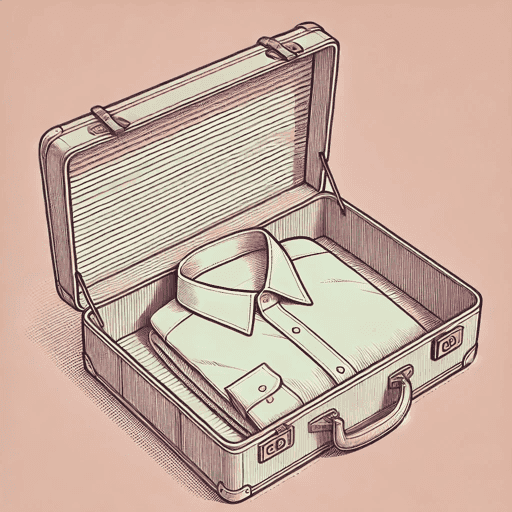
After Adrian leaves, she wrestles her heavy suitcase, which she packed thinking she wouldn’t have to carry it alone. It is full of things meant to prove that she isn’t ordinary. She recalls pulling out one of her books to sign for Adrian, as he’d lost the first copy, and its contents spilled out. As people look at her askance, she wonders why being catcalled always makes her feel “hunted,” and she assumes there’s something wrong with her since it’s supposed to be flattering. Bennett always blamed her for making herself seem too “availab[le].” Whenever she rejects men’s advances, they always assume she’s playing games and actually wants them. However, if she were rejected, she knows she’d assume something was wrong with her and not the man. It’s ironic, she realizes, that when she finally pursued a fantasy with a man—Adrian—he couldn’t keep an erection and ultimately rejected her. She remembers how “awful” it is to be a woman, how “vulnerab[le].” She finds a hotel room, but it’s dirty and musty and makes her want to cry. She fears being alone but can’t figure out what’s so bad about being alone. She wants to be “possessed […] totally,” while recognizing that she’d “feel trapped” if she were (382). She wants freedom and closeness, independence and love. Isadora sinks deeper into panic and wishes for her mother.
Chapter 17 Summary: “Dreamwork”
Isadora cannot sleep. She looks at herself in the mirror and thinks that she “use[s] everyone”; in fact, she feels she “deserved” what happened with Brian. She thinks her body is intimately connected to her writing, as if every poem is her attempt to extend herself. She is, she feels, 10 pounds too heavy and “loathe[s]” every ounce of fat on her body as evidence of her weakness. She wants to figure out how she got to this place, emotionally and mentally, so she pulls everything out of her suitcase and begins to examine the artifacts. Rereading her journal, she realizes she forgot how lonely she’d been with Bennett, how coldly he treated her. Just then, a “curious revelation started to dawn” (395). Isadora stops finding fault with herself, choosing to see “running away” as a kind of loyalty to herself rather than disloyalty to others. She realizes she needn’t apologize for prioritizing her soul. In a marriage, she thinks, one confuses dependency with closeness, blaming oneself inappropriately. She doesn’t want to return to the marriage she’s reading about. If she goes back to Bennett, it will have to be different, and if it doesn’t work out, she knows she’ll survive.
Chapter 18 Summary: “Blood Weddings or Sic Transit”
Isadora awakens with a pool of blood between her legs and tries to find a tampon in her suitcase, but she’s out. She takes one of Bennett’s clean T-shirts and fashions it into a kind of “diaper” using a safety pin. She rushes around the hotel to find a free bathroom. As she cleans herself up, she recalls being young and wishing she would get her first period. Later, she mentally connected her period to all the “nonsense” that being a woman seemed to confer: the expectation of babies, that she’d become consumed with topics like eating and defecating, that she’d learn to type like a secretary. It was then that she decided she would never learn to type, and she never has. She realizes now that she’s in Paris because she’s cut herself off from everyone in her life to prove that she is free, but she doesn’t feel very free.
Isadora washes her dirty hair to give herself some sense of control. She lugs her suitcase to a drugstore to buy a box of tampons, and she leaves it at a table in a café while she goes to the bathroom. It makes her nervous to walk away from it, and she decides it will be a good omen if it’s still there when she returns. It is. She sits next to it and has a coffee and some brioche, enjoying the small pleasures. Isadora reflects on menstruation’s dual nature: It’s a bit sad when her period comes, but it’s also a new beginning. She realizes that people don’t need others to complete them, that they can complete themselves; further, she understands that searching for love while feeling incomplete amounts to an attempt to self-annihilate (which we call “love” though it isn’t). She will not sacrifice herself for a self-destructive passion.
She recalls Adrian’s suggestion that she abandon the pursuit of love and just live her life. It sounds like a good idea; no more “Isadora Icarus,” borrowing others’ wings and losing them. She goes to the train station and buys a ticket to London, lugging her suitcase. A young train attendant helps her stow the suitcase before pushing her down and thrusting his hand between her legs. She’d been pleased by his willingness to help, but this turns to horror when she learns his real intentions. She feels credulous and provincial: “Isadora in Wonderland” (416). On the other hand, she recognizes that the prospect of a “zipless fuck” no longer excites her; in fact, it revolts her. Isadora talks to a man who shares her train cabin, while his wife silently feeds their baby. She openly disagrees with him about the state of the American education system; he thinks it is too “permissive” while she argues that “genuine permissiveness promotes independence” (419). After sleeping for a few hours, the conductor wakes the passengers, and Isadora drags her suitcase to the boat and then on to the next train station.
Chapter 19 Summary: “A 19th-Century Ending”
Isadora finds Bennett’s hotel, but the clerk says there’s no “Wing” staying there. She asks to see the ledger and realizes they’ve misspelled his name as “Wong”; she immediately empathizes with Bennett and the way white people think “[a]ll Chinese look alike and all Chinese names are Wong” (422). Bennett is out, but the clerk gives Isadora a key to wait in his room. She runs a bath, deciding that she likes her body now. Her fear is gone. She’s not sure what Bennett will say to her, but she knows she won’t grovel. While she washes, Bennet walks into the room.
Chapter 16-19 Analysis
In this section, Isadora’s enormous, heavy suitcase is a symbol of the figurative weight she carries: her emotional baggage, past experiences, guilt, and expectations. She lists the numerous items it contains, saying, “Some of these […] were simply carried out of insecurity; badges of identity to put on for anyone I might meet. They were designed to prove that I was not just an ordinary woman. They were designed to prove that I was exceptional” (373). Feeling she might have to prove her worth to someone, she carries toiletries and other personal care items, several copies of her published work, and anything that might convey her “value” to someone who doesn’t see it, evidence of The Pervasiveness of Internalized Misogyny. She recalls objects falling out of the suitcase as she searches for a copy of her book of poetry, “[her] life spilling out into the street” (374). The suitcase symbolizes Isadora’s belief that she’s been burdened or cursed with womanhood, with artistic talent, with strong sexual desires and the wish to be loved. To this end, she refers to the suitcase as an “albatross,” an allusion to Samuel Taylor Coleridge’s “The Rime of the Ancient Mariner,” in which a sailor shoots an albatross—a bird of good omen—and his fellows punish him by making him wear the carcass. Thus, the allusion suggests that Isadora is guilty, that she’s made critical errors in judgment that have resulted in her unfortunate state.
After she parses the items she’s carried around, her feelings change dramatically, indicating a radical shift in her thinking. When she decides to leave the suitcase at a café table so she can use the restroom, she says, “I had a momentary pang about leaving the suitcase, but then I decided to say the hell with it” (410). Up until now, she’s been unwilling to walk away from the suitcase, which contains all the trappings of her identity and ways she might prove her value, but now, she realizes she doesn’t have to carry this burden around anymore. If something happens to it all, she’ll survive. She can finally lay down her desire to justify herself and her choices, to prove herself to the world. This literal unpacking symbolizes the ideal of psychoanalysis, in which the hidden baggage of the psyche is unpacked, exposed to the light, and thus loses its power.
After this cathartic unpacking, Isadora wakes up to find that she’s started her period, in this case a symbol of her personal renewal. She calls this period “a new beginning. I was being given another chance” (412). She remembers Adrian leaving her to return to his family, and how she felt at that time that she “could scream and yell that [she] was a baby too, that [she’d] fall apart if he left [her], that [she’d] crack up” (372), even believing she would. She thought of herself as incapable, inept at being an adult woman, that she needed a man to hold her parts together or she would “crack” apart. After going through her suitcase and reading her old journal, though, she realizes that she doesn’t need a man to hold her together. She is finally complete in herself: “You did not have to apologize for wanting to own your own soul. Your soul belonged to you—for better or worse. When all was said and done, it was all you had” (395). This major epiphany reframes her choices as loyalty to herself rather than disloyalty to someone else. When she gets her period overnight, she must fashion a kind of “diaper” for herself because she’s run out of tampons. She begins menstruating, a common symbol of womanhood, and dons a diaper, a common symbol of babies; thus she seems to experience a figurative rebirth into womanhood.
With this chance to start afresh, Isadora has an epiphany that resolves her sense of fragmentation. She realizes, “People don’t complete us. We complete ourselves. If we haven’t the power to complete ourselves, the search for love becomes a search for self-annihilation; and then we try to convince ourselves that self-annihilation is love” (412). She doesn’t need a man to hold her together or keep her from falling apart. Instead, she can “complete” herself,” avoiding the temptation to hope someone else might do it for her, a process that only breaks her down further. What she desires isn’t sex, or a man, or a savior; she desires self-exploration, self-discovery, and self-fulfillment. This recognition highlights Female Desire and the Pursuit of Autonomy. Isadora realizes that she doesn’t need a man to “save” her; she needs the time and space and courage to be loyal to herself, and this is what will prevent her from falling apart.

Unlock all 59 pages of this Study Guide
Get in-depth, chapter-by-chapter summaries and analysis from our literary experts.
- Grasp challenging concepts with clear, comprehensive explanations
- Revisit key plot points and ideas without rereading the book
- Share impressive insights in classes and book clubs