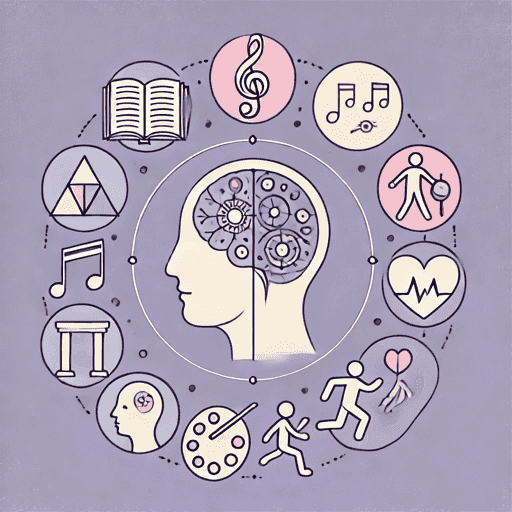
Frames of Mind: The Theory of Multiple Intelligences

Howard Gardner

62 pages 2-hour read

Howard Gardner

Frames of Mind: The Theory of Multiple Intelligences

Nonfiction | Reference/Text Book | Adult | Published in 1983

A modern alternative to SparkNotes and CliffsNotes, SuperSummary offers high-quality Study Guides with detailed chapter summaries and analysis of major themes, characters, and more.

Part 1Chapter Summaries & Analyses

Part 1: “Background”

Part 1, Chapter 1 Summary: “The Idea of Multiple Intelligences”

Content Warning: This section of the guide includes discussion of racism.


Gardner begins with the example of a young girl taking an IQ test. She is asked basic vocabulary and trivia questions and tested on her math skills, her memory, and her ability to think abstractly. Her results from this test are “likely to exert appreciable effect upon her future” and even to change how her teachers think of her and what opportunities she is afforded (3). Many are dissatisfied with this method of measuring intelligence but accept it as an imperfect method of basic categorization for academic life.


However, many humans might fail that test but succeed admirably in life. Gardner introduces a Puluwat sailor, an Indigenous Micronesian who learns to navigate by memorizing historical tradition and information, reading the ocean, stars, and geography to successfully sail through a dangerous archipelago of hundreds of islands. Next, he describes a young Iranian Koranic scholar who has memorized the entire Koran and mastered the Arabic language. Finally, he gives the example of a young programmer in Paris who uses a computer to compose music with a synthesizer. Each of these individuals has a high level of competence that undoubtedly displays intelligent behavior, yet if they were to take an IQ test, they could very well fail it. The test is fundamentally flawed, but it is flawed because the human understanding of intellect is flawed and requires revision.


Throughout Western history, especially since the philosophers of Ancient Greece, the concept of rationality, or reasoning, has dominated cultural understandings of intelligence. The capacity for reason, combined with the accumulation of knowledge through reading and memorization, has constituted the most enduring definition of intelligence. However, ancient, medieval, and Renaissance thinkers all agreed that rational thinking formed only one part of the mind and that other elements contributed to the whole of human consciousness. Gardner introduces a metaphor first constructed by the Greek poet Archilochus, who compared the intelligences of the hedgehog (which, Archilochus believed, has a general intelligence that it focuses on pertinent questions of survival and thriving) and the fox (which has multiple smaller, more focused intelligences). Gardner uses these models of intelligence to define different schools of thought regarding intelligence.


Gardner proposes that there are in fact “several relatively autonomous human intellectual competences” (8), which he calls intelligences. Gardner’s study of prodigies, individuals with brain damage, average children and adults, experts, and individuals from many different cultures has bolstered his belief that his categories of intelligence exist in some capacity in every person and in every culture. However, these intelligences are cultivated and prioritized in different ways in each culture and individual. He calls this framework the theory of multiple intelligences, or MI.


Gardner concludes by defining the goals of Frames of Mind: to expand the fields of cognitive and developmental psychology and to examine the educational implications of MI. Gardner predicts resistance from psychological academics but posits that his model, while still imperfect and progressing, will be fundamentally more helpful than more traditional models.

Part 1, Chapter 2 Summary: “Intelligence: Earlier Views”

Gardner begins with the example of Franz Joseph Gall, the father of phrenology, or the pseudoscience of attributing personality traits and intellectual capacities to differences in head and skull shape, uniformity, and size. Gall’s research had many flaws, including that brain size has no meaningful implications for success and cannot be successfully correlated with it through research. Additionally, his work was repurposed by racist pseudoscience to imply that different races had different intellectual capacities based on physical attributes. However, Gall was one of the first people to propose that different parts of the brain had discrete functions. Though his other research was disproven, later discoveries proved that particular brain functions are localized and that damage in a particular region affects brain functioning in consistent ways.


The field of psychology has long searched for a neurological location for information processing, but the methods of testing have posed a significant problem. Measuring sensory capacities progressed into linguistic and reasoning capacities in later forms of testing. The concept of reliably predicting a person’s future capacities and successes drove the social fascination with IQ and intelligence testing; indeed, it cemented psychology as a field in which governments and institutions should invest.


However, the imperfect nature of the tests, the results of which skewed favorably toward people who were highly literate, comfortable in an academic setting, and accustomed to sitting still and taking written tests, meant that some people missed out on social opportunities for no real cause. Additionally, even refined versions of the tests didn’t provide compelling evidence for any one model of human information processing.


In this environment, the Swiss psychologist Jean Piaget started to study not the answers to the tests, but the lines of reasoning children undertook when attempting to solve the problems. He realized that IQ tests’ abstract and often random questions advantaged children with a higher facility with language, as well as those who attended wealthy private schools that could afford teachers in the classics. Crucially, they measured how well children retained information, not how well they assimilated new information and solved unfamiliar problems.


In studying the deficiencies in testing, Piaget realized that as children learn, they develop internal rules based on their observations that dictate their future problem-solving. They internalize external information, ordering it in their heads, and then construct symbols that help them retain information and reason with new information. By adolescence, children can freely hypothesize and test their rules of operations, “achieving the end-state of human cognition” (20), according to Piaget. However, this method of intelligence testing, while an improvement on the earlier model, still prioritizes a type of intelligence associated with science that doesn’t mimic or interact with artistic or holistic types of intelligence. 


Another approach, called information-processing psychology and developed alongside improvements in cognitive psychology and computing, attempts to study and replicate intellectual thought so perfectly that a computer can simulate it. While this has led to more understanding of how humans think, computers cannot simulate the complexity of human thought or the interaction between human biological function and consciousness.


Gardner then posits a fundamental shift in intelligence study: using the “symbol systems” approach. This is one of his main fields of study, and as such, he acknowledges that he may have a positive bias toward the system. He states that symbol use, unlike sensory processing or even problem solving, is unique to humanity and thus is the main indicator of human intelligence. Symbols are the basis of myth, language, art, and science and showcase the diversity of human perception; the same symbol can change meaning based on the medium in which it is presented, the person who presents it, and the person who receives it. Additionally, symbols are present in every human culture and can often be understood even by those who do not share the same cultural or linguistic knowledge. As an example, Gardner uses chess playing and the presence of strategic game play in almost every human culture. Though people may not know how to play chess, or equivalents like the Japanese game of go, when encountering people playing chess or strategic games in art, film, or other media, people understand that the game is a test of skill, the results of which determine the relationship between the players. Additionally, symbol usage in music is almost universally interpreted correctly, with people able to identify “sad,” “happy,” or “exciting” music from any culture. Gardner argues that this type of symbol interpretation is one of the best ways to define and study the different types of intelligence.


Symbol-based study has flaws as well: For instance, children who are raised in highly literate settings have predictably different and often more complex ways of interpreting symbols. However, humans everywhere use symbols to communicate, regardless of their education. Additionally, symbol-based research allows for study of the different domains of intelligence, expanding past linguistic-logical thinking and scientific reasoning. Gardner thus proposes that symbol-based systems are the right framework to build upon in studying the true range of human potential.

Part 1, Chapter 3 Summary: “Biological Foundations of Intelligence”

The two main things that Gardner believes constitute the basis of human intelligence are the flexibility of human development and the identity, or nature, of the intellectual capacities that humans can develop. Scientific and academic progress has ascertained that both factors are much more complex than previously imagined. In Gardner’s view, there is significant flexibility in intelligence, particularly in early development. However, strong genetic constraints can guide development along some paths rather than others. He cautions that intellectual proclivities are not inherited and that the intellectual capacities of a child’s parents do not determine the child’s. However, genetics does determine types and degrees of sensory processing, which may predispose a child to particular types of intelligence.


Though gene research is invaluable in showing heritability for particular diseases and physical traits, no compelling research has shown any genetic component to achievement in higher human expression, like music or language. Gene expression is polymorphic, or able to affect many different aspects of an organism and to affect different organisms in different ways, so genetic heritage is difficult to track and define. However, in the same way that individuals can inherit genetic risk for disease, Gardner states that they can be considered “at promise” for intellectual achievement according to their genes. However, he warns that promise is not the same as talent: Someone with the potential to become a chess champion will never do so if they are never given a chessboard.


The neurobiological perspective, states Gardner, “promises to bear much richer fruit” in the study of intelligence (38). Neurobiology, with a focus on the operations of the nervous system, seems to affect cognition and the mind much more obviously than genetics. A key aspect of neural growth and development is canalization, or the tendency of any organism to follow particular developmental paths rather than others. Neural connections grow in precise ways across organisms, with little variation. While environmental influences can affect superficial aspects of growth, nervous systems grow with the “goal” of becoming an adequately functioning system. This aspect of neurology is canalized, or genetically predetermined. 


However, plasticity, or the ability of biological organisms to develop to suit their environment and needs, is also crucial. Early experiences can fundamentally change the way a child’s brain processes, but its competence at processing is often preserved. As an example, Gardner speaks about a child losing an entire hemisphere of their brain who still learned to speak, while a teenager or an adult who lost the same part would have a permanent disability. Children who are denied particular sensory experiences will develop brains designed to overcome that deprivation. In this way, particular types of learned or canalized behavior, often shaped by precise plasticity, form a “kind of alphabet from which one can compose far more complex forms of learning” (50). Canalized behaviors can predispose a human brain to particular types of intelligence.


Gardner then details the organizational structure of the human brain, with particular emphasis on the differences between the molar and molecular levels of the brain. The molar level involves areas of the cerebral cortex visible to the naked eye, while the molecular level involves single cells within the same structure. As a focus of research, the molar level tracks physical aspects of the brain like trauma from an accident, whereas the molecular level studies how the cells grow and interact with one another. On both the molar and molecular levels, cognitive function can be precisely located in precise regions of the cerebral cortex. Damage to Broca’s area of the frontal lobe creates difficulty with speaking even as the individual still comprehends language fully, while damage to Wernicke’s has the opposite effect. 


Gardner posits that this means that average adult cognitive functions can be linked to specific areas of the brain. He pulls together research from neuro- and cognitive-psychologists, as well as from philosophers, to indicate that human cognition depends on several discrete computational mechanisms within the brain. Some functions, like face processing, are also found in animals, while others are unique to humans, like grammar or syntactic parsing. This “modular” view is characterized by understanding various mechanisms as independent from one another. Gardner admits that this view leaves open some questions, like how plasticity affects the mechanisms and to what degree the mechanisms work with one another.


Gardner concludes by stating that this neurobiological review suggests “a biological basis for specialized intelligences” (60). However, he warns the reader not to underestimate the influence of culture on intelligence and its expressions.

Part 1, Chapter 4 Summary: “What Is an Intelligence?”

Gardner reflects that the aim of this book is “a question not of the certainty of knowledge but, rather, of how knowledge is attained at all” (63). He warns that the study of intelligence will never result in a single key that solves the question. Instead, it will involve progress, failure, review, intuition, and collaboration, all of which will result in greater insight into intelligence as a human attribute. Gardner states that, though he attempts to categorize types of intelligence in the following chapters, there can never be an unimpeachable master list of all types and forms of intelligence and that anyone attempting to construct such a list would inevitably inject it with their own biases. 


That said, Gardner posits that basic prerequisites for what constitutes an intelligence do need to be defined. He proposes that to be considered an intelligence, a given human competence must be able to “resolve genuine problems or difficulties” and also have the potential to recognize problems as they arise (64), though he acknowledges that the definition of a genuine problem will differ across cultures. Beyond these basics, he details a set of criteria, the majority of which the different models of intelligence must meet to be considered an intelligence. These criteria, or “signs,” include things like the potential for a “genius” or prodigy to exist in the specific field (like music or math), an identifiable core operation or neurological mechanism that develops and can be altered via brain damage, an evolutionary history, and some support from the field of psychology in proving its existence. Finally, and crucially, an intelligence should be able to be encoded in “its own special symbol system” (70), like language, music, or math, so that it can be replicated and shared to some degree.


Gardner concludes by also defining what an intelligence is not: It is not dependent on a single sensory system (e.g., Beethoven was able to continue his musical career even as he developed deafness), and it is not a moral capacity. Any intelligence can be used for good or evil, and no intelligence dictates one’s morality. Intelligence is also not ability; it is in fact more usefully defined as potential. Gardner notes that his objective in presenting this framework of intelligences is more to “illuminate scientific issues and tackle pressing practical problems” than to set forth a new definitive model of intelligence (74).

Part 1 Analysis

Part 1 principally serves as an introduction to the theoretical framework of Multiple Intelligences (MI) and thus to The Model of Intelligence as Multifaceted Rather Than Singular. Across Chapters 1 through 4, Gardner defends his model against prevailing norms, in part by situating it culturally, historically, and scientifically.


Gardner opens Chapter 1 with a critique of the traditional IQ test, which becomes symbolic of the broader failures of the conventional model in its emphasis on linguistic, logical, and memory-based tasks (as well as its capacity to unduly shape the test-taker’s future). His argument that the test overlooks a vast range of human intellectual capacities is embodied in the contrast between the test-taking child and the three counterexamples Gardner introduces: the Puluwat navigator, the Iranian Koranic scholar, and the Parisian music programmer. Each of these individuals exemplifies highly specialized, culturally relevant forms of competence that traditional IQ assessments would fail to recognize. Gardner uses these examples to argue that intelligence should not be conflated with academic aptitude or verbal-logical reasoning alone.


Indeed, in surveying the historical dominance of rationalism in Western thought, Gardner notes that even many of its early proponents did not view it as constitutive of human intelligence. This frames the modern emphasis on logical reasoning as an aberration in not only global but also Western history, bolstering Gardner’s case. Similarly, in critiquing early psychological and pseudoscientific attempts—such as phrenology—to measure intelligence, Gardner observes that scientific research would ultimately validate certain theories that arose from this movement, including the localization of various abilities. Besides contextualizing an idea key to Gardner’s own theory, this works in part to illustrate that the advancement of scientific knowledge is not linear. Implicitly, this suggests that Gardner’s theory is not so much a break with established consensus as it is part of an ongoing debate, rendering it more accessible to those who might otherwise be skeptical. Likewise, in redefining intelligence as “several relatively autonomous human intellectual competences” (8), each rooted in a different aspect of brain function, developmental trajectory, and cultural expression, Gardner argues that his approach is supported by a convergence of scientific evidence, including studies of prodigies, brain damage, cultural practices, and symbolic communication. In backing up his claims this way, he frames his theory as an extension of current scientific understanding rather than a departure from it.


Although The Implications of Multiple Intelligences for Teaching and Learning are not a central focus of Part 1, Gardner’s discussion here lays the groundwork for more explicit consideration later in the work. For instance, Gardner’s discussion of plasticity, canalization, and modularity in brain function reveals that different types of intelligences may be supported by distinct neural pathways that respond to environment. The example of a child recovering language ability after losing an entire hemisphere of the brain underscores this developmental flexibility, suggesting the need for adaptive, individualized education. Likewise, Chapter 4’s contention that intelligences can be identified through culturally situated problem-solving, symbol use, and neurological evidence suggests that effective teaching must include varied modes of symbolic representation—e.g., visual art as well as verbal communication. More broadly, his critique of prior models, including Piaget’s developmental stages and the limits of information-processing psychology, hints that education must move beyond simply transmitting knowledge; it must enable students to develop and apply their unique intellectual capacities.


These chapters similarly constitute a basis for later exploration of The Empowerment of Individuals Through the Recognition of Diverse Talents and Abilities. The early chapters of Frames of Mind repeatedly highlight how traditional metrics of intelligence privilege certain socioeconomic, cultural, and cognitive profiles while excluding others. In some cases, Gardner’s argument is explicit—e.g., his discussion of the racist applications of phrenology. Elsewhere, Gardner makes an implicit case for social and cultural pluralism in conceptualizing intelligence. For instance, the example of the Puluwat navigator challenges the ethnocentric assumptions that underpin Western educational and psychological systems. This individual’s navigation skills, rooted in oral tradition and ecological attunement, are framed not only as culturally significant but also as intellectually rigorous.


Gardner’s emphasis on symbol systems as a means of identifying intelligence (Chapter 4) reinforces this project, as symbols are universal to human cultures. For example, the global interpretability of musical emotion, or the strategic symbolism of games like chess or go, underscores the universal roots of intelligence while also showing that intelligence is not merely about logical manipulation; it is also about expressive understanding. Recognizing such competencies as valid—and as indicative of intelligence—gives legitimacy and value to talents that had previously been dismissed.


Gardner’s insistence that intelligence is potential, not mastery or skill, further broadens intelligence’s scope by recognizing latent abilities. This distinction matters for educational equity. A student who has never been exposed to musical instruction may still possess musical intelligence, just as a child who cannot sit still for a written exam may demonstrate bodily-kinesthetic intelligence through dance or sport. Empowerment, then, arises not from labeling students according to narrow metrics but from creating environments that allow varied intelligences to emerge and flourish.

blurred text
blurred text
blurred text

Unlock all 62 pages of this Study Guide

Get in-depth, chapter-by-chapter summaries and analysis from our literary experts.

  • Grasp challenging concepts with clear, comprehensive explanations
  • Revisit key plot points and ideas without rereading the book
  • Share impressive insights in classes and book clubs