Frames of Mind: The Theory of Multiple Intelligences
62 pages • 2-hour read
Howard GardnerFrames of Mind: The Theory of Multiple Intelligences
A modern alternative to SparkNotes and CliffsNotes, SuperSummary offers high-quality Study Guides with detailed chapter summaries and analysis of major themes, characters, and more.
Part 2, Chapters 5-8Chapter Summaries & Analyses
Part 2: “The Theory”
Part 2, Chapter 5 Summary: “Linguistic Intelligence”
Gardner begins his definition of linguistic intelligence with examples from prominent poets and their close, highly analytical relationship with words and their meanings. He emphasizes how poets often try dozens of different words before settling on the one with the precise meaning and sound that they need. The complex interaction of vocabulary and semantics, combined with “a sensitivity to shadings of meaning” in the written as well as the spoken word (80), shows linguistic intelligence at work.
Though not every human being is a poet, all humans grapple with language to some degree. Gardner identifies four elements of linguistic intelligence that humans use widely: its rhetorical aspect, or the ability to use language to convince others of a course of action, its mnemonic aspect, or the use of language to help memorize and retain information, its explanatory aspect, or the use of language to transmit knowledge, and its meta-linguistic aspect, or language’s ability to analyze itself. These complex and fundamental aspects of linguistic intelligence showcase why linguistic aptitude has been “the most thoroughly studied intelligence” in the history of psychology (83). The ability to explicate thought is fundamental to the expression of intelligence, so language is an easily recognizable symbol of intelligence.
Developmentally, Gardner argues, linguistic intelligence is one of the most astonishing aspects of a child’s growth. They learn syntax and vocabulary in huge strides, can debate meaning, attempt to persuade, or clarify confusion by around four years old; they can even speculate on the nature of language at around the same time. The practice of writing creates more technical skill with language and also encourages the mnemonic aspect of linguistic work. Intense practice with language through writing seems to be a universal precursor to significant linguistic intelligence, as displayed by historical figures like the poet W. H. Auden or the philosopher Jean-Paul Sartre.
Other historical figures notably struggled with language, including the mathematician Albert Einstein. He learned to speak very late, like many children with otherwise typical development. Gardner details aspects of linguistic intelligence that can be affected by developmental differences or brain damage. Particular types of brain injury, called aphasias, affect language comprehension and use. Injury to Broca’s or Wernicke’s areas in the brain affects the way the brain interprets information or attempts to transmit information, creating an aphasia. Gardner also discusses the evolutionary traits of humans that facilitate rapid linguistic communication, including differences in vocal tracts between homo sapiens and Neanderthals or other primates.
Gardner next discusses the mnemonic aspect of linguistic intelligence, describing the astounding achievement of oral epics like Homer’s Iliad and Odyssey, as well as African oral storytellers whose power of memory eclipses anything in Western societies. While a “powerful verbal memory” becomes less vital in a society that relies heavily on written language (97), it is still impressive and often celebrated in events like spelling bees or trivia contests. Meanwhile, rhetorical skill with language often correlates with positions of power, as it indicates competence and allows the speaker to persuade others to adopt their preferred course of action.
Gardner concludes by emphasizing the essentially oral-verbal aspect of language. Though writing creates more fluency and showcases certain aspects of linguistic intelligence, the “communicative and expressive purposes” of language are its chief distinguishing factor among the intelligences (103). He clarifies that this doesn’t mean someone with hearing or speaking difficulties cannot attain a high level of linguistic intelligence. Rather, it indicates that linguistic intelligence occupies a different part of the brain than the logical and spatial intelligences, which involve the use of visual symbols for meaning. Linguistic intelligence, while it can overlap with other forms of intelligence, must be considered a unique form of intelligence.
Part 2, Chapter 6 Summary: “Musical Intelligence”
Gardner points out that high musical intelligence often emerges very early in a child’s development. Young musical prodigies are noted across cultures: Some benefit from early musical education, others’ neurodiversity guide them to engage profoundly with music, and yet others grow up in musical environments and learn to “speak” music from a young age.
Composers, or people with recognized and celebrated musical intelligence, usually have sounds and tones playing in their heads that may or may not be prompted by the external environment. They begin to compose original music when one of those series of tones begins to develop into something larger, which the composer often experiences as a mysterious, automatic process. The composers Wagner and Saint-Saëns compared their abilities to cows producing milk and trees producing apples, the initial idea striking them and then the rest “growing” to completion if given enough time and if recorded and tended correctly. Gardner emphasizes that this type of composition is wholly different from the linguistic composition detailed in the previous chapter. The composer Stravinsky stated that “composing is doing, not thinking” (109). While this process feels remote and even metaphysical to the average person, scientists who study music state that composition is most similar to the active listening engaged in by any appreciator of music. The ability to listen to a song and then recreate it, singing it from memory (even imperfectly), is the musical intelligence at work.
The core elements of music are pitch, rhythm, and timbre. Pitch is a particular series of notes that must be replicated the same way every time music is repeated, while rhythm is the prescribed system of repetition that guides the pitch, or melody. Timbre is the quality of a tone; a flute, piano, and human voice provide different timbres of the same melody. While the auditory sense is crucial to musical development, people with hearing impairment often engage in music through a complex appreciation of rhythmic organization.
Developmentally, musicality develops seemingly simultaneously with language. However, infants seem much more capable of grasping and mimicking music than language, and the use of music to soothe and entertain children is documented in every human culture. This intuitive, internal relationship with music appears to exist in every person to some degree, but the way it interacts with formal music education and community differs greatly. In communities where music forms a large part of social engagement and children are encouraged to participate, musical intelligence flourishes. One commonality, Gardner says, is that “[n] early all composers begin as performers” (121). Moreover, facility with reproducing music well seems to influence the ability to create original music.
The interactions between linguistic and musical intelligences have led some researchers to hypothesize that linguistic and musical expression have a common neurological origin that split off from one another at some point in human evolution. In support of their divergence, damage to a part of the brain can harm linguistic expression but leave musical expression intact, and vice versa. However, musicality is different from linguistic expression because of the myriad ways it can be engaged in or expressed. Linguistic intelligence must come from hearing, speaking, or writing, but music can be engaged in through singing, playing an instrument by hand or with the mouth, dancing, writing music, or just listening to or watching music being performed.
Gardner concludes by pointing out some of the enduring mysteries about music. Most human competencies can be explained with reference to evolutionary adaptation, but music’s ability to help humans live long enough to produce offspring has never been satisfactorily explained. Researchers point to associations between musical ability and spatial ability, as well as mathematical ability, and Gardner notes that numerical competence is an important part of musical composition. However, music fulfills an entirely separate role in human existence than mathematics does. Nevertheless, he relationship between music and the human nervous system is as obvious as it is mysterious: Music can “stimulate emotions, accelerate the pulse, cure the course of asthma, induce epilepsy, or calm an infant” in ways that linguistics, spatial reasoning, and mathematics cannot (134).
Part 2, Chapter 7 Summary: “Logical-Mathematical Intelligence”
Gardner separates the logical-mathematical intelligence from others by pointing out that it constitutes a “confrontation with the world of objects” (136). Linguistic and musical intelligences are internal and communicative in nature, but math is impossible to understand without initially grounding it in the physical world. Infants engage with concrete objects, like toys, cribs, or bottles, and slowly become able to understand that those things exist even when they cannot be seen or interacted with. This ability, known as object permanence, is the basis of abstract thought and allows children to categorize objects further. For example, they can then separate their yellow toys from the rest, or the soft ones from the hard. Gardner returns to the work of Piaget, who studied how children develop scientific or mathematical knowledge. Through abstract thought and imagination, children become capable of solving simple mathematical problems, like how much money they need to buy a treat, even though they cannot see the treat yet. This paves the way for logical operations, which use semantics and highly formalized language to understand human effects on the world and vice versa.
Facility with logic and mathematics is highly prized in the Western world, so much research, especially on IQ and development, centers on its nature and encouragement. However, while all types of intelligence can be useful, logical-mathematical intelligence involves the most specialized use of abstraction and invention. This means that while poets and musicians create works that are enjoyed and celebrated, mathematicians’ work often strikes non-experts as impenetrable and frustrating. Gardner uses the work of mathematicians reflecting on the nature of their work to show that logical-mathematical intelligence is “an appreciation of the nature of the links between the propositions” created through mathematical reasoning (145). Clear reasoning that links a proposal, action, or observation to a conclusion requires nothing but the ability to understand the connections between abstractions. “Like a painter or a poet, a mathematician is a maker of patterns” (147), and those patterns can have far-reaching implications for everyday life because they are made with ideas based on the principles of physics and reality.
The connections between the study of science, mathematics, and philosophy are clear throughout many human cultures. Geometric principles are often expressed through artwork and patterns, while rhetorical ability, philosophical reasoning, and scientific observation all require a strong grasp of logic, the precursor to mathematics. Games like chess or go require a degree of logical-mathematical ability to play; this intelligence can therefore be appreciated by every human, though perhaps not understood or engaged in.
Gardner concludes by reflecting on the question of whether logical-mathematical intelligence can be considered more central to human intellect than the other intelligences. “There is, after all, only one logic” (177), and its main benefit is that it can express concrete aspects of reality in ways that are objective, with no shades of meaning or confusion. Because of this, logic and math are elements of almost all human work, including art, writing, dance, inventions, labor, and even human relations. The logical and mathematical aspects of other intelligences are therefore difficult to ignore. Gardner insists, however, that the intelligences remain distinct. For example, it is more than possible for someone to use their linguistic intelligence to construct a mathematically admirable rhyme scheme without knowing anything about math. Thus, logical-mathematical expression must be considered its own discrete area of intelligence.
Part 2, Chapter 8 Summary: “Spatial Intelligence”
Gardner provides diagrams of spatial-intelligence assessment tests that present the viewer with a shape and ask them to identify the shape again from an assortment of options, first reproducing the shape perfectly, then rotating a shape two-dimensionally, and then rotating another three-dimensionally and asking the viewer to identify the correct shape by visualizing how the original shape would look after rotation. Gardner next presents some of Einstein’s writings about relativity, which ask the reader to visualize abstract concepts in order to understand his theories. Spatial intelligence—namely, the ability to internally visualize and construct things first observed in the visual world—is central to both of these endeavors. It is also necessary for a range of tasks, including engineering, architecture, and art. Though vision is the primary sensory mechanism that most people use for spatial reasoning, individuals who are blind can still develop spatial intelligence through other means.
Children develop spatial intelligence as part of their sensori-motor understanding. Learning to move throughout a space means gauging distances accurately and visualizing the room and one’s place within it. Imagining scenes or events without having been there also requires spatial intelligence. Spatial intelligence plays a crucial role in human history: Hunting, gathering, building structures, making roads and trails, giving directions, sailing, mapmaking, and astro-navigation all require sophisticated spatial intelligence, including the ability to visualize a space from an angle and distance that the viewer has never experienced in reality. The relative ease with which people can learn to use a road map points to humans’ inherent spatial intelligence. Even basic tool-making, in which the maker has to predict how different pieces will fit together and what force will be required to combine them, demands spatial intelligence.
Gardner observes that brain damage and developmental differences often impact spatial reasoning. Some neurodiverse people have immense artistic or visualization talent despite difficulties in other areas. Meanwhile, some individuals who survive brain trauma lose their ability to navigate obstacles or visualize their own body in space, leading to clumsiness and injury.
Spatial intelligence can be fundamental to both art and mathematics, leading it to enjoy broad reverence. Spatial reasoning allows people to visualize numbers in a completely different way than logic alone, leading to greater facility with math and logic, and also allows artists like painters, photographers, animators, and cinematographers to skillfully recreate three-dimensional forms in a two-dimensional medium through manipulation of different factors. For instance, artists may use the subtleties of color to imply the movement of light, the depth of a space, and the correct proportions to create a pleasing work. Leonardo da Vinci and Michelangelo were both celebrated for their extraordinary visualization skills, both having the ability to see something and then reproduce it almost perfectly from memory. Gardner also touts chess as a celebration of spatial intelligence, though it also has logical and mathematical aspects. Great chess players can visualize moves and their possible countermoves 5, 10, or 15 moves in advance, a feat of spatial reasoning.
Gardner concludes by pointing out that where logical-mathematical intelligence is first tied to the concrete world and then launches into the abstract world, spatial intelligence remains more tethered to the concrete nature of reality. Its many uses in human endeavors lend credence to the idea that it is a fundamental intelligence, necessary for survival in the world.
Part 2, Chapters 5-8 Analysis
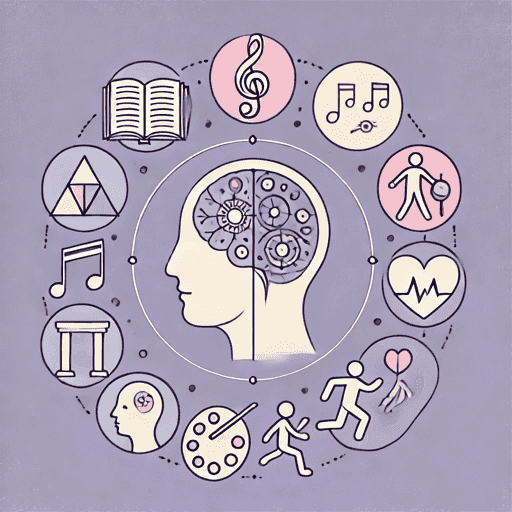
In Part 2, Gardner further substantiates The Model of Intelligence as Multifaceted Rather Than Singular by exploring distinct modalities of intelligence—linguistic, musical, logical-mathematical, and spatial. That distinctness emerges across several criteria: Gardner’s in-depth analysis of these intelligences posits that each has its own developmental path, neurological location, and cultural expression. In Chapter 5, for instance, Gardner defines linguistic intelligence not merely as the capacity to speak or write but as a complex interplay of rhetorical, mnemonic, explanatory, and metalinguistic abilities. The poet’s sensitivity to “shadings of meaning” is presented as a peak expression of this (80), yet Gardner emphasizes that all humans engage in some form of linguistic processing, making it a foundational intelligence. In Chapter 6, musical intelligence is defined by an intuitive and emotional relationship with sound. Logical-mathematical intelligence, discussed in Chapter 7, is characterized by a capacity for abstraction, pattern recognition, and deductive reasoning. Finally, Chapter 8 elaborates on spatial intelligence, grounded in the ability to perceive and manipulate visual and spatial information.
The order in which Gardner presents these intelligences is not arbitrary. As he notes, these intelligences interact with one another in relatively predictable ways: Linguistic intelligence may have evolved alongside musical intelligence, which is often correlated with logical-mathematical intelligence, which is enhanced by spatial intelligence. Nevertheless, Gardner uses the conclusion of each chapter to anticipate and rebut claims that any of these intelligences is identical to any other. Musical intelligence and linguistic abilities may share evolutionary origins, for example, but they can also manifest independently of one another: For example, brain damage may impair one individual while sparing another, suggesting distinct neurocognitive mechanisms. Likewise, Gardner references Einstein’s thought experiments and da Vinci’s visual memory to illustrate the autonomy and cultural significance of spatial intelligence. The capacity to mentally rotate shapes or visualize unexperienced environments underscores the distinctiveness of spatial reasoning from linguistic or logical faculties.
Though logical-mathematical intelligence holds a privileged position in Western intellectual traditions, Gardner underscores that this form of intelligence, though unique, is no more central than others. The statement “there is, after all, only one logic” acknowledges the distinctiveness of logical operations but does not imply supremacy (177); according to Gardner, all forms of intelligence are, by definition, distinct. Thus, these chapters emphasize that intelligence cannot be reduced to a single measurable factor. Each type of intelligence engages different cognitive systems and offers unique contributions to culture, as the panoply of examples Gardner cites demonstrates.
Yet even within a given domain of intelligence, Gardner suggests, cultural attitudes shape which skills are valued and which are not. For instance, Gardner’s reference to the ability of African storytellers to memorize vast amounts of verbal material carries with it an implicit critique of Western society’s association of linguistic ability solely with written expression. As part of Gardner’s project is The Empowerment of Individuals Through the Recognition of Diverse Talents and Abilities, he repeatedly emphasizes the many ways in which intelligence manifests. By acknowledging, in Chapter 5, that a respected figure like Albert Einstein struggled with language in childhood, Gardner critiques rigid developmental norms and challenges deterministic views of intelligence. Likewise, the observation that individuals with hearing impairments can still engage musically (Chapter 6) underlines the adaptability and inclusivity inherent in Gardner’s framework.
To counteract the overemphasis on certain kinds or manifestations of intelligence, these chapters argue implicitly for pluralized pedagogy—instruction that incorporates multiple forms of intelligence and thus makes learning more accessible and meaningful to a diverse student population. For example, a student who excels in rhetorical skills but struggles with written assessments may be misjudged in a system that does not recognize verbal persuasion as a form of linguistic intelligence (or even intellectual mastery). Chapter 6 suggests that musical engagement, often overlooked in formal education, is central to the cognitive development of children. Educational models that devalue music thus ignore a fundamental mode of human expression and learning, harming not only those with a unique aptitude for music but potentially all students. Similarly, Chapter 8 suggests that spatial reasoning is the basis of many real-world skills, from architecture to navigation, underscoring its relevance to all children.
Furthermore, the emphasis on symbolic literacy across intelligences suggests that intelligence is not fixed but expressive and dynamic, shaped by opportunity and practice. This develops Gardner’s claims about the complex nature of intelligence, but it also broadens the scope of The Implications of Multiple Intelligences for Teaching and Learning. It is not enough, Gardner suggests, merely to recognize the existence of multiple intelligences. For instance, Gardner’s remark that talent requires the provision of tools underscores how access to resources and educational equity play crucial roles in intellectual development. Understanding the roots of each kind of intelligence is also key. Chapter 7, for instance, shows how mathematical reasoning emerges from interactions with the physical world. Recognizing the abstract yet experiential nature of math allows for more developmentally informed instruction.

Unlock all 62 pages of this Study Guide
Get in-depth, chapter-by-chapter summaries and analysis from our literary experts.
- Grasp challenging concepts with clear, comprehensive explanations
- Revisit key plot points and ideas without rereading the book
- Share impressive insights in classes and book clubs