Heroes
A modern alternative to SparkNotes and CliffsNotes, SuperSummary offers high-quality Study Guides with detailed chapter summaries and analysis of major themes, characters, and more.
Summaries & Analyses
Quizzes
NEWReading Tools
Games
Part 2, Chapters 22-39Chapter Summaries & Analyses
Part 2: “During”
Part 2, Chapter 22 Summary: “No Going Back”
Content Warning: This section of the guide includes depictions of wartime violence and death, as well as depictions of racism and anti-Asian racial slurs.
Frank stares in horror at the burning wreck where his house used to stand. A large piece of the Arizona has crushed it. Frank grieves over the loss of his home and belongings, especially his family mementos and comic book scripts. However, this latest explosion has brought Mrs. Summers to her senses, and she drags the boys away from the burning house. They walk to the Dungeon but are stopped at the entrance by Arthur and Johnny, the two bullies Stanley fought.
The bullies tell them that Frank can enter, but neither Stanley nor his mother is permitted because they are “Japs” (113). Frank and Stanley are shocked and horrified. Mrs. Summers is less surprised but angry, insisting that they are American citizens. The bullies still refuse, claiming that Japanese forces have already taken over parts of Hawaii and that the Japanese Americans in Honolulu are storming Pearl Harbor. Johnny spits at Stanley’s feet and tells him to go die in the attack.
Part 2, Chapter 23 Summary: “The Good Fight”
For the first time in his life, Frank is so angry that he leaps forward to punch someone—Johnny—in the face. Soon they are wrestling and fighting. Stanley joins in a moment later. Frank believes this is a worthy cause. Suddenly, the bullies stop fighting to stare in horror at something behind Frank and Stanley. Frank turns to see a monster, shaped like a man but covered in black oil, walking up the hill toward them. The monster points a finger at its throat and gurgles, and Frank screams.
Part 2, Chapter 24 Summary: “The Dungeon”
The other boys also scream, but Mrs. Summers runs toward the monster. She says it is a sailor, burned and covered in oil, possibly suffocating with oil down his throat. She orders Frank and Stanley to help her, and the three lead the sailor into the Dungeon, which is no longer blocked by Arthur and Johnny. In the Dungeon, Mrs. McCoy takes charge with Ginny to help the sailor. Other families hiding in the Dungeon glare at Stanley and Mrs. Summers, muttering under their breaths.
Frank tries to tell his mother that Brooks is dead, but then another burned, oil-covered sailor stumbles into the Dungeon and she rushes off again. Ginny walks across the room, headed for Frank. He panics at the thought of telling her about Brooks.
Part 2, Chapter 25 Summary: “The Sandman”
Mrs. McCoy calls for Ginny’s help, sparing Frank from the conversation. For a while, more sailors wander to the Dungeon. Everyone does what they can to help. Frank approaches Stanley while they work, but Stanley is angry with Frank for attacking Arthur and Johnny earlier. Frank is confused, insisting that was what Stanley had wanted him to do yesterday. Stanley says there is a difference between joining a fight with him and fighting his battles for him. Frank does not really understand but nods.
The boys carry boxes outside to make space for more arriving sailors. At the door, a Marine arrives to guard the entrance. A woman Frank recognizes as a classmate’s mother tells the Marine that if the Japanese invade, she wants the Marine to kill her children and then her rather than let them be taken prisoner by “those Japanese monsters” (129). Shocked and horrified, Stanley and Frank stare at each other. Then Ginny appears, asking about Brooks.
Part 2, Chapter 26 Summary: “The Truth”
At first, Frank tries to lie, claiming that he does not know where Brooks is or what has happened to him. Stanley glares at him and realizes he cannot hide from the truth. He tells Ginny that Brooks is dead. Ginny insists that there must be some mistake. Then she begins to cry.
After a few moments, Ginny recovers her composure and says that they should go help other sailors reach the safety of the Dungeon. Frank refuses, terrified, but Ginny insists that people need them, and she needs to save at least one sailor. Frank understands that she wants to save someone because she could not save Brooks. While they argue about it, they realize the gunfire has quieted down, and Ginny says the attack must be over. Finally, still feeling that he is to blame for Brooks’s death, Frank agrees. Ginny, Frank, and Stanley leave the bunker and head to the beach.
Part 2, Chapter 27 Summary: “Oil and Water”
On the beach, the trio finds injured men and dead bodies floating in the water and laying on the shore. Everything is on fire, from grass to houses to the water itself, where oil slicks on the surface burn, but the attack seems to have ended. The three help injured sailors out of the water and direct them to the Dungeon. Around them, some men spread rumors that the Japanese have attacked the Panama Canal as well, and possibly even Washington, D.C. Some even claim that land forces have invaded California. Frank demands to know where this information came from. Then he freezes, seeing a body in the water wearing the familiar white baseball uniform.
Part 2, Chapter 28 Summary: “Just One”
Momentarily confused, he thinks it might be Brooks’s body. Ginny immediately runs to him, even as Frank realizes he is mistaken. They turn the body over to discover it is not Brooks but another sailor. His baseball uniform is not for the Utah but for the Submarine Squadron. They drag him from the water and realize he is still alive though severely injured. Ginny insists they need to take him to the mainland hospital; the limited provisions at the Dungeon will not be enough to save him.
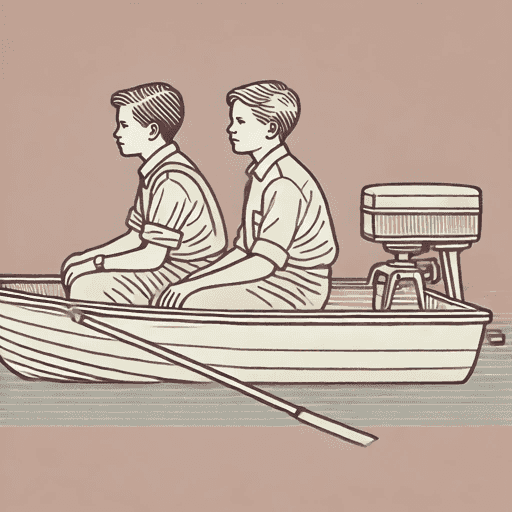
Stanley offers to take him on their motorboat across the harbor. Frank hesitates, but Ginny begs him to save “just one [...] this one” (143), and Frank relents.
Part 2, Chapter 29 Summary: “Battleship Row”
They put the injured submariner in their motorboat and head across the harbor. Frank finds his name, Joseph Kowalczyk, on his dog tags. They steer through Battleship Row, where all the US Naval ships are kept. There is little left. The ships are on fire, many bombed, broken, and sinking. They motor past the Oklahoma, a giant battleship that has capsized. Around them, white sailor caps float on the water.
Stanley laments that everyone will hate him and his mother now. Frank insists that they are American, and it is not their fault, but Stanley knows that does not matter. Suddenly, a plane appears overhead. They are surprised that it is another Japanese plane because the attack is done. A moment later, hundreds more Japanese planes appear, dropping bombs. They realize the attack is not over. A second wave has begun.
Part 2, Chapter 30 Summary: “Dead in the Water”
Frank cries that they are going to die and curls up next to the unconscious body of Joseph Kowalczyk. A bomb drops near them and a huge column of water explodes, drenching them and swamping the boat’s engine. Now dead in the water, they drift. Frank says they should turn around and head back to Ford Island, but Stanley insists that they need to save the sailor in their boat. He says that if they are going to die, they might as well die “trying to do the right thing” (151). Frank retorts that they are only 13 and should not be out there at all.
Stanley argues that they are closer to the mainland now than they are to Ford Island and that it makes more sense to keep moving forward. He restarts the engine, and when Frank has no more arguments, heads toward the hospital. Suddenly, a large battleship looms overhead, about to run right into them.
Part 2, Chapter 31 Summary: “Papayas”
Frank realizes that the battleship is the Nevada just as Stanley frantically steers them clear of its path. The Japanese planes bomb the Nevada and shoot at it with their machine guns. As they watch in confusion, they see several sailors on the shore dive into the water and head toward the battleship.
Part 2, Chapter 32 Summary: “Fireworks”
The sailors swim past their boat, and one explains on the way that they intend to join the battleship crew, where they can at least do something useful. Meanwhile, another bomb flies past the boys and the Nevada, crashing into the already-burning ship, the Shaw, which explodes like an enormous fireworks show. All around them, more sailors fall into the water. Most of them are dead, but a few survive the explosion and flail in the water. Worse yet, the water is on fire, as the oil on the surface burns and spreads.
In the distance, Stanley sees one sailor trapped in the water, with a burning ring of oil closing in around him. They steer their boat toward him.
Part 2, Chapter 33 Summary: “One Chance”
The sailor is terrified. He flails and calls for help but they cannot get the boat close enough because of the fire. Frank shouts for him to swim beneath the fire, but the sailor says he cannot because his arm is broken. This time, it is Stanley who decides they must leave him. Frank refuses and offers to swim to him instead.
Part 2, Chapter 34 Summary: “The Real McCoy”
Stanley argues with Frank, saying he will surely die; besides which, they promised Ginny to save Joseph. Frank, however, insists he can make it, reminding Stanley that holding his breath is his superpower.
Frank is terrified. He thinks about the thousand ways he could die but needs to do it anyway. He realizes that his worst fear is being too scared to do the right thing, and that “the real McCoy” he wishes to be would help however he can (163). He dives into the water.
Part 2, Chapter 35 Summary: “Fins”
Frank holds his breath and swims beneath the fire to reach the sailor. All around him are dead bodies. Fear nearly freezes him, but he pushes past it and keeps going. Finally, he reaches the sailor who asks how he swam that far underwater. Frank jokes that it is his superpower, like Namor, and now the sailor will need to swim back with him.
Part 2, Chapter 36 Summary: “Deep Breaths”
The sailor panics. He cannot swim that far or hold his breath that long. Frank realizes the sailor is young, not much older than Frank. He asks for the sailor’s name, which is Patrick. He tells him that he is afraid too, but if they do not try, they will die. He promises to help, tells him to take a deep breath, and then dives.
Part 2, Chapter 37 Summary: “Diving Deep”
Patrick is not a strong swimmer, made even less so by his broken arm. Before long, Patrick is merely clinging to Frank, who struggles to pull him along beneath the water. Then Patrick goes slack, likely unconscious. Suddenly, Frank sees the one thing people have always scoffed at him for fearing: a giant moray eel swimming toward him.
Part 2, Chapter 38 Summary: “Everybody Forgets the Eels”
Frank feels a “mixture of horror and vindication” as the eel swims toward him (172). Out of nowhere, a whitetip reef shark streaks through the water, bites the eel and drags it down into the dark water. Frank frantically swims toward the boat, dragging Patrick behind him. As the fiery oil closes in around him, Stanley slaps the surface of the water with an oar, briefly dispersing the oil just long enough for Frank to scramble into the boat. In the boat, Stanley pumps Patrick’s chest until he jerks awake and coughs the water out of his lungs.
Part 2, Chapter 39 Summary: “Hospital Point”
Finally, the bedraggled group reaches the beach of Hospital Point, where the mainland hospital resides. Though Patrick is conscious and can walk on his own, they need someone to help carry Joseph into the building. Eventually, local men arrive to help them carry Joseph.
In the hospital, wounded men line the halls and fill the beds. One man is burned from head to toe and cursing the Japanese. Stanley keeps his eyes down as they walk with Patrick. Nurses move efficiently, giving men shots of morphine. Doctors treat injuries. A medic gives each man a quick inspection before writing a letter on their foreheads: C for critical, ensuring the patient gets quick treatment, and an F when the man is beyond saving.
A military police officer stops them and points his rifle at Stanley. He demands to know who allowed the Japanese in, using slurs. Angrily, Stanley states that he is an American citizen and that Frank stands beside him in support. The MP still points the rifle at Stanley. Patrick steps forward and says that both boys saved his life and are heroes. The MP finally lowers his weapon and steps aside.
A nurse arrives to take care of Patrick, and the boys are suddenly alone again. Frank is astounded to be called a hero. He tries to share his sense of pride with Stanley, but Stanley merely nods and says he needs to head into Honolulu to find his grandparents. Frank offers to join him, but Stanley wants to be alone. Frank knows that of all things about that awful day, he will never forget the sight of Stanley walking away.
Part 2, Chapters 22-39 Analysis
This section continues to explore Racism and American Identity. There are many illustrations of how racism has a traumatic impact. For example, two bullies use racial slurs and refuse Stanley and his mother entrance to the Dungeon, and an MP points his rifle at Stanley. These incidents underscore the anti-Asian racism that became increasingly prevalent during WWII. They also demonstrate that Japanese Americans are just as American as their white counterparts.
These chapters also explore the Loss of Innocence in War. Frank and Stanley are children when the novel begins, but now they confront death for the first time. Frank’s house—which is supposed to be a sanctuary and safe place—is crushed during the explosion of the Arizona, marking the loss of family mementos, toys and comics, and his personal writings. At this moment, Frank’s childhood innocence is destroyed by the arrival of the war on his front door. Stanley is thrust into a racist world, losing his innocence when faced with Arthur and Johnny’s racist violence.
Upon their arrival at the Dungeon, the concept of “just one” emerges. Ginny, who works somewhat as Frank’s moral compass and a reminder of his moral values, introduces this motif. Ginny could not be there to help Brooks when he died, and wishes to save at least one sailor in his place to assuage her grief and guilt. Her repeated insistence of “just one” finally spurs Frank into action. It triggers his sense of shame over Brooks’s death and helps him fight past his fears to do the right thing. From this moment, Frank adopts the call of “just one” as his own, inspiring him to save Patrick.
Frank’s saving of Patrick is a pivotal turning point. Up until now, Frank has allowed his fears to control him and only moved past them at the urging of other characters. Now, despite Stanley’s insistence that they need to leave Patrick behind and save themselves and Joseph, Frank stands his ground. Of his own free will, he decides to face danger. Drawing connections between his last name and the idiom “the real McCoy” (meaning “the real or genuine thing”), he decides that he wants the brave version of himself to be the real version (163). He wants to be the one who does the right thing despite danger and makes it happen. He embraces his inner superhero when swimming underwater for a long time, which Patrick recognizes when he calls him a hero at the hospital. In this moment, Frank finally believes it is true.

Get in-depth, chapter-by-chapter summaries and analysis from our literary experts.
- Grasp challenging concepts with clear, comprehensive explanations
- Revisit key plot points and ideas without rereading the book
- Share impressive insights in classes and book clubs
Related Titles
By Alan Gratz








Featured Collections
Action & Adventure
View Collection
Friendship
View Collection
Juvenile Literature
View Collection
Memorial Day Reads
View Collection
Military Reads
View Collection
School Book List Titles
View Collection
The Best of "Best Book" Lists
View Collection
War
View Collection
World War II
View Collection