Hideaway
57 pages • 1-hour read
Penelope DouglasHideaway
A modern alternative to SparkNotes and CliffsNotes, SuperSummary offers high-quality Study Guides with detailed chapter summaries and analysis of major themes, characters, and more.
Symbols & Motifs
Kai’s Mask
Content Warning: This section of the guide includes descriptions of sexual violence, rape, mental illness, child abuse and child sexual abuse, suicidal ideation, self-harm, animal cruelty, addiction, sexual content, cursing, death, physical abuse, and emotional abuse.
Kai’s silver skull mask represents his desire to conceal his true identity and exert control over his environment. Because the mask gives him a measure of anonymity, it allows him to navigate the world without revealing his vulnerabilities, and its ominous style also suggests his liking for secrecy and manipulation. As he admits, “Six years ago, I liked lying. I liked having secrets. I preferred people not knowing the real me” (55). In this context, the mask allows him to maintain a specific façade, and although he no longer wears his mask as often in the present-day, he still pulls it out when he is trying to prove a point, conceal his identity, or scare someone. The mask also limits Kai’s vision, both literally and metaphorically, making it easier for him to act against his morals. Upon wearing the mask, he states, “The world around me shrank to a tunnel, and all I could see was what was right in front of me” (2).
The mask’s significance is further emphasized when Damon appears at Kai’s house wearing a replica of Kai’s mask and accompanied by two men in identical masks. Banks initially believes that Damon is Kai, but her relief turns into panic when she realizes the truth. Originally, each of the four Horsemen work a specific mask, and only during the yearly Devil’s Night excursions. Now, as the Horsemen deal with the aftermath of their crimes, the masks remain a symbol of The Long-Term Consequences of Traumatic Decisions.
Catholicism and the Cathedral
Catholicism and the town cathedral both play pivotal roles in Hideaway, providing a pointed contrast with the main characters’ morally questionable actions and thoughts. The backdrop of religious dogma also provides a judgmental counterpoint to many of their debaucherous acts, given that these activities often take place in ostensibly Christian settings like the cathedral and its confessional space. Additionally, Kai’s complex relationship with the church reflects his internal struggles and his ongoing search for the resolution of his regrets. He appreciates the quiet of the cathedral but dislikes the preaching and lecturing that the congregation must necessarily endure. Privately, Kai wants to be a better person and hates the fact that he has disappointed himself and his family, and for these reasons, religion—or at least the idea of religion—remains an important part of his family culture and his past.
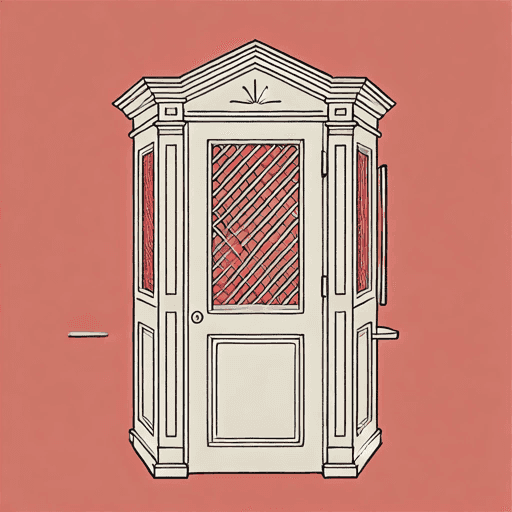
The cathedral also invokes multiple versions of “confession,” from the Catholic ritual itself to the edgier, more personal version that characterizes Kai and Banks’s initial meeting, when they share an intimate moment through the confessional screen. This encounter also marks the beginning of the novel’s focus on The Psychological Impact of Toxic Power Dynamics that define the pair’s bond, setting the stage for many additional encounters that challenge the boundaries of conventional morality. The confessional, which is traditionally a place in which to seek divine absolution, becomes a place for the two to confess their most sordid hidden desires. Ultimately, they engage in a confession of a more physical kind when they have sex here and solidify their bond. In the end, the couple’s shared experiences within the cathedral are connected to their more abstract journey toward understanding and reconciliation.
The Pope Hotel
The Pope Hotel acts as a repository of the characters’ past traumas and secrets. The hotel was always a failed establishment, as it was built for a stadium that was never finished. The hotel is now abandoned, becoming a physical manifestation of the emotional despair and isolation of the main characters who find themselves returning to its silent, foreboding halls. The Pope Hotel also has a presence of its own, looming over the city, casting its shadow, and refusing to be ignored despite its uselessness. With its “hundred rooms that now sat quiet and empty” (12), the building reflects the emotional and spiritual voids in the characters’ lives, highlighting their unresolved issues.
The hotel is said to have a 12th floor that is inaccessible to the public and is only used by the family who owns it. Kai learns this tidbit from Banks during their first encounter six years ago, when she mentions the story as though it is an urban legend. Kai and Banks’s investigation of the hotel ultimately represents an exploration into their respective pasts.
Sex
Sex is used as a motif in the story to explore The Psychological Impact of Toxic Power Dynamics and to demonstrate The Long-Term Consequences of Traumatic Decisions. Kai and Banks’s relationship is primarily sexual in nature; they spend very little time talking and instead engage in flirting, taunting, and chasing one another. Their first meeting in the confessional is highly suggestive of both tenderness and violence when Kai reaches through the screen and puts his hand around Banks’s neck. In these intimate moments, Banks shows signs of enjoying Kai’s shows of domination, and she even encourages him to “hunt” her. As Banks and Kai go through one sexual encounter after another, many of these moments revolve around Kai’s need to exert control over Banks. One crucial aspect of Banks’s sexuality relates to her reluctance to fully embrace her womanhood, and Kai helps to awaken this urge within her. Over time, she starts to dress in a more feminine fashion and becomes more sexually responsive to Kai.
On a broader scale, several characters use sex as a tool to harm and cause trauma. For example, Damon is sexually abused by his mother, and at various points in the novel, Banks is sexually abused by Kai, his friends, and Gabriel’s guards. Many of the scenes involving sexual violence gloss over the issue of consent and trauma, while others directly condemn it.

Unlock the meaning behind every key symbol & motif
See how recurring imagery, objects, and ideas shape the narrative.
- Explore how the author builds meaning through symbolism
- Understand what symbols & motifs represent in the text
- Connect recurring ideas to themes, characters, and events