Home Fire
Home Fire
A modern alternative to SparkNotes and CliffsNotes, SuperSummary offers high-quality Study Guides with detailed chapter summaries and analysis of major themes, characters, and more. For select classroom titles, we also provide Teaching Guides with discussion and quiz questions to prompt student engagement.
Summaries & Analyses
Quizzes
NEWReading Tools
Games
Important Quotes
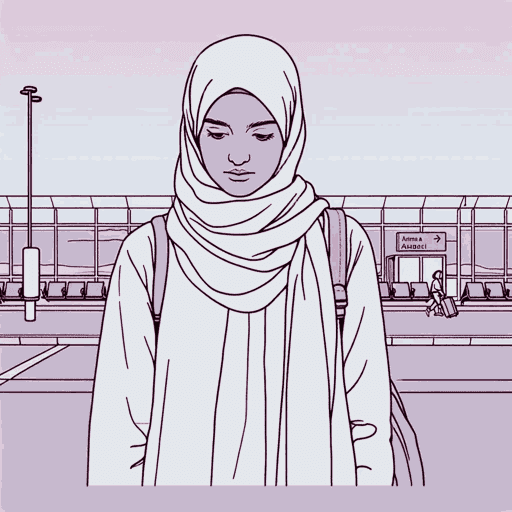
“She stopped herself. The official was doing that thing that she’d encountered before in security personnel—staying quiet when you answered their questions in a straightforward manner, which made you think you had to say more. And the more you said, the more guilty you sounded.”
(Chapter 1, Page 8)
Because of her appearance and Muslim background, Isma is detained at the airport and interrogated for hours. Using Isma’s example, Shamsie foregrounds the issue of othering, which is especially manifest in Western countries, where people who look like they adhere to Islam are often treated with suspicion.
“‘You know, you don’t have to be so compliant about everything,’ Aneeka had said during the role-playing. Isma’s sister, not quite nineteen, with her law student brain, who knew everything about her rights and nothing about the fragility of her place in the world.”
(Chapter 1, Page 10)
Aneeka has a strong sense of justice and refuses to accept a scenario under which she has fewer rights than non-Muslim British citizens. Always protected by Isma from the inequalities of the social system, Aneeka doesn’t understand why she, a person born and raised in the UK, with no other country to call home except Britain, should deserve a different treatment. Isma, being the most sensible among the siblings, realizes that as British Muslims of Pakistani descent, their family will always be more vulnerable, and that’s why they need to be more vigilant in obeying the laws and following the rules of the state.
“‘Can I ask you something?’ he said. ‘The turban. Is that a style thing or a Muslim thing?’
‘You know, the only people in Massachusetts who have ever asked me about it both wanted to know if it’s a style thing or a chemo thing.’
Laughing, he said, ‘Cancer or Islam—which is the greater affliction?’”
(Chapter 1, Page 28)
Eamonn was raised in a secular family with almost no connection to his Islamic ancestry, so he finds Isma’s decision to wear the turban surprising. He doesn’t understand why a person would want to set herself apart so much. Although he intends his comment as a joke, it becomes clear that Eamonn views Islam, and especially public manifestations of Muslim faith, as a hindrance. Shamsie uses Eamonn’s reaction to Isma’s turban to highlight the orientalizing narrative towards Muslims, prevalent in secular countries.
“The 7/7 terrorists were never described by the media as ‘British terrorists.’ Even when the word ‘British’ was used, it was always ‘British of Pakistani descent’ or ‘British Muslim’ or, [Isma’s] favorite, ‘British passport holders,’ always something interposed between their Britishness and terrorism.”
(Chapter 2, Page 50)
In this quote, the author brings to the fore the prejudice and discrimination many British Muslims face. In the eyes of the public, just being a Muslim, especially of Pakistani descent, might be a precondition for being a terrorist. At the same time, the way the 7/7 terrorists are presented in the media highlights that they are considered second-class UK citizens, despite their nominal status as full citizenship holders. Moreover, the assumption that radicalization is a uniquely Muslim problem strengthens the attitudes of othering and xenophobia in society.
“We’re in no position to let the state question our loyalties. Don’t you understand that? If you cooperate, it makes a difference. I wasn’t going to let him make you suffer for the choices he’d made.”
(Chapter 2, Page 53)
When Aneeka confronts Isma about her decision to report Parvaiz’s move to Syria to the police, Isma once again must justify her loyalties to her family and her loyalties to the state. On the one hand, her priority is to protect Aneeka from possible repercussions of Parvaiz’s decision. On the other hand, she realizes that by turning her brother in, she is risking ruining her relationships with Aneeka. Isma, unlike her sister, views the state as a friend, rather than foe, and she believes that by staying compliant, the family can rely on being protected by the state.
“‘One of my grandmother’s friends had said the British government would withdraw all the benefits of the welfare state—including state school and the NHS—from any family it suspected of siding with the terrorists.’
Eamonn made a face of distaste, clearly offended in a way that told her he saw the state as part of himself, something that had never been possible for anyone in her family.”
(Chapter 2, Page 65)
This quote accentuates the fears and anxieties many immigrant communities have to live with on a daily basis. Moreover, it shows a deep divide between people like Eamonn, who are used to the idea that the state’s role is to help and protect, and people like Isma, who see the state as a force that can punish and restraint. This interaction between Eamonn and Isma also foregrounds the gap between the immigrant communities and the elite in their feeling of social security and safety.
“‘It’s harder for him,’ he said. ‘Because of his background. Early on, in particular, he had to be more careful than any other MP, and at times that meant doing things he regretted. But everything he did, even the wrong choices, were because he had a sense of purpose. Public service, national good, British values. He deeply believes in these things. All the wrong choices he made, they were necessary to get him to the right place, the place he is now.’”
(Chapter 2, Page 68)
When Eamonn tries to justify his father’s actions to Isma, he appeals to the struggles he faced as a British politician of Pakistani descent. In Eamonn’s eyes, his father had to make some sacrifices to prove his loyalty to Britain, and his striving to make the country better gave him a carte blanche for taking extreme measure. While Isma sees Karamat’s decision to abandon his Muslim roots as betrayal, Eamonn sees it as a necessary precondition for becoming a successful politician who can work for the sake of the greater good.
“He tried to imagine growing up knowing your father to be a fanatic, his death a mystery open to terrible speculation, but the attempt was defeated by his simple inability to know how such a man as Adil Pasha could have existed in Britain to begin with.”
(Chapter 3, Page 76)
This quote highlights Eamonn’s idolizing of his father as well as his limited exposure to British people beyond his social group. Eamonn finds it hard just to contemplate the idea of having a father that is a cause of shame, not admiration. In Eamonn’s eyes, Britain is a place where all citizens share the same values and beliefs. By staying in his social bubble, Eamonn remains blind to the diversity of the British society.
“You are, we are, British. Britain accepts this. So do most of you. But for those of you who are in some doubt about it, let me say this: Don’t set yourself apart in the way you dress, the way you think, the outdated codes of behavior you cling to, the ideologies to which you attach your loyalties. Because if you do, you will be treated differently—not because of racism, though that does still exist, but because you insist on your difference from everyone else in this multiethnic, multireligious, multitudinous United Kingdom of ours.”
(Chapter 4, Page 106)
Karamat’s speech addressed to pupils of his former school highlights his belief that assimilation, and not diversity, needs to become a priority of the British society. In his eyes, Britain can live peacefully and prosper only when citizens voluntarily abandon their identities and make sure that their behavior conforms to the norm. However, by recommending mostly Muslim teenagers to obscure their religious and cultural differences, Karamat is only strengthening the xenophobic attitudes in the country.
“What do you say to your father when he makes a speech like that? Do you say, ‘Dad, you’re making it okay to stigmatize people for the way they dress’? Do you say, ‘What kind of idiot stands in front of a group of teenagers and tells them to conform’? Do you say, ‘Why didn’t you mention that among the things this country will let you achieve if you’re Muslim is torture, rendition, detention without trial, airport interrogations, spies in your mosques, teachers reporting your children to the authorities for wanting a world without British injustice’?”
(Chapter 4, Page 110)
Aneeka’s emotional reaction to the Karamat’s speech shows how much more aware she is of the prejudices British Muslims face. She realizes that artificially erasing the differences between a priori different groups of people will lead to a deeper divide within the society. Karamat, as someone who doesn’t fully understand the strengths of a diverse society, strives to impose assimilation. For people like Aneeka, erasing cultural and religious differences is equal to a loss of identity.
“Or Farooq would talk and Parvaiz would listen to those stories of his father for which he’d always yearned—not a footloose boy or feckless husband but a man of courage who fought injustice, saw beyond the lies of national boundaries, kept his comrades’ spirits up through times of darkness.”
(Chapter 5, Page 153)
By telling Parvaiz exaggerated, and sometimes even untrue, stories about Adil, Farooq tries to deepen Parvaiz’s crisis of masculinity. As a boy who grew up in an all-women household, Parvaiz already had some doubts about his manhood, but Farooq intentionally strengthened them. Because Parvaiz reached adulthood feeling ashamed of his father, he was eager to hear the stories that portrayed his father as a hero, not a villain. Farooq quickly senses this and paints a picture of Adil where he is a brave warrior, and not a notorious jihadi.
“MI5 officers were present at Bagram, Farooq told him, and showed him evidence to corroborate that. Your government, the one that took taxes from your family and claimed to represent the people, knew what was going on. How can you live in this place, accepting, after all that you now know? How can you live in this mirage of democracy and freedom? What kind of man are you, what kind of son are you?”
(Chapter 5, Page 179)
One of Farooq’s strategies in persuading Parvaiz to go with him to Syria is to undermine his trust in the state. Farooq strives to present Britain as complicit in the torturing of his father, and responsible for hiding the information about his fate. This deepens Parvaiz’s sense of unbelonging in the UK, and he becomes more prone to believing Farooq’s tales about ISIS as a place of camaraderie, where all Muslims feel safe and welcome.
“He had survived military training, during which he learned that fear can drive your body to impossible feats, and that the men of his father’s generation who fought jihad in Bosnia, Chechnya, Kashmir, all went home to their families for the winter months. That piece of information had made him blubber into his pillow at night, not because it made him understand that his father had never loved him (though he did understand that) but because he finally saw that he was his father’s son in his abandonment of a family who had always deserved better than him.”
(Chapter 6, Page 220)
Parvaiz left Britain with an illusion that in Syria he would meet people who knew his father and would learn more about him. The more time he spent in the Caliphate, the more aware he became of how much his decision to join ISIS would affect his sisters. After seeing that heroic stories about his father were just a part of the plan to get him to Syria, Parvaiz deeply regrets his decision to betray Isma and Aneeka, but just like his father, he doesn’t have a way back.
“I made a mistake. I’m prepared to face trial if I’ve broken laws. Just let me go to London. But he was the terrorist son of a terrorist father. He rested his head on his knees. He didn’t know how to break out of these currents of history, how to shake free of demons he had attached to his own heels.”
(Chapter 6, Page 229)
This quote highlights the precariousness of Parvaiz’s situation. Without a passport and in a lawless country, he feels trapped and alone. Parvaiz realizes that he will be held responsible for his decision to join ISIS, but he is ready to face the legal consequences of his actions. Despite this, his hope of returning home to London is slim: His family background and the Home Secretary’s policy towards those citizens of the UK who went to Syria make his situation even more grave. Thus, Parvaiz’s decision to go to the British consulate in Istanbul and plead guilty is his final leap of faith.
“‘Please don’t go,’ she called after him. ‘Please, brother. Why won’t you help me?’
Oh, to be deaf. Allah, take away my hearing.”
(Chapter 6, Page 232)
For Parvaiz, an aspiring sound engineer, his sense of hearing is his greatest asset. Yet when he hears a girl of Aneeka’s age with a London accent plead for help, and he realizes that he can’t help her, Parvaiz asks Allah to take away his sense of hearing. This emphasizes how much the crimes Parvaiz saw in Syria broke him: He would rather be deaf than to witness suffering.
“‘We’ll always have each other,’ when Isma had never been ‘always’; ‘always’ stretched both forward and back, womb to tomb, ‘always’ was only Parvaiz.”
(Chapter 7, Page 242)
When Parvaiz dies, Isma hopes that she will help Aneeka cope with her grief by reminding her that although she lost a brother, she still has a sister. Aneeka and Parvaiz, as twins, have such a strong bond that even Isma with her unconditional love cannot take the place of Parvaiz in Aneeka’s life. After Parvaiz’s death, Aneeka finds herself not just grief-stricken, but incomplete, unable to live in a world without her twin brother.
“What would you stop at to help the people you love most? Well, you obviously don’t love anyone very much if your love is contingent on them always staying the same.”
(Chapter 7, Page 248)
Although Aneeka doesn’t understand Parvaiz’s decision to join ISIS and condemns it, her love for him is so unconditional that despite his actions, she is ready to do whatever it takes to bring him home. When Aneeka meets Eamonn, she seems determined to make him fall in love with her so that she can later use his connections to bring Parvaiz back to Britain safely. Thus, despite Parvaiz abandoning her and Isma and jeopardizing their legal status in the UK, Aneeka’s devotion toward her brother in unwavering.
“My sister lives in America, she’s about to have a child there—did you or your bhenchod brother stop to think about those of us with passports that look like toilet paper to the rest of the world who spend our whole lives being so careful we don’t give anyone a reason to reject our visa applications? Don’t stand next to this guide, don’t follow that guy on Twitter, don’t download that Noam Chomsky book.”
(Chapter 7, Page 264)
Aneeka’s cousin, who helps her arrange Parvaiz’s funeral in Karachi, doesn’t hide his irritation at the likes of her and Parvaiz for putting him and his family at risk of getting into trouble with the state authorities because of their affiliation. As someone who continually finds himself at the mercy of the authorities, he has learned to live an obedient life, but now his efforts might be ruined because of him being related to the Pasha family. In his eyes, Aneeka’s actions are not rebellion or a protest against injustice, but a manifestation of egocentrism and disregard for the others.
“You had to determine someone’s fitness for citizenship based on actions, not accidents of birth.”
(Chapter 8, Page 267)
One of Karamat’s policies as a Home Secretary is to pass a legislation that would allow the denaturalization of dual passport holders for joining ISIS. His position is that citizenship is something to be achieved, not granted. However, such an attitude creates room for discrimination and inequality, producing a system where people are assessed and classified based on such dubious criteria as merit.
“‘She’s going to look for justice in Pakistan?’ That final word spoken with all the disgust of a child of migrants who understands how much his parents gave up—family, context, language, familiarity—because the nation to which they first belonged had proven itself inadequate to the task of allowing them to live with dignity.”
(Chapter 8, Page 268)
In this passage, Shamsie offers a different perspective at Karamat. Here he is presented not as an ambitious politician, ready to abandon his heritage if it helps his career, but as a child of immigrants who understands how much his parents had to give up, so they could give him a better life. By portraying Karamat this way, Shamsie foregrounds his ambivalence and invites readers to reconsider their opinion of him.
“‘Please don’t try to develop a spine. You weren’t built for it. Did she give you your first really great blow job, Eamonn? Is that what this is about? Because trust me, there are better ones out there.’
A pause, and then his son’s voice at its most cuttingly posh: ‘I think we’re done here, Father.’”
(Chapter 8, Page 273)
This conversation between Karamat and Eamonn marks the end of their relationship. By openly humiliating Eamonn and questioning his masculinity, Karamat irreversibly drives his son away from him. His sharp words lead to Eamonn’s decision to travel to Karachi, where he dies in a terrorist attack. Thus, here Shamsie foregrounds how wounds inflicted by fathers could alter the course of their sons’ lives.
“Karamat handed him the piece of paper with the urbane host’s name and said, ‘If he has a UK visa, find a reason to cancel it.’”
(Chapter 8, Page 276)
Karamat, realizing that he occupies the position of power, uses the procedure of issuing and canceling visas as a method of punishment. Thus, he allows his personal attitudes to influence the state policies, which enhances the vulnerability of people who find themselves at the mercy of the state. As a result, a procedure meant to regulate people’s travel becomes a means of revenge.
“In the stories of wicked tyrants, men and women are punished with exile, bodies are kept from their families—their heads impaled on spikes, their corpses thrown into unmarked graves. All these things happen according to the law, but not according to justice. I am here to ask for justice. I appeal to the prime minister: Let me take my brother home.”
(Chapter 8, Page 280)
Aneeka, as a law student, has a very strong sense of justice, but when she sees that the British laws work against this justice, she openly violates them. Her protest is a manifestation of her rebellious nature and a demonstration of her strength of character and courage, even in the face of a much stronger opponent. Although aware of the possible repercussions, Aneeka sees the pursuit of justice as the only reaction to the treatment of her family by the British state.
“We thought it was some kind of secret affair, his first time in love. In a way, it was. What else explains a person being turned inside out in the space of just a few weeks?”
(Chapter 8, Page 284)
When Isma and Aneeka watch their brother transform shortly after he starts to spend time with Farooq, they assume that the explanation for his altered behavior is a secret love affair. Because they don’t know anything about Farooq’s presence in Parvaiz’s life, they assume that only love can cause such a drastic metamorphosis, from a family-oriented kind boy into a retreated and bitter man. This foregrounds hidden homoeroticism, characteristic of Parvaiz and Farooq’s friendship, but its illusion quickly diminishes once Parvaiz arrives in Raqqa.
“Is Britain really a nation that turns people into figures of hate because they love unconditionally? Unconditionally but not uncritically. While her brother was alive that love was turned toward convincing him to return home; now he’s dead it’s turned to convincing the government to return his body home. Where is the crime in this? Dad, please tell me, where is the crime?”
(Chapter 9, Page 289)
Eamonn’s decision to challenge his father’s policy under the watchful eye of the public demonstrates his readiness to show Karamat that he, too, can be opinionated and brave. Moreover, by publicly appealing to his father, Eamonn strives to refute the accusations against the Pasha family and to make his father change his opinion about them. Using Eamonn’s monologue at the end of the novel, Shamsie leaves readers with many rhetorical questions, and thus urges them to look for answers outside the book.

Unlock every key quote and its meaning
Get 25 quotes with page numbers and clear analysis to help you reference, write, and discuss with confidence.
- Cite quotes accurately with exact page numbers
- Understand what each quote really means
- Strengthen your analysis in essays or discussions