How High We Go in the Dark
How High We Go in the Dark
A modern alternative to SparkNotes and CliffsNotes, SuperSummary offers high-quality Study Guides with detailed chapter summaries and analysis of major themes, characters, and more.
Summaries & Analyses
Quizzes
NEWReading Tools
Games
Chapters 12-13Chapter Summaries & Analyses
Chapter 12 Summary: “Before You Melt into the Sea”
Content Warning: This chapter contains graphic depictions of death rituals and the preparations for them.
An unnamed narrator directly addresses an also unnamed “you,” who is ultimately revealed as Mabel, one of the neighbors from Chapter 10, “The Used-To-Be Party.” The narrator explains the procedures that will take place at Eden Ice, a “new death” company that provides alternative funerary arrangements. Although the plague has been cured, those who were infected are developing chronic issues like cancer that continue to cause high death rates.
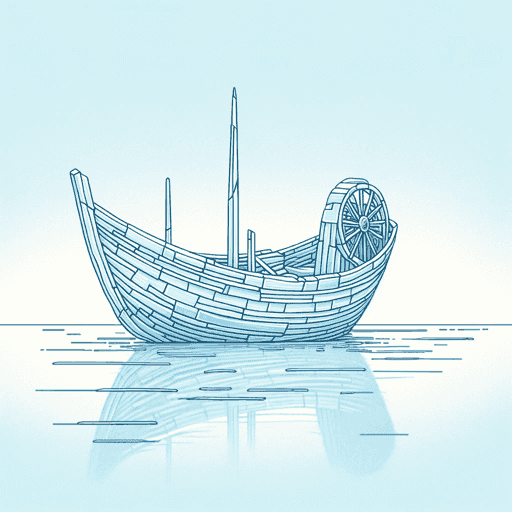
The narrator tells Mabel about his work turning human remains into ice sculptures, and Mabel insists that her tattoos be surgically removed and preserved before he works with her remains. Over video calls and texts, they design an ice sculpture ship that will be made from her, a plan that takes years. During the course of their interactions, they learn about each other, and the narrator does research on jazz and folklore to impress her. She teases him about this, but they continue to digitally spend time together.
Mabel dies, and her body is sent to the narrator, who begins the process of turning her into an ice sculpture. While he does, he ruminates on what he knows and doesn’t know about her, wondering at what could have been different between them. He then scouts the area where they’ll release Mabel’s sculpture into the ocean, a part of Alaska that is closest to Siberia. He imagines that she’s alive and with him but runs away into the Alaskan wilds before he returns to work on her sculpture.
At her memorial, the narrator listens to stories about her life before pulling the ice ship out to sea with an inflatable raft. He puts a digital voice recorder in a waterproof sleeve and waits while the sculpture begins to melt, suspicious that Mabel has sent one of her immortalized tattoos to his office. He puts on a diving suit and enters the ocean, holding her statue until it melts completely.
Chapter 13 Summary: “Grave Friends”
In the year 2105, Rina travels to Japan for the first time in five years, having left to go to the US, where she got married. She’s picked up from the airport by her sister, Tamami, who chronicles the lives of the grave friends: five families who started mixing their ashes into a communal urn two generations earlier. Rina reflects on the different members of the grave friends, the death of her grandmother, and her decision to stay in the US and not join the communal urn. She looks out over Niigata City from the hypertube, observing changes caused by rising sea levels since her absence.
Rina asks Tamami about their parents and reflects on her strained relationship with her mother. At home, she’s greeted warmly by her father and with tension by her mother. When her parents question her about her husband, she goes upstairs to unpack, staying in her grandmother’s room. She finds her grandmother’s blessed rice and virtual reality recordings to help her see what she missed. While reflecting on her grandmother’s life, she remembers information that indicates that her grandmother was the infant rescued from the darkness in Chapter 3, “Through the Garden of Memory.” Tamami describes the late stages of their grandmother’s illness, and Rina reveals that she’s pregnant. She then watches one of the recordings and is filled with guilt.
Before dinner, the members of the grave friends take a walk. Rina talks to some of the younger members of the community and finds them disdainful of the grave friends’ attitudes, which includes a sense of superiority. During dinner, Rina tries to fade into the background, and her mother is dismissive of her American life. Rina goes on a walk and meets up with an old friend to learn what has happened in her absence.
She returns home late and finds her mother working on food for the memorial service. Her mother guilts her again about her absence and Rina shares the picture of her ultrasound; her mother only asks the gender of the baby. Rina goes to bed and watches another virtual reality recording. She wakes up to the chaos of the street getting ready for the ceremony. When she goes downstairs, her father embraces her and expresses his joy at becoming a grandfather. Rina joins her family with her grandmother’s ashes, picking through them with chopsticks to remove any bone fragments before the ashes are placed in the three-meter-tall communal urn. During the ceremony, Rina’s mother cries so hard she can’t remove the bone fragments, so Rina helps her.
After the ceremony, the community shares stories about Rina’s grandmother. Rina joins her parents on a walk to the cemetery tower, skyscrapers repurposed to house the dead. Rina and her father have a private moment as her mother walks ahead, talking about community. Rina admits that she misses home, and her father reiterates how much her mother loves her. At the cemetery tower, they enter a room that fills with holograms of their deceased ancestors. Rina ruminates on her own eventual death and foreshadows a familial reconciliation.
Chapters 12-13 Analysis
The penultimate section of the novel showcases and assesses the culture surrounding funerary practices as the author explores the ways we handle our dead. These topics have been explored for most of the text, but now that society has stabilized through the introduction of a plague cure, people can explore how they take care of the dead without the pressure of an influx of bodies. The funeral skyscrapers described in earlier chapters continue to be prevalent, but the process of saying goodbye becomes more sophisticated. Mabel chooses to have her tattoos preserved and her flesh converted into an ice sculpture, while Rina’s grandmother joins a community of others in a mutual urn. Both of these funerary practices involve becoming a part of something bigger than an individual. Mabel becomes a part of nature—specifically, the ocean near Siberia. Rina’s grandmother, a staple of her Japanese community, maintains her connectivity to her loved ones by joining her remains with theirs. These choices show the cyclical nature of history, as such funerary practices were more common and acceptable in pre-industrial times.
Both chapters feature the theme of The Difficulty of Choice—but within vastly different contexts. Mabel’s choices are surrounded by the inevitability of her death. The plague led to her terminal cancer, giving her just enough time to make her final arrangements. She must choose what happens to her remains and the details that become part of her final sculpture, essentially dictating how people are able to say goodbye to her—and even controlling the farewells themselves, evident when she limits the sculptor’s ability to say goodbye. She notes that “sometimes people and places serve a purpose for a finite amount of time to help you think and grow and love and then you move on” (248). This statement establishes that she doesn’t want the sculptor to linger over her farewell; she has already made her decision to become one with nature and won’t be swayed in her choice to mourn more than she already has. In Chapter 13, “Grave Friends,” Rina is the one grappling with choices. When she returns home, she encounters a sense of belonging that was previously absent, but she also has obligations and loves in the US. She faces decisions about rejoining a community she once shunned, healing the rifts within her family, and integrating her soon-to-be child into the society that will take care of them most. Rina’s experience shows that while choices may be difficult, they also provide options. She ends the story not sure of the best thing to do but secure in the knowledge that her family will support her as she navigates the next stage in her life. Rina’s story emphasizes the importance of active decision-making and the pursuit of growth.
The Importance of Building Community emerges as a central theme through the presence of mourners and the process of mourning. Mabel’s ceremony shows that she has created and sustained community through the people who arrive to celebrate her life. Monks, tattoo artists, and even members of her childhood neighborhood all gather to bid her farewell in a highly emotional, communal moment. They share their emotions as they support one of their own, building on the foundation Mabel provided. Rina views community from an outsider’s perspective for much of Chapter 13, “Grave Friends,” grappling with her own emotions toward her family’s choices and behaviors. She feels as if she’s not part of a community because of her childhood conflicts with her mother and her own abandonment of her neighborhood in favor of the US. Two factors shift her mindset to see herself as a viable member of a community. First, she’s repeatedly asked whether she misses her home, opening her up to the idea of belonging. Having the opportunity to objectively think about what allows her to belong in a place is then bolstered by Rina’s father insisting that she’s loved. These two confirmations of a deep desire to belong culminate in the story’s foreshadowed future, in which she and her child can build communities in two different countries. In addition, this shows that community is not restricted by geography and is only dampened by one’s perspective.

Unlock all 57 pages of this Study Guide
Get in-depth, chapter-by-chapter summaries and analysis from our literary experts.
- Grasp challenging concepts with clear, comprehensive explanations
- Revisit key plot points and ideas without rereading the book
- Share impressive insights in classes and book clubs