How We Learn to Be Brave: Decisive Moments in Life and Faith
54 pages • 1-hour read
Mariann Edgar BuddeHow We Learn to Be Brave: Decisive Moments in Life and Faith
A modern alternative to SparkNotes and CliffsNotes, SuperSummary offers high-quality Study Guides with detailed chapter summaries and analysis of major themes, characters, and more.
Chapter 5-EpilogueChapter Summaries & Analyses
Chapter 5 Summary: “Stepping Up to the Plate”
Content Warning: This section of the guide includes discussion of death, illness, and racism.
Budde introduces Jesuit priest Gregory Boyle, who founded Homeboy Industries, the largest gang intervention and rehabilitation program in the world. When Boyle started the organization, he was serving as parish priest at Dolores Mission Church, located in the highest area of gang activity in Los Angeles, California. He wanted to establish a school for gang members, and the only available building was the parish convent that housed six Belgian nuns. When he asked them to move out so that he could turn their convent into a school for gang members, the nuns had a single word in response: “Sure” (105).
Budde states that, like the nuns, people make some of their most consequential decisions seemingly on the spot, without logical consideration. A situation arises, and people respond with something like intuition; they step up to the plate. Though these decisions are characterized by immediacy, it retrospectively becomes clear that people have been preparing for longer than they realize. During the COVID-19 pandemic, Budde felt the call to step up to the plate as she, her church, and her diocese received an unprecedented number of appeals for assistance. Despite her fatigue, Budde knew that she needed to push through and serve however and wherever she could. She stepped up to the plate out of the public eye.
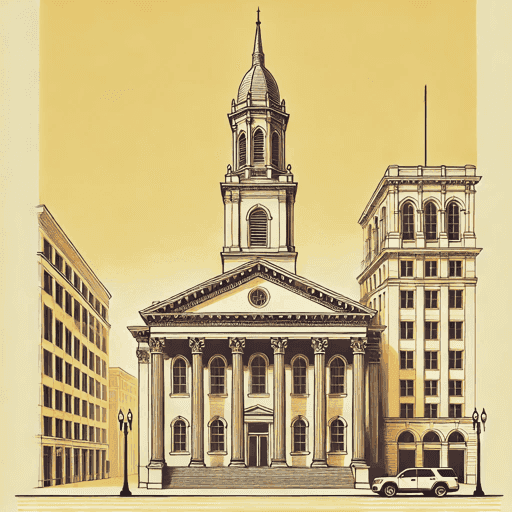
However, Budde also encountered moments in which she was called to step up to the plate in public—notably, after Trump’s photo-op at Lafayette Square in front of St. John’s in June 2020. Dozens of faith leaders wanted to release a joint condemnation of Trump’s actions in front of St. John’s. Budde agreed, but she offers this gathering as an example of the uncertainty with which the public receives some moments of stepping up to the plate in the public eye. The day of the joint condemnation, Budde and the other faith leaders attempted to speak in front of St. John’s, but the police blocked off large swaths of the city. Budde and the others set up a podium as close to St. John’s as they could get and attempted to speak, though the sound system was terrible and they could barely be heard. When Budde attempted to speak, overwhelmed by the reporters present, a protester told her to sit down and shut up.
Budde went and sat next to the man, who expressed frustration that the media only paid attention to the faith leaders. Budde apologized and expressed empathy for him. He apologized for snapping, stating that it had been a long, hot day. Budde acknowledged that it had been a number of long, hot days of protest, in which the man and the other protestors stepped up to the plate again and again, even when the eyes of the world were not upon them. It can be ego boosting to step up to the plate when people feel prepared, but it’s important to step up to the plate when one feels inadequate and unprepared because this offers the opportunity to trust in a higher power. Stepping up to the plate in confidence, though, is equally important, as it allows people to operate from a place of strength. She gives the example of scientists working toward a cure for leukemia or a vaccine for COVID-19. The work is arduous and tiring, but they are the most equipped to do it and the most capable of stepping up to the plate.
Budde gives examples of moments when Jesus stepped up to the plate in confidence. The first, detailed in the Gospel of Luke, is when Jesus returned to Nazareth after being baptized by John the Baptist. He attended synagogue, read from the book of Isaiah, and announced himself as the one anointed by God. Jesus heard his vocation in the words of Isaiah and knew it was time, even as his community turned against him. The second, from the Gospel of John, is when Jesus was arrested and brought before Pontius Pilate. When asked if he is the king of Jews, Jesus replied that his kingdom was not of this world. When Pontius Pilate asked him what truth was, Jesus refused to answer or plead for his life, instead facing his death head-on. Budde’s friend Rod, the husband of Katie, the first office administrator whom Budde met in Minneapolis, faced his death head-on like Jesus. After a terminal cancer diagnosis, Rod still lived his life with joy and with hope of eternal life through Christ.
Stepping up the plate is important, even when it is not a matter of life and death. Budde returns to Bishop Michael Curry, who delivered a touching message about the power of love during Meghan Markle and Prince Harry’s wedding, which was seen by over two billion people. He invited his audience to imagine a world guided by the power of unselfish, sacrificial love, a world that his audience then wanted to create. Budde explains the history of Curry’s rise to presiding bishop. He served as a parish priest for many years before becoming bishop of a diocese in North Carolina, during which time Budde met him and was mentored by him. Curry took fewer meetings than most bishops, choosing to focus instead on what he did best, which was teaching and preaching. He was able to take strong public positions while creating loving relationships with those around him.
When Curry sought the position of presiding bishop, Budde knew that it was from a selfless place and a response to a call, given how many meetings presiding bishops must take. Curry knew that he would be the first Black man to become presiding bishop in a church with ties to Jim Crow and slavery, but he was never arrogant. He knew that he was the right person for the job and took on the role with love and gratitude, with his eyes set on Jesus.
A more common reaction to the call to step up is the feeling of unreadiness or inadequacy. Budde points out examples from the Bible when people felt unready yet heeded the call anyway. Moses told God that he was the wrong man to guide the Israelites out of Egypt, Jeremiah told God that no one would listen to him because of his youth, Isaiah told God that he had unclean lips, and Simon Peter told Jesus that he was a sinful man. In each example, God pursued the person anyway, and their answer to the call had an intense impact on the fate of Christianity. When God summons people, it’s normal to feel unready, but God will guide them. Another example that Budde includes is the miracles of the loaves and fish, when Jesus multiplied five loaves of bread and two fish to feed thousands. The disciples were uncertain, but they brought the food to Jesus, who filled in the gaps and fed the entire crowd.
Budde states that she “live[s] [her] entire life inside the miracle of the loaves and fish” (117). Her leadership is at times imperfect and insufficient, but God fills in the gaps. She offers an example of a sermon that she gave about an orphaned girl from the Soviet Union whom she met during a summer trip to Sweden with her family. Though she felt that the sermon was incomplete, after she finished speaking, a couple approached her to thank her, as they had been in the arduous process of trying to adopt two girls from the Soviet Union and were contemplating giving up. They felt that Budde’s sermon was God’s message to them to persevere, illustrating how God filled in the gaps.
However, God does not always fill in the gaps, and sometimes people fail. Learning from failure can help define a person, as failure is a key aspect of growth, courage, and purpose. Budde offers an example of a time when she failed. She delivered a Christmas Eve sermon in the early years of her role as Bishop, and she included an example that offended the Jewish community. There was outrage in her email inbox and even in The Washington Post. Budde took the opportunity to learn from her mistake, reaching out to those she had offended and asking to meet with them. Several agreed, and they had constructive conversations in her office. Though Budde was initially crushed by her failure, she learned from it, as she continues to do with each of her failures, embracing failure as a key and courageous aspect of answering the call to step up.
The third way to answer the call to step up, Budde asserts, comes when people feel stuck in the complexity and contradiction of their lives. God comes to pull people out of their self-absorption to do something brave, and this call comes from the “sheer grace” of God (123). She gives the example of Jacob, who, as described in Genesis, stole from his brother Esau and tricked him out of the blessing of their father, something that could be bestowed only once. Jacob left at his mother’s urging and went to work for Laban. Jacob fell for Laban’s daughter Rachel, and Laban promised Rachel as a wife if Jacob worked for him for seven years. After his labor, Laban tricked Jacob into marrying his older daughter Leah but promised Rachel as a wife if Jacob worked an additional seven years. Jacob did, and then, married to both sisters, he heard the call to return to his homeland. During the journey, he was attacked in the night and wrestled all night with a man who turned out to be God. He was given God’s blessing but was injured on his hip, and he walked with a limp for the rest of his life as a reminder. Jacob returned to Esau, and the brothers reconciled. What Budde finds striking about his story is God’s ability to look past Jacob’s selfishness and deceptive actions and to call Jacob to join the lineage of God’s people.
Budde was pulled out of her own complexity by God numerous times, and she offers an example: In 2021, at the end of summer, she found herself in a depression. Despite her desire to remain isolated, she attended a giant yard sale to help marginalized communities disproportionately affected by COVID. She found the community invigorating and felt the love that the community practiced pulling her out of her own struggles. It served to her as a reminder that God, who sees all her brokenness, will always invite her to step into something worthwhile.
Budde returns to examples of stepping up from the civil rights movement. She finds herself drawn to the history of the movement because the historical narrative ties together a tapestry of individual courageous moments and individual instances of stepping up. She examines the 1965 march from Selma to Montgomery through the lens of Henry Caffey and his daughter, whom she heard about from a colleague, Andrew Waldo, who grew up as the son of an Episcopal minister in the 1960s. Caffey was a well-respected member of his community who was interviewed by Waldo years after the march. Caffey drove his daughter to the march and was pulled over by a police officer, who ticketed him but promised to rescind the ticket if he took his daughter home. Caffey refused.
Others also refused to back down during the civil rights movement in Alabama. Budde offers the example of Jonathan Daniels, an Episcopal seminary student who, after praying the Magnificat, felt inspired by Mary, mother of God, to travel to Alabama to become involved in the civil rights movement. He helped organize transportation during the Selma march, worked in rural counties to help with voter registration and the implementation of the Voting Rights Act of 1965, and protested segregation. Participating in a primarily teenage-led protest in a small town in Alabama, he was murdered by a white man while protecting the teenage Ruby Sales from being shot. Budde views Daniels as an example of a young man who learned to be brave, even though it cost him his life.
Chapter 6 Summary: “The Inevitable Letdown”
The liturgical season of Lent calls Christians to practice self-reflection that mirrors Jesus’ experience in being baptized and then tempted by Satan in the wilderness. After the euphoric high of baptism, Jesus wrestled with his human weaknesses and frailties. Budde contends that although circumstances vary, “the inevitable emotional letdown that follows a decisive moment can throw [people] off course and cause [them] to question the validity or lasting power of what [they] had thought to be a transformative experience” (138).
Budde experienced this letdown herself. One example is her indecision about her course of study during seminary: One option was a more academically traditional track of study, while the other was more adventurous and offered hands-on experience with urban ministry. She was stuck, but when she swam laps in the pool, she was struck with a moment of clarity: She should go with the traditional track. Yet, as soon as she was out of the water, she was plagued with doubt and the inevitable letdown. She realized that she had to have faith in her decision in order to move forward.
Letdown can take many forms, from emptiness, to doubt, to overconfidence. Budde offers examples of letdown from the Bible. Jesus elevated Simon Peter to a position of leadership, telling him that he was the rock upon which Jesus would build his church. He then revealed to his disciples that he would die, and Simon Peter told Jesus that he would not let it happen. Jesus rebuked Simon Peter for focusing on mortal things. After Simon Peter’s ascension to leadership, he immediately experienced criticism. Like Simon Peter, Budde mistakenly assumed that praise in one part of her life would translate into other parts of her life. She offers small examples of speaking on issues she didn’t understand before building to a larger example, which she connects to Peter’s three denials of knowing Jesus prior to his crucifixion. Her larger example was her deciding to air a prerecorded sermon by Max Lucado, a minister who had previously made antigay comments, during the COVID shutdown of in-person worship.
Though the sermon itself did not contain antigay content, Budde’s parish, diocese, and beyond were hurt by her decision to air the sermon from the pulpit of St. John’s. She received myriad angry emails from people from within and outside her community, especially from LGBTQ+ people who felt betrayed that their church would give a platform to someone who had spewed such bigoted rhetoric. Budde apologized and answered each email, but it still wasn’t enough. She attended a Zoom panel led by Dr. Kelly Brown Douglas, who herself was also disappointed by Budde’s actions. The panel did not lead to resolution, and the discourse continued on social media. Though the incident eventually blew over, Budde still feels the importance of the lesson; no matter how on top of the world she feels, there is always the lingering possibility of making mistakes.
Sometimes, the letdown that follows a moment of courage or clarity comes from others. Budde refers to this as “payback” and provides the example of returning home after being away and finding her children cranky and her husband distant and exhausted from managing the household. Payback can dip into abusive scenarios, but when normally expressed, Budde encourages readers to have empathy and listen to the stories of those in the valley before expressing their experiences ascending the mountain.
Just out of seminary, Budde took a job at a church in Ohio working with Walter Sobol, a priest whom others warned her had a difficult time with women. Every time Budde found success in her role, Sobol would retaliate with payback, either through insults or through humiliation. The payback was as relational as it was personal, and the decisive moments that Budde encountered in her first job triggered the worst in Sobol, as he sought to undermine Budde’s life-affirming success.
“Backlash” is the sociological term that describes “the harsh, often violent reaction against real or perceived advances for more expansive political and civil rights and other measures of social equality” (149). It first entered the zeitgeist during the civil rights movement to describe white opposition to the political gains made by Black Americans. Ta-Nahesi Coates, in his essay compilation We Were Eight Years in Power: An American Tragedy, studies white backlash from Barack Obama’s presidency to the post-Civil War Reconstruction era, both moments of Black leadership amid fierce white opposition. Coates describes himself as someone who cannot believe in God because no god could save him from the brutality of the world. Budde is drawn to Coates’s writings because he finds the same call in atheism that she does in Christianity: to pursue truth and avoid falling into despair, turning to resistance instead.
Those called to a life of faith rely on both spiritual experiences of conversion and smaller awakenings and moments of illumination that give their lives meaning. Through retreat, prayer, and meditation, people can open themselves up to the presence of God, though God’s presence is not always palpable. The challenge to the faithful is to remember that the moments of feeling God’s presence were real. This is what St. Ignatius called the balance between spiritual consolation and spiritual desolation. Spiritual consolation comes with moments of intense joy, while spiritual desolation comes with moments of intense discouragement and heartbreak. Both experiences are universal to those with faith, and both are instructive in the journey toward courage, self-understanding, and loving God.
Budde ends the chapter by returning to her CREDO experiences; while some participants achieved their goals, many others experienced letdown, and Budde began including a disclaimer about letdown and potential disappointments. When she found her own CREDO list as she cleaned out her desk before her move to Washington, she was shocked by the twists and turns that her life had taken. The ups and downs taught her that she, like all people, can learn the power of perseverance.
Chapter 7 Summary: “The Hidden Virtue of Perseverance”
Budde offers the example of Madeleine Allbright, the first female secretary of state. She was an unlikely candidate as a woman, an immigrant, and a person who did not hold a government job until she was 40. Despite this, she persevered. Budde acknowledges that perseverance does not come easily to her. In her early career, she would often quit things that were more challenging for her, even as her peers stuck things out. She learned to write with the help of a friend in college, but academics still never came easily to her. She stuck through her education, but Budde does not view this as perseverance, as that is too narrow a definition of the term. It was not just sticking it out but taking the initiative to learn to thrive.
Budde was thrilled when she received the call to leave Ohio and go to Minneapolis, but when she arrived there, she realized that the church she viewed as her idealized dream church had problems lingering beneath the surface, like leadership infighting, shabby buildings, and key initiatives upheld by only a small group of people. Budde’s leadership was not characterized by the prophetic successes that she anticipated but instead by taking the steps to do things that were difficult or uncomfortable, like working to increase fundraising for the church. Perseverance in leadership, Budde realized, involved doing the things she did not want to do and mastering the necessary disciplines, frameworks, and materials.
Budde learned many helpful tools and principles from Rabbi Edwin Friedman, including conflict resolution, leading with transparency, and tips for lowering anxiety and dealing with resistance. She used these tools in her leadership in Minneapolis and kept a spirit of adventure, even after Friedman’s death. Budde continued to grow her leadership skills, especially in recruiting more people to the Episcopal Church during times of dwindling membership, through engagement with evangelical churches. Though they differed in ideologies, Budde learned valuable skills.
Budde identifies the key framework to her leadership: systemic change, which requires intense perseverance. She describes this aspect of her work by borrowing a term from sociologist Everett M. Rogers: diffusion of innovation. Rogers identified five types of people in diffusion theory: the innovators, who love innovation and change; the early adopters, who have the capacity to influence others; the early majority, who assimilate after the early adopters; the late majority, who adopt new ideas reluctantly and with skepticism; and the laggards, who resist vocally and come last, if at all. Budde explains that effective leaders evaluate where people are on the continuum and make efforts to slowly build momentum through relationships and trust. While this process can be difficult and arduous, requiring perseverance, it is worthwhile and integral to Budde’s leadership development.
Budde returns to the Bible, explaining that there is a heart component to perseverance, which stems from prayer. People must persevere in prayer, but they mustn’t lose heart. Perseverance in prayer must come with mindfulness and commitment to learning basic skills, without which people risk falling into the idea that prayer can magically grant their desires. Instead, people must lean into their disappointments, trials, and struggles to make more room for love, forgiveness, and endurance. Through examples from theologians like Peter Gomes, Reinhold Niebuhr, and Elizabeth Sifton, Budde establishes that “acts of daily faithfulness and perseverance are part of a larger arc of courage and resilience through which the power and the grace of God are at work” (178).
Budde concludes with another example from Rachel Naomi Remen, whose grandfather once gave her a cup of dirt with the instructions to water it. She watered it daily until a plant sprouted, and her grandfather reminded her that it did not just need water but her faithfulness. To persevere in faithfulness, Budde asserts, is the greatest gift to the world.
Epilogue Summary
To this day, people still approach Budde to discuss the moment of Trump’s photo-op in front of St. John’s. Her response is often mentioned during introductions. Over the course of How We Learn to Be Brave, Budde attempts to place her moment of courage within a larger context to explain how bravery is built over a lifetime, especially when some courageous actions are known only to God. While the world around Budde continues to feel divided, she finds hope in both the historical accounts of people who stepped up with bravery and the rising generation of leaders who are beginning to step up. She looks to the Christian idea of hope, which she calls “the capacity to face reality, no matter how difficult, and still seek whatever good is possible” (183). She trusts that God is at work even in the most challenging of times and that, through grace and acceptance, people will join with God in the holy work of transforming the world.
Budde wrote the book to honor the breadth and depth of courage and perseverance. She prays that her readers will be “emboldened to lean into the wisdom, strength, power, and grace that come to [them], whenever [they] find [them]selves at a decisive moment” (184). Through that work, people learn to be brave.
Chapter 5-Epilogue Analysis
The final chapters of How We Learn to Be Brave weave together all the themes and ideas that Budde explores throughout the entirety of the text as she acknowledges the more disappointing aspects of decisive moments. Chapter 5 discusses the courage required to step up to the plate when feeling unprepared, Chapter 6 discusses the letdown that comes with decisive moments, and Chapter 7 discusses the perseverance required for the cultivation of bravery. These more challenging sides of bravery have a strong connection to the expression of courage in modern life. Budde returns to her condemnation of Trump’s use of St. John’s Church as a political backdrop, framing this experience as an example of what she calls “stepping up to the plate.” Because of social media, Budde’s voice echoed across the United States, and she received both support and castigation for her stance. She did not find this unexpected, as she writes, “When stepping up to the plate in the public arena, it’s impossible to know in advance how our actions will be received” (107). Part of the bravery of stepping up to the plate publicly stems from the unknown. Budde does not allow herself to become lost in the uncertainty of how others will react to her choices, instead grounding herself in acceptance of all possible outcomes.
One such possible outcome is failure, which Budde spends much of Chapter 6 investigating. While she states that God often helps and guides people on their journeys to bravery, this does not mean that people will never fail, and she goes further to insist that failure is an essential part of the journey to courage, writing, “If we can learn to accept failure as a part of growth, trusting that such experiences are part of a larger narrative of courage and purpose, we can glean the lessons we need to learn from the pain and move on” (118). Failure is inevitable in life, and it leads toward a broader understanding of courage. Budde offers biblical examples of failure and redemption, illustrating the theme of Bravery as a Historical Throughline. Simon Peter, the disciple Jesus chose for leadership, failed many times, including when he sought to prevent Jesus’ necessary death. Budde notes that, despite Simon Peter’s shortcomings, “it’s noteworthy that Jesus’ rebuke doesn’t cause him to change his mind about Simon Peter’s future leadership. And although Jesus’ words must have stung, Simon Peter remains at his side. Nor would this be the last time he would fail Jesus” (141). Simon Peter failed over and over because he was an imperfect person, like all human beings. Despite his failures, Jesus kept his faith in Simon Peter’s ability to help guide the church, illustrating that all people are capable of learning from failure and coming back stronger and more courageous.
Simon Peter is an example of The Courage to Accept What Cannot Be Controlled—despite his initial failures, he showed courage by accepting and finding meaning in the death of his spiritual leader. Budde suggests that all people can find this kind of courage, even if in less dramatic ways. She is candid about her struggles with leadership, especially when it comes to preaching. After she introduces the biblical examples of the loaves and fish, in which Jesus filled in the gaps for the disciples, she writes, “I live my entire life inside the miracle of the loaves and fish. Nearly every sermon I preach feels incomplete and inadequate, but I preach it anyway, praying that Jesus will fill in the gaps” (117). Budde places her faith in Jesus to bridge the holes in her ministry, to perfect her imperfections, and to help her overcome the pressure of leadership. She places her trust in her faith to guide her, which she also illustrates is essential when it comes to experiencing doubt in moments of letdown. Another her example is the clarity about her educational journey that she found while swimming: “It dawned on me that I could either trust what had happened in the pool or heed the rush of doubt that followed. In what felt like an act of faith, I chose to go with my experience in the water” (139). Budde’s use of water imagery harkens to Jesus’ baptism and the clarity with which he understood his mission as the son of God, further cementing her assertion that faith is necessary to combat difficulty and doubt.
Perseverance plays a key role in the final chapters, as Budde connects perseverance to faith while expanding its definition. She uses Jesus as an illustration of perseverance, writing, “Jesus’ cross was one he took up daily, and so must we. Our acts of daily faithfulness and perseverance are part of a larger arc of courage and resilience through which the power and the grace of God are at work” (178). Jesus is an exemplar of perseverance for people to emulate, as he took the burden of the cross and carried it throughout the entirety of his life, demonstrating how people can carry the burdens of life through faith. Budde then links perseverance to the themes surrounding leadership, exploring how pushing through challenges in leadership is necessary. Budde again offers an example from her own life: She found the job of fundraising for her church awkward and difficult, but she pushed past her feelings to accomplish the task. Of this experience, she writes, “In this and similar moments, I learned that perseverance in leadership involved rolling up my sleeves and doing the very thing I didn’t want to do” (166). Leadership requires the bravery necessary to do the difficult things, just as Jesus modeled throughout his life, leading his disciples and doing the most difficult thing of all: sacrificing his life out of love.

Unlock all 54 pages of this Study Guide
Get in-depth, chapter-by-chapter summaries and analysis from our literary experts.
- Grasp challenging concepts with clear, comprehensive explanations
- Revisit key plot points and ideas without rereading the book
- Share impressive insights in classes and book clubs