Isola: A Novel
69 pages • 2-hour read
Allegra GoodmanIsola: A Novel
A modern alternative to SparkNotes and CliffsNotes, SuperSummary offers high-quality Study Guides with detailed chapter summaries and analysis of major themes, characters, and more.
Part 4Chapter Summaries & Analyses
Part 4: “The Isle 1542”
Part 4, Chapter 22 Summary
Content Warning: This section features depictions of violence, death, and animal death.
Jean Alfonse rows Marguerite, Auguste, and Damienne into the gulf. He directs his men past several islands until they find one with vegetation. Auguste says parting words of thanks, and the trio make their way to shore with their belongings. They kneel to pray and scramble to protect their trunks when the tide surges in. They sit silently on their trunks and share biscuits and wine. Marguerite lists their provisions, from clothes and the Virgin’s portrait to weapons, preserved food, and seeds. Marguerite and Auguste also have their instruments and books.
Auguste chops small trees to prepare a signal fire. Marguerite follows Auguste to explore higher ground, but she slips and cuts her hands. Auguste washes her wounds in a pool of fresh water, and they collect some water to drink. Damienne hears a loud humming noise, and they follow the sound to a flock of white birds. Auguste shoots and kills one, and Damienne thanks God they won’t go hungry. Damienne prepares the bird, Auguste prepares a fire, and they all feast.
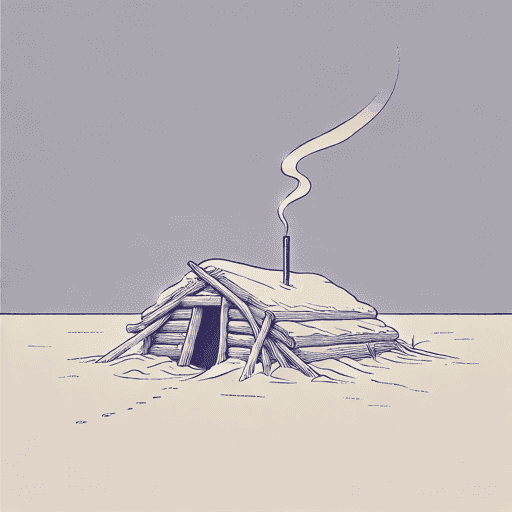
Auguste discovers a large oak tree washed ashore, and he cuts off its branches. Damienne helps Auguste drag the branches up the shore, refusing to let Marguerite help in the hard labor. They create a “cottage” with the branches, and they fashion tree-trunk chairs and a hearth. They happily eat dinner, satisfied with their work. Auguste creates a bed out of peat, but Damienne chooses to sleep on the ground. Auguste and Marguerite stay awake and keep watch. Despite being exiled, they feel free. They make love and lay entwined under the stars.
Part 4, Chapter 23 Summary
In the morning, the group collects fresh water, and Auguste hunts birds. He brings Damienne’s sewing basket to collect eggs as well. Damienne forgives Marguerite for their punishment, though Marguerite thinks she’s undeserving. Auguste returns with more meat than they can eat, so Damienne preserves the leftovers with salt. They organize their supplies, and Damienne makes their space like a home. Marguerite marvels at Damienne’s ingenuity, as she boils plants for tea and makes tools from their sparse possessions. Marguerite offers to help, but Damienne refuses to let her work below her station. Damienne also won’t unpack the more precious items.
As the group watch birds dive for fish, they name their island Isle of Our Lady. Auguste creates a calendar to keep track of the days, and on Sundays, they perform a simple service. Marguerite wants to feel useful, so she starts a garden, although Damienne warns her the soil is too weak. Auguste helps clear a patch of land, and Damienne reluctantly shows Marguerite how to sow and water the seeds. Sprouts shoot up quickly, and Marguerite diligently tends to the plants. After three weeks in the hot sun, the plants wither and die. Marguerite cries and yells at Damienne when the nurse scolds her for not listening.
Later that night, Marguerite confesses to Auguste that she doesn’t believe in prayer, since God took away her garden. Auguste tries to comfort her, but they argue. Marguerite thinks his acceptance of their punishment is foolish, since virtue won’t matter when they die. They contemplate the “riddle” of the island that is both their prison and their freedom.
Part 4, Chapter 24 Summary
The nights grow cold, and the group preserves more meat for the winter. Without her garden, Marguerite feels useless, so she resolves to fetch eggs while Auguste hunts. Marguerite follows Auguste and imagines she’s like the brave huntresses in the book of ladies. Her excitement quickly turns to fear when she faces the birds. Auguste shoots, but she forgets her task and runs away. She shamefully returns to the beach, but she determines to try again.
The next day, Marguerite gathers eggs successfully, but the birds haunt her dreams. Auguste tries to fish in the sea, but the task is too time consuming. Marguerite helps her companions preserve meat and dry herbs for the winter, feeling satisfied in her work. They try to celebrate by unpacking their instruments, but the virginal and cittern are warped from the heat and humidity.
Suddenly, the group sees a small fleet of longboats piloted by Indigenous peoples near the island. They flee from the shore, fearing they’ll be brutally attacked, but the boats sail by. Auguste proposes to build a shelter somewhere they’ll be more protected.
Part 4, Chapter 25 Summary
Auguste finds a stone cave higher upland to use as shelter. The cave is small, but Marguerite knows it’s their best option. Damienne stubbornly refuses to enter the claustrophobic space. As Marguerite and Auguste carry their trunks to the cave, Marguerite wishes she could have fruit. There are small berries on the island, but Damienne is convinced they’re poisonous. Marguerite obsesses over the berries and even dreams about them.
In the morning, Auguste sweeps out the cave and Marguerite arranges their sleeping area. Marguerite coaxes Damienne inside, and to please her, Marguerite sets the picture of the Virgin on the virginal. They half-bury the larger trunks outside and spend their first night in the cave.
The next day, they pray and read from the New Testament. Marguerite collects fresh water, and at the freshwater pool, she cannot resist the berries. She tastes their bitter juices and spits the berries out, crying that she’s been poisoned. When Damienne checks her over, she realizes Marguerite isn’t sick from poison, but from pregnancy.
Part 4, Chapter 26 Summary
Marguerite worries about bringing a child onto the island. Auguste believes God gave them the baby, but he agrees it’s cruel timing. Marguerite secretly prays that she’ll miscarry, but as the baby grows, she comes to love her child. She dreams about the baby becoming a prince. Marguerite reminds Damienne of Marguerite’s mother, who was pregnant at 20 years old too.
The birds fly for warmer climates the day before winter’s first snowfall. The group stays in their cave out of the cold. While walking about one day, Marguerite and Auguste see a white fox. Marguerite prays for better weather, but another snowstorm blows in and traps them in the cave. Marguerite recites psalms, and after three days, Auguste creates a tunnel to fresh air.
As winter continues, the trio sleeps as often as they can. While Marguerite feels the pains of pregnancy, Auguste becomes ill. He can’t eat and grows weak with a fever. Marguerite watches over him day and night. Auguste cries out in pain, but he fears dying in his sleep, so he refuses to rest. Marguerite is frightened by Auguste’s sudden pleas for forgiveness. He makes Marguerite practice loading the gun in front of him until he is satisfied.
Part 4, Chapter 27 Summary
Auguste sleeps and wakes, and in his delirium, he asks about the fox and tells Marguerite to burn the cittern. Marguerite pleads with him to keep fighting but also promises to survive for the baby and Damienne. Marguerite tries to keep Auguste warm, but he dies. Damienne covers Auguste’s body with a sheet and tries to dig a grave in the frozen ground. The women clear out one of the trunks instead and place Auguste’s body inside. Marguerite decorates the trunk with a cross.
Marguerite sleeps deeply, and when she wakes, she thinks Auguste’s death was a dream. She hears noises outside and thinks it’s her lover, but when she peers out of the cave, she sees a polar bear covered in Auguste’s blood. Marguerite is overcome with rage, and in her fury, she puts on Auguste’s cloak, loads the gun, and shoots the bear dead. Not satisfied, Marguerite stabs and decapitates the bear.
Part 4 Analysis
When stranded on the island, both Marguerite and Damienne confront their personal faith outside the context of the religious power structures of their society, pointing to the novel’s thematic engagement with The Use of Christian Faith to Reinforce Patriarchal Power. The women’s differing responses emphasize the individualized nature of their spiritual journeys. Damienne finds courage in God’s will and accepts her fate unquestioningly. She’s the first of the group to stop looking for ships on the horizon, since she believes “[it] is in God’s hands” whether they’re rescued or not (180). Isolated in the wilderness, Marguerite finds Damienne’s commitment to their cultural and spiritual indoctrination strange, signaling her internal rejection of the ways Roberval has weaponized the Christian faith against her. In contrast, Damienne turns to the safety of the familiar in the face of uncertainty, asserting that they “must remember who [they are,” even when there is no one around to witness (180). While Damienne insists that God sees all and maintains her devotion to patience, decency, and propriety, Marguerite sees no practical application for these virtues on their island.
For Marguerite, the wilderness represents both danger and freedom—far from the strictures and expectations of French society, she finds herself able to express explicit doubt in the God she was raised to revere. For example, when her garden fails, Marguerite confesses, “I do not believe that my prayers are answered” (186). She rejects the idea that God would allow her garden to flourish just to make it die, causing her to question whether God hears her at all. When Marguerite becomes pregnant, she and Auguste question the cruelty of a God who would give them a child in such an uninhabitable landscape. Rather than accept that God has a plan and a purpose for them, as Damienne does, Marguerite finds the freedom to grow doubtful and even spiteful toward God—a spiritual autonomy she couldn’t access in her previous life with Roberval.
The transformation Marguerite experiences during her time on the island highlights Goodman’s thematic exploration of Survival Conditions as a Catalyst for Personal Growth. On the island, Marguerite observes Damienne and Auguste creating the shelter and hunting for meals. Both Auguste and Damienne have experience with hard labor—a work ethic they draw on during their time in the wilderness. In contrast, Marguerite is unused to such work and feels shocked at Damienne’s ingenuity, since the nurse was so fearful on the ship. She notes: “Although she found herself so far from her own country, Damienne was sure-footed on land” (180). Compared to her companions, Marguerite feels like she isn’t contributing, and Damienne’s refusal to let her do any work only makes Marguerite more determined. As she commits to learning and honing the survival skills she needs, Marguerite finds immense satisfaction in working on her garden, which occupies her waking hours. Even though the garden fails, she continues to chase that same feeling of fulfilment. She joins Auguste on his hunts, helps Damienne prepare preserved food, and ventures daily on her own to collect fresh water, gaining more and more autonomy. The demands of life on the island force Marguerite out of her sheltered lifestyle and allow her to step into her authentic self—where she was once punished for acting unladylike, she now finds her impulsiveness, curiosity, stubbornness useful for her survival.
Throughout Part 4, Goodman highlights the paradox the island poses for Marguerite and Auguste’s relationship. A paradox is a statement that seems to contradict itself and at the same time contains an element of truth. Marguerite and Auguste both know Roberval intends their exile as a punishment and show of dominance, but at the same time, the isolation allows them the freedom to be together in a way they couldn’t have imagined in France. Without the threat of Roberval discovering them, Marguerite and Auguste express their love openly and without restraint, and their imprisonment paradoxically becomes their escape. Marguerite identifies other small paradoxes of their situation, noting: “We ate fresh meat but slept outside, as beggars did at home. We had property and yet we were impoverished. On the island, we were rulers and our own subjects too” (188). Although the group have next to nothing in the wilderness, they’re free of The Personal Impact of Gender and Class Inequality imposed on them by society. The “riddle” of the island, as Marguerite calls it, continues to confound her in future chapters as she grapples with surviving the island without her lover.
In Part 4, Goodman introduces the harsh island winter to escalate the threat to the group’s survival and raise the narrative stakes as the novel builds toward its climax. During the initial warm months, the group feels confident in the work they’ve done to hunt for food, create shelter and find relative ease living off the land. However, when the winter months arrive, Marguerite recognizes the growing danger of their predicament. To prevent hunger, they sleep as much as possible, and as the weeks wear on, their once bountiful meals are reduced to small rations—as Marguerite observes: “We thought we had set aside great stores, but this winter was longer, colder, and darker than any we had known” (209). The winter frightens Marguerite, as its extreme weather intensifies the threats around them and makes their situation more precarious. Her pregnancy further escalates the stakes of their survival since Marguerite knows that a child won’t be able to withstand the island’s harsh conditions and secretly prays for a miscarriage to spare the child a life of struggle. Auguste’s death and brutalization by the bear hyperbolically reinforces the group’s mortality, pushing Marguerite to survive both the hostile conditions of the island and her own overwhelming grief and loss.

Unlock all 69 pages of this Study Guide
Get in-depth, chapter-by-chapter summaries and analysis from our literary experts.
- Grasp challenging concepts with clear, comprehensive explanations
- Revisit key plot points and ideas without rereading the book
- Share impressive insights in classes and book clubs