Isola: A Novel
Isola: A Novel
A modern alternative to SparkNotes and CliffsNotes, SuperSummary offers high-quality Study Guides with detailed chapter summaries and analysis of major themes, characters, and more.
Summaries & Analyses
Author Insights
Quizzes
NEWReading Tools
Games
Themes
Survival Conditions as a Catalyst for Personal Growth
Content Warning: This section of the guide includes discussion of death, child death, physical abuse, and emotional abuse.
In the world of Isola, Goodman portrays Europe’s patriarchal values as deeply rooted in and justified through Christian spiritual doctrine, laying the groundwork for Marguerite to experience a crisis of faith as she begins to dismantle patriarchal control in her life. Throughout her life, Marguerite is surrounded by people who have complete trust in God’s will, but when she confronts contradictions, unpunished evils, and senseless violence and harm in the world around her, Marguerite doubts not only God’s will but God’s presence in her life. Marguerite’s closest companions—Damienne, Claire, and Madame D’Artois—all accept divine mysteries without question, situating God as the ultimate patriarch. belief that God uses hardship to teach lessons of virtue. For example, on the island, Damienne believes God is present in the snowstorm not because He wants to punish them, but because He wants to teach them to be humble in the face of nature. She believes that by acting virtuously at all times—even when it may not be practical—God will see her and reward her.
Goodman positions Damienne, who believes it isn’t her place to question God’s intentions, as a foil for Marguerite, who rejects the idea of quiet work and prayer as quintessentially feminine virtues and spends the whole of the novel repeatedly questioning the “why” of her circumstances. As Marguerite rebels both internally and externally against her lack of agency, she views the godly virtues of patience and humility as ways to keep her—and all women—docile. Roberval weaponizes the psalms and scripture against her, which leads Marguerite to associate God with punishment, not salvation. After her garden fails on the island, Margeurite confesses that she doesn’t believe her prayers are answered, and she refuses to see the potential lesson in the situation because she “will not be grateful when we starve here” (187). When baby Auguste and Damienne die, even after she begs for their safety, Marguerite wholeheartedly believes God has abandoned her. She brings no offerings to the Virgin because she won’t pray to “she who smiled while Damienne stopped breathing” (255). Marguerite grapples with the disconnect between the God of love and protection she’s been taught to worship and the trauma and suffering she and her loved ones experience as they struggle to survive the wilderness. For example, she notes that even if God and the Virgin are still watching over her, their lack of action to intercede in her companions’ deaths only proves that they don’t hear her prayers. Marguerite refuses to accept that God has a larger plan for her suffering, especially when men like Roberval seem to walk the earth unscathed by divine wrath.
Over the course of her arc, Marguerite finds her way back to faith in God’s omnipresence when she experiences the sublime in the wilderness—a context disconnected from the religious power structures in which she was raised. She witnesses an unexplainable natural phenomenon, and the sheer power and beauty of the scene alters her understanding of divine mysteries. She writes: “I asked myself, How could it be? But I could not doubt what I was witnessing. I thought, Judge by what you hear. Judge by what you see” (254). Rather than seek to explain every aspect of the world around her, Marguerite comes to accept that some things are simply incomprehensible and embraces a version of the divine that pervades the world in ways she doesn’t understands. She doesn’t become as devout as Damienne or Claire, and she still allows herself space to question and interpret God’s signs, but Marguerite learns to find comfort in the religious texts that used to frighten her on her own terms, evidencing her personal growth. Just like Auguste once claimed to believe in symmetry, Marguerite tries to live by accepting that both good and evil can exist in the same place, and when she contemplates God’s “riddles,” she no longer demands a firm answer.
The Personal Impact of Gender and Class Inequality
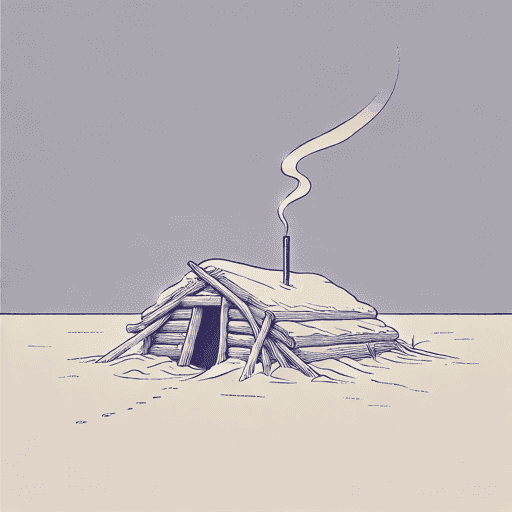
The life and death stakes of Marguerite, Auguste, and Damienne’s time in the Canadian wilderness forces them to rise to the challenge and survive with few supplies and their own ingenuity—an experience that pushes them to access latent skills and strengths. For example, Damienne, as Marguerite’s life-long nurse, initially refuses to let Marguerite help her even sweep the hearth, and takes on a major share of the survival duties, like cleaning and cooking birds, tidying the shelter, and laundering linens. Goodman introduces Damienne’s resourcefulness prior to their time in the wilderness—like when she did mending work for the laundress at La Rochelle for pocket money in Roberval’s absence—but the island’s scarcity intensifies the woman’s creativity. She finds ways to not only help the group survive but thrive—as Goodman notes: “Ingeniously, she boiled seagrass in [their] iron kettle to brew a briny soup which [they] sipped from [their] cups. And she contrived to store [their] wine by digging into dry peat and burying the bottles to keep them cool” (181). Damienne surprises even herself with her strength—honed from her days on the farm—as she easily helps Auguste move heavy boulders to make their shelter. The island’s harsh conditions intensifies Damienne’s maternal instincts towards Marguerite, and before she dies, she even claims the young woman as her own child.
The remoteness of the island also disrupts Damienne and Marguerite’s socially prescribed roles and internalized class dynamics. Marguerite undergoes an intense transformation on the island as she leaves her sheltered life and learns how to work for herself and for others. At first, she’s motivated to work in order to rid herself of a feeling of uselessness. She learns how to collect eggs, preserve plants and meat, sow a garden, and collect water and kindling, which gives her a feeling of satisfaction and autonomy. She notes that at the end of the day, “[her] arms and legs were tired, and [she] lay gratefully on the hard ground. [She] was sure [her] labor would be rewarded” (184). The island dismantles the class hierarchy that defined their lives in France and allows Marguerite to feel more empowered and in control of her own life. It also allows her to develop a familial closeness with Damienne, viewing her as an equal fighting to survive the harsh conditions of the wilderness.
The bond that develops between Marguerite, Damienne, and Auguste exacerbates the grief and isolation Marguerite feels once she is forced to survive on her own. Goodman suggests that the ultimate test of Marguerite’s resilience is her ability to survive on the island even once she’s lost everyone she loves. After the loss of Auguste and her baby, Marguerite pushes herself to survive not for herself, but for Damienne. Despite her debilitating grief, she selflessly works day after day to make Damienne’s life on the island easier. Marguerite feels that the experience of survival has made her brave, but after Damienne dies, Marguerite falls back into depression, feeling more like a “beast” than a person all alone on the island. The wilderness forces Marguerite confront the base elements of her mortality, but it also draws her back to her humanity. The power and beauty of the sea brings Marguerite back to her faith, and she views the world and her own life with new appreciation. Marguerite’s return to France after this experience evidences her personal growth during her time in the wilderness. Not only does she gain practical skills of survival, but she is no longer afraid of what Roberval will try to do to her. Having experienced extreme suffering and loss, she comes back fearless and dignified. She now knows what it means to make decisions for herself, and she refuses to live a life under someone else’s control ever again.

Unlock every key theme and why it matters
Get in-depth breakdowns of the book’s main ideas and how they connect and evolve.
- Explore how themes develop throughout the text
- Connect themes to characters, events, and symbols
- Support essays and discussions with thematic evidence