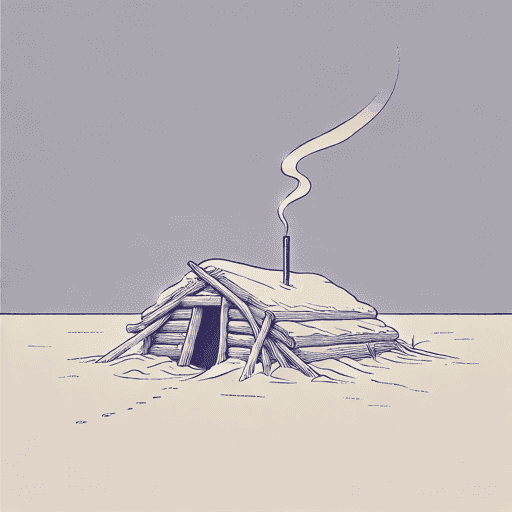
Isola: A Novel
69 pages • 2-hour read
Allegra GoodmanIsola: A Novel
A modern alternative to SparkNotes and CliffsNotes, SuperSummary offers high-quality Study Guides with detailed chapter summaries and analysis of major themes, characters, and more.
Part 6Chapter Summaries & Analyses
Part 6: “At Sea, La Rochelle, Perigord 1544”
Part 6, Chapter 34 Summary
Marguerite approaches the men cautiously, but since they don’t understand her language, they are frightened. The leader, Anzar, calls to a man who speaks French, Mikel, who roughly translates Marguerite’s words into Basque. Marguerite mimes the story of her exile, and the men think she is a nun. Marguerite shows them Claire’s ring, which was from Queen of Navarre, to prove her story.
Marguerite cooks eggs for the men and invites them to shoot birds with her. Mikel and another sailor follow her to her cave. Marguerite produces guns and the picture of the Virgin to show she is a religious woman. They shoot birds, and the men marvel at her unwomanly behavior. They feast together, and Mikel explains they’ll travel to France in three days. Marguerite doesn’t want to appear too eager, so she makes herself useful for the next two days to endear herself to the men.
When Marguerite sees the men packing, she dresses and collects a few possessions. Marguerite says goodbye to the three graves and vows to honor them. Marguerite gently pleads with Mikel to bring her with them. She promises she can be useful on the ship, but Anzar refuses. Marguerite changes tactics and pays Anzar a gold coin. Marguerite boards the ship, and as they sail away, she cries.
Part 6, Chapter 35 Summary
Marguerite keeps her heavy clothes on in the boiling sun while the men swim in the sea. She helps them clean fish, mend nets, and pray for safe passage. She is seasick, but the voyage is smooth for the first month. In the fifth week, the boats sail into a bad storm. The crew tie themselves to the deck as they roll over massive waves. On one wave, their sister ship capsizes, and all of the sailors are lost. The sailors and Marguerite pray wildly for safety. The storm subsides, and Anzar thanks Marguerite for saving their ship. Many possessions were lost, including the Virgin and Marguerite’s psalms. The ship veered off course, and the men let out their frustrations by fighting. Marguerite brings the sailors together with a prayer for the dead.
The wind picks up, and porpoises follow the boat. They sail for several weeks and suddenly come upon a whaling ship. The ship’s captain, Barthold, boards and listens to Anzar’s story. Barthold speaks to Marguerite in fluent French and asks about her exile. Marguerite is shy, but Barthold thanks her for conveying the men safely across the ocean. He invites Anzar to follow him to La Rochelle.
Part 6, Chapter 36 Summary
After three days, the ship arrives at La Rochelle. A boat ferries the sailors ashore, and the oarsmen look at Marguerite with suspicion. Marguerite pays the sailors, and Mikel helps her find Jean Alfonse’s house. The clamor of the market overwhelms Marguerite. At Jean Alfonse’s door, a servant refuses Marguerite entry and throws her down the stairs. Marguerite pays Mikel another coin and dismisses him.
Marguerite finds maids behind Jean Alfonse’s house and pleads her case to them. She sees Marie, the young servant from Roberval’s house. Marguerite recalls information about the house that only she would know, but Marie was told Marguerite died. Marguerite gives a coin to a maid so she can ask Jean Alfonse’s steward if she can stay at the house. Marguerite tries to pay Marie to bring her clothes, but the maid returns and turns Marguerite away. Marguerite buys food from the market and purchases old servants’ clothes and shoes. A guard patrols for loiterers, so Marguerite slips into a church to avoid punishment.
Part 6, Chapter 37 Summary
Marguerite sleeps deeply in the church, but a sexton kicks her out in the morning. She buys food for her journey and walks towards Perigord. While she walks alone, men harass her on the road. For safety, she pays for a ride on an ox cart, and again she pays to sleep on the couple’s floor. Marguerite sets out again and joins a passing group of pilgrims. She steals away from the group after three days, and she trades her shoes for food. She forages for berries and spends the night in an abandoned hut.
After ten days, Marguerite reaches Perigord. She cleans herself in a river before approaching and learns the Montforts still own the castle. Grooms turn her away at the stables, and the garden doors are locked. She hears Claire’s voice over the garden wall and calls out to her. Agnes, a nurse, opens the door, and Marguerite sees Claire, Madame D’Artois, and the grown Suzanne and Ysabeau. None of the women recognize Marguerite, and when she calls for help, Agnes hits her for begging. Claire helps Marguerite up, and when Marguerite presents the ring, Claire realizes her friend has returned.
Part 6, Chapter 38 Summary
Claire helps Marguerite to her old chamber. Marguerite hides her few possessions and washes. The women dress Marguerite in one of Claire’s gowns, comb her matted hair, and return her mother’s ruby ring. Marguerite worries about what to tell her friends, but they don’t press her to speak. Ysabeau and Suzanne play music for Marguerite. Marguerite feels shy returning to the activities of a lady, and she regards the room with a new appreciation.
When the children leave, Marguerite tells the women of her journey to New France. She explains that Roberval exiled her, Auguste, and Damienne on an island, hoping they would die there, and they lived off the land. She tells them of Damienne and Auguste’s deaths but doesn’t mention her child. Claire reveals that Roberval is back at the King’s court, and the Montforts—now Lord and Lady—are at the Queen’s court.
At night, Marguerite has trouble sleeping on her raised featherbed, so she sleeps on the floor. Marguerite sits in on the girls’ lessons and tears up when they read from the book of ladies. The girls pepper her with questions, so Marguerite describes the wonders of the island, like the pure white fox and the small white flowers. Marguerite hopes the children will recommend her to their mother, as she doesn’t want to be Roberval’s ward.
Part 6, Chapter 39 Summary
Marguerite continues to teach the girls with Claire, but she finds the chamber and garden restrictive after living in the wild. The elder Montforts return to the chateau, and Marguerite frets about her position in the house. The children bring an invitation from Lady Katherine, so Marguerite collects some of her treasures and follows them downstairs.
Marguerite meets Lady Katherine and the two older Montfort girls, Louise and Anne. Lady Katherine thanks the teachers for their diligent work and dismisses the children so Marguerite can talk freely. Marguerite describes the brutal winter and how she had to kill a bear herself after Auguste and Damienne died. She shows the women her knife and the bear’s claw, and they are both horrified and fascinated. Lady Katherine suggests Marguerite should tell her story to the Queen when she visits in a month.
In their chamber, Claire and Madame D’Artois express horror at the suffering Marguerite endured. Marguerite asks Claire about the Queen. Claire explains that the Queen likes to collect stories. When Claire and Madame D’Artois were at her court, the poet Clemet Marot fell in love with Madame, though Madame rejected him. The Queen loved Marot for herself and felt betrayed by Madame, so she expelled her from court. Marot wrote the book of psalms that Marguerite read, and Roberval was Marot’s benefactor. The story intensifies Marguerite’s anxieties.
Part 6, Chapter 40 Summary
Perigord bustles with activity in preparation for the Queen’s arrival, which distracts Ysabeau and Suzanne from their lessons. Marguerite worries about her audience with the Queen, and Madame D’Artois reminds Marguerite to speak briefly and ask for nothing. Claire gives Marguerite her gold ring for comfort.
Marguerite follows a maid through the crowds of ladies and gentlemen, and Marguerite sees Roberval among them. Infuriated by his pleasantries, Marguerite evades him and slips into Lady Katherine’s room. The hairdresser arranges her hair and paints over her sun damaged skin, and the women dress her in an extravagant gown. They admire how Marguerite looks in the room, and Marguerite feels like a curiosity.
In the great hall, Marguerite tells herself that Roberval won’t make a scene, but while the crowd is distracted, Roberval seizes Marguerite’s arm and drags her into the darkened hall. Marguerite deflects his niceties and rebukes him for his cruelty. Roberval warns Marguerite to be careful in front of the Queen. Marguerite declares that she survived everything he put her through and has nothing left to lose. As she turns away, Roberval reveals he already told the Queen Marguerite’s story.
Part 6, Chapter 41 Summary
At the banquet, Marguerite ignores her meal and watches the Queen. The Queen is unamused by the entertainment, and when she leaves, Lady Katherine beckons Marguerite to follow. The Queen asks Marguerite to tell the story of her travels, which she already recorded from Lady Katherine and Roberval’s reports. This upsets Marguerite, but she asks the Queen to read the tale so she can illuminate the details better. The Queen tells Marguerite that the tale does not punish her further for her disobedience but praises her faith.
The Queen reads her tale, which differs significantly from Marguerite’s experience. In the Queen’s version, Auguste plotted to kill Roberval, and Marguerite begged for exile to prevent her husband’s death. After Auguste died of starvation, Marguerite fed her soul with prayer. Roberval’s ships found Marguerite and conveyed her back to France. Marguerite can’t stop herself, and she corrects the Queen with the truth about the Basque fisherman. The Queen is insulted, and the more Marguerite apologizes, the more she offends the Queen.
Marguerite tells as much of the truth as she can. She explains how she had to hunt and kill bears after one devoured Auguste’s body, and rather than find comfort in God, she became hopeless. She speaks of Damienne and her child’s death. Marguerite describes how she finally understood the psalms and found her way back to God. She feels relief to finally speak of her trials and faults. The Queen confesses that she too has grappled with doubt, and she thinks people who have suffered have the most to teach others.
Rather than punish Marguerite, the Queen rewards her. Marguerite asks for a dowry so Claire can become a nun. The Queen commends Marguerite’s charity, but she wants the girl to have something for herself too. Marguerite explains her dream of building a school for poor girls. The Queen thinks it’s an uncommon request, but she gifts Marguerite a trunk of gold and offers to write the school’s charter. The Queen leaves, and the Montforts praise Marguerite. Marguerite changes back into her plain gown and carries her trunk of gold to her chamber.
Part 6, Chapter 42 Summary
Marguerite recounts her interaction with the Queen to Claire and Madame D’Artois. Claire refuses the dowry, as she would rather help with the school. As promised, the Queen writes them a charter. The women continue to teach the Montforts, and when the Queen prepares to leave, they tell the children about their plans to leave for Nontron.
Roberval’s man Henri arrives with a message. Roberval hopes Marguerite will remember him, and he plans to travel again if he can find the funds. Marguerite is incredulous that Roberval would ask her for money, so she tells Henri that she has no response. Lady Katherine helps the women prepare for their journey, and she hires a guard and guide to protect them on the road. Anne Montfort tries to buy Marguerite’s bear claw, but Marguerite refuses to part with the cherished treasure.
Lady Katherine and the children see the women off, but the young girls are too sad to say goodbye. As the women ride through the countryside, Marguerite imagines what they will teach the children at their school: reading and writing, virtues and scripture, but also fearlessness.
Part 6 Analysis
Marguerite’s reentry into France, dressed in rags, emphasizes The Personal Impact of Gender and Class Inequality in 16th-century France. The modern world presents a new challenge for her survival—she must still contend with hunger and finding shelter, but she now has to navigate the prejudice and judgment of human society. Due to her rough appearance from living in the wilderness for two years, most people assume Marguerite is a beggar and treat her inhumanely, making her already precarious situation worse. Jean Alfonse’s servant throws Marguerite down the stairs when he believes she is begging, and Marguerite realizes her good name means nothing when she looks like a wild woman. While walking alone to Perigord, Marguerite feels keenly aware of her vulnerability to assault by men. Marguerite fears for her life as she walks on isolated roads hearing men jeer at and proposition her. In one instance, Marguerite describes needing to hide in the trees because a man “brandished his riding stick” when she didn’t answer his questions (287). Marguerite recognizes that the roads of France are “dangerous as it had never been upon [her] island” because people have the capacity for deep cruelty and violence.
Marguerite’s struggles and discomfort as she’s reintroduced to French society emphasizes her transformation on the island and underscores Survival Conditions as a Catalyst for Personal Growth as a central theme in the text. Goodman contrasts the freedom Marguerite experienced on the island with the restrictive role she must play as a woman in French society to avoid danger. Marguerite’s first reminder of her gender difference occurs on the Basque fisherman’s boat. While the men are free to remove their clothes and swim in the sea to cool off, Marguerite is expected to remain modest, which means she must boil in the summer sun wearing multiple layers of clothes to maintain propriety or risk censure or assault. At Perigord, Marguerite returns to her position as Suzanne and Ysabeau’s teacher, but now that she isn’t Roberval’s ward, has no money to her name, and worries the Montforts will throw her out of the house—her livelihood is again in someone else’s hands. Regaining her position in the house forces Marguerite to reckon with the confinements of being a woman. She cannot even grab a chair for herself without the other women looking at her strangely, which makes Marguerite feel paranoid about her behavior and disconnected from her authentic self. After all her time in the wild, Marguerite feels restless in the confines of the castle, asserting: “During lessons, I would stand and pace because it was difficult to sit cramped in chairs. I counted hours and minutes until we might take the girls out to the garden” (303). At Perigord, Marguerite feels her freedom slipping away again because she must conform to a society that has strict rules for women’s behavior.
The moral and spiritual expectations of her society force Marguerite to hide parts of her story to avoid judgement, highlighting The Use of Christian Faith to Reinforce Patriarchal Power in 16th-century France. As Marguerite’s attempts to tell the story of her experience, even with her closest friends, she censors the elements that will subject her to harm. At Perigord, Marguerite knows her tale will shock her friends’ delicate sensibilities and Christian ethos. Marguerite reflects: “I must confide in Claire and Madame D’Artois, but how much should I tell? If I confessed I had been cast away, must I also explain why? If I said Roberval mistreated me, must I admit to my disobedience? Not to my gentle friends” (294-95). Marguerite worries that she will be blamed for her own misfortunes, so she sanitizes her story to maintain her reputation with her friends. For example, Marguerite makes sure to call Auguste her husband, since the women might find her unconsecrated union sinful and turn against her. When Marguerite learns that Roberval told the Queen his version of events, painting himself as an actor of divine justice and redemption, she feels like he has once again taken possession of her life. Illustrating her personal growth, Marguerite asserts her own autonomy risking the violation of decorum by correcting the Queen’s written tale and reclaiming her story from Roberval. She feels a sense of freedom at finally expressing all of her doubts, fears, and failings, knowing that by speaking them aloud, Roberval will have nothing left to blackmail her with. In a final show of independence, Marguerite keeps some elements of her experience to herself—like her awe at the crashing waves—memories she keeps only for herself.

Unlock all 69 pages of this Study Guide
Get in-depth, chapter-by-chapter summaries and analysis from our literary experts.
- Grasp challenging concepts with clear, comprehensive explanations
- Revisit key plot points and ideas without rereading the book
- Share impressive insights in classes and book clubs