Jake Drake, Bully Buster
39 pages • 1-hour read
Andrew ClementsJake Drake, Bully Buster
A modern alternative to SparkNotes and CliffsNotes, SuperSummary offers high-quality Study Guides with detailed chapter summaries and analysis of major themes, characters, and more.
Chapters 8-10Chapter Summaries & Analyses
Chapter 8 Summary: “Dangerous Duo”
Content Warning: This section of the guide includes discussion of bullying and racism.
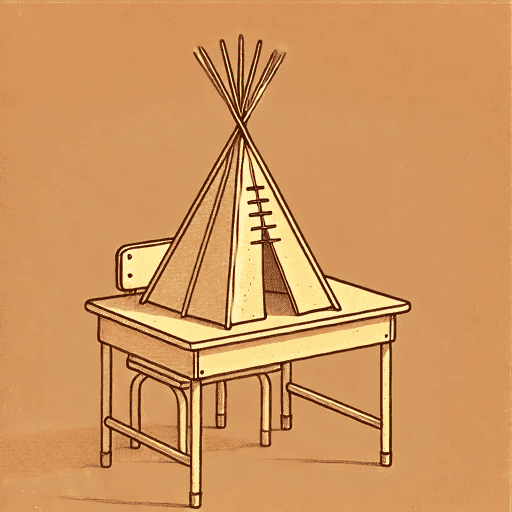
Over the next week, Link continues to bully Jake. He breaks Jake’s favorite red pen, hides his book bag, and pushes Jake into a group of older girls. Jake begins to worry that he will not be able to solve the problem of Link’s bullying. Then, just before Thanksgiving, Mrs. Brattle assigns Jake and Link to work as partners on a social studies project showing how Indigenous Americans lived in the past. Link tells Jake that he will have to do all the work. During their research time in the library, Link reads a comic book while Jake looks up information. Jake is the one who finds and labels pictures and creates a report—but on the day before the project is due, they still do not have a model of an Indigenous American traditional home to show the class. When Link tells Jake that he should also take care of this, Jake finally snaps. He tells Link that either Link can help or they can both fail the assignment. Jake thinks that Link is about to hit him, but finally Link just shrugs and tells Jake to come over to his house after school so they can make a model together. Jake feels like something has changed in his relationship with Link. He remembers when he was five and was afraid there was a monster under his bed. When he finally got up the courage to look, he saw that there was no monster—and he wonders if he has just discovered something similar about Link.
Chapter 9 Summary: “Surprises and Questions”
When Jake rings Link’s doorbell, Link drops a water balloon from a window above the door. As it breaks on the ground near Jake’s feet, Link laughs and calls “Surprise!” (56) He tells Jake to come inside. Jake is nervous, but he thinks that Link probably missed him with the water balloon on purpose. Inside, Link’s mother greets him warmly. Link calls to Jake to come upstairs. Jake is surprised to find that Link’s room is a normal kid’s room, filled with comic books and model cars and planes. When Jake moves to pick one up, Link tells him to keep his hands off of the models. Jake praises the model and asks where Link got it. Link says his father gave him the kit. Jake is surprised that Link would have a hobby that requires so much patience and skill. Link’s older sister comes into his room, angrily accusing him of stealing a dollar from her room. She calls him “Stink” (58). She picks up the model car and threatens to crush it, then tosses it at Link carelessly and tells him she will “kill” him if he or any of his friends ever come in her room again. She leaves and goes back to her own room, slamming her door hard. Link grins at Jake and tells him that his older sister is “demented” (60). Jake finds the sister frightening and hopes they can get the project done quickly so that he can leave.
Link shows Jake a box of items he has collected for use in their project: sticks, sand, moss, and so on. Jake watches as Jake skillfully assembles and paints two realistic-looking miniature teepees and then creates a setting for them using a box lid, sand, and moss. Jake is able to help by showing Link his research, but he leaves the actual assembly up to Link, who is much more skillful with his hands. Jake is amazed at the detail Link has created, and he tells Link how impressed he is. Link shrugs off the praise and says that he will bring the diorama to school tomorrow. On his way home, Jake considers what it must be like for Link to live with his bully of an older sister. He is surprised at how normal Link seemed during their work session and at how good Link is at building things. He wonders if, when there is no one around to bully, Link is just a normal kid.
Chapter 10 Summary: “Busted Link”
The next day, Mrs. Brattle asks students to give reports on their projects. Students share their research into topics like the Mayflower and Plymouth Rock. Then Mrs. Brattle calls on Link and Jake. The two boys carry their project in from the hallway. Jake notices that Link’s face is pale. Very quietly, he tells Jake that he cannot speak in front of the whole class. Jake sees that Link is terrified. Jake realizes that, if he wanted to, he could turn the tables on Link and be the bully himself. He could make fun of Link for being scared and expose his fear to the whole class. Instead, he reassures Link that their report will be great—he will do the talking, and Link can point out the features of the diorama as Jake talks. He reminds Link that the model is really well done, and he assures Link that students will be impressed by it. This turns out to be true—even Mrs. Brattle is impressed. Jake notices that overnight, Link has added more details to the diorama—tiny baskets of corn, bows and arrows, and so on. When Jake finishes up his report, he tells the class that Link made the entire display himself. Link smiles proudly as the class claps for him. That afternoon, on the bus home, Link sits by Jake without bothering him. When they get off the bus, Link thanks Jake for “What [he] did at school today” (72). Jake notices that Link calls him “Jake,” not “Fake” or “Flake” (72).
The flashback to second grade ends, and Jake, speaking from fourth grade, reflects on his experiences. He notes that Link still lives near him. They are not really friends, but they tolerate one another. Link sometimes still bullies people, at least a little bit, but he does not bully Jake. In fact, Jake does not get bullied much anymore, at all. He is still a perfect target for bullies, because he is on the small side, looks smart, and doesn’t tattle. Now, however, he knows how to handle bullies. He understands that behind their bullying, there is a real person that he can get to know. Once he actually knows the person, the bully feels understood and stops his bullying.
Chapters 8-10 Analysis
In the book’s last section, Jake finally solves his problem with Link, resolving the book’s central conflict. The way in which he solves the problem—by confronting his own fear of Link and acknowledging Link’s humanity—is foreshadowed from the story’s beginning. On the day Jake meets Link in Chapter 2, he is aware that his own fear is feeding Link’s behavior—but he is unable to use this understanding in any practical way until late in the narrative. In Chapter 8, however, this changes. Jake finally stands up to Link and has the important realization that Link may be like the imaginary monster he thought was under his bed when he was five: not a real monster, at all. He is primed, on his subsequent visit to Link’s house, to notice details that give him a more complete picture of who Link is and confirm that Link is not a cartoonish monster, but an ordinary child just like Jake himself. Link has an ordinary and kind mother, has a room like any other child’s, and has hobbies that Jake can relate to. Jake learns that Link is being bullied by his older sister, and he feels empathy for his bully for the first time. He is able to offer genuine support to Link after this—he praises Link’s model-building abilities several times, and the next day, during their class presentation of their report, he not only resists the temptation to bully Link back, he actively encourages Link and makes sure that their classmates know how good Link is at model building. Link’s gratitude for these gestures shows when he thanks Jake after school and in the fact that he never bullies Jake again after this day. This sequence of events reinforces the book’s thematic claims regarding The Importance of Friendship and Support and The Role of Empathy in Dealing with Adversaries.
One issue that modern readers might notice is that the social studies project that Mrs. Brattle assigns does not accurately reflect the historical realities of the culture of the Wampanoag people of the Massachusetts area. To fulfill this assignment, Jake and Link create a diorama of a teepee, a portable, tent-like structure used by Great Plains and Canadian Prairie Indigenous peoples, but this reflects settler stereotypes regarding generic “Native Americans” and is not the type of housing used by the Wampanoag. Although Andrew Clements himself taught fourth grade, he taught during the 1970s, before curricula were modernized to reflect more accurate historical and cultural information. It is likely that Clements’s choice for Jake and Link’s project is simply typical of the kinds of projects that were assigned and acceptable in the middle of the 20th century—it is unlikely that this detail is intended to characterize Jake, Link, or Mrs. Brattle as ignorant or insensitive.
The ending of Jake Drake, Bully Buster showcases Clements’s sensitivity as an author and demonstrates his respect for his young audience. Not only does the conclusion of the story advocate for values like kindness, empathy, and understanding, but Clements displays these characteristics in the construction of the story itself. Each of the Jake Drake novels begins and ends with Jake’s perspective as a fourth-grader. This means that the Jake telling the story is now a little older and wiser and safely removed in time from whatever turmoil he is about to relate. Jake’s narrative voice is cheerful and amusing, and it is clear that fourth-grade Jake is a happy child—he even notes that fourth grade is his “best grade so far” (1). This sends the reassuring message that even when frightening things like bullying come into Jake’s life there is happiness waiting on the other side of the experience. Clements gives Jake’s story a positive but realistic ending: He does not condescend to his readers by implying that complex issues like The Problem of Bullying at School can be magically and permanently ended. Jake does learn how to better his own interactions with bullies, which suggests that some positive changes can be made. He notes, however, that “it’s not like Link stopped being a bully” and that there are still other bullies in his school (73). As Jake points out early in the story, bullying is a widespread problem, and it is not one that children themselves should be expected to solve. Without burdening young readers with a sense that dealing with bullying is their individual responsibility, Clements manages to use his story to offer some gentle suggestions about how to better their individual situations.

Unlock all 39 pages of this Study Guide
Get in-depth, chapter-by-chapter summaries and analysis from our literary experts.
- Grasp challenging concepts with clear, comprehensive explanations
- Revisit key plot points and ideas without rereading the book
- Share impressive insights in classes and book clubs